_1774494554973.webp)
Your Ultimate Guide to Prayer Mats: History, Types and How to Choose
August 28, 2026


Finding the best prayer rugs for your business inventory involves more than aesthetics—it requires understanding their cultural significance, material composition, and functional requirements. Whether you're a wholesaler sourcing for diverse retail markets or an e-commerce seller building a specialized product line, the right prayer mat selection directly influences customer satisfaction and repeat business.
This guide walks through the historical context, material options, selection criteria, and maintenance protocols that matter most to procurement professionals working with prayer mats. We'll explore how modern manufacturing meets traditional expectations, what technical specifications truly affect performance, and how to partner with suppliers who deliver consistent quality at scale.
The History and Significance of Prayer Rugs
Many years of Islamic tradition go into making prayer rugs. They are from all over the world, from Persia to Anatolia, and each has its own style of design. People could use these mats to move around and pray in a clean area that met the Islamic standard for cleaning during Salah. Even though artists from different parts of the world gave the mihrab (arch design) their own styles and meanings, it was always the same thing that showed people how to pray facing Mecca.
Cultural Resonance in Modern Markets
Business-to-business buyers can better understand why authenticity is important to end users when they know a lot about the past. Patterns from Central Asia like geometric shapes, Ottoman art with floral designs, and Arabian style calligraphy can be recognized by Muslims all over the world. When buying teams look for prayer rugs that use these visual languages, they connect with customers on an emotional level, which keeps them coming back. Muslim groups in North America and Europe are looking for high-quality items that show their background. This is driving the market for Islamic culture goods to keep going up.
Evolution Toward Functional Design
The prayer mats of today are a good mix of old traditions and modern needs. Manufacturers have brought old designs up to date by using new materials and production methods. It's not too expensive to get hand-knotted textures with high-density stitching, and smooth floors like those in Western homes are safer with non-slip backings. Now that there is a change, companies can sell items that are both traditional and useful in terms of sturdiness, portability, and care.
Types and Materials of Prayer Rugs
There is a big difference between prayer rugs in terms of how well they work, how much they cost, and how much care they need. When buying managers know about these differences, they can match things with certain market groups and ways of using them.
Traditional Natural Fibers
In the past, wool and silk were important materials because they kept people warm, were strong, and felt nice. Because wool doesn't color easily, prayer rugs made of wool last a long time and look good in high-end homes. For events or props where looks are more important than how often they are used, silk types are good. They are very pricey, but these materials offer realism that some customer groups actively seek.
Modern Synthetic Solutions
Most prayer mats on the market today are made of polypropylene and polyester, which don't fade colors, are cheap, and are easy to clean. Because these synthetics don't soak up water, they don't rust where it's wet. This is helpful for people who buy in bulk and have customers in a lot of places. It is possible to find mixes of fake cashmere that are soft enough to feel like real wool but strong and cheap enough to be fake.
Emerging Performance Materials
Memory foam cores are used in newer making methods to support the body while lying down, which makes it easier on older users' joints. Antimicrobial treatments are bought by institutions that are in charge of keeping places where people pray together clean. As a general trend in sustainability grows, more and more eco-friendly people want to buy clothes made from bamboo viscose or recycled materials. Best prayer rugs now often incorporate these same sustainable foams and fabrics, appealing to health‑conscious and environmentally aware buyers. This is something that buyers can get from flexible manufacturers that helps their goods stand out and attract specific groups of people.
How to Choose the Best Prayer Rug: A Decision Support Guide
When you buy a lot of prayer mats, you need to think about how well they work, what your target market needs, and how much money you have. This part talks about choice factors that have a direct impact on how well the product does.
Material Integrity and Construction Quality
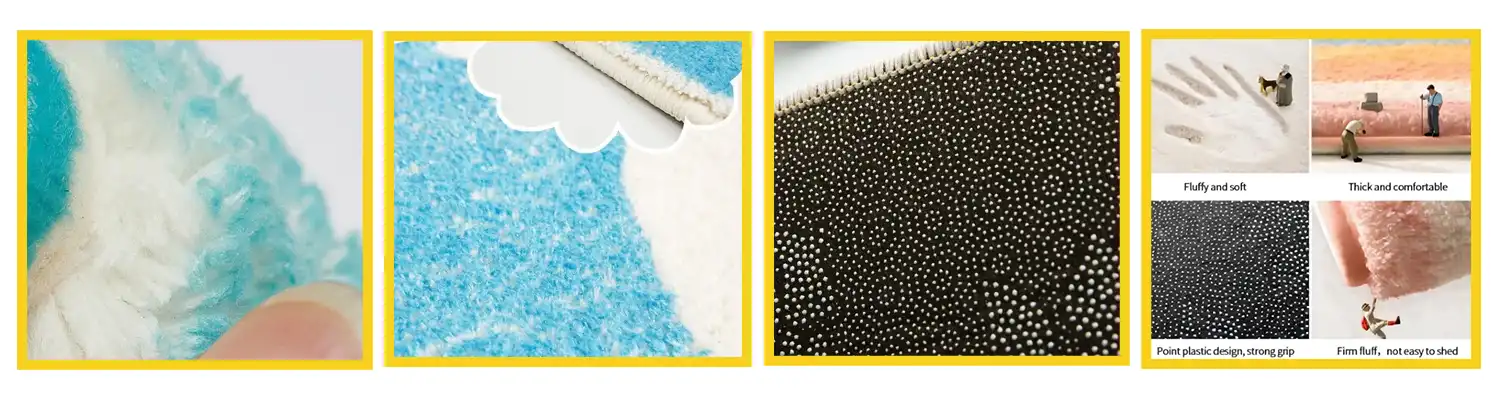
Most high-density woven structures have more than 750,000 points per square meter. They last longer and make designs stand out more clearly. For comfort while lying down and ease of care, a 5 mm pile height is a good choice. It's easier to clean shorter piles, and they still protect pressure points. You can tell how good something is by how heavy it is. Rugs that weigh around 800 g/m² are strong enough to lie flat without being too big to store or ship. Safety-wise, the backing system is very important. Pointed plastic or dotted silicone stops the shoe from slipping on tile, wooden, or marble floors, which are common in modern homes.
Functional Surface Treatments
When you treat things to make them less likely to damage, they last longer under normal use. This means that customers are less likely to complain or send things back. This is very important for people who sell things online since reviews and ratings are directly linked to how well their products work. Slip-resistant features keep stores safe, and low-maintenance features make it easier to own, which makes customers happier. These treatments cost a little more, but they really pay off in markets where useful performance is what makes similar goods stand out.
Customization Capabilities for Market Differentiation
People who buy in bulk gain a lot when sellers offer OEM and ODM services. For custom sizing, regional tastes are taken into account. People in North America, for instance, like bigger sizes for their big homes, while people who move around a lot like smaller sizes for vacations. With heat transfer printing, businesses can change patterns to make their own designs. This stops straight price competition and helps people remember their name. Logo integration is helpful for gift shops, hotel chains that want to add prayer rooms, and religious groups that want to make meeting rooms that look good with each other. Long-term business partners look for sellers who can handle these changes while still maintaining high quality standards.
Verifying Supplier Reliability
What the supplier can do besides selling the goods affects the choices people make about what to buy. OEKO-TEX Standard 100 certifications show that a product doesn't have any chemicals that are bad for you in them. Fears about safety and following the rules are eased in all places. When something is approved by ISO 9001, quality control is set up. This means that the result will be the same from one production run to the next.
Businesses that need to keep track of their stock or meet project deadlines need delivery that they can count on. Businesses of all sizes that are just starting out in the market can work with suppliers who have clear schedules, reasonable minimum order quantities, and the ability to change the size of orders as needed.
Care, Cleaning, and Maintenance of Prayer Rugs
If you take the right steps to care for your prayer rug, it will stay in good shape and work properly. This will directly affect how satisfied your customers are and how long the product lasts. It's better for customers to trust your brand when you give them clear care instructions. This will also cut down on returns.
Material-Specific Cleaning Approaches
Synthetic prayer mats that don't have beating bars to protect the pile can be cleaned regularly. You don't have to hire a professional to get rid of small spots because you can just clean them up with a light detergent. A damp mop is a good way to clean a lot of man-made materials, especially ones that have been cleaned to not damage. There is less work to do on care for institutional buyers who are in charge of big installations.
More care needs to be taken with natural fibers. To get rid of deep-down dirt and keep the lanolin content that naturally fights spots, wool should be cleaned by a professional every 12 to 18 months. For best prayer rugs made from natural wool, this professional schedule is especially important to preserve both their appearance and antimicrobial properties.
Storage and Handling Best Practices
When you store piles in rolled storage, they stay straight and don't get creased while they're away or between seasons. Controlled climates keep wetness from building up, which is bad for mildew growth, especially in places where natural fibers are stored. When used in schools, rotation techniques spread wear patterns across several units, which makes the fleet last longer as a whole. Putting these steps into writing and giving them to buyers shows that the seller knows what they're doing and makes the launch of the product go more smoothly.
Warranty and After-Sales Support
If you buy something from a reputable source, the protection will cover any problems with the way it was made, such as edge binding coming apart, pile dropping too soon, or backing delamination. When you buy something from a professional supplier, you get help after the sale in the form of replacement goods and quick ways to connect. When a buyer has an ongoing account, having a designated liaison is helpful because they know the past of orders and can speed up repeat orders without having to go through long requalification processes. Keeping these relationships going makes it easier to buy things and keeps supply lines stable.
Trusted Brands and Suppliers: Where to Buy Quality Prayer Rugs
Picking the right supplier is important for procurement because it affects the quality of the goods, how reliably they deliver them, and how valuable a long-term partnership is. You have an advantage over your competitors if you can find makers who have a history of doing a good job with production, quality control, and shipping.
Manufacturer Capabilities and Certifications
The best companies that make prayer rugs use both old-fashioned knowledge and new, cutting-edge ways to make their products. These days, with improved heat transfer printing, you can make large-scale designs with complicated patterns that look like they were made by hand every step of the way. With laser cutting, you don't need to buy expensive tools to make things that are exactly the right size and shape. This helps keep costs down while still meeting special requests. Full quality control, which includes a full check of the goods before they are shipped, finds issues with them before they reach customers. The brand's image is kept safe, and returns are cut down.
Certified files are an objective way to show that something is good. Putting a CE marking on a product means it follows EU rules, which lets it be sold in European markets. Approval under REACH makes sure that chemicals meet safety standards and follow rules about the environment that are becoming more popular in developed markets. As per EN 1350, the flame retardancy rates are safe enough for use in hospitals, hotels, and apartment buildings with more than one unit.
Prayer mat manufacturers, for instance, can also benefit from these certifications to demonstrate that their products meet strict safety and environmental criteria in shared or public spaces. These licenses show buyers that suppliers are serious about following the rules, which gives buyers the confidence to buy in controlled markets.
Logistics and Packaging Expertise
When professionals package goods for export, they use moisture barriers and compression resistance that are right for shipping containers. This keeps the goods safe as they cross international borders. When you load containers in the best way, you can ship more at once and pay less per unit for freight. This is very important for goods whose prices change often. Freight companies that have been around for a while and people who know how to fill out customs forms keep inventory planning from getting messed up by delays at the ports. Suppliers who offer consolidated shipping make it possible for smaller buyers to get into the market without having to buy whole containers. New businesses will find it easier to start up now.
Partnership Advantages with Established Suppliers
When purchasing teams work with makers with a lot of experience, like Yiyajia Carpet, they can use expert tools that go beyond just making purchases. Using the same methods used in production to make custom samples in 24 to 48 hours is called rapid sampling. This speeds up product development and cuts down on the time it takes to get a product on the market. Flexible minimum order amounts can help businesses at all stages of growth, from just starting out to large-scale operations. It's easier to make accurate predictions when there are clear price systems and bulk discount plans. This is important for financial planning and handling margins.
Conclusion
You need to find the best prayer rugs that are both culturally accurate and useful, as well as those that are made of good materials but don't cost a lot of money. If you work in procurement and work with a lot of different markets, you can do your job better if you know about a product's historical significance, material properties, and technical specifications.
You can turn buying prayer rugs from a commodity into a strategic benefit if you work with makers that let you make any changes you want, have strong quality systems, and offer reliable shipping. Respect from the past and modern skills in manufacturing come together to make goods that make customers happy and help businesses grow by providing consistent quality and a steady supply.
FAQ
What makes a prayer rug suitable for bulk procurement?
Materials like high-density polypropylene or fake cashmere that are both long-lasting and cheap are used to make procurement-grade prayer rugs. Even though they're cheap, they can handle a lot of use. Customers will be happy with the non-slip backing, stain protection, and uniform sizes across production runs. Flexible minimums, customization options, and standards like OEKO-TEX from suppliers add value, letting businesses serve a wide range of markets effectively while controlling inventory risk properly.
Which material offers the best durability-to-maintenance ratio?
Synthetic fabrics, especially polypropylene and polyester mixes that have been treated, last a long time and don't need much upkeep. These fibers don't stain easily, dry quickly after being washed, and keep their look after hundreds of uses. Quality synthetic prayer rugs are usually 9 mm thick, which gives them enough cushioning while still being easy to vacuum and spot-clean. This makes them perfect for retail customers who want practical solutions that don't require a lot of upkeep.
How can I verify supplier quality before large orders?
Instead of hand-made prototypes, ask for models that were made using real factory methods. Check the pile density, the quality of the backing connection, and the edge finishing when the item is handled normally. Ask for proof of certification, like OEKO-TEX, ISO 9001, or CE marking, and check these with the groups that issued the certifications if you can. References from past customers, especially those in your target markets, can tell you a lot about how reliable your delivery is and how good your after-sales support is that paperwork alone can't.
Partner with Yiyajia Carpet for Your Prayer Rug Supply Needs
Yiyajia Carpet is a reliable company that makes prayer rugs for stores, wholesalers, and sellers all over the world. Our fake cashmere prayer mats are made with a high density, have a non-slip backing, and are treated to not stain. They are a good balance between quality and price. We offer full OEM and ODM customization, from adding logos to creating new patterns. All of our products are inspected and certified by OEKO-TEX before they are shipped. No matter if you need standard inventory or custom designs, our large order flexibility and 24- to 48-hour samples can help your business grow.
Connect with our team at sale@yyj-carpet.com to talk about how our production skills and dependable business can help your prayer rug line. You can see all of our services at yyj-carpet.com and start forming a relationship with us that guarantees quality work, on-time delivery, and helpful support.
References
1. Bloom, Jonathan M. and Blair, Sheila S. "Islamic Arts: Textiles and Carpets." Grove Art Online, Oxford University Press, 2018.
2. Erdmann, Kurt. "Seven Hundred Years of Oriental Carpets." University of California Press, 1970.
3. International Textile Manufacturers Federation. "Quality Standards for Prayer Rugs: Material Specifications and Performance Testing." ITMF Technical Report Series, 2021.
4. Rahman, Fazlur. "Daily Life and Ritual Practices in Islam." Encyclopedia of Religion and Society, Hartford Institute for Religion Research, 2019.
5. Stone, Peter F. "Technical Textiles for Commercial Applications: Material Science and Manufacturing Innovations." Woodhead Publishing, 2020.
6. Walker, Daniel. "Carpets and Floor Coverings: Historical Development and Contemporary Production." Metropolitan Museum Studies in Art, 2017.