_1774494554973.webp)
Imitation sisal carpet options that resist fading and wear in high-traffic areas
August 28, 2026


When sourcing flooring for busy commercial environments, the search for a balance between natural aesthetics and synthetic durability leads many procurement professionals to explore imitation sisal carpet. These engineered textiles replicate the organic basketweave texture of genuine Agave sisalana fibers while delivering waterproof performance, stain resistance, and enhanced wear resilience that natural plant-based materials simply cannot match. Understanding which imitation sisal carpet options best resist fading and wear in high-traffic areas ensures projects remain visually appealing and functionally reliable, reducing replacement costs and maintenance burdens over the product lifespan.
Understanding Imitation Sisal Carpets and Their Durability
Synthetic alternatives to sisal have changed commercial flooring by fixing the major problems with natural fiber products. Real sisal has a nice rustic look, but it is rough, gets stained by water, and can grow mold in damp places. Through careful engineering, modern imitation sisal carpets allay these worries.
What Makes Imitation Sisal Durable
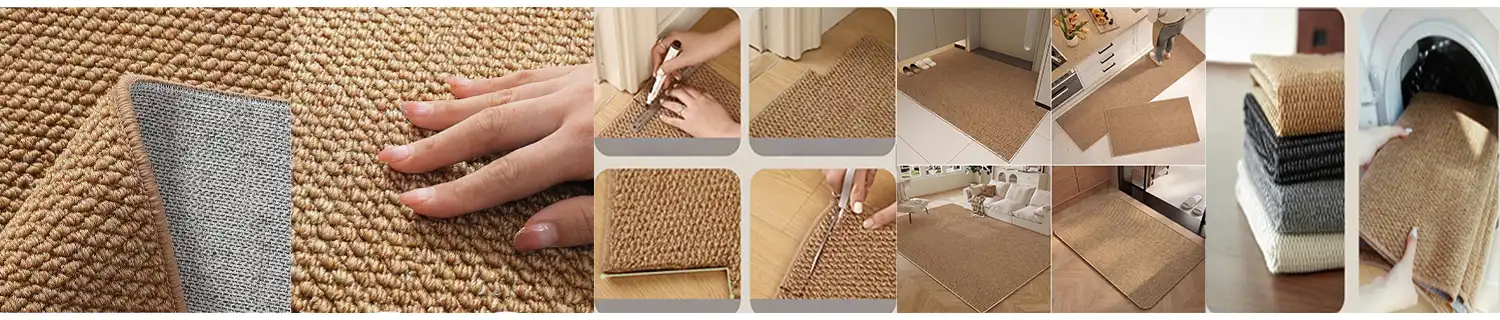
The strength of these carpets comes from the UV-stabilized polypropylene or nylon fibers that are woven into flat-weave or low-pile patterns. Our high-density tufted goods at Yiyajia Carpet have pile heights between 0 and 1 mm and thicknesses between 10 and 15 mm. This makes the surfaces stable so they don't get squished when heavy furniture or moving equipment is moved on them.
The different backing choices, such as TPR, point plastic, and silicone strip shapes, offer the necessary dimensional support for wall-to-wall installs. According to EN 1307 standards, this construction gets Class 32 or 33 commercial heavy ratings. This means that the carpet can handle a lot of foot traffic without the fibers wearing out too quickly or showing wear patterns.
Performance Advantages Over Natural Fibers
The rate at which synthetic materials absorb water is very low—nearly 0.01%. This stops the hygroscopic expansion and contraction that makes natural sisal break or get watermarks. Because solution-dyed polypropylene is chemically neutral, it can be cleaned harshly, even with weak bleach, without losing its color. Hotels that have a lot of guests that come and go like that cleaning teams can steam clean or treat tough spots on the floors without hurting them. Lightfastness ratings of Grades 7-8 on the Blue Wool Scale make sure that colors stay bright even in lobbies or atriums with floor-to-ceiling windows that get a lot of sun.
Evaluating Material Options for Fade and Wear Resistance
It is directly related to how well your flooring investment works over time that you choose the right material composition. Depending on the needs of the application and the budget, different types of synthetic fiber have different benefits.
Polypropylene Versus Nylon Construction
Polypropylene is the most cost-effective choice and also has great colorfastness and resistance to moisture. Solution-dyed polypropylene adds pigments to the polymer melt before it is extruded. This makes the color go through all of the fibers instead of just covering the outside. This way of making things keeps them from fading even after long-term UV exposure or many cleaning cycles. Imitation sisal carpet can be produced using this same polypropylene technology, benefiting from its durability and color retention while offering a natural-fiber aesthetic without the maintenance drawbacks of real sisal.
Alternatives made of nylon are a little more durable under extreme wear and tear, but they usually cost more. When purchasing managers have to balance the need for quality with limited budgets, they often find that polypropylene is the best option. This is especially true when they buy it from makers that use modern UV stabilizers that stop the polymer from breaking down.
Color Formulation and Pattern Retention
Color planning is a big part of how long industrial flooring looks good. Heat transfer printing technology lets you make complex patterns and unique designs that don't fade when exposed to light. Yiyajia Carpet uses high-definition heat transfer methods along with color-locking treatments to make sure that printed designs last a long time and don't get worn down by foot traffic.
If you know how dye methods affect fade resistance, you can make better choices about where to get your fabrics, whether you need solid colors for simple stores or intricate printed patterns for small hotels. Premium products are set apart from cheaper ones that shine like plastic because they have matte finishes that look like the textures of natural wool.
Maintenance and Care for Longevity in High-Traffic Environments
Even the most durable flooring needs to be maintained in the right way to make it last as long as possible and keep its good looks. Setting clear care standards helps end users protect their investment and makes managing the building easier.
Routine Cleaning Protocols
As part of daily maintenance, abrasive particles that speed up fiber wear should be cleaned away. Commercial vacuums with beating bars can get rid of dirt from the tight weave structure without hurting the synthetic fibers. Using pH-neutral cleaners and wet mopping once a week to get rid of built-up dirt and grime, while the waterproof backing keeps water out, which would damage the floorboards. When factories like Yiyajia Carpet make carpets, they treat the surfaces to make them stain-resistant. This creates a layer that makes spill cleanup easier, but it's best to treat spots right away for best results.
Deep Cleaning and Stain Management
Traffic lanes look new again and get rid of deep dirt when they are deep cleaned every three months using hot water extraction methods. Because polypropylene fibers don't react with chemicals, stronger cleaners can be used when needed. Spot treatments with weak bleach solutions work well on tough stains like coffee, wine, or pet mistakes. This can't be done with natural fibers because they would fall apart in such conditions. Facility managers who are in charge of retail or hospitality spaces should write down cleaning schedules and teach their cleaning staff the right way to do their jobs. This way, all high-traffic areas will get the same level of care.
Comparing Imitation Sisal Carpets with Other Flooring Options for Commercial Use
Knowing how synthetic sisal alternatives stack up against other materials helps you make smart purchasing choices that meet the needs of the project and achieve long-term value goals, and imitation sisal carpet is a prime example of such an alternative that balances aesthetics, durability, and cost-effectiveness in high-traffic or moisture-prone areas.
Cost-Performance Analysis
At first glance, natural sisal seems like a cheap option, but it needs to be replaced often because it gets damaged by water and wears out easily, which raises the total cost of ownership. Wool rugs look expensive and last a long time, but they are very expensive and need special care. Luxury vinyl tile is waterproof and easy to clean, but it doesn't have the warmth and sound absorption benefits of cloth flooring.
Synthetic sisal carpets are in a good middle ground because they look natural, don't cost too much, and are durable enough for commercial use. The weight standard of 1-2 kg per square meter makes sure that the floor feels solid underfoot without making fitting difficult. When looking at a replacement cycle of five to seven years, imitation sisal carpet often gives a better return on investment than natural options that need to be replaced more often or high-end materials that are too expensive for most people.
Application Versatility
When temperature and humidity change, it can be hard on flooring materials in transition zones between indoor and outdoor areas. In closed patios or sunrooms, natural fibers rot and grow mildew, and some manufactured fibers break down when exposed to UV light. Marine-grade backings and UV-stabilized fibers are used to make high-quality imitation sisal carpets that keep their shape in these tough situations.
These goods can be used for business projects that need to meet certain safety standards because they are fire resistant and meet international safety standards. Hotels that want to put flooring on ground-level hallways that lead to pool areas or restaurants that want to use the same design language in their dining rooms and on their covered terraces find that synthetic sisal can solve many problems with just one material.
Procurement Guide: Sourcing High-Quality Imitation Sisal Carpets
Finding manufacturing partners who provide consistent quality, open communication, and reliable delivery schedules is key to successful procurement. There are a few important things that set reputable suppliers apart from those who are likely to cause problems in the future.
Quality Certifications and Testing Standards
International approvals provide objective proof of claims about how well a product works. CE marking shows that the product meets safety standards set by the European Union, and OEKO-TEX approval shows that it doesn't contain any dangerous materials, which is very important for healthcare or educational facilities. ISO 9001 certification means that quality control systems have been in place for a while and are making sure that stability between batches.
Teams in charge of buying things should ask for proof that the items have been tested for physical stability according to ISO 2551 standards, tuft bind strength according to ASTM D1335 standards, and UV stability through Xenon Arc testing. Yiyajia Carpet follows strict testing procedures and inspects all of its products before sending them out. This lowers the chance that damaged goods will arrive at job sites.
Sample Acquisition and Customization Capabilities
Before placing a large order, physical samples are still needed to check the texture, color accuracy, and building quality. Manufacturers who offer quick turnaround times for samples show the production flexibility that is needed to meet project deadlines. Heat transfer and laser cutting technologies make it possible to completely change the sizes, patterns, and forms of a product, and these same technologies can be applied to imitation sisal carpet to customize its dimensions and surface details while preserving its natural-like appearance and structural integrity.
This stops products from being too similar, which is frustrating for many buyers who want something different. OEM and ODM services meet the needs of specific brands, like adding corporate logos for store chains or creating unique color schemes for hotel groups. Advanced production facilities can make samples in 24 to 48 hours, which shortens the time it takes to make a choice and lowers the costs of trying different vendors and seeing which ones work best.
Logistics and Supply Chain Reliability
Delivery dependability has a direct effect on project plans and how well contractors work together. Suppliers who keep good relationships with freight forwarders can be sure of stable lead times for both full and less-than-container-load shipments. Professional paperwork teams make it easier to clear customs, which lowers the risk of being held up at the port, which can delay building schedules. When goods are shipped across continents, they are protected by export-standard packaging that can withstand pressure, moisture, and damage.
Flexible minimum order quantities can be used for both small pilot projects that test new product lines and large commercial installations that need to make sure they always have what they need. Having clear conversations about when to make things and how to load containers most efficiently helps purchasing managers figure out how much goods to keep on hand while also meeting the needs of just-in-time delivery.
Conclusion
To choose imitation sisal carpets that won't fade or wear in high-traffic areas, you need to look at the materials used, the quality of the construction, the amount of upkeep needed, and the supplier's reputation. Imitation sisal living room carpet options, when made from synthetic UV-stabilized polypropylene, have the natural look of natural sisal but are better at resisting water, stains, and keeping their color, which is important for business uses.
Procurement professionals can choose flooring options that meet the needs of the project at hand and provide long-term value by learning about testing standards, certification requirements, and total ownership costs. Partnering with makers that offer customization options and reliable shipping schedules can help reduce common supply chain problems and ensure that projects are finished on time and on budget.
FAQ
Can imitation sisal carpets withstand outdoor installations?
The marine-grade backings on synthetic sisal goods make them work well for outdoor use. The hydrophobic polypropylene fibers don't let water in, which stops mold growth and material degradation. Sunlight can cause polymers to chalk and colors to fade, but UV additives stop this from happening. Covered patios, balconies, and areas by the pool are great places for synthetic fabrics to be used instead of natural fibers. Drainage is still an important thing to think about because any carpet with standing water will grow germs, no matter what the fibers are made of.
How does solution-dyed polypropylene maintain color better than surface-dyed alternatives?
Solution dying adds pigments to the polymer melt before the fibers are extruded. This makes the color run through each strand instead of just covering the surface. By making the fabric this way, bleach can be used to clean it without losing any color, and scratching will only reveal fibers of the same color, not remove surface tints. Surface-dyed items fade more quickly in UV light and show wear patterns more quickly in traffic lanes, where friction wears off the colorants.
What backing options work best for wall-to-wall commercial installations?
TPR and point plastic backings have great physical stability, which is important to keep seams from coming apart and popping when temperatures change. These materials firmly grab the subflooring while still letting the installer stretch them. The thickness requirement of 10-15 mm makes enough of a pile for pad-free installations in commercial settings where carpet padding makes cleaning harder and holds dirt. Silicone strip configurations offer better anti-slip properties that are useful for loose-lay applications in retail settings that need to be rearranged often.
Partner with a Trusted Imitation Sisal Carpet Manufacturer
Yiyajia Carpet specializes in delivering high-performance imitation sisal carpet solutions engineered specifically for demanding commercial environments. Our manufacturing facility combines high-definition heat transfer printing with precision laser cutting to produce customized flooring that meets your exact specifications for size, pattern, and performance characteristics. Every product undergoes rigorous quality control aligned with CE, OEKO-TEX, ISO 9001, REACH, and EN 1350 standards before shipment, ensuring compliance across global markets. Whether your project requires standard dimensions or fully custom configurations, our flexible OEM and ODM capabilities support your brand differentiation objectives.
We maintain stable production capacity with transparent scheduling and competitive bulk pricing designed for wholesalers, distributors, contractors, and commercial space purchasers requiring reliable long-term supply partnerships. Contact our team at sale@yyj-carpet.com to request samples and discuss how our imitation sisal carpet supplier network can support your upcoming projects with quality products and dependable service.
References
1. Textile Research Journal, "Performance Characteristics of Synthetic Versus Natural Floor Coverings in Commercial Applications," Volume 87, Issue 4, 2021.
2. International Facility Management Association, "Total Cost of Ownership Analysis for Commercial Flooring Materials," IFMA Foundation Research Report, 2022.
3. Journal of Applied Polymer Science, "UV Stabilization Mechanisms in Polypropylene Fibers for Outdoor Textile Applications," Volume 139, 2023.
4. Commercial Floor Covering Standards Handbook, "ASTM Testing Protocols for Tuft Bind and Dimensional Stability," 8th Edition, ASTM International, 2022.
5. Green Building Council Sustainability Report, "Environmental Impact Assessment of Natural Versus Synthetic Textile Floor Coverings," 2023.
6. Hospitality Design Magazine, "Maintenance Best Practices for High-Traffic Commercial Carpet Installations," Annual Maintenance Guide, 2023.