_1774494554973.webp)
What materials are used to make high-quality dopamine carpets now?
September 21, 2026


High-quality dopamine carpets are engineered with materials specifically chosen to deliver vivid, high-saturation color performance alongside lasting durability. At their core, these mood-boosting floor coverings rely on fine faux cashmere polyester fiber surfaces that hold pigment exceptionally well, paired with thermoplastic rubber (TPR) backing for grip and dimensional stability. Unlike conventional neutral flooring, a dopamine carpet is constructed around the neuro-aesthetic principle that saturated color stimulates joy — meaning every material decision, from fiber density to dye chemistry, directly serves that visual and tactile purpose.


Understanding Dopamine Carpet Materials: A General Overview
The Surface Fiber: Why Faux Cashmere Polyester Leads the Market?
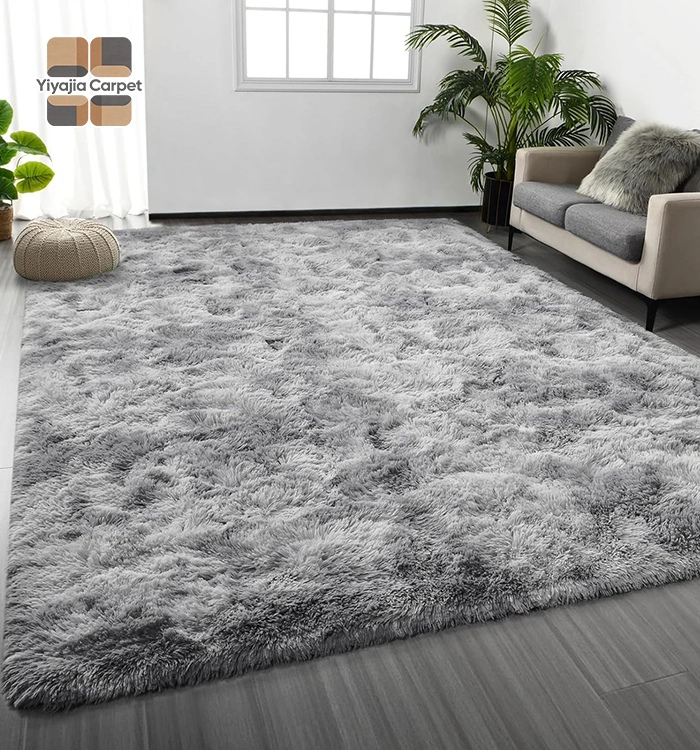
The most important thing about any bright area rug that is meant for markets that follow trends is the material that it is made of. When it comes to colorful area rugs, 350g/◡ premium-grade faux cashmere polyester has become the standard. Heat-transfer dye can be applied to polyester fiber at the molecular level, locking in bright colors like electric pink, citrus yellow, mint green, and sky blue without changing how soft the fiber is. This makes a pile that looks great in both natural and artificial light, which is very important for DTC brands making content for Instagram and TikTok users.
The Base Layer: TPR Thermoplastic Rubber Backing
Washed anti-slip TPR (2 mm thick) forms the base of the structure under the soft surface. TPR keeps its shape, doesn't absorb water, and doesn't give off toxic chemicals after it's been installed. This makes it truly safe for babies and odorless, which is a feature that North American and European retail buyers are asking for more and more. The total thickness of the carpet is 5 mm, which is thick enough to lie flat on hard floors without curling or sticking on doors, which is one of the main complaints about thin ornamental mats.
Key Dimensions of Dopamine Carpet Materials: Durability, Design & Maintenance
When it comes to trend-driven flooring like dopamine carpet, material performance includes three interconnected areas: how long it lasts, how well it meets design goals, and how easy it is to clean. Based on the buyer's end route, each measurement has a different amount of weight.
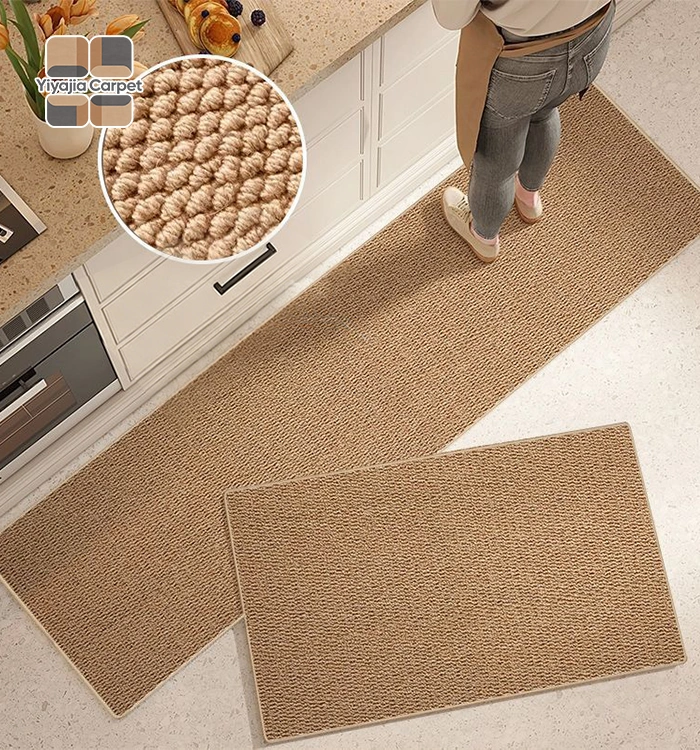
- Durability under real-world use: Machine-woven construction with reinforced lockstitching and a 0.6cm hemmed edge eliminates fraying and thread shedding even after extended daily use. A pile height of 3mm (short pile) maintains its structure under foot traffic better than longer pile constructions, preserving the visual integrity of printed patterns.
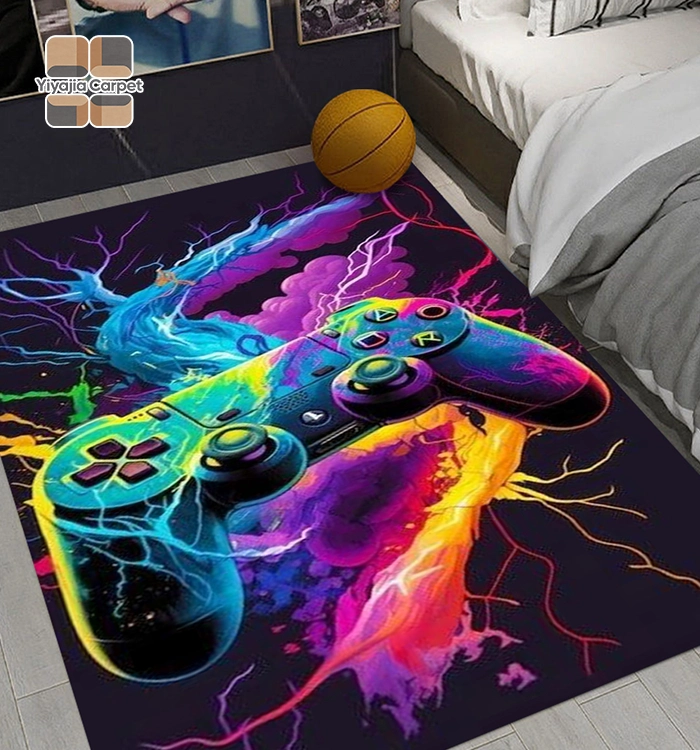
- Color and design fidelity: High-definition heat transfer technology replicates multi-color gradients and bold color-block patterns with precision. The 350g/㎡ polyester surface achieves color saturation that conventional tufted construction simply cannot match at equivalent price points. ISO lightfastness performance at Grade 5+ ensures the vibrancy that makes these rugs socially shareable does not degrade within a normal product lifecycle.
- Maintenance practicality: Short-pile polyester surfaces resist embedded soiling and wipe clean with minimal effort. TPR backing does not absorb spills, which simplifies care routines for household and light-commercial settings alike.
Maintenance-Friendly: Short-pile polyester surfaces don't show stains and are easy to clean with a damp cloth. The TPR backing doesn't soak up spills, which makes cleaning easier in both home and light-commercial settings.
Comparative Analysis: Dopamine Carpet Materials vs. Alternatives
When buying colored area rugs, procurement teams usually look at three types of materials: natural wool, solution-dyed nylon, and polyester-based constructions. Each has its own set of pros and cons.
Although natural wool feels great, it absorbs water, limits dye saturation in high-chroma colorways, and costs a lot more per unit. Wool's price-per-unit makes it economically impossible for brands to quickly change styles in response to seasonal microtrends with 50-piece test runs.
Solution-dyed nylon 6,6 is the best material for heavy-duty hospitality flooring because it doesn't wear down easily and keeps its color. But it needs industrial stitching equipment and longer wait times, which means it's not good for fast-moving brands that need samples in 24 to 48 hours.
The middle ground of faux cashmere fabric with TPR backing is ideally ideal for dopamine carpet production. For home and light commercial use, it keeps its color just as well as nylon, costs a lot less than wool, and works well with heat transfer printing technology. This construction offers the best mix of visual performance, tactile quality, and production costs for brands that need to order at least 50 pieces and have 7 days to customize the logo. The fact that it has CE, OEKO-TEX, ISO 9001, REACH, and EN 13501 certifications shows that it is safe to use in regulated export markets in the EU and North America.
How to Choose the Right Dopamine Carpet Material for Your Procurement Needs?
Picking a material structure isn't just a technical matter; it's also a matter of business. The following are the most important things that buying managers and creative directors should think about when choosing a seller.
- Color reproduction accuracy: Request heat-transfer test samples before placing any order. Evaluate samples under both daylight and warm artificial lighting to verify that printed gradients and solid-color blocks match your reference Pantone codes without visible banding or shift.
- Certification alignment with your target market: North American DTC brands need OEKO-TEX and CE compliance for consumer confidence. EU market entry requires REACH and EN 13501 documentation. Confirm that your supplier maintains these certifications at the factory level, not just at the product level.
- MOQ flexibility and iteration speed: For trend-responsive categories, a supplier offering 50-piece color/size customization and 24–48-hour sample production is structurally more valuable than a lower-cost alternative with a 500-piece MOQ and 3-week lead time. The ability to test a colorway on social media before scaling a reorder directly reduces inventory risk.
- Edge finishing and structural quality: Inspect hemming quality on samples. A 0.6cm machine-woven lockstitch hem is the industry standard for preventing edge deterioration. Laser-cut edges offer additional precision for irregular or custom-shaped rugs.
By meeting these factors, the risk of buying something is smaller, and the product does better on the shelf and in social media.
Future Trends and Innovations in Dopamine Carpet Materials
There are two main trends happening at the same time in the materials world for colorful, mood-based rugs: ecology and surface technology.
As a surface fiber, recycled PET polyester is becoming more popular. This polyester comes from used plastic bottles. It absorbs dyes as well as fresh polyester but has less of an effect on the environment. This is helpful for brands that want to reach Gen Z customers who care about the ethics of the supply chain. Biodegradable TPR formulations are being worked on by a number of textile research institutions, but as of 2024, they are still not commercially scalable.
In terms of technology, mid-level carpet manufacturers are starting to use nano-coatings to attach stain- and germ-resistant chemicals to individual fibers at the molecular level. These coats make products last longer without changing the way they look or how soft the surface is. This makes them perfect for use in restaurants and co-working spaces. If purchasing teams work with makers that can do advanced heat transfer and laser cutting and are also spending in eco-material research and development, they will be able to use these new technologies without affecting their relationships with suppliers.
Conclusion
Material selection is the single most consequential decision in developing a vibrant, trend-aligned dopamine carpet product. Faux cashmere polyester surfaces deliver the color saturation and photogenic softness that social-media-driven brands require. TPR backing provides the safety, stability, and certification compliance that regulated markets demand. When these materials combine with precision heat-transfer printing, laser cutting, and low-MOQ flexibility, the result is a procurement model built for rapid, low-risk iteration — exactly what fast-moving home décor brands need to stay ahead of the trend cycle.
FAQ
What fundamentally separates dopamine carpet materials from standard carpet fiber construction?
Standard carpets prioritize neutral colorfastness and durability under heavy-contract conditions. Vibrant, mood-driven rugs are built around high-saturation dye absorption and visual impact. Faux cashmere polyester accepts heat-transfer pigments more readily than conventional tufted nylon, enabling the sharp gradients and multi-color prints that define this aesthetic category.
Are these colorful rugs suitable for high-traffic residential or light-commercial areas?
Short-pile polyester construction at 350g/㎡ density handles daily household foot traffic reliably. For light-commercial settings such as co-working breakout zones or boutique retail, the 5mm total thickness and reinforced lockstitch edge maintain structural integrity. They are not rated for heavy-contract usage exceeding Class 23.
How should I care for a high-saturation printed rug to maintain color vibrancy?
Vacuum regularly along the pile direction. Spot-clean spills promptly with a damp cloth — TPR backing prevents moisture from penetrating the base layer. Avoid steam cleaning, which can soften TPR adhesion over time. For periodic deep cleaning, a low-moisture extraction method is preferable.
What is the minimum order for custom color or logo designs?
Size and color customization starts at 50 pieces. Logo customization carries a 7-day production lead time after artwork approval.
Ready to Source Your Next Colorful Rug Collection? Connect with Yiyajia Carpet
With 20 years of experience making things, Yiyajia Carpet brings to every dopamine carpet supply connection we make. With our 2,000 m³/day production capacity, 24- to 48-hour samples, and certified-compliant materials, you can go from getting an idea of a trend to having a proven inventory in days instead of months. You can email our team at sale@yyj-carpet.com to get samples, talk about custom colorways, or look into bulk pricing that fits the stage of growth of your brand.
References
1. Textile Research Journal — 2022
2. Journal of Industrial Textiles — 2021
3. Color Research & Application — 2023
4. OEKO-TEX Annual Report — 2023
5. Carpet and Rug Institute: Fiber Performance Standards — 2022
6. Indoor Air: International Journal of Indoor Environment and Health — 2023