_1774494554973.webp)
Can eco friendly jute rugs be customized for hospitality projects?
September 22, 2026


Yes, eco friendly jute rugs can absolutely be customized for hospitality projects. Modern manufacturers offer tailored size, color, pattern, and finish options that align with a hotel's or resort's branding requirements while preserving the natural fiber's biodegradable integrity. With certifications such as OEKO-TEX and REACH now standard among leading suppliers, procurement teams can source customized sustainable jute rugs with measurable environmental credentials. For hospitality brands committed to responsible sourcing, this intersection of design flexibility and ecological accountability makes natural jute floor coverings a compelling choice.


Why Jute Rugs Are Gaining Ground in Hospitality Design
There is more and more pressure on the hotel industry to leave less of an impact on the earth. The UN Environment Program says that the tourist business is responsible for about 8% of the world's carbon emissions. The materials used inside of hotels play a big role in this number. In this situation, people are very interested in buying natural fiber floor covers made at the Corchorus plant.
The Environmental Case Is Backed by Data
Standard agricultural practice doesn't need any synthetic pesticides to grow jute, and the Food and Agriculture Organization says that each acre of jute takes about 15 tons of CO2 per year. The fiber completely breaks down, so a rug that has reached the end of its useful life doesn't add to microplastic waste. This is very different from options made of nylon or polypropylene. Hotels that want to get LEED v4.1 credits in the "Low-Emitting Materials" category can use certified natural eco-friendly jute rugs to help them get there.
Performance Attributes That Suit High-Traffic Environments
Jute has a high tensile strength for its weight because it is mostly made up of lignocellulosic materials, with about 60% cellulose and 13% lignin. The naturally coarse weave structure provides measured acoustic dampening, which lowers the passage of contact sound in hallways and lobby areas. The fiber is naturally antistatic, so it doesn't cause the static electricity problems that happen in commercial carpets when it's dry outside. These useful features make it a useful, not just an abstract, environmentally friendly option for hotel purchasing managers.
What Customization Actually Looks Like for Hospitality Procurement
Each hotel project has its own needs when it comes to space and business. A 200-room hotel in the city has different needs than a small getaway on the coast, and a reputable jute rug maker must be able to meet all of them without lowering the quality of the fibers or harming the environment. Eco friendly jute rugs are a natural choice in such cases, as they offer both sustainable durability and design flexibility, ensuring that every property—regardless of scale or style—receives flooring that aligns with its operational and environmental goals.
Dimensions, Shapes, and Structural Options
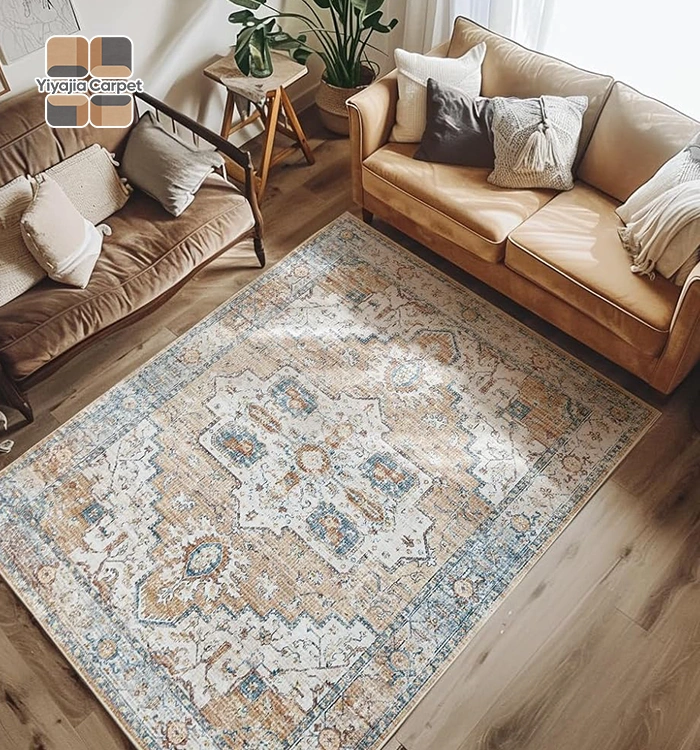
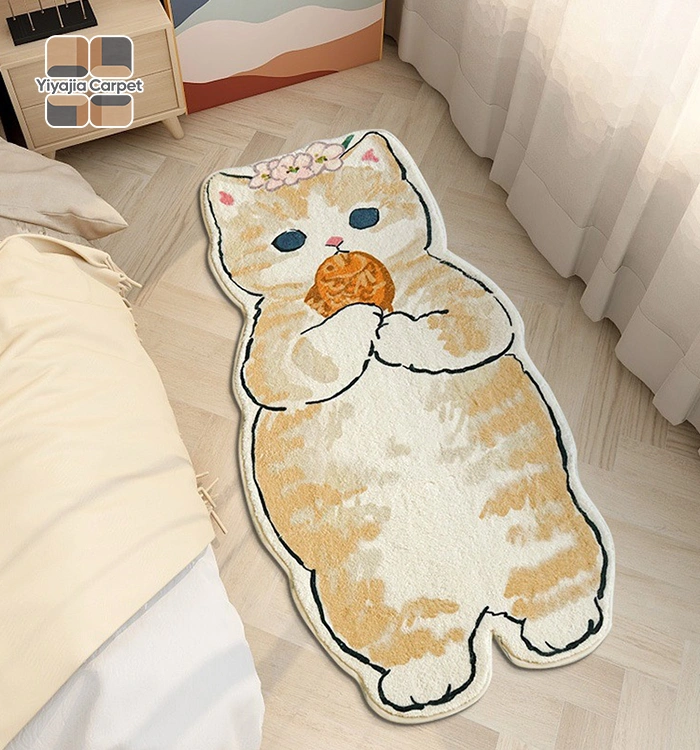
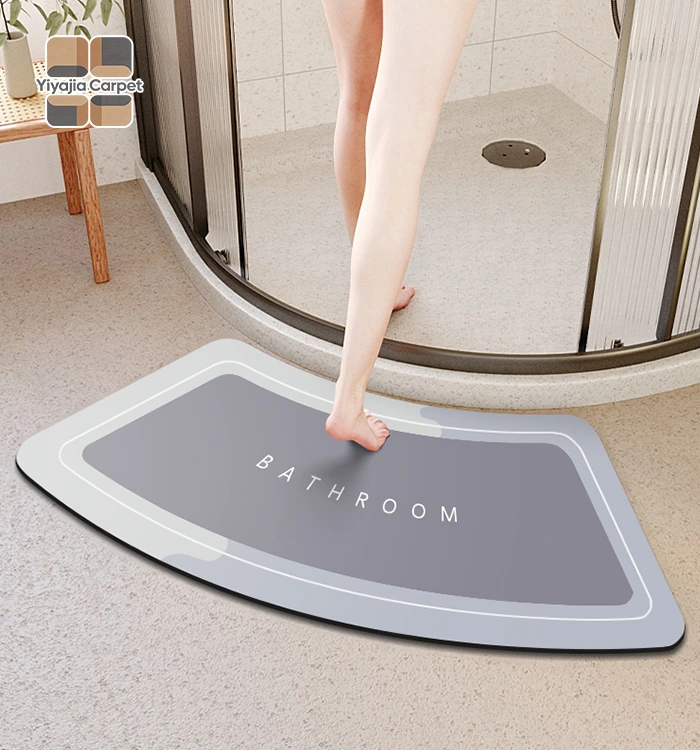
With dimensional tolerances of just ±3%, precision laser cutting technology lets suppliers make custom sizes and shapes, like runner configurations for hallways, circular formats for lobby focal points, or sizes that are just right for each room. Yiyajia Carpet's 2,000 m² production plant can handle both standard and fully custom sizes, and lead times start at seven days. This means that supply times for floor covering can be coordinated with larger FF&E schedules.
Color, Pattern, and Dyeing Integrity
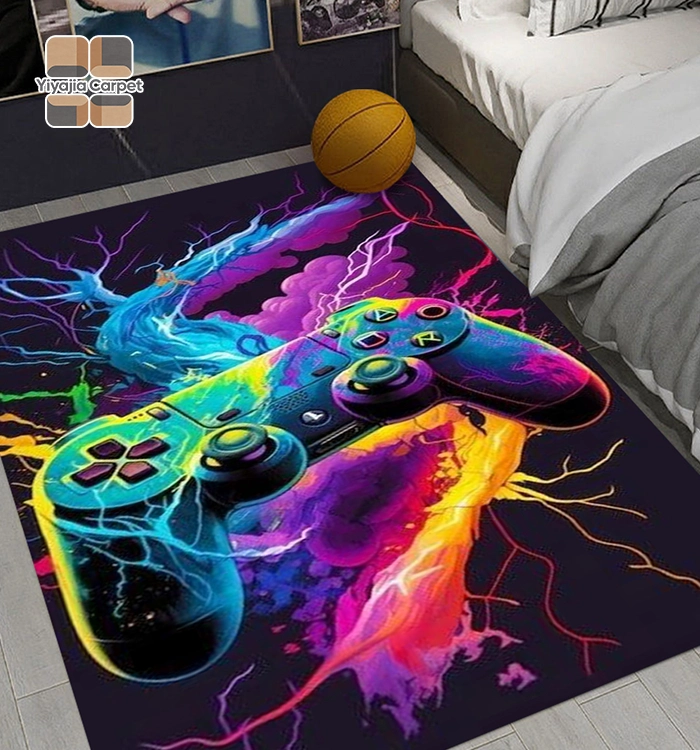
When eco-conscious buying teams look closely at color specifications, they pay extra attention to sustainability. Suppliers who are responsible use colors that are made from water or plants and have been checked to meet ISO 105-B02 standards for how well they resist light and crocking. High-definition heat transfer printing technology makes it possible to print complex patterns and brand-specific motifs correctly on large quantities of items. You can make solid naturals, printed geometrics, and fully unique patterns without adding any chemicals that could be harmful to the fiber.
Here are the core customization parameters available for hospitality specification:
- Size and shape: We offer standard room sizes as well as fully customized sizes and laser-cut profiles that aren't straight lines to fit any building layout.
- Color palette: Natural tones that haven't been colored, water-based solid colors, or brand colors that can be custom-matched and have been tested for color fastness under ISO 105-B02.
- Surface treatment: finishes that are stain- and slip-resistant are put on without using manufactured coatings that would make biodegradability promises false.
- Backing system: The TPR washable backing gives you grip and shape stability on hard floors, and the 9 mm thickness and 5 mm pile height make it good for areas with moderate traffic.
- Packaging: Export-grade roll, carton, or woven bag packaging that is fully recyclable and has the best load-out for each container to lower the carbon impact of logistics per unit.
Comparing Jute Against Other Natural Fiber Options
When looking for eco friendly jute rugs for hotel rooms, procurement managers often compare jute to sisal, wool, and cotton. Before you agree to a bulk buy, you should know the pros and cons of each fiber. Sisal has about the same tensile strength as jute, but it doesn't absorb sound like jute does, and it can be rough on the feet, which is not ideal for places where guests will be walking. In contrast, eco friendly jute rugs offer a softer, more acoustic-friendly surface, making them a preferred option for guest comfort and sustainable hospitality design.
Wool is better at keeping heat in and naturally resisting soil damage, but it has a much bigger carbon footprint because it comes from raising animals, and it's expensive, so buying it in bulk for a hotel is not an option. Cotton is softer and easier to clean, but it's not strong enough to be used for things like hallway runners or lobby installations. Jute is one of the few natural fibers that offers a good mix of natural texture, biodegradability, sound performance, and scalable cost-effectiveness.
This comparison is made stronger by weight density. Yiyajia Carpet's hospitality-grade jute rugs have a high-density tufted structure and weigh up to 1,000 g/m². This gives them the structural strength to last through daily cleaning cycles and light foot traffic without the fibers wearing down quickly.
How to Qualify a Supplier for Hospitality-Scale Orders
Most of the risks in procurement are either taken away or made worse during the supplier qualification stage. Verification of certification is the first thing that must be done. For basic signs of operational discipline, look for active OEKO-TEX Standard 100 certification (which confirms the absence of harmful substances), REACH compliance for orders going to the EU, and ISO 9001 quality management accreditation.
In addition to documents, you should ask for a pre-production sample that was made with the same tools and methods as the big run. A reliable maker can perfectly copy known patterns, sizes, and finishes. Yiyajia Carpet can send you models within 24 to 48 hours using our heat transfer and laser cutting lines.
Check the sample's GSM against the requirements, make sure the edges are properly bound, and do a basic moisture content assessment if the climate where it will be used is more than 65% relative humidity. Lastly, check to see what the supplier's quality control process is. Before export paperwork is sent out, every Yiyajia Carpet unit goes through a 100% pre-shipment check. This gives procurement teams real guarantee instead of just statistical sampling.
Maintaining Customized Jute Rugs in Active Hospitality Use
Natural fiber floor covers need to be maintained in a way that takes into account how they absorb water. When you shampoo or steam clean jute fibers while they are wet, they soak up extra water. This makes the fibers turn brown because lignin is released, shrink, and possibly break down by microbes. For regular cleaning, housekeeping teams should use suction-only sweeping or host powder, which are both dry extraction methods, and for added durability and style, they may also consider eco friendly jute rugs as a preferred alternative that responds well to these same gentle, water-free maintenance practices.
Response to stains must happen right away. Using an absorbent cloth to wipe up a spill within the first few minutes greatly reduces the depth to which it can go. For seaside or tropical homes with a lot of humidity, extra dehumidification keeps the relative humidity below the 65–70% level where mold growth becomes noticeable.
A high-density jute rug in a low-to-moderate traffic area can usually last for two to four years before it needs to be replaced if it is taken care of properly. At the end of its useful life, the fiber breaks down into organic soil nutrients, ending the zero-waste cycle that eco-friendly hospitality brands use to justify their purchases.
Conclusion
Customized natural jute floor coverings are a reliable option that is ready to be specified for environmentally conscious hotel projects. The fiber's ability to break down naturally, block noise, and be used in a variety of ways, along with its provable certifications and responsible production, make it a good choice for purchase.
The investment and the environmental promises made about it are both safe when the source is carefully vetted, the standards for surface treatment and dyeing are made clear, and there is a good upkeep plan in place. This is a category that procurement teams should look into with a qualified manufacturer to find the best balance between guest satisfaction and environmental responsibility, and specifying eco friendly jute rugs within this category further reinforces both durability and sustainable design goals.
FAQ
Can jute rugs handle the cleaning demands of hotel housekeeping routines?
Yes, as long as the cleaning rules don't allow wet methods. Both dry cleaning and powder-based extraction work well and are safe. Surface treatments that are stain-resistant are used during production to stop common spills from getting through. Units with a TPR washable backing can handle light spot cleaning without losing their shape.
What certifications should I require from a jute rug supplier for hospitality procurement?
As a minimum, ask for compliance with OEKO-TEX Standard 100, REACH, and ISO 9001. For projects going to the EU, CE marking is a must. If color specifications are part of the brief, GOTS certification proves the integrity of the organic dye.
How long does customization and production take for a bulk hospitality order?
Advanced heat transfer and laser cutting techniques are used to make samples in 24 to 48 hours. Lead times for bulk production start at about seven days, but depend on the size and complexity of the order.
Are natural jute rugs suitable for coastal or humid hospitality environments?
Because jute absorbs water, it needs to be dried out in places with a lot of humidity. Even in coastal areas, jute rugs can work well in places where the relative humidity stays below 65–70% through dehumidification.
Partner With Yiyajia Carpet for Your Next Hospitality Specification
Every large order from Yiyajia Carpet is made with 20 years of experience. We are a reputable provider of eco-friendly jute rugs, and we have certificates from CE, OEKO-TEX, ISO 9001, REACH, and EN 13501. We also check every shipment thoroughly before it leaves our warehouse. Lead times start at seven days, and you can get custom sizes, colors, patterns, and OEM/ODM services. You can email our team at sale@yyj-carpet.com or go to yyj-carpet.com to get samples and talk about the needs of your project.
References
1. Food and Agriculture Organization of the United Nations. Jute and Allied Fibres: Current Scenario and Future Prospects. FAO, 2020.
2. UN Environment Programme. Tourism's Carbon Footprint and the Path to Net Zero. UNEP, 2022.
3. OEKO-TEX Association. OEKO-TEX Standard 100: Testing for Harmful Substances. OEKO-TEX, 2023.
4. U.S. Green Building Council. LEED v4.1 Reference Guide for Building Design and Construction. USGBC, 2021.
5. Sustainable Furnishings Council. State of Sustainability in the Home Furnishings Industry. SFC, 2022.
6. Blackburn, R. S. (Ed.). Sustainable Textiles: Life Cycle and Environmental Impact. Woodhead Publishing, 2009.