_1774494554973.webp)
What Material Makes the Best Prayer Rugs for Comfort and Durability?
September 21, 2026


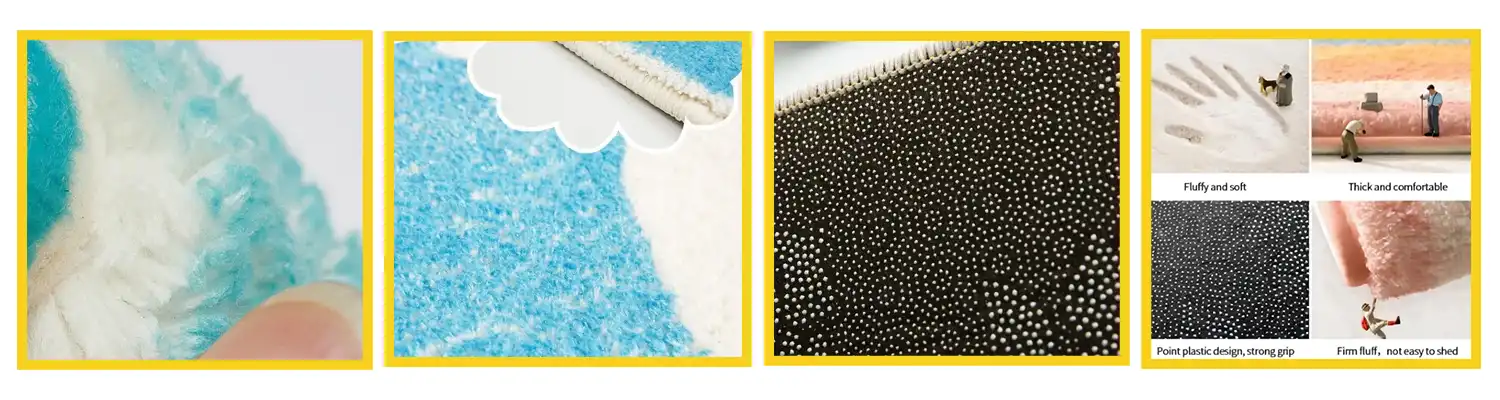
When sourcing the best prayer rugs for bulk distribution, material selection is the single most consequential decision a procurement professional makes. Imitation cashmere has emerged as the leading choice across Middle Eastern, Southeast Asian, and North African markets — delivering silk-like softness that cushions knees and forehead during Sujood, while maintaining structural resilience through thousands of prayer cycles. Paired with a high-density tufted structure, 5mm pile height, 9mm total thickness, and a pointed plastic anti-slip backing, today's premium Sajadah rugs meet both devotional and commercial standards at scale.
Understanding the Core Needs for Prayer Rug Materials
Procurement managers evaluating prayer mats for wholesale distribution face a distinct set of pressures that differ from typical textile sourcing. End-users kneel directly on the surface multiple times daily — often on ceramic tile or marble flooring — which means comfort is not a luxury feature but a functional requirement.
Two performance pillars dominate every B2B evaluation:
- Comfort: Tactile softness, pile resilience, and surface temperature regulation determine whether a worshipper can complete Fajr or Tarawih prayers without knee or wrist discomfort. A pile height of 5mm combined with 9mm total thickness provides meaningful joint cushioning without the rug feeling unstable underfoot.
- Durability: Abrasion resistance, colorfastness, and dimensional stability define a rug's commercial lifespan. Buyers placing orders of 500 to 5,000 units need batch-to-batch consistency — pattern clarity, weight uniformity at 800 g/m², and backing integrity across every carton.
These two pillars must coexist within a cost structure that keeps landed pricing competitive in price-sensitive markets like Saudi Arabia, Indonesia, and Egypt. That alignment between comfort, durability, and cost-efficiency is what separates a strategic supplier from a transactional one.
Common Materials Used in Prayer Rugs and Their Characteristics
Material composition defines how the best prayer rugs perform across their entire service life. Each option presents genuine trade-offs that procurement teams must weigh against their target market's priorities.
Wool: Natural Performance With Trade-Offs
Wool offers exceptional breathability and natural softness, and hand-knotted wool Sajadahs remain culturally prestigious in markets like Turkey and Iran. However, wool carries higher raw material costs, demands careful cleaning protocols, and can retain moisture in humid climates — a legitimate concern for distributors serving Gulf and Southeast Asian markets where storage conditions fluctuate.
Cotton and Synthetic Blends
Cotton prayer mats are lightweight and affordable, making them suitable for Ramadan gift sets or entry-level retail. Their pile density is typically lower, and they flatten with repeated use. Polyester and acrylic synthetics solve the cost problem but often sacrifice the tactile warmth that end-users associate with devotional quality.
Imitation Cashmere: The High-Value Middle Ground
Imitation cashmere microfiber has redefined what a mid-tier prayer rug can deliver. The fiber mimics the loft and hand-feel of genuine cashmere at a fraction of the cost — soft enough for prolonged prostration, resilient enough to retain pile height through extended use cycles. When constructed with a high-density tufted structure and treated with stain-resistant and anti-slip surface finishes, imitation cashmere rugs perform consistently across home devotional use and mosque environments alike.
Evaluating Comfort and Durability — A Comparative Analysis
Research published in the Journal of Textile Science & Engineering confirms that pile density directly correlates with long-term comfort retention — higher-density tufted constructions resist matting significantly better than low-density alternatives under repeated compression loading. An 800 g/m² weight specification reflects genuine material investment, not padding inflated by loose construction. For procurement teams sourcing the best prayer rugs, this 800 g/m² benchmark is a practical filter: it signals real durability and comfort retention rather than superficial thickness.
Here is how the primary materials compare across the metrics that matter most to B2B buyers:
- Imitation cashmere (5mm pile / 9mm thickness / 800 g/m²): Highest softness rating for knee and forehead contact zones; pointed plastic backing delivers reliable grip on marble and tile surfaces; stain-resistant treatment allows dry-spot cleaning without pile damage; colorfastness stable through standard cleaning cycles.
- Wool: Superior breathability and natural resilience; high abrasion resistance; elevated unit cost and dry-clean dependency increase total ownership expense; moisture retention in humid climates raises mold risk during extended warehousing.
- Cotton/polyester blends: Low unit cost and machine-washable convenience; pile height collapses after approximately 6–12 months of daily use; colorfastness varies significantly by dye process quality.
These comparisons illustrate a clear pattern: imitation cashmere occupies the optimal position for bulk procurement — premium user experience, manageable maintenance requirements, and a landed cost that supports competitive retail pricing in high-volume markets.
Maintenance and Care: Prolonging Rug Life and Comfort
Proper care protocols protect your inventory value and reduce post-sale returns. The good news is that imitation cashmere prayer mats with stain-resistant surface treatment are genuinely easy to maintain — a significant selling point when distributors pitch to mosque procurement committees or retail buyers.
Routine care guidelines worth communicating to downstream buyers include:
- Spot-clean surface stains promptly using a damp cloth; the stain-resistant treatment prevents most liquids from penetrating the pile fiber.
- Avoid prolonged immersion or machine washing with high agitation settings, which can distort the high-density tufted structure.
- Store rolled, not folded, using export-standard roll packaging — this preserves pile orientation and prevents permanent crease lines during transit and warehouse storage.
- In high-humidity environments (common across Gulf and Southeast Asian distribution chains), ensure storage areas maintain adequate ventilation. Imitation cashmere's synthetic fiber composition resists mold and mildew formation more reliably than natural wool under equivalent conditions.
One persistent myth worth addressing: many buyers assume that thicker rugs require more aggressive cleaning. In practice, the pointed plastic backing on these best prayer rugs keeps the underside dimensionally stable, and the stain-resistant pile surface means light maintenance is sufficient for regular devotional use.
Procurement and Supplier Recommendations for B2B Clients
Selecting a prayer rug supplier for seasonal bulk orders — particularly ahead of Ramadan or Hajj — requires scrutiny beyond the sample stage. Here are the criteria that distinguish a reliable manufacturing partner:
- Customization depth: Heat transfer printing technology enables precise reproduction of Islamic geometric patterns, mirroring mihrab motifs and arabesque borders with commercial accuracy. Verify that the supplier supports OEM/ODM services including custom logo, color palette, and size specifications.
- Quality certification: OEKO-TEX Standard 100 certification confirms freedom from harmful dyes — a requirement for mosque procurement committees and increasingly relevant to retail compliance in Europe and North America. ISO 9001 certification reflects a documented quality management system, not just a verbal commitment.
- Production consistency: Request batch color cards and pre-shipment inspection reports. A 100% pre-shipment inspection protocol eliminates the color variance and pile irregularities that generate buyer complaints at the point of sale.
- Packaging and logistics: Export-standard roll packaging, woven bag packaging, and carton options should align with your container loading strategy. Confirm the supplier's freight forwarder relationships and documented lead times — critical when Ramadan inventory must arrive no later than 60 days before the season opens.
Conclusion
Material selection for devotional textiles carries weight beyond commercial metrics. Imitation cashmere, engineered to a 5mm pile height, 9mm total thickness, and 800 g/m² weight standard, currently represents the most defensible choice for procurement professionals sourcing the best prayer rugs — balancing end-user comfort, supply chain predictability, and landed cost management. When supported by pointed plastic anti-slip backing, stain-resistant treatment, OEKO-TEX compliance, and verified heat transfer pattern accuracy, these rugs meet the expectations of both mosque procurement committees and individual consumers across demanding global markets.
FAQ
What material is most comfortable for daily prayer use?
Imitation cashmere microfiber delivers the highest comfort-to-cost ratio for daily Salah. Its soft pile cushions knee and forehead contact points effectively, and at 5mm pile height with 9mm total thickness, it provides meaningful joint support without compromising stability during prostration.
How does imitation cashmere hold up compared to wool in humid climates?
Imitation cashmere's synthetic composition resists moisture absorption and mold formation more reliably than natural wool in humid storage environments. This makes it a pragmatic choice for distributors operating across Gulf and Southeast Asian supply chains where warehouse conditions vary seasonally.
What should I verify before placing a bulk order with a new supplier?
Request pre-shipment inspection reports, batch color consistency samples, and copies of relevant certifications (OEKO-TEX, ISO 9001). Confirm the supplier's heat transfer pattern accuracy by reviewing printed samples against your approved artwork before committing to full production volume.
Can prayer rugs be customized with mosque-specific designs?
Yes. Suppliers with advanced heat transfer printing capability can reproduce intricate Islamic geometric patterns, mosque silhouettes, and directional mihrab elements with commercial precision. OEM and ODM services covering logo, color, size, and pattern are available for standard and non-standard dimensions.
Partner With Yiyajia Carpet for Reliable Bulk Prayer Rug Supply
Yiyajia Carpet is a trusted best prayer rugs manufacturer with verified OEKO-TEX, ISO 9001, and CE certifications, offering full OEM/ODM customization — from Islamic geometric patterns to mosque-specific sizing. Every order undergoes 100% pre-shipment inspection, with export-standard packaging and managed logistics to keep your Ramadan and Hajj inventory on schedule. Contact our team at sale@yyj-carpet.com to request samples or a bulk quotation.
References
1. Journal of Textile Science & Engineering — "Pile Density and Compression Recovery in Tufted Floor Coverings," 2021.
2. OEKO-TEX Association — OEKO-TEX Standard 100 Certification Guidelines, 2023.
3. Textile Research Journal — "Performance Evaluation of Synthetic Microfiber Pile Fabrics Under Cyclic Loading," 2020.
4. ISO — ISO 9001:2015 Quality Management Systems — Requirements, International Organization for Standardization, 2015.
5. International Journal of Fashion Design, Technology and Education — "Consumer Perceptions of Prayer Mat Comfort and Material Quality in Muslim-Majority Markets," 2022.
6. ASTM International — ASTM D2859: Standard Test Method for Ignition Characteristics of Finished Textile Floor Covering Materials, 2016.