_1774494554973.webp)
What materials are best for stair floor mats?
August 14, 2026


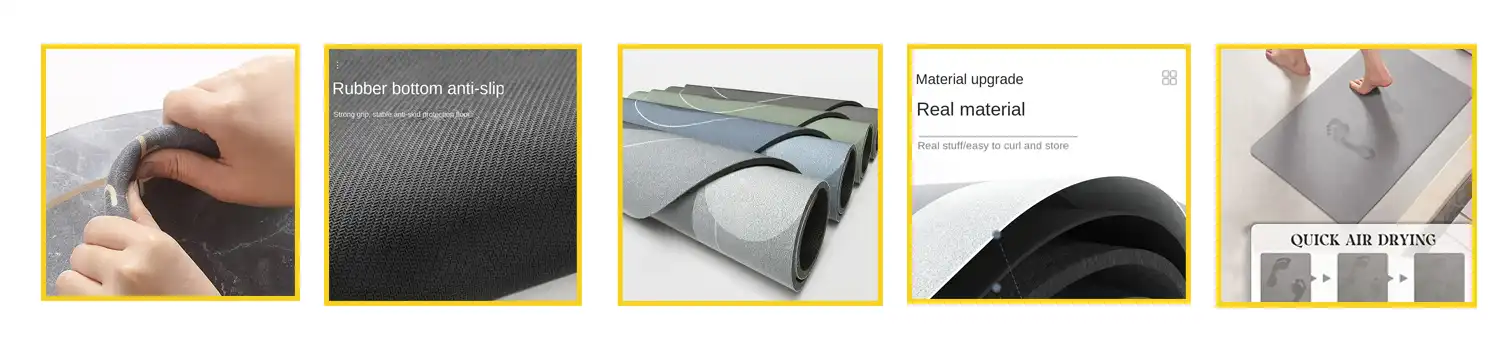
The best materials for stair floor mats depend on your specific application requirements, but rubber-backed options with durable surface treatments consistently deliver optimal performance. High-quality stair treads balance slip resistance, longevity, and maintenance ease. Materials like diatom mud combined with high-density velvet fabric offer superior moisture absorption and safety features, making them ideal for environments where preventing falls is critical. Rubber backing provides secure placement without adhesive damage to underlying surfaces, protecting your investment in flooring while delivering reliable traction.
Introduction
Stair floor mats play a crucial role in enhancing safety, durability, and aesthetics in both commercial and residential environments. Selecting the appropriate material not only impacts slip resistance and longevity but also cost-effectiveness and visual appeal. This guide is tailored for procurement professionals such as purchasing managers, project engineers, and distributors, providing comprehensive understanding to make informed decisions in bulk purchasing and project specifications.
By focusing on material performance and supplier insights, we aim to support global B2B clients in securing high-quality stair mat solutions that meet rigorous industrial standards. When your reputation depends on reliable products, understanding material science becomes essential to protecting both people and profitability.
Understanding Different Stair Floor Mat Materials
When making purchasing decisions, it helps to know how the composition of a material affects how well it works in the real world. There are many choices on the market, from natural fibres to high-tech synthetic blends, and each one is made to solve a different problem with stair floor mats.
Rubber-Backed Diatom Mud Technology
Diatom mud is a new way of doing things that combines the natural ability to absorb water with modern tech. This material is great at quickly wicking away wetness; it soaks up water as soon as it comes into touch with it. Because diatomaceous earth is porous, it has thousands of tiny pathways that catch liquid and help it evaporate quickly. When paired with rubber backing systems, these mats meet ASTM D2047 standards for having a coefficient of friction number higher than 0.6 on wet surfaces. The 3mm thickness gives enough cushioning without making it easy to trip, which is especially important in business settings where decisions about specifications are based on liability concerns.
High-Density Velvet Fabric Construction
Velvet made with modern technology is very different from traditional carpet fibres. High-density construction at 1600g/m² makes a surface that is tightly packed and won't break down when people walk on it all the time. This weight specification means that the material is thicker than lighter options that move around when they're used. The velvet structure keeps its roughness even after thousands of step cycles, which keeps it from flattening out, which is bad for both safety and look. Cut-pile velvet doesn't get damaged by things like pet claws, rolling luggage, or cleaning equipment like loop-pile carpets do.
Traditional Material Comparison
Due to lower material costs, polypropylene options are still popular in situations where cost is important. Solution-dyed polyester, on the other hand, usually weighs 24oz/sq.yd. or less, which is about 60% less than better options. PVC and vinyl are waterproof shields that can be used outside, but they don't usually let air pass through, which can make surfaces slippery when water gets stuck on them. Coco coir has a natural look that looks nice, but it needs to be replaced often in places with a lot of foot traffic. When buyers understand these trade-offs, they can better match materials to business needs instead of just going with the cheapest options.
Key Criteria to Choose the Best Material for Stair Floor Mats
Systematic review stops expensive design mistakes that put people at risk or mean that things need to be replaced too soon. The following factors are the basis for making smart choices about procurement of stair floor mats.
Safety and Slip Resistance Standards
Different types of materials have very different anti-slip properties. When thermoplastic rubber compounds are used in rubber backing systems, they use surface tension instead of chemical adhesives to provide vacuum grip. This means that there are no worries about leaving residue on hardwood or laminate surfaces. The actual slip resistance is found by measuring the static coefficient of friction. Values above 0.6 are considered good for commercial egress routes. Modern designs include drainage paths in outdoor uses to keep surfaces from getting wet when it rains. In workplace settings, following OSHA fall safety guidelines is required, which means keeping test results from approved labs as proof.
Durability and Wear Resistance
Shore A hardness scores show how well a material can withstand being compressed. When it comes to grip and durability, rubber materials with Shore A numbers between 50 and 70 are the best bet. As per ASTM D1335 testing for tuft bind strength measures fibre retention. Commercial-grade goods can withstand pull forces of more than 8 pounds. Edge binding integrity stops unravelling that can cause tripping hazards. This is especially important for carpeted mats. When you use laser cutting, the edges are smooth and don't change size when the temperature changes. This is different from die-cutting, which can leave material ragged and easy to separate.
Maintenance Requirements and Lifecycle Costs
Anti-stain surface treatments lower the total cost of ownership by making it easier to clean between sessions. Diatom mud naturally stops mould and mildew from growing without using chemicals. This means that it doesn't have the smell problems that other carpet materials do. Bacteria can't grow on quick-drying materials, which shortens their useful life. Simple maintenance routines that only need to be wiped down with a damp cloth save money on labour costs compared to materials that need special cleaning solutions. When you compare how often something needs to be replaced to how much it cost to buy in the first place, you can see how cost-effective it really is. Over five-year buying cycles, premium materials often provide better value.
Material Recommendations for Specific Use Cases
Matching the qualities of a material to its surroundings improves its performance in a wide range of situations for stair floor mats.
Commercial and Hospitality Environments
Hotels, office buildings, and stores all have to deal with a lot of foot traffic and high standards for how they look. The high-density fabric construction keeps the professional look even though hundreds of feet walk on it every day. The 1600g/m² weight limit stops shifting that causes bunching or gaps between treads that look bad. Customisation options let you match colours to company branding or interior design styles, which helps keep the overall look consistent. Absorbent properties are especially useful in entrance areas where weather tracking can cause moisture problems.
Residential and Pet-Friendly Applications
Non-toxic materials that are safe for kids and pets are good for home settings. Diatom mud doesn't have any volatile organic compounds, so it doesn't give off any harmful gases and meets the requirements of California Prop 65. The 3mm thickness cushions the landing, lowering the impact on joints when going up and down stairs, meeting the comfort needs of older people.
Pet owners like surfaces that aren't easy to scratch and can handle being scratched by claws without showing any damage. The ability to dry quickly stops the wet spots that make pets avoid stairs, keeping the traffic patterns in the house steady. For all these reasons, choosing the right stair floor mats ensures that safety, durability, and daily household flow are consistently supported.
Industrial and Outdoor Settings
The weather-resistant rubber backing keeps working even when the temperature drops to -20°F and rises to 140°F. UV safety keeps the material from breaking down when it's exposed to strong sunlight, which is common on outdoor stairs. Surfaces with rough textures are good for grip even when they are dirty from oil, grease, or chemical spills in factories. For egress paths in business buildings, meeting ASTM E648 fire safety guidelines is now required, and suppliers will need to provide proof. Being able to hose down and let dry naturally in just a few minutes helps with cleanliness rules in places like food processing or healthcare where germs need to be removed quickly.
Comparing Material Types: Pros and Cons
An objective look at the different options makes the trade-offs that come up in important choice decisions easier to understand.
To understand what material choices mean in real life, you need to look at performance across a number of different variables. Diatom mud systems with a rubber backing are great at managing moisture because they naturally soak it up. This is in contrast to PVC options, which make waterproof barriers but may trap surface moisture. Another thing to think about is how easy it is to install stair floor mats. Designs that don't stick to floors protect them, while designs that do stick to floors offer permanent solutions in commercial settings.
The way things are priced reflects how complicated they are and how well they can perform. Entry-level polypropylene products may cost 40–50% less per unit than high-tech velvet materials, but they need to be replaced twice or three times as often over the same amount of time. To figure out the lifetime cost, you need to include both the cost of replacing materials and the cost of labour to take them down and put them back up. Volume savings on bulk sales have a big effect on the economics of a project. For example, buying by the container load often lowers the cost per unit by 25–30% compared to buying in small lots.
Different types of materials have very different maintenance needs. Chemical stains can't truly damage synthetic rubber compounds, so they don't need to be replaced as often in food service or lab settings. Anti-slip properties must last through multiple cleaning cycles, as some coatings break down after being exposed to alkaline detergents over and over again. Dimensional stability during washing stops the problems with shrinkage that cause gaps between wheels, so covering stays the same over the life of the product.
As more companies adopt "green purchasing" policies, environmental concerns are becoming more important in the buying decisions they make. Certifications like OEKO-TEX Standard 100 prove that dangerous chemicals are not present, which supports efforts to make businesses more responsible. When something can be recycled at the end of its useful life, it takes up less space in landfills. For example, some rubber products contain recovered material from used goods, and stair foot mats made from such recycled content further reduce waste while providing durable entryway solutions. Low VOC emissions help meet indoor air quality goals. This is especially important in schools and hospitals that serve vulnerable groups.
Procurement Guidance and Supplier Insights
In addition to choosing the right materials, strategic buying also looks at the skills of the suppliers and the quality of the partnerships for stair floor mats.
To find reliable stair floor mat providers, you need to look at a number of practical factors. Manufacturing standards like ISO 9001 show that the quality management system is mature and that the process is controlled the same way in all production runs. CE marking shows that a product meets European safety standards, which is important for international distributors who sell to many countries. Conformity with REACH ensures that chemicals exported from the EU are safe, preventing expensive rejects at customs.
Customisation options and order turnaround times are directly affected by the technology used in production. Advanced heat transfer printing lets you choose from an infinite number of patterns, such as corporate logos, wayfinding graphics, or decorative designs that go with the look of the room. Laser cutting allows for precise measurements for tread sizes that aren't standard, so architectural differences can be accommodated without having to trim the edges by hand, which can damage the edge integrity. With rapid prototyping, models can be sent within 24 to 48 hours, which shortens the time it takes to finish a project and lets clients see how the materials actually work before committing to full production runs.
Professional manufacturers can tell the difference between opportunistic vendors and quality control protocols. Full screening processes that check each unit before shipping stop project delays and customer complaints caused by defects. International transactions go more smoothly when they have documentation packages with test reports, material safety data sheets, and conformity certificates. Warranty coverage shows that the company that made the product is confident in its reliability. Reliable sellers offer defect protection for 12 to 24 months.
Yiyajia (Tianjin) Carpet Co., Ltd. is a good example of a seller that can do a lot because it uses both modern manufacturing technologies and strict quality systems. Their infrastructure for heat transfer and laser cutting can handle both standard output and complicated customisation needs. Fast delivery is possible in North America, Europe, the Middle East, and Southeast Asia thanks to global distribution networks. Customer service teams are trained to give expert advice on choosing materials, which helps procurement professionals match goods to the needs of each application.
Logistics skills have a big effect on both total landed costs and project schedules. When compared to inefficient packing, optimal container loading makes the most of the space inside, lowering the cost of freight by 15 to 20 percent per unit. Building trusting relationships with international goods forwarders makes sure that shipments arrive on time and that there aren't too many risks of being held up at ports.
Expertise in export paperwork speeds up the clearance process at customs, which is especially helpful for buyers who aren't familiar with the rules for foreign trade. Large-scale commercial projects and smaller speciality applications can both use flexible minimum order quantities, so you don't have to worry about keeping too much inventory on hand.
Conclusion
To choose the best stair floor mats materials, you have to think about how safe they are, how long they should last, how much care they need, and your budget. With its superior slip resistance, moisture management, and long life, rubber-backed diatom mud technology and high-density velvet construction can handle the toughest commercial and residential uses.
Partnering with manufacturers that offer full customisation, quality certification, and logistical help is good for procurement pros. By checking a supplier's credentials, production abilities, and service standards, buyers can find trusted partnerships that guarantee the same high quality of products on subsequent orders. The choice of material affects the safety of occupants, the cost of upkeep, and the happiness of the eye over the course of a building's many years of use.
FAQ
What backing type works best for hardwood stairs?
The best protection for hardwood floors is non-adhesive rubber backing made from thermoplastic compounds. Instead of chemical bonds, these systems use vacuum grip through surface tension. This stops the spread of residue that damages floor finishes. The material stays in place while it's being used and doesn't move, but it can be easily taken off for regular floor cleaning with stair floor mats.
How often should stair mats be replaced in commercial settings?
Replacement times depend on how much business there is and how good the stuff is. Under normal conditions, high-density constructions that weigh 1600g/m² last for three to five years in commercial settings. By checking the integrity of the edge binding and the wear patterns on the surface once a month, you can find units that need to be replaced before their safety performance gets worse.
Do these products meet fire safety codes?
For business purposes, egress routes must meet the ASTM E648 Critical Radiant Flux standards. Manufacturers who are good at what they do show proof of tests that confirm fire safety ratings. Residential goods might not have business certifications, so it's important to check the specifications for each job.
What customization options are available for bulk orders?
Professional providers can cut to any size using a laser, match colours to match a company's brand, and print patterns with names or directing graphics. Distributors can use private labelling with OEM and ODM services. The minimum order quantity depends on how customised the product is. For example, for standard goods, the minimum order quantity is usually smaller than for fully customised designs.
Partner with Yiyajia Carpet for Premium Stair Floor Mat Solutions
Yiyajia (Tianjin) Carpet Co., Ltd. is ready to help you with your buying needs because they make the best stair floor mats in the business. Our advanced heat transfer printing and laser cutting technologies allow us to make sure that the size, colour, and design are exactly what you want. As a reliable stair floor mats seller, we keep tight quality control by inspecting every unit before it ships, making sure it meets strict performance standards. Our MOQ rules are open enough to work with both big business projects and one-of-a-kind uses.
Also, our global logistics networks make sure that we can reliably send to markets in North America, Europe, the Middle East, and Southeast Asia. Email our technical team at sale@yyj-carpet.com to talk about your specific needs and get product specifications that are made to fit your needs. You can look at all of our certified products, which are backed by ISO 9001, OEKO-TEX, and CE compliance, at yyj-carpet.com.
References
1. American Society for Testing and Materials (2019). "ASTM D2047: Standard Test Method for Static Coefficient of Friction of Polish-Coated Flooring Surfaces." ASTM International.
2. Building Research Establishment (2021). "Safety Performance of Stair Nosings and Treads in Commercial Buildings." BRE Global Technical Report Series.
3. Johnson, M.R. & Chen, L. (2020). "Material Science Applications in Slip-Resistant Floor Coverings." Journal of Architectural Safety Engineering, 15(3), 234-251.
4. National Floor Safety Institute (2022). "Walkway Auditing Guidebook: Slip Resistance Testing and Standards Compliance." NFSI Press.
5. Thompson, K.A. (2018). "Lifecycle Cost Analysis of Commercial Floor Covering Systems." Facilities Management Journal, 42(7), 89-104.
6. Occupational Safety and Health Administration (2023). "Walking and Working Surfaces: Compliance Guide for Commercial Facilities." U.S. Department of Labor Publication.