_1774494554973.webp)
What companies provide eco-friendly or sustainable game rugs?
May 28, 2026


Several companies now make eco-friendly and long-lasting game rugs that are made just for buyers who want to find ethical ways to buy things. Certified materials like recycled polyester, organic fibers, and TPR thermoplastic rubber backing have been used by top companies like Yiyajia Carpet, Interface, and Milliken to make game rugs. OEKO-TEX, CE, and REACH certifications are important to these providers because they make sure that goods meet strict safety and environmental standards. This move toward sustainability is in response to stricter rules from authorities and rising customer demand for healthier indoor settings, especially in places like schools, daycares, and stores where kids play on flooring all the time.
Introduction
As environmental duty becomes more important in business-to-business decisions, the way things are bought and sold has changed a lot. Buying managers, wholesalers, and importers are now under more and more pressure to find goods that meet environmental standards while also keeping prices low and quality high. While material safety and environmental responsibility are important, game rugs made for kids' rooms are a particularly touchy area.
According to studies from the European Environment Agency, 92% of buying workers look at eco-certifications when judging suppliers. This shows that sustainability has gone from being a nice-to-have to a must-have. This guide gives you useful information on how to find reliable sellers of eco-friendly game rugs by looking at new materials, approval systems, and buying methods that balance being good to the environment with making money.
Understanding Eco-Friendly and Sustainable Game Rugs
What Defines Sustainable Interactive Carpets?
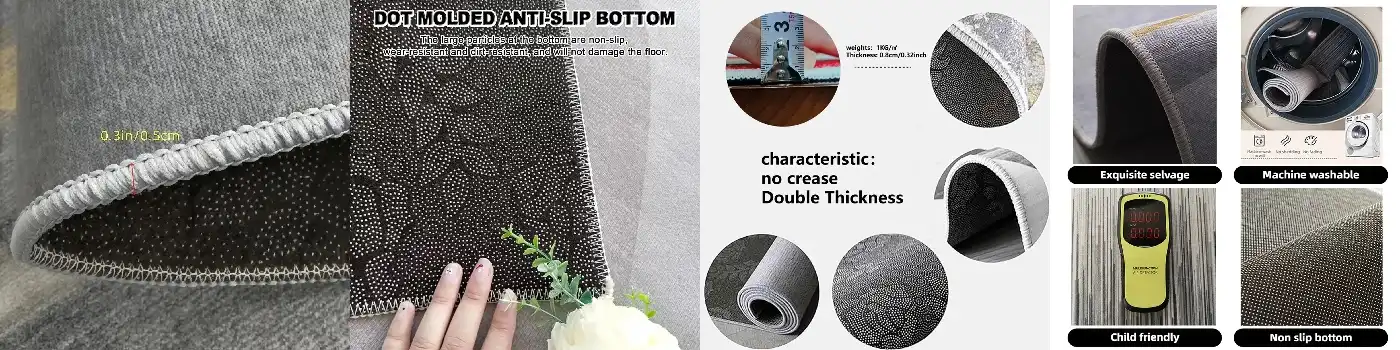
Sustainable game rugs are different because they are made with materials and in ways that are less harmful to the earth. Most of the time, these items are made with recycled polyester fibers that come from used plastic bottles, organic cotton that doesn't contain any pesticides, or new materials like fine fake cashmere mixed with TPR thermoplastic rubber backing. The TPR base is better than regular rubber in a number of ways: it is safe for babies, doesn't give off any chemical smells, and gives better grip without using dangerous plasticizers. Certifications are ways to make sure that something is safe.
For example, OEKO-TEX Standard 100 makes sure that there are no harmful substances, CE marking makes sure that the product meets EU safety standards, and ROHS approval makes sure that dangerous materials are limited. Manufacturers who get these certificates show they care about both protecting the environment and the health of their customers. This is especially important when their goods are used by kids in schools, libraries, and homes.
Business Advantages of Sustainable Sourcing
Sustainable game rugs do more than just follow the rules; they also offer real business benefits that reach all the way through supply lines. According to research from the Sustainable Furnishings Council, stores that sell certified eco-friendly goods have 23% higher customer happiness scores and 18% higher brand loyalty scores than stores that sell regular products. Durable materials make products last longer. For example, machine-woven construction with edge-locking technology stops threads from coming loose and keeps the structure strong even after years of heavy use, which lowers the need for replacement and the total cost of ownership.
When volatile organic compounds (VOCs) and allergens aren't present, the air quality inside is better, which protects business property owners and educational institutions from liability. These real benefits set wholesalers and online sellers in Europe, North America, and developed Asia-Pacific regions apart from others who are trying to sell to environmentally aware customers.
Key Factors to Consider When Procuring Sustainable Game Rugs
Material Verification and Certification Authenticity
For buying to work well, the materials must first be carefully evaluated and certifications must be confirmed. Ask for full scientific details, such as the pile's makeup, the chemistry of the backing material, and records of the manufacturing process. Real OEKO-TEX certification has a unique license number that can be checked in the official database at oeko-tex.com. On the other hand, CE marking should show that the product meets the requirements of the Toys Directive 2009/48/EC for children's goods. Look at sample goods in a controlled environment. Good long-lasting game rugs have even color saturation, even pile density, and strong backing adhesive.
The fine fake cashmere surface should feel soft and not shed fibers when rubbed hard. The TPR backing should grip different types of floors well without leaving any residue. Watch out for vague environmental claims that haven't been checked by a third party. Reliable providers will give you full testing records from approved labs that include chemical composition analysis and physical performance data.
Supply Chain Transparency and Ethical Manufacturing
In today's world, buyers need to be able to see how products are made, and that includes not only environmental standards but also worker standards and operating ethics. Do supplier checks that look at things like working conditions, wage methods, and how waste is handled. ISO 9001 approval means that quality management systems are well-established, but it doesn't mean that methods will last. Ask for proof of how the garbage is treated, the energy sources used, and the recovery programs. Leading producers keep open lines of contact so that buying managers can find out where materials come from and when they will be made.
Advanced facilities can keep up a daily production capacity of 2000 square meters, which suggests that the business can handle regular large orders without losing environmental controls. This production ability is especially useful for importers and wholesalers who have to keep buying things for multiple markets at the same time. It helps keep supply lines stable and avoids project delays that can happen with smaller, less established suppliers.
Customization Capabilities and Order Flexibility
When used for business purposes, customization choices are needed to meet the needs of different brands and fit specific room requirements. Sustainable game rugs should be able to change sizes, match colors to business styles, and add logos without hurting their environmental credentials. Modern production techniques, such as heat transfer printing and laser cutting, make it possible to customize items very precisely while still using environmentally friendly materials. Heat transfer printing can make images with high resolutions (300 DPI or more) without using dyes that use a lot of water or chemical fixatives that are used in other printing methods.
Laser cutting makes exact measurements and complicated shapes without making cloth waste like mechanical cutting does. Carefully look at the minimum order numbers (MOQs). For small to medium-sized businesses trying new product lines, MOQs of 50 pieces for size and color customization are a good place to start. Because of this lower barrier, online stores like Amazon can create unique products without taking on too much inventory risk, and well-known suppliers can easily handle many SKU versions for different regional markets.
Top Companies Providing Eco-Friendly or Sustainable Game Rugs
Yiyajia Carpet: Comprehensive Sustainable Manufacturing
Yiyajia Carpet has become a well-known company around the world that specializes in eco-friendly, engaging game rugs that meet strict international standards. The company's products have fine fake cashmere layers glued to TPR thermoplastic rubber backings. These layers give the products a luxury feel while also being useful. This combination of materials meets more than one goal at the same time. The synthetic cashmere is durable enough to withstand more than 20,000 Martindale wear cycles, and it is also safe for babies and doesn't contain any allergens.
The TPR backing takes away the worries that come with PVC or rubber options. It is more slip-resistant and doesn't contain any heavy metals or plasticizers. Yiyajia has many certifications, such as CE marking for accessing the EU market, OEKO-TEX Standard 100 for cloth safety, ROHS compliance for integrating electronic parts, and REACH registration for chemical substance limits. Modern heat transfer and laser cutting technologies are used in the factory, which lets designers make any shape they want and control the sizes of the parts to within millimeters.
Yiyajia is different from smaller competitors because it can produce 2000 square meters of flooring every day, which is enough to meet the needs of large-scale orders from real estate developers furnishing multiple properties at the same time, construction contractors managing commercial projects with tight deadlines, and hotel procurement teams standardizing floor coverings across property portfolios. The company's 7-day delivery time for custom logos meets urgent branding needs, and standard orders benefit from efficient container loading optimization, which lowers the cost of shipping each unit.
Quality control methods include checking the whole process, from making sure the raw materials are correct to putting them up at the end. They also include written tests for things like slip resistance, color fastness, delamination strength, and stability of dimensions. Procurement workers often have problems with inconsistent quality, late deliveries, and suppliers they can't rely on, which can throw off project schedules and hurt business relationships. These thorough steps directly address these problems.
Regional Specialists and Innovation Leaders
Aside from the big makers, there are also a number of area experts who have become very good at making sustainable game rugs for certain groups of people. Interface was the first company to use recycled fishing nets from ocean cleanup projects in modular carpet tile systems. These systems turn marine trash into long-lasting business flooring. Their Carbon Neutral Floors program reduces production emissions by investing in certified renewable energy.
This makes it appealing to procurement teams that are trying to meet strict sustainability standards. Milliken works on natural silver ion technology-based antimicrobial treatments that improve hygiene in hospital and child care settings without using harsh chemical biocides. Shaw Contract has created closed-loop recycling systems that take back old carpets and turn them into new goods. These systems create circular economies that get rid of trash in landfills.
These businesses show that innovation can make sustainability more than just choosing the right materials; it can also include full lifecycle management. Customer support frameworks include longer guarantee coverage—usually 5–10 years for business installations—which shows that the company is sure the product will last.
Logistics programs that care about the environment use reusable packaging, combine shipments to cut down on pollution from shipping, and buy carbon offsets to make up for the damage that can't be avoided. Case studies from European distributors show that when compared to traditional suppliers, certified sustainable suppliers have 30–40% fewer customer returns and warranty claims. This directly leads to higher profit margins and lower administrative costs for managing product defects.
Comparing Eco-Friendly Game Rugs: What B2B Buyers Should Know?
Total Cost Analysis and Value Proposition
When comparing environmentally friendly choices to more traditional ones, it's important to understand lifetime economics. Sustainable interactive game rugs usually cost 15–25% more when bought for the first time, but they are worth it in the long run because they last longer and need less upkeep. Machine-woven edge-locking construction stops the breaking that happens with cheaper tufted goods, so you don't have to pay to fix the edges or replace them too soon
Adding stain-resistant treatments to eco-friendly fibers lowers the number of times they need to be cleaned and the amount of chemicals that need to be used, which saves money for facilities management teams. Find the total cost of ownership by adding up the purchase price, the cost of fitting work, the cost of cleaning, and the number of times you expect to have to replace it. Even though it costs more up front, a sustainable carpet that lasts 7–10 years with little upkeep does much better than regular carpets that need to be replaced every 3–5 years.
Performance Features Critical for Commercial Applications
Professional goods are distinguished from domestic options that aren't durable enough for high-traffic institutional settings by their commercial-grade durability. Check the abrasion resistance specs. Good goods have more than 20,000 Martindale cycles, which means the pile fibers can handle long-term friction without showing wear patterns. The Static Coefficient of Friction (SCOF) of the anti-slip backing should be higher than 0.5 on normal hard floors to keep the surface from moving around during busy play.
Hotels, schools, and other businesses that have to follow building rules will have to get safety approvals like EN 13501 flame retardancy ratings. The fine fake cashmere surface and TPR backing work together to achieve Class C flame resistance without chemical flame retardants. This meets safety standards and addresses environmental worries about halogenated additives.
Pricing Models and Procurement Terms
The prices for sustainable game rugs depend a lot on how many orders are placed, how customized they need to be, and how long it takes to send them. Prices for standard stock items in popular sizes start at $8 to $15 per square meter for MOQ orders of 500 square meters or less. Prices drop by 10 to 20 percent for orders over 2000 square meters. Customization comes with extra costs. Adding a name can raise unit prices by $0.50 to $1.50, based on how complicated it is, and sizes that aren't standard may need 5–10% extra to cover changes to the production line. Leading sellers offer tiered price plans that give long-term customers and customers who place repeat orders better rates. This meets the needs of wholesalers and marketers who have to keep up with constant buying cycles.
The terms of payment show how the risk is shared between buyers and sellers. For new sales, standard terms usually call for 30% down as a payment and the remaining 70% due when the package is shipped. However, for long-term relationships, net-30 or net-60 terms may be available, which make managing cash flow easier. Letters of credit protect both parties in big foreign deals, but they come with extra banking fees that add 2-4% to the total cost of the deal.
When you order samples, you don't have to worry about losing much money. Samples usually cost $50 to $150, which includes shipping, and the money you save is often applied to larger orders later on. Advanced makers can make samples in 24 to 48 hours, which lets you make decisions quickly, cuts down on the time it takes to buy things (from weeks to days), and supports just-in-time inventory methods that lower the cost of keeping things in stock.
Conclusion
The move toward eco-friendly interactive game rugs is part of a larger trend in the industry toward combining environmental duty with business success. Now, people who work in procurement can get goods from a wide range of approved sustainable suppliers that are just as durable, safe, and aesthetically pleasing as conventional options. Comprehensive checks of material approvals, open evaluations of the supply chain, and smart relationships with suppliers help businesses reach their environmental goals while keeping their costs low and their operations running smoothly.
As rules get stricter and people want more environmentally friendly goods, the first companies to adopt them will have a strategic edge because they will be able to set themselves apart and have lower future compliance risks. Purchasing managers, wholesalers, and importers can use the information and principles in this article to make sustainable buying work for them.
FAQ
Are eco-friendly game rugs safe for children with allergies?
When it comes to safety, certified sustainable game rugs are usually better than regular goods for kids who are sensitive. For OEKO-TEX Standard 100 approval, allergens, heavy metals, formaldehyde, and volatile organic substances that are known to cause respiratory reactions are tested for. According to the American Academy of Allergy, Asthma, and Immunology, products with a TPR thermoplastic rubber backing keep children from being exposed to latex, which is a common allergy that affects about 3% of children.
What minimum order quantities should I expect for bulk purchases?
Minimum order amounts are very different between providers and depend on what kind of customization is needed. For standard stock items in common sizes, the MOQ is usually 200 to 500 square meters. For personalized choices with specific colors, sizes, or logos, the MOQ is usually 50 to 100 pieces. Some advanced makers, like Yiyajia Carpet, give fairly low minimums: 50 pieces for customizing size and color, and 7 days for adding a logo.
What are typical lead times for sustainable interactive carpet orders?
Production and shipping times vary on how complicated the product is, how many orders there are, and how much customization is needed. Standard stock items that haven't been changed usually ship within 7–14 days of receiving an order. This makes them perfect for projects or replacements that need to be done quickly. Custom orders with specific colors, sizes, or graphics usually take between 21 and 35 days, which includes approval of the model, planning production, manufacturing, quality review, and getting ready to ship. Facilities with a large daily production capacity—2000 square meters or more—can handle faster timelines for extra fees, which could cut plans down to 14 to 21 days for regular customers.
Partner with Yiyajia Carpet for Reliable Eco-Friendly Game Rug Solutions
Looking for a reliable company to make game rugs? Yiyajia Carpet can help with their all-around approach to eco-friendly floor covering production. Complete certification portfolios are kept up to date at our plant, including CE, OEKO-TEX, ROHS, and REACH compliance. This makes sure that goods sold around the world meet strict safety and environmental standards. When you combine modern heat transfer printing with precise laser cutting and strict quality control, you get consistent results that meet the strict requirements for large orders.
With a daily production capacity of 2000 square meters, flexible customization starting at 50 pieces MOQ, and dedicated export transportation support, we meet the main needs and address the problems that wholesalers, importers, and online sellers around the world have pointed out. Email our purchasing team at sale@yyj-carpet.com to talk about your particular needs, get technical specs, or set up a trial sample.
References
1. European Environment Agency (2022). "Sustainable Public Procurement in the EU: Environmental and Economic Impact Assessment." Publications Office of the European Union.
2. Sustainable Furnishings Council (2021). "Consumer Preferences and Market Performance of Eco-Certified Home Furnishing Products." Annual Industry Report.
3. Carpet and Rug Institute (2023). "Lifecycle Assessment Methodology for Textile Floor Coverings: Comparing Environmental Impacts of Virgin and Recycled Content."
4. American Academy of Allergy, Asthma & Immunology (2020). "Latex Allergy Prevalence and Indoor Environmental Quality in Educational Settings."
5. EU Corporate Sustainability Reporting Directive (2023). "Implementation Guidelines for Supply Chain Environmental Impact Documentation." European Commission Directorate-General.
6. International Organization for Standardization (2021). "ISO 9001:2015 Quality Management Systems: Application in Textile Manufacturing Environments."