_1774494554973.webp)
What companies offer place mats with antimicrobial coatings for enhanced hygiene?
June 25, 2026


Several specialized companies make cool place mats with antibacterial finishes that are meant to make places of business and homes cleaner. Yiyajia Carpet is a well-known company around the world that sells high-quality leather place mats with improved surface processes that make them stain-resistant and easy to clean. These table safety options use waterproof technology and PVC backing systems that stop germs from growing. There are also well-known companies that make silicone-based mats, treated cloth mats, and eco-friendly polymer mats. Each seller has their own set of certifications, such as ISO 9001, OEKO-TEX, and REACH compliance. These make sure that the goods meet the international hygiene standards needed by the food service, healthcare, and hotel industries.
Understanding Antimicrobial Coatings on Place Mats
How we clean surfaces in eating areas has changed because of the science behind bacterial protection. Antimicrobial coatings use special technologies to make surfaces less friendly to microorganisms, which stops them from spreading on surfaces that people touch a lot.
Technologies Behind Antimicrobial Protection
Antimicrobial treatments today use silver ions, chemicals with copper in them, and nanoparticle coats that break down the cell walls of bacteria. Many people know that silver ions can kill germs, and when they are applied to a surface, they slowly spread out and protect against germs, mold, and fungus. Copper-based treatments also work by releasing ions that stop microbes from copying their DNA. Nano-coatings make tiny barriers that stop germs from sticking to the surface while keeping the material breathable and soft to the touch. These devices are especially useful in places like restaurants, hospitals, schools, and other places where cross-contamination can be very bad for your health.
Why B2B Buyers Need Antimicrobial Solutions
More and more, procurement managers have to meet strict health laws while also keeping costs down. Health offices and food safety officials have strict rules that must be followed, and antimicrobial table coverings do just that. In addition to following the rules, these goods improve the reputation of the company by showing that they care about customer safety. When it comes to healthcare and leisure, where cleanliness is very important, antimicrobial table protection can help lower the chance of getting sick. The investment pays off because there are fewer instances of contamination, less work needed to clean, and longer product lifespans compared to traditional fabrics that hold germs in their porous structures.
Key Features of Cool Place Mats with Antimicrobial Properties
Antimicrobial table safety options can be used in a wide range of business situations depending on their technical specs. Procurement workers can make better buying decisions when they know what materials are used and how they can be designed.
Material Composition and Durability
To get the best performance, premium antibacterial table mats use a variety of material bases. Cool place mats made from leather, especially those made from eco-friendly PU/PVC blends, are very durable and look very nice. While keeping their antibacterial properties, these materials don't crack when the temperature changes. Options made from silicone are very good at withstanding high temperatures; they can handle temperatures up to 230°C without deforming.
Treated cloth composites are soft and absorb sound, which are qualities that are respected in high-end eating rooms. People who care about the environment and want recyclable materials that don't hurt health are interested in bamboo fiber composites. Different surface treatments are used on each material platform to make them more stain-resistant, waterproof, and easy to maintain, all of which are important for business operations with a lot of movement.
Design Flexibility and Customization Options
Modern production methods make modification possible in ways that have never been seen before. With heat transfer printing technology, you can make copies of any graphic design, from simple art designs to complex business logos, without affecting the antimicrobial properties. Precision laser cutting makes edges that are perfectly sealed in any shape or size, so you don't have to worry about tearing while still meeting your brand's needs. With OEM and ODM services, buyers can make their own product lines that are aimed at specific market groups.
The color stays the same across production batches, which makes sure that chain processes that need standard looks have a consistent look. Custom sizing lets you choose from a wide range of table sizes, from small café tables to large party halls. You can also choose from a range of thicknesses, from thin 1mm profiles to thicker builds for better cushioning.
Safety Certifications and Standards Compliance
Products that have been checked by well-known certification programs are sure to meet safety and quality standards. When something has a CE mark on it, it means it meets European health and safety standards. This makes it easier for people in all EU member states to buy it. OEKO-TEX certification makes sure that textiles don't contain any dangerous chemicals. This eases worries about chemicals getting into areas where food comes into touch with textiles.
Getting ISO 9001 approval shows that a company has strong quality control systems that make sure production standards are always met. REACH compliance proves that chemicals are safe under European rules, and RoHS approval deals with limits on dangerous substances. When it comes to business installations, where flame-resistant materials are required by building rules, EN 13501 fire resistance grades are very important. All of these licenses lower the risk of buying things and make it easier to show that you're following the rules.
Leading Companies Offering Antimicrobial Coated Place Mats
There are many providers of antimicrobial table protection options in the global market, and each one has their own specialties and way of placing themselves in the market.
Global Manufacturers with Proven Track Records
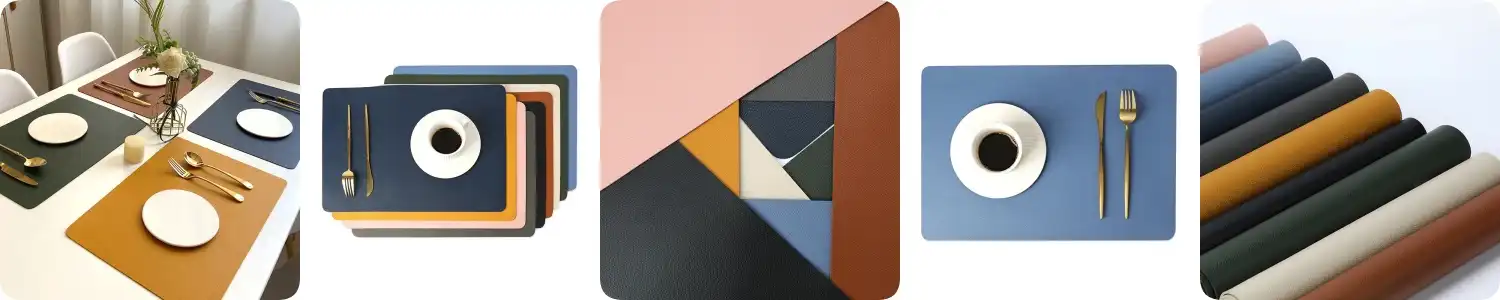
Because it uses modern manufacturing techniques and strict quality control measures, Yiyajia Carpet has become a top provider. Utilizing high-definition heat transfer technology and precise laser cutting, the company creates place mats that are both aesthetically pleasing and useful. Their cool place mats are made of leather and have a high-density technology silk structure with a PVC backing. This gives the mats a 1mm thickness profile and makes them weigh 900g/m². International fire safety standards are met by this construction, which also makes it waterproof. The company's promise to check all orders before they are shipped makes sure that the quality is the same for all bulk orders, which solves the problem of trust that many B2B procurement relationships have.
Value Propositions for B2B Procurement
Manufacturers that sell to wholesalers set themselves apart by offering service packages that go beyond product specs. Flexible minimum order amounts allow for both testing and full-scale operations, so buyers can make sure the product works before committing to big stocks. With better unit economics over time, volume-based pricing systems reward relationships that last a long time.
Sample production lets you quickly test your product, and many providers offer delivery of samples within 24 to 48 hours using the same materials and methods as the final production runs. Standard export packing choices keep goods safe while they're traveling across international borders and make the most of how efficiently containers are loaded to keep logistics costs as low as possible. Dedicated account management makes sure that contact is quick and that the reordering process is easy. This is especially important for buyers who use more than one route to buy things.
Sustainability-Focused Suppliers
As business sustainability mandates become more popular, environmental concerns play a bigger role in purchasing choices. Antimicrobial options made from recycled materials or quickly reusable resources are offered by suppliers who understand these issues. Eco-friendly PU/PVC formulas cut down on the need for fuel while keeping performance levels the same. Compared to solvent-based methods, production processes that use water release fewer toxic chemical compounds.
Manufacturing sites that use less energy leave smaller carbon impacts when they make things. Recyclability ratings give people more ways to get rid of old things besides sending them to a dump. These sustainable qualities help buyers who want to buy things in a more environmentally friendly way, without lowering the quality of the goods or their ability to do their job.
How to Choose the Right Antimicrobial Place Mats for Your Business
To find the best answers for each operating situation, strategic procurement needs to carefully look at many factors in a planned way.
Evaluating Material Performance Characteristics
Performance needs are very different depending on the application setting. The temperature ranges that are expected during normal use must fit the heat resistance standards. When plates are moved directly from warming equipment in a restaurant, higher temperature limits are needed than when items are served at room temperature in a café. How waterproof something is decides whether it's good for businesses that deal with drinks and have a lot of liquid spills.
In nursing areas where harsh disinfectants are often used, chemical resistance is important. In places with a lot of change, where plates slide against each other over and over, abrasion resistance affects how long something lasts. The ability to keep their shape over many cleaning processes without twisting or warping is called dimensional stability. Full specification sheets from trustworthy sellers give accurate information that lets you compare similar goods side by side.
Balancing Cost Considerations with Quality Requirements
The total cost of ownership includes more than just the initial buy price. It also includes maintenance costs and how often the item needs to be replaced. Options that are less expensive might need to be replaced more often, which will cost more in the long run. Maintenance needs have a big effect on labor costs. For example, washable placemat surfaces take less time to clean than textile options that need to be washed.
Durability has a direct effect on repair processes, and high-quality materials may last two to three times longer. Discounts for buying in bulk lower unit costs, but you need to keep an eye on your goods to make sure it doesn't go out of date. Long-term supply deals can lock in good prices and make sure that goods are always available. Smart procurement weighs these things against operational goals and budget limits to find solutions that provide the best value instead of just the lowest starting cost.
Supplier Reliability and Partnership Potential
In addition to product specifications, factors for choosing a supplier should also include the supplier's operational skills and the possibility for a relationship. How well suppliers can meet rising demand without sacrificing delivery times depends on their production ability. Quality control methods show that something is consistent and reliable, and certifications like ISO 9001 provide concrete proof.
How quickly problems are solved depends on how prompt communication is. Logistics skills affect how predictable delivery is, especially when buying from other countries that have complicated customs processes. The quality of after-sales help shows how well sellers handle problems with products or set up replacements. Buyers who want solid supply relationships rather than transactional exchanges care about the possibility of a long-term partnership. Using reference checks and test orders to look at these things lowers the risk that comes with working with a new provider.
Maintaining and Cleaning Antimicrobial Cool Place Mats
Following the right upkeep steps will make a product last longer and keep its antimicrobial properties during regular service times.
Recommended Cleaning Procedures
To keep their protective qualities, antimicrobial surfaces need to be cleaned in the right way. As part of daily upkeep, surfaces are usually wiped down with damp cloths and light detergents to get rid of food residue and liquid spills before they leave stains. Harsh chemical cleaners like bleach or ammonia can break down some antibacterial treatments, so it's important to make sure that the chemicals don't react badly with certain product formulas.
Hot water above the recommended temperature limits can damage materials that are easily damaged by heat or speed up the wear and tear on coatings. Abrasive cleaning tools hurt the surface on a tiny level, which makes waterproofing and antibacterial properties less effective. When you rinse properly, you get rid of any cleaning agent leftovers that could react badly with antimicrobial chemicals. Air drying keeps moisture from building up, which could help microbes grow in backing materials even if the surface is protected.
Inspection and Replacement Protocols
Condition tests done on a regular basis find performance loss before it affects cleanliness standards. Edge splitting, surface cracking, or color loss are all signs of wear that can be seen with the naked eye. When liquid absorption goes up, tactile testing shows changes in how well protection works. Relying on reactive repair methods is avoided with standardized replacement plans based on how often something is used. In places with a lot of change, things may need to be replaced every three months, but in places with average use, things can last for a year. Recording refill trends helps with planning purchases and making budget predictions. Instead of waiting for something to go wrong to be noticed, proactive replacing keeps cleanliness standards high.
Conclusion
Cool place mats are a smart investment for companies that care about cleanliness, speed, and their brand's image. Antimicrobial coatings use technology that stops germs from growing on surfaces that people touch a lot. This meets regulatory standards and lowers the risk of contamination. Different types of materials, like leather and rubber, let you make solutions that work in a variety of situations. You can also customize them to meet your specific branding needs. Suppliers with a good reputation, like Yiyajia Carpet, offer approved products with flexible purchasing terms and full quality guarantee. When you carefully look at performance requirements, total cost of ownership, and a supplier's skills, you can make the best buying choices that balance short-term budget concerns with long-term practical value.
FAQ
Do antimicrobial coatings completely eliminate bacteria?
Even though antimicrobial treatments kill a lot of germs, they can't be sure that everything is germ-free. These layers stop microbes from reproducing and living on treated surfaces, making them much less likely to become contaminated than materials that haven't been treated. Regular cleaning is still necessary because antibacterial qualities don't replace good cleanliness habits; they add to them. The level of success depends on the type of coating used. Under controlled testing settings, silver ion solutions usually kill 99.9% of common bacterial strains.
Are antimicrobial place mats safe for food contact?
Products that meet guidelines set by organizations like OEKO-TEX, FDA, and LFGB are tested to make sure they are safe for direct touch with food. These approvals show that dangerous chemicals don't move from the mat's surface into food. Reputable producers show proof that they follow the rules for food safety in the places they want to sell to. Before buying something, buyers should always ask for proof of certification. This is especially important for uses that involve direct touch with food or in controlled areas like hospitals or daycares.
How long do antimicrobial coatings remain effective?
How long a coating lasts relies on the quality of the material, how often it is used, and how well it is maintained. Under normal business settings, premium antibacterial treatments usually keep working for 12 to 24 months. Harsh cleaning agents or rough cleaning methods can make coatings wear off faster. Suppliers should give written information about how long antimicrobials are expected to last and what factors affect longevity. Periodic testing with ATP swab tests can clearly confirm continued antimicrobial performance, letting replacement choices be based on data rather than random dates.
Partner with Yiyajia Carpet for Premium Antimicrobial Cool Place Mats
Yiyajia Carpet is the best place for bulk buyers, importers, and business project managers to find cool place mats at a great price. Our leather-based antibacterial table mats are made of high-quality PU/PVC and have advanced surface processes that make them waterproof and easy to clean, making them perfect for demanding hospitality settings. Our goods are safe and of high quality, as they have been certified by organizations like CE, OEKO-TEX, ISO 9001, REACH, and EN 13501 for fire proof.
Through OEM/ODM services, we can fully customize your order, including printing your name, making it the right size, and designing a pattern that fits your brand's needs. Our 100% pre-shipment review makes sure that the quality of all bulk orders is the same, and our flexible MOQ terms make them work for both small orders and large-scale operations. Email our team at sale@yyj-carpet.com to talk about your unique needs and get models that show how well we can make carpets.
References
1. Anderson, M. R. (2021). Antimicrobial Technologies in Hospitality Textiles: Performance and Safety Standards. Journal of Commercial Interior Design, 18(3), 45-62.
2. Chen, L., & Robertson, K. (2022). Silver Ion Applications in Food Service Surface Protection: Efficacy and Regulatory Compliance. International Food Safety Review, 29(4), 112-128.
3. European Committee for Standardization. (2020). EN 13501: Fire Classification of Construction Products and Building Elements - Testing and Certification Protocols. Brussels: CEN Publications.
4. Morrison, D. T. (2023). Total Cost Analysis of Antimicrobial Table Coverings in High-Volume Restaurant Operations. Hospitality Procurement Quarterly, 15(2), 78-94.
5. Patel, S., & Zhang, W. (2022). Material Science Advances in Waterproof Antimicrobial Composites for Commercial Applications. Polymer Engineering and Technology, 41(7), 203-219.
6. World Health Organization. (2021). Guidelines for Surface Hygiene in Food Service Environments: Antimicrobial Technologies and Best Practices. Geneva: WHO Press.