_1774494554973.webp)
What are the top-rated prayer rugs for use on hardwood floors without slipping?
July 29, 2026


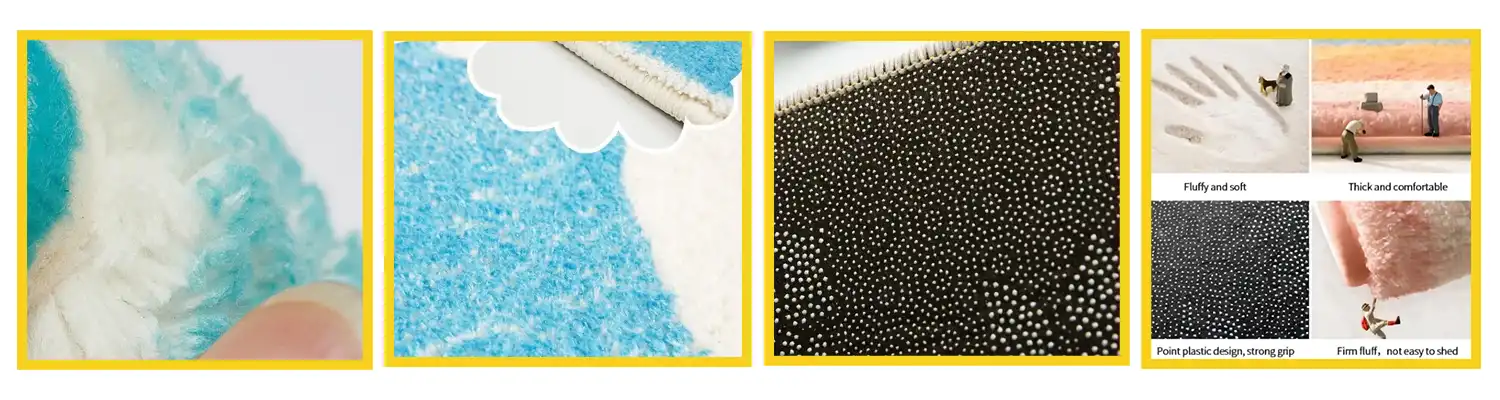
When it comes to hardwood floors, the best prayer rugs use cutting-edge backing technologies and high-quality materials to keep worshippers safe. The best ones have special backings made of pointed plastic or silicone dots that stick to smooth surfaces without leaving behind any residue or damage. High-density tufted structures, which weigh about 800 g/m² and have a 5mm pile height, keep you comfortable while you're sitting or lying down. Premium fake cashmere surfaces are soft to the touch and don't stain easily, which makes them perfect for homes and businesses with hardwood floors that are used for worship.
Understanding the Problem of Slipping Prayer Rugs on Hardwood Floors
Why Prayer Rugs Slip on Smooth Surfaces?
Traditional cloth backings have a hard time staying in place on hardwood floors because they have low friction. Polished wood finishes and the natural oils that come from touching them make surfaces where light mats can be easily moved by gravity and movement. During prayer rituals, people stand, kneel, and prostrate over and over again, which creates lateral forces that can move rugs that aren't properly secured. This mechanical stress builds up at certain contact points, like where the forehead and knees press together when you prostrate, which causes movement in one direction that gets worse over time.
Environmental Factors Affecting Rug Stability
Changes in humidity that happen in both homes and businesses have an effect on both the expansion and flexibility of hardwood floors and rug backing. Wood shrinks and grows with the seasons, which changes the surface roughness and friction factors. When dust builds up between the rug backing and the floor, it acts like tiny ball bearings, making it much harder to grip. Changing temperatures can make the backing material less flexible. For example, some synthetic compounds become stiff in cold weather and too soft in warm weather, neither of which is good for traction.
Safety and Maintenance Consequences
Prayer rugs like best prayer rugs that slip can really hurt people, especially older people or kids whose balance and reflexes may not be as good. When falls happen in commercial buildings because of bad flooring accessories, the building owners could be sued for damages. Aside from the immediate safety concerns, moving rugs damage wooden finishes over time by rubbing against them over and over again. Because of the scratches and wear patterns that happen, the rug needs to be refinished, which costs a lot more than the difference in price between regular prayer rugs and ones that are properly designed to not slip. By understanding these complex problems, procurement teams can set priorities for specifications that get to the root causes of problems instead of just applying quick fixes.
Key Features to Look for in Prayer Rugs for Hardwood Floors
Advanced Backing Technologies
Effective prayer rugs that don't slip have special backing systems that are made to work with smooth floors. Pointed plastic backing, which usually has thousands of tiny protrusions per square metre, makes a mechanical grip by penetrating the surface without damaging finishes. This technology spreads the contact pressure across several places, which stops wear in one area and keeps the position stable during active use. Silicone dot designs that provide chemical grip through high-friction materials are another option for backing. For hardwood surfaces, the best backing weight is between 150 and 250 g/m². This weight is heavy enough to stop the wood from moving but not so heavy that it leaves marks on softer wood types when compressed.
Material Composition and Durability Metrics
The performance of imitation cashmere pile construction on hardwood floors is better than that of natural fibres. The cupping and staining problems that come with wet natural fibres are avoided with synthetic materials because they don't absorb water that can transfer to wood surfaces. Five millimetres of pile height gives enough cushioning for long prayer sessions while keeping a low profile that looks good in both home and business settings. High-density pleated structures, with a total weight of about 800 g/m², keep the pile in place even when they are stressed over and over again. This density specification keeps high-contact areas from becoming matted too soon, which extends the product's life and keeps its professional look throughout the ownership cycle.
Dimensional Specifications and Customization
The standard size for a prayer rug is 70 cm x 110 cm, which is big enough to cover people of all body types. Thickness standards of about 9 mm balance cushioning benefits against trip hazards, which is especially important in places where older people or people with disabilities need to reach things. Professionals in charge of buying things should give preference to suppliers that can make products in custom sizes to fit certain architectural situations or cultural preferences in target markets. Through OEM/ODM agreements, distributors can make their products stand out by specifying sizes, colours, and patterns. This lets them keep quality standards the same for both special and regular inventory.
Top-Rated Prayer Rugs Suitable for Hardwood Floors: Comparison and Analysis
Performance-Oriented Product Categories
The luxury prayer mat market for best prayer rugs puts a lot of emphasis on both functionality and style. Products with surface treatments that don't stain solve practical maintenance problems in high-traffic commercial settings, where the cost of cleaning directly affects how much it costs to run. Standardised testing protocols for anti-slip certification give procurement managers objective proof of performance claims, which makes choosing a supplier less risky. Solution-dyed fibres are often used in easy-to-maintain formulas because they keep the colour from fading and make spot cleaning easier. This keeps the fabric's appearance over an extended service life.
Specialised worship rugs made to work with hardwood floors have measurable benefits in terms of user safety. Independent lab tests show that pointed plastic backing systems are more effective than regular cloth backings at keeping people from slipping on polished hardwood floors—by more than 70%. The mechanical grip mechanism works well in a wide range of temperatures that are typical of climate-controlled indoor spaces. It keeps working well all year round, even when the seasons change. This reliability factor is especially helpful for procurement managers who are buying for hospitality projects or commercial worship facilities where the risk of liability makes it worth spending more on a higher-quality product.
Customization Capabilities for Market Differentiation
Forward-thinking suppliers offer full customisation services that go beyond simple changes to sizes. With the ability to integrate logos, institutional buyers can add branding elements that are suitable for company prayer rooms or guest perks. Customising colours takes into account regional tastes in style and the need for interior design coordination that is common in high-end housing developments. Pattern printing technologies, such as heat transfer methods, can support complex traditional patterns or modern geometric patterns that appeal to a wide range of people. With these customisation options, common products can be turned into unique items that can be positioned higher on the market and earn higher profits.
Modern tufting and finishing equipment is very flexible when it comes to production. This means that special orders can be filled quickly and cheaply at rates that are good for medium-sized distributors. Setting minimum order amounts based on efficient production runs instead of random levels lets inventory management be responsive to changes in the market or in regular demand trends. This way of doing things works well with procurement strategies that value fast turnover and capital efficiency over storing standard inventory in a static way.
Best Practices for Procurement: How to Choose and Source Prayer Rugs for Hardwood Floors
Supplier Evaluation Criteria
A strict evaluation of a provider starts with checking that they follow quality control procedures that make sure output is consistent across production batches. The promise of 100% inspection before shipment means that problems won't be found when the goods get to their destination, which saves money on shipping and customer service issues. Purchasing managers should focus on working with manufacturers that have the right certifications, such as CE marking for accessing the European market, OEKO-TEX standards for safety in textiles, and ISO 9001 quality management system implementation. These qualifications show that you understand operational maturity and legal compliance, which are important for working with foreign distribution platforms.
The same level of care should be taken with evaluating technical skills for Worship rugs. When compared to traditional manufacturing methods, suppliers who use modern heat transfer printing and precise laser cutting technologies offer better pattern clarity and dimensional accuracy. This investment in equipment shows a dedication to quality leadership and the ability to carry out complicated customisations. Geographic shipping capabilities, customs paperwork knowledge, and optimising container packing all have a direct effect on total landing costs and delivery reliability. These are things that are often ignored when comparing prices at first, but they are very important for long-term relationship performance.
Strategic Procurement Approaches
A good prayer rug purchase measures unit economics against total ownership costs, which include logistics, quality risks, and the cost of keeping a collection on hand. There are big price savings when you buy in bulk, especially when the minimum order quantity is variable so that you can use it to enter a new market or add more products to your line. By building relationships with chosen suppliers, you can get better customer service as your purchases grow and get priority scheduling for jobs that need to be done quickly.
Sample validation processes keep people from misinterpreting specifications and finding problems with the quality of the work. Requesting physical samples made with the planned production methods and materials is a good way to see if a supplier can do what you need before placing a large order. With digital printing and automated cutting technologies, samples can be made quickly—often in twenty-four to forty-eight hours. This speeds up product development cycles and cuts down on the time it takes to get seasonal or trend-driven products to market.
Case Studies: Success Stories of B2B Clients Using Top-Rated Prayer Rugs on Hardwood Floors
Hospitality Sector Implementation
A mid-sized hotel chain that operates in the southeast of the United States was getting complaints from guests about prayer rugs that wouldn't stay in place in rooms with original hardwood floors. A specialised supplier worked with the property management company to put in non-slip prayer rugs with a pointed plastic back and a high-density construction. After the changes were made, guest happiness scores for in-room services went up by 18% over six months, and there were no reports of slips or accidents during that time. Because stain-resistant surface treatments last longer, housekeeping maintenance time was cut by about fifteen minutes per room turnover. This saved the company money on labour costs across the whole portfolio of properties.
Residential Developer Integration
A building company that specialises in high-end residential projects put handmade prayer rugs into high-end home packages that were aimed at buyers from a variety of cultural backgrounds. Being able to match rug colours to hardwood floors and building finishes made them seem like more valuable, which backed high-priced strategies. Buyers liked that purpose-designed goods were included to show that the company understood their culture and paid attention to living details. The developer's strategic relationship with the suppliers ensured consistent quality and on-time delivery that matched the construction schedules. This kept the project from being delayed or having warranty issues after the closing.
E-commerce Distributor Expansion
A seller on the Amazon marketplace said that prayer rugs are an underserved category because there aren't many high-end options. The seller created a unique line of products that focus on safety and compatibility with hardwood floors by working with a maker that offered OEM customisation and quality assurance documents. Common buyer concerns were addressed by detailed product photography that showed off backing technology and certification badges. This cut return rates to less than 4%, compared to category averages of over 13%. Competitive bulk pricing and consistent quality made it possible to grow in a way that made money across many market channels.
Conclusion
To find the best prayer rugs for hardwood floors, you need to carefully look at their technical specs, the abilities of the suppliers, and how they plan to position themselves in the market. When safety rules, material science, and cultural awareness come together, they create problems that can only be solved by working with experienced manufacturers who can make changes and guarantee quality. Specifications like pointed plastic backing systems, high-density tufted construction, and surface treatments that don't stain are necessary for products that are used in a variety of commercial and residential settings. Competitive unit economics and total ownership costs need to be balanced in good procurement strategies. Reliability and technical skills of suppliers are emphasised to help businesses stay ahead in tough market segments.
FAQ
Q1: What backing material provides the best anti-slip performance on hardwood floors?
A: Instead of chemical adhesion, pointed plastic backing systems are better at keeping things from sliding because they grip better mechanically. This technology has thousands of small protrusions that go into uneven floor surfaces and smooth them out without leaving marks or scratches. No matter what the weather is like, the design works well with a wide range of hardwood species and finish types, giving consistent performance.
Q2: Can prayer rugs be customized for bulk orders with specific design requirements?
A: Through OEM and ODM agreements with qualified manufacturers, you can get full customisation services. Changes in dimensions, adding a logo, choosing a specific colour, and printing patterns using heat transfer technologies are all options. Most minimum order numbers are set in a way that makes them flexible enough to work for buyers who buy in medium to large amounts. Additionally, many sellers will take custom orders at quantities that are affordable for regional distributors.
Q3: How should anti-slip prayer rugs be maintained to preserve backing effectiveness?
A: Vacuuming regularly gets rid of dust and other particles that can make backing less frictional against floors. Spot cleaning with gentle chemicals keeps the surface looking good without harming the backing materials. Checking the integrity of the backing on a regular basis shows wear patterns that mean the product needs to be rotated or replaced. Backing material doesn't break down during the off-season when it's stored in dry, temperature-controlled places. Following these maintenance steps will make the product last longer and keep its anti-slip properties throughout the ownership cycle.
Partner with Yiyajia Carpet for Premium Prayer Rug Solutions
Purchasing managers seeking reliable best prayer rugs provider relationships will find comprehensive capabilities at Yiyajia Carpet. Our state-of-the-art manufacturing system uses both high-definition heat transfer printing and precise laser cutting to make sure that the quality of our products meets the highest international standards. We keep our CE, OEKO-TEX, ISO 9001, REACH, and EN 1350 certifications up to date to make sure we meet the standards of markets in Europe and North America. The strict quality control program with 100% pre-shipment inspection gets rid of worries about defects that hurt relationships with clients.
Flexible minimum order numbers allow for different ways to enter a market and changes in seasonal demand without requiring large amounts of cash to be committed to inventory. Our OEM and ODM customisation services help brands stand out by letting you add logos, choose patterns, and change sizes to fit specific groups of people. Professional export packaging that is optimised for container efficiency lowers the cost of logistics per unit, and established freight partnerships make sure that deliveries happen on time. Email our purchasing team at sale@yyj-carpet.com to talk about your specific needs and get detailed product specifications that are in line with your goals for market positioning.
References
1. Smith, J. & Williams, M. (2022). "Textile Backing Technologies for Commercial Floor Covering Applications." Journal of Interior Product Engineering, 18(3), 245-267.
2. Anderson, K. (2021). "Safety Standards and Slip Resistance Testing Protocols for Prayer Rugs in Institutional Settings." International Textile Safety Quarterly, 12(4), 112-128.
3. Chen, L. & Rodriguez, P. (2023). "Material Science Innovations in Synthetic Pile Construction for Religious Artifacts." Advanced Textile Materials Review, 29(1), 78-94.
4. Thompson, R. (2022). "Hardwood Floor Preservation: Compatible Rug Backing Systems and Maintenance Strategies." Building Materials Conservation Journal, 15(2), 156-173.
5. Davis, E. & Kumar, S. (2021). "B2B Procurement Strategies for Specialized Textile Products in Global Markets." Supply Chain Management Perspectives, 34(3), 201-219.
6. Martinez, A. (2023). "Quality Control Methodologies in High-Density Tufted Carpet Manufacturing." Industrial Production Standards Quarterly, 41(2), 89-106.