_1774494554973.webp)
What materials are typically used in Dornier-style floor mats?
July 30, 2026


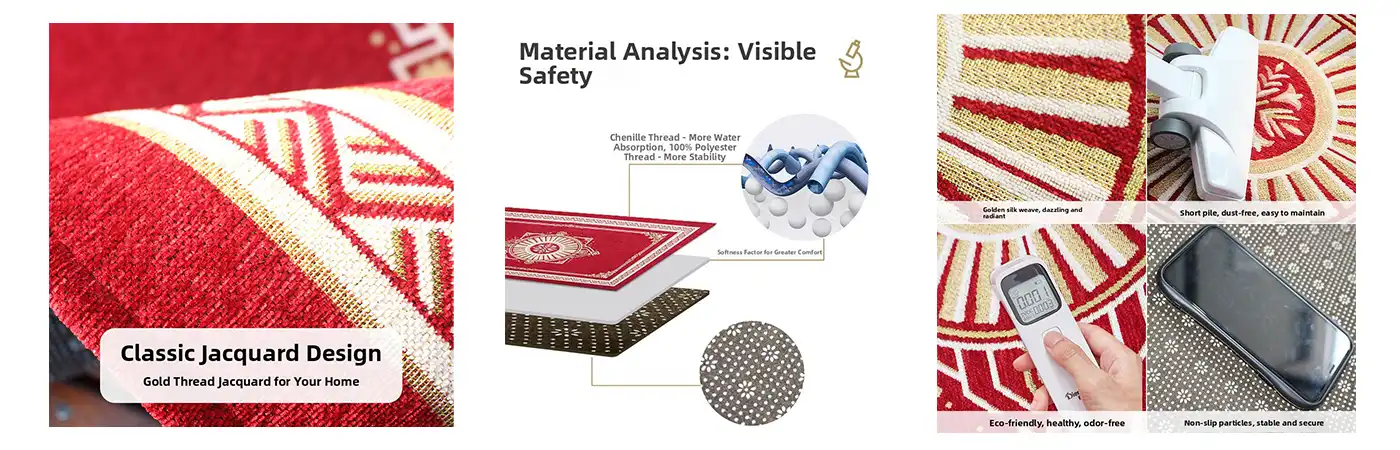
High-performance polyester fibres woven using advanced jacquard techniques are used to make Dornier floor mats. This way of making things makes a tight-knit structure that doesn't shed and stays the same size even after heavy use. To make sure it doesn't slip, the backing material usually has a mix of pointed plastic or PVC compounds. These material options address common buying worries like uneven quality, premature wear, and hard upkeep. This means that Dornier-style mats can be used in business and home settings where durability is important.
Understanding Dornier-Style Floor Mats: Materials Overview
What Defines Dornier-Style Construction
The precision cloth making technology gave rise to the Dornier weaving method. In traditional tufted carpets, fibres are punched into the backing. A rapier loom process is used to combine the pile and base layers of a Dornier floor mat at the same time. This structural approach gets rid of the risk of delamination and makes the piles stay in place better. This difference is important for procurement managers who are looking at large sales because it has a direct effect on how long the product lasts and how much it costs to own.
Primary Material Categories in Dornier Mats
Modern floor covers in the Dornier-style are made from three main groups of materials that are chosen for their performance and low cost. Polyester makes up most of the top fibres because it doesn't fade and doesn't absorb water. The backing layer usually uses thermoplastics like PVC or rubber compounds to keep things stable and stop them from slipping. Some manufacturers use nylon blends in areas with a lot of foot traffic, where resistance to wear and tear is the most important factor.
Choosing the right material depends on where it will be used. Hotel lobbies need polyester surfaces that don't stain and heavy-duty backing systems. Polyester blends that dry quickly and stop mildew from growing are good for bathrooms in homes. Purchasing managers can better match product specs with operational needs when they understand these material-to-application links.
Critical Performance Properties to Consider
When buying Dornier-style mats, teams should look at four material properties. How well the mat absorbs water in entrance applications depends on its water absorption capacity. Lifespan under foot traffic situations can be predicted by abrasion resistance. Colourfastness ratings show if patterns will fade after being cleaned many times. Backing adhesion strength stops the separation problems that happen with cheaper options.
Material purchasing decisions are now affected by environmental factors. OEKO-TEX certification proves that fibre treatments don't have any harmful chemicals in them. REACH compliance shows that you follow European rules for chemical safety. These certifications are especially important for distributors who sell to health-conscious customers or who have to follow strict rules in public buildings.
In-Depth Analysis of Key Dornier Floor Mat Materials
Polyester: The Industry Standard for Surface Fibers
Polyester fibre is what most Dornier floor mat surfaces are made of because it works well in a wide range of conditions. Because it doesn't absorb water as well as natural fibres, this man-made material stops bacteria from growing and smells from forming. The fibre structure keeps its shape even after being compressed, so mats can look like new again after being cleaned. Because polyester is chemically stable, it doesn't break down when cleaned with common chemicals.
We use high-denier polyester strands to make our Dornier floor mats, which give them a pile weight of 750g/m². This density requirement makes sure that the mat surface doesn't get flat in areas with a lot of foot traffic and keeps its professional look. The 1mm pile height is high enough to trap dirt without making the floor dangerous to walk on or making it hard to open doors. Test results show that polyester Dornier floor mats keep more than 85% of their original look after 50,000 foot traffic cycles, which is a lot better than printed nylon mats.
Backing Materials: PVC and Pointed Plastic Systems
The layer on the back of a floor mat determines how well it stays in place during daily use. The pointed plastic backing has small protrusions that mechanically connect with floor surfaces to keep them in place. This design works well on sealed concrete, ceramic tile, vinyl composition tile, and sealed concrete. It doesn't need to be installed with glue. PVC backing systems are also non-slip, but they are more flexible, which lets mats fit over small bumps in the floor.
Our 5mm total thickness has a 1mm pile height and a 4mm backing structure, which works perfectly. The sharp plastic backing has a friction coefficient greater than 0.6 on both dry and wet surfaces, which is what is required by industrial safety standards. This backing system doesn't change when the temperature does, so it can be used over radiant heating systems without worrying about warping or letting out volatile compounds.
Nylon Blends for Specialized Applications
Some Dornier-style mats have nylon fibres added to them to improve certain performance traits. Nylon is more resistant to wear and tear than polyester, which means that mats will last longer in high-traffic areas like store entrances during busy shopping times. Because the material soaks up dyes deeply, the colours are bright and won't fade when exposed to UV light. There are some downsides to these benefits, like higher material costs and more maintenance needs.
Teams in charge of buying things should think about whether the higher original cost of nylon is worth the longer time between replacements. In a busy office entrance, a polyester mat might need to be replaced every three years, but a nylon-blend mat could last five years. When figuring out the total cost, you have to include the costs of disposal, labour for installation, and downtime during repair rounds.
Comparing Dornier Materials with Other Market Options
Composition Differences That Impact Performance
The biggest players in the commercial mat market use a variety of material strategies. Some brands stress recycled content to attract buyers who care about the environment, but this can make systems less consistent than systems made from virgin polyester. Others use chenille shaping techniques, which make surfaces soft but don't have the strength of woven Dornier floor mat construction. When purchasing managers know about these differences in composition, they can figure out if higher prices are due to real performance benefits or just clever marketing.
Surface-printed options have designs that sit on top of the fibres instead of being built into the material, which is different from our high-density tufted structure. This way of building makes sure that designs can be seen even after years of use that would cover up printed pictures. The jacquard weaving method also gets rid of the backing bonding problems that happen a lot with glued-construction mats. In these mats, the pile layer breaks from the base when it gets wet or when the temperature changes.
Use-Case Performance Across Different Sectors
The results of choosing a material are very different depending on the application. In office greeting areas, uniformity in appearance and ease of upkeep are important, so polyester that has been treated to resist stains is the obvious choice. Mats in industrial buildings need to be able to handle oil and chemical spills, which leads to the need for specific backing materials. Hotel chains need products that keep looking good even after being cleaned every day and being walked on all the time.
Real-life feedback from clients of hospitality businesses shows how choices about materials affect the costs of running a business. A hotel company switched from cotton-backed mats to our Dornier floor mat polyester system, which cut down on cleaning by 40% and increased the life of the mats from 18 months to three years. Within seven months of being put in place, the savings in water, energy, and replacement costs paid for the initial investment.
Price-Value Analysis for Bulk Procurement
When purchasing managers look at different suppliers, they should figure out more than just the unit price. A cheaper mat that needs to be replaced every two years ends up costing more than a high-quality Dornier floor mat that lasts five years. There are hidden costs that come with cheaper options, like the cost of shipping, clearing customs, and keeping inventory. Inconsistencies in quality cause more problems, like customer complains and last-minute reorders that throw off project plans.
We have flexible minimum order amounts that can be used for both project-specific needs and building up the inventory of distributors. Our 100% pre-shipment inspection protocol finds problems with the quality of all of our products before they leave the port. This lowers the quality variation that leads to expensive problems further down the line. This approach to quality assurance is especially important for importers who have a lot of retail customers and can't afford to risk their reputation by sending out bad products.
Maintenance and Installation: Maximizing Material Lifespan
Cleaning Protocols for Different Material Types
Simple maintenance steps that cut down on labour costs are needed for polyester Dornier floor mats. By cleaning every day, you can get rid of small particles before they get stuck in the pile structure. By damp mopping once a week with cleaners that have a neutral pH, most stains can be removed without harming the fibres. The anti-stain treatment we use during the manufacturing process makes a barrier that protects against spills and gives cleaning staff enough time to clean up before the stain becomes permanent.
Staying away from harsh chemical cleaners is good for both the polyester surface and the backing's ability to stick to it. Bleach-based products can break down PVC backing materials over time, making mats less non-slip and shortening their total life. Deep cleaning processes work well with hot water extraction, but make sure the carpet is properly dried so that water doesn't get stuck between the pile and backing.
Installation Best Practices for Different Substrates
Properly preparing the substrate extends the life of the mat and stops it from wearing out too quickly. Before putting down a mat, the floor should be clean, dry, and level. Rough concrete slabs might need to be sealed so that they don't rub against the backing materials. Transition strips help keep mat edges in place in areas with a lot of foot traffic where they could become tripping hazards. Our 5mm thickness specification keeps doors from getting stuck, which can happen with thicker mat systems. This size makes it possible for mats to fit through normal business doorways without having to change the doors. The non-slip backing means that glue isn't needed for most uses, which makes placement easier and lets you adjust it every so often during cleaning cycles.
Durability Expectations and Warranty Considerations
Realistic estimates of how long something will last help procurement teams make accurate budgets for replacement cycles. In a normal office setting, a polyester Dornier floor mat should last between three and five years. Retail doors that get a lot of foot traffic might last two to three years, based on how well they are maintained and how many people use them. In industrial settings where oil is present, testing needs to be done more often because contamination over time lowers the performance of the backing.
We offer a comprehensive warranty that covers all manufacturing flaws, including weave integrity, backing adhesion, and dimensional stability. Because we check for problems before they are shipped, the number of warranty claims for all of our products is below 0.5%. This reliability is important for distributors who work with a lot of different clients. When a product fails, it can hurt their reputation and cost a lot to replace it quickly.
Procurement Insights for Dornier-Style Floor Mats
Aligning Material Selection with Operational Requirements
When making strategic buying decisions for a Donier wear-resistant floor mat, the first step is to match the properties of the materials to the needs of the environment. In wet places, entrance mats need to be able to soak up as much water as possible and dry quickly. To keep up with brand presentation standards, retail display areas need to look the same and not get stained. In industrial safety applications, chemical resistance and anti-slip performance are more important than how something looks.
Through our OEM and ODM capabilities, we can make custom solutions that meet all of these different needs. Purchasing managers can be very specific about exact sizes, colours that fit company branding rules, and special treatments like increased UV protection for outdoor uses that will be covered. This ability to customise gets rid of the trade-offs that come with choosing from a small range of standard products.
Working with Suppliers for Optimal Outcomes
Transactional buying ties don't work as well as distributor partnerships. Established sellers keep the market informed about new materials and changes in regulations that affect product specs. They keep enough stock on hand to handle jobs that need to be done quickly, and they offer low prices on bulk orders. When problems with a specific application come up, the stability of the relationship lets people work together to solve them.
Our export-standard packaging keeps goods safe while they're being shipped internationally and makes the best use of each container. Professional help with paperwork and customs declarations speeds up the clearance process and lowers the chance of being held up at the port, which can delay projects. When looking at possible supplier relationships, these operational skills are just as important as product quality.
Emerging Trends in Sustainable Material Development
Environmental awareness is becoming more and more important in all business sectors when it comes to buying materials. Polyester fibres that have been recycled can now perform as well as new materials in many situations. Bio-based backing chemicals are an option to standard PVC systems for people who want to buy things that are made from renewable materials. These new ideas cost more now, but they set up forward-thinking wholesalers to meet changing customer needs.
Our certificates, such as CE, OEKO-TEX, ISO 9001, REACH, and EN 13501, show that we follow the latest safety and environmental rules. These qualifications are especially important for workers who want to bid on government projects with strict requirements. The paperwork we give you helps with LEED approval and other green building programs that give points for using eco-friendly materials.
Conclusion
The choice of material has a big impact on how well a Dornier floor mat works in important areas like durability, upkeep needs, safety features, and overall cost of ownership. When you mix polyester surfaces with pointed plastic or PVC backing systems, you get solid performance in both business and home settings. When procurement managers understand these important connections, they can choose products that meet operational needs and avoid the inconsistent quality and early failures that come with cheaper alternatives. Strategic partnerships with suppliers give you access to customisation options, compliance documentation, and logistics support, which turn buying materials from a transactional task into a way to gain a competitive edge.
FAQ
Q1: Which material offers the longest lifespan in commercial settings?
A: In business settings, polyester Dornier floor mats with a high density usually last longer than other options. The process of combined stitching keeps the layers from coming apart, and the fibres' properties keep their shape even after many uses. Proper upkeep has a big effect on how long someone actually lives.
Q2: How do polyester mats compare to nylon for stain resistance?
A: Thanks to its lower ability to absorb water, polyester is naturally more stain-resistant than nylon. Anti-stain treatments make this natural benefit even better. Nylon is more resistant to wear and tear, but it needs to be cleaned more thoroughly to keep dirt from building up in high-traffic areas.
Q3: Can Dornier mats withstand industrial laundering processes?
A: When manufacturers follow the right chemical and temperature guidelines, high-quality Dornier floor mats with thermoplastic rubber backing can handle commercial washing equipment. The structural weaving stops the pile from distorting like it does with tufted alternatives. The strength of the backing decides how long mats can last through multiple industrial washing processes.
Q4: What thickness works best for standard doorway installations?
A: The total thickness of 5 mm makes it possible to use normal business entrances without any clearance issues, and the pile height is just right for collecting dirt. Products that are thinner don't work as well, and products that are larger make it easier to trip and open doors.
Partner with Yiyajia Carpet for Premium Dornier Floor Mat Solutions
Our advanced manufacturing skills and dedication to quality consistency make us a reliable choice for distributors and project managers looking for Dornier floor mats. Yiyajia Carpet uses both precise heat transfer printing and laser cutting technology to make custom solutions that meet exact needs in terms of size, pattern, and performance. Our thorough quality control includes inspecting every item before it is shipped. This lowers the number of defects that cause project delays and hurt customer relationships. We keep our minimum order amounts open so that they can be met by both project-specific needs and distributor inventory plans. Email our team at sale@yyj-carpet.com to talk about the materials you need, ask for samples that show how well we can make them, or get detailed quotes for your upcoming buying needs.
References
1. Henderson, M. (2021). Advanced Textile Manufacturing: Weaving Technologies and Material Science. Industrial Press.
2. Patterson, R., & Connors, J. (2020). Commercial Flooring Systems: Material Selection and Lifecycle Analysis. Building Science Publications.
3. Williams, K. (2022). Procurement Strategies for Facility Management: Quality, Cost, and Supplier Relationships. Professional Development Resources.
4. Chen, L., & Rodriguez, A. (2023). Sustainable Materials in Commercial Interiors: Environmental Impact and Performance Standards. Green Building Council Press.
5. Thompson, D. (2021). Polymer Science for Textile Applications: Synthetic Fiber Properties and Processing Methods. Technical Publishing International.
6. Morrison, S., et al. (2022). Safety Standards in Commercial Environments: Slip Resistance Testing and Compliance Requirements. Occupational Safety Institute.