_1774494554973.webp)
Stylish kitchen mats with best value for money
July 17, 2026


People who are looking for stylish kitchen mats that are also good value want more than just looks. They want mats that will last, meet safety standards, and save them money all at the same time. When it comes to industrial-grade performance and good looks, stylish kitchen mats fill the gap. They solve problems like worker tiredness, slip risks, and floor damage in high-traffic areas. Yiyajia Carpet's second-generation diatom mud mats are made of cutting-edge materials and tried-and-true engineering. They provide purchasing managers, importers, and project developers with a reliable floor covering solution that meets both operational needs and design standards without breaking the bank.
Understanding Stylish Kitchen Mats and Their Benefits
Learn about stylish kitchen mats and what they can do for you.
These days, kitchen floor mats are much more than just simple plastic runners. Modern ergonomic floor coverings use high-density velvet fabric structures and anti-slip rubber backing to solve three important business problems: musculoskeletal strain from standing for long periods of time; visual disruption from purely functional mats; and safety liability from slip-and-fall accidents in areas where liquids are likely to collect.
Enhanced Worker Safety and Productivity
Anti-fatigue features stop veins from pooling in the lower limbs and lumbar compression from happening when you stand for long amounts of time. According to research, the right padding can lower the contact force by 30 to 50 percent compared to hard floors like concrete or tile. This directly leads to observable advantages at work, such as fewer accident claims, fewer absences, and higher staff productivity during busy times. The treatment that makes the surface non-slip meets strict safety standards needed in business services and hospitality settings where grease and water are always a risk.
Floor Protection in High-Traffic Zones
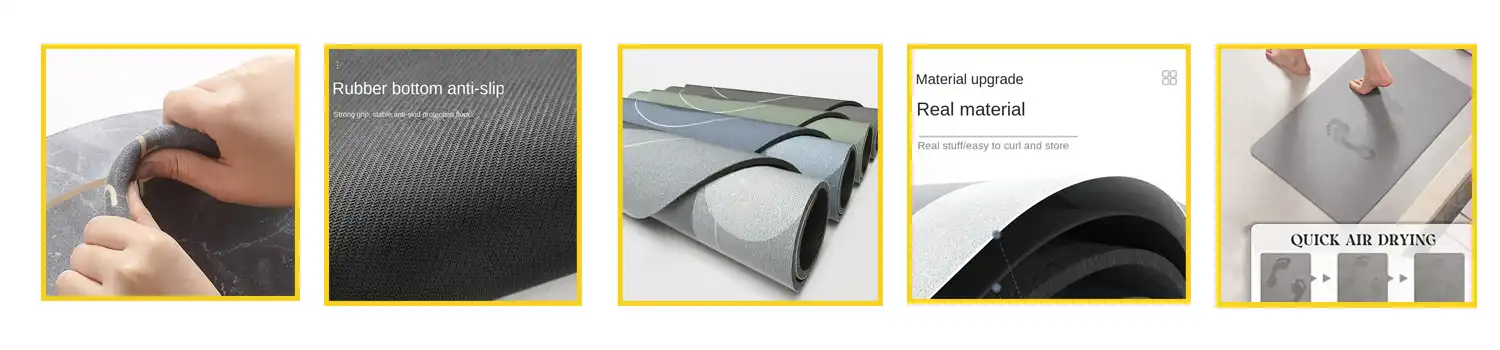
When heavy foot traffic hits expensive flooring projects, commercial-grade mats protect the floors. The weight limit of 800-900 grams per square metre makes sure that the mat stays in place and doesn't move. The rubber backing also keeps water out, which can damage wood or stain tile grout. Protective mats that soak up daily wear and tear can help floors last longer and cost less to maintain in hotels, stores, and business offices.
Aesthetic Integration with Brand Identity
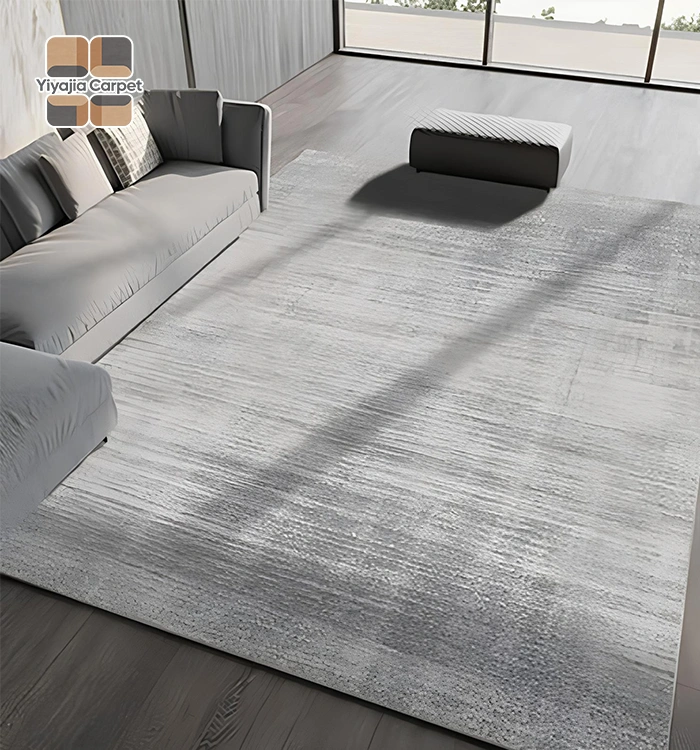
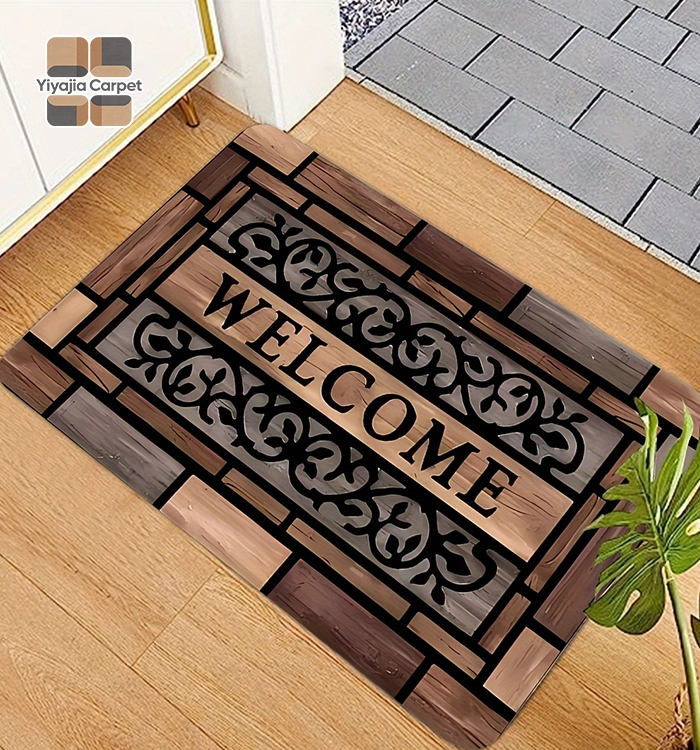
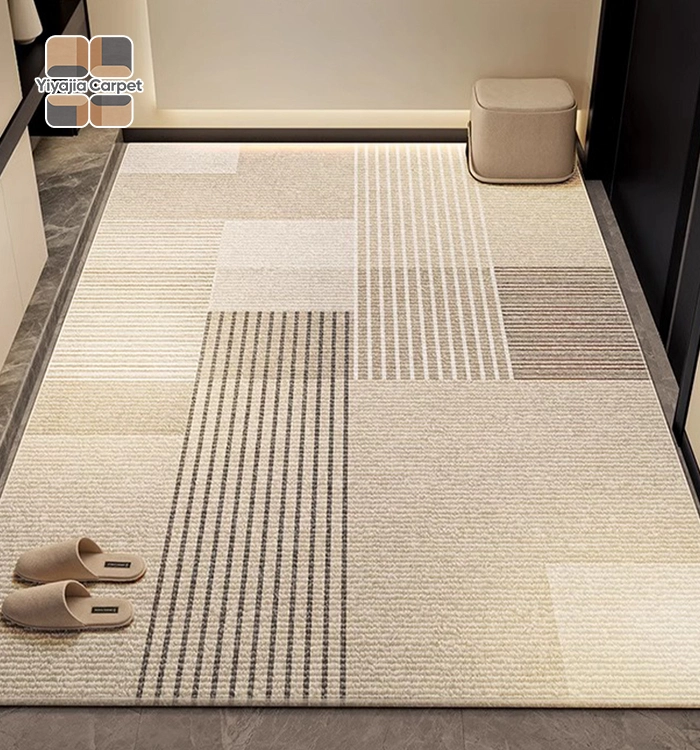
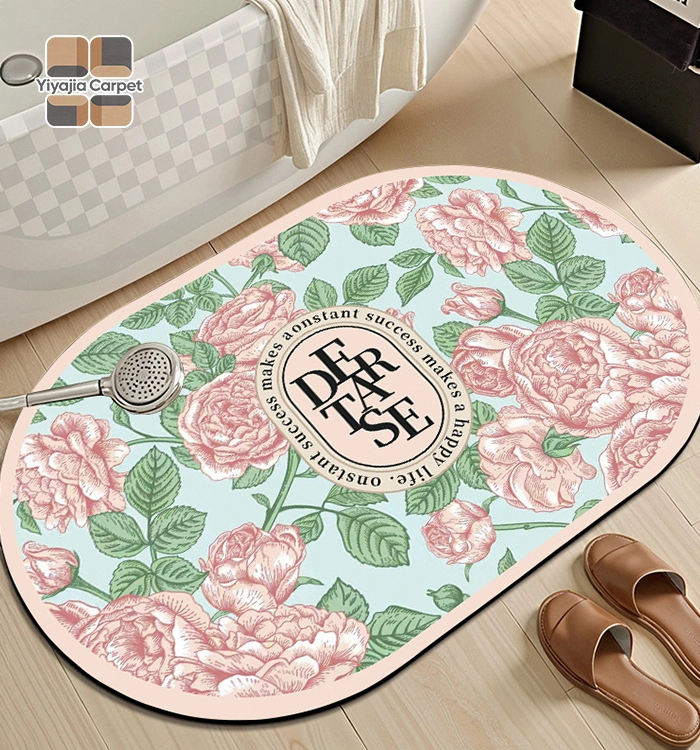
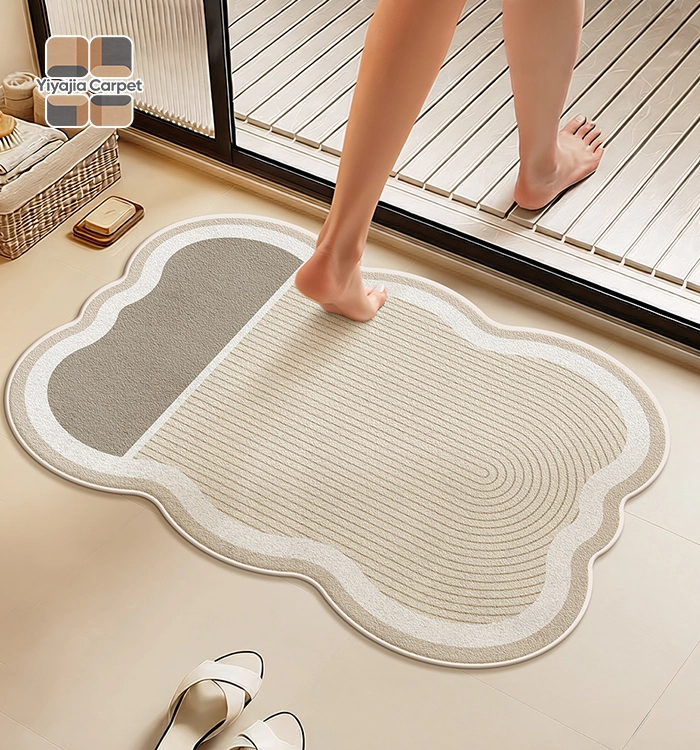
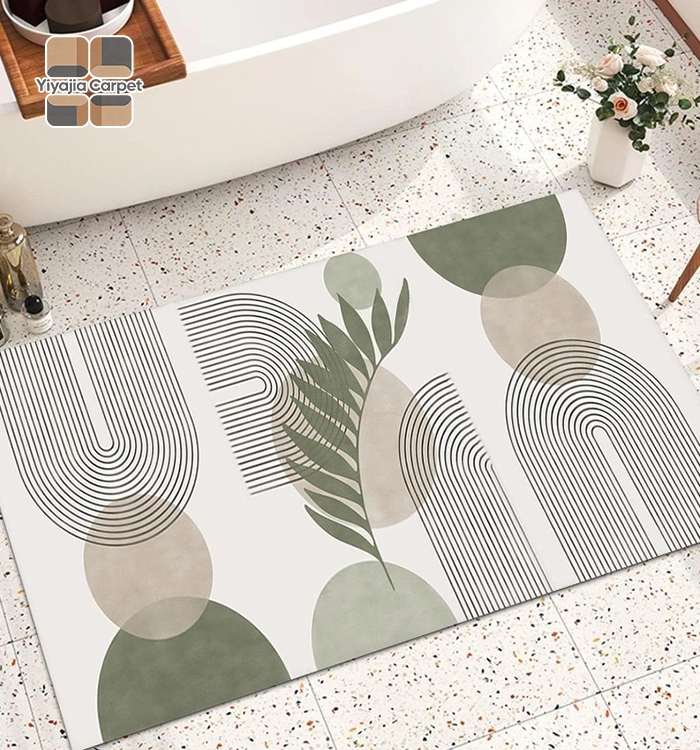
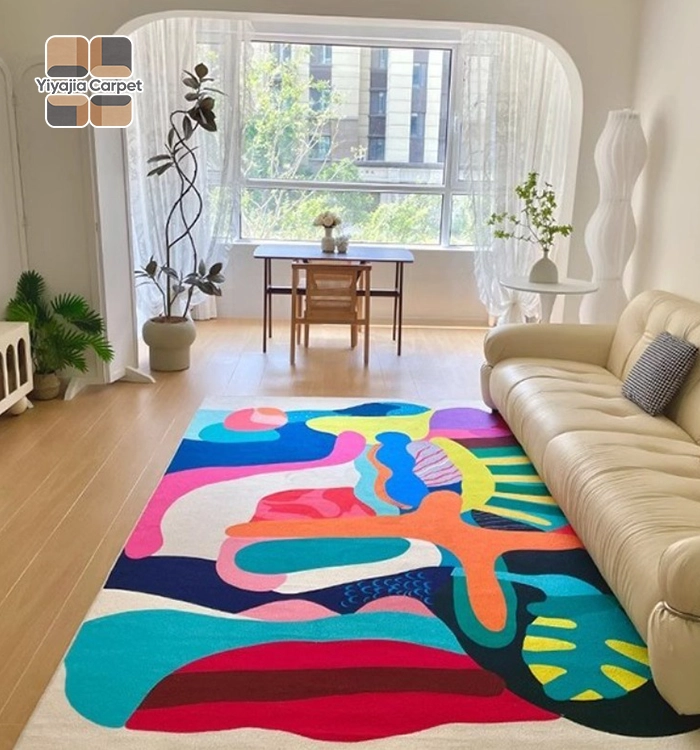
Today's stylish kitchen mats can be customised with designs made possible by heat transfer printing technology, unlike industrial-only rubber mats that don't go with modern interior design. The mat's solid colours, printed designs, and custom branding choices make it look more consistent in open-concept luxury kitchens, boutique hospitality places, and cooking showrooms where how something looks affects how people think of the brand. Functional items can be turned into design elements by being able to match cabinets, work with company colours, or show logos.
Hygiene and Maintenance Efficiency
The non-porous surface of second-generation diatom mud stops oil from absorbing and germs from growing, which fixes the problem of keeping rugs clean that is common with fabric rugs. This material quickly soaks up water and dries quickly, so business kitchens don't get the damp conditions that mould likes. Cleaning methods stay simple—standard soaps clean well without damaging the surface, and the treatment that makes the floor easy to clean cuts down on the time needed to keep it clean.
How to Pick the Most Attractive and Affordable Kitchen Mats?
Before making a purchase choice, practical needs must be carefully weighed against budget limits. Before agreeing to bulk sales, smart buyers look at a number of factors. Stylish kitchen mats procurement requires systematic evaluation of operational requirements balanced against budget parameters.
Assessing Operational Environment Factors
The plan of the kitchen affects the size and placement of the appliances. Check out the places with a lot of foot flow where employees stand for long periods of time, like prep tables, stovetops, and sinks. What kind of floor you have is very important. The rubber backing works well on tile, hardwood, and vinyl, but it needs to be checked to make sure it works with underfloor heating systems. The amount of traffic determines the thickness: 2 mm is good for average home use, while 3 mm is better for business settings with constant activity. By knowing these standard conditions, you can avoid making purchases that aren't right and don't meet performance goals.
Material Composition and Trade-Offs in Performance
When compared to memory foam, gel, or simple PVC, second-generation diatom mud has clear benefits. The high-density technical silk structure gives the material better resilience—it goes back to its original shape after being compressed, so it stays soft even after years of use. This density standard has a direct effect on how long something lasts; choices with lower densities permanently compress, losing their anti-fatigue benefits within months of being used in business settings. The closed-cell surface stays chemically resistant to acids and oils that are common in food service settings. This is different from foam types that break down when they come in contact with cleaning products or cooking waste.
Safety Certification and Compliance Requirements
Not just marketing claims, slip resistance must be tested and proven to be true. Check to see if the ASTM trip-hazard process is followed and that the displacement under load measures has been confirmed. When bevelled edges are moulded into the structure of the mat instead of being glued on separately, they don't curl up over time, which can be dangerous if you're not careful. For European markets, hotel and business setups must now meet EN 1350 flame retardant standards, and REACH approval makes sure that all EU member states follow chemical restrictions.
Customization Capabilities for Brand Alignment
Standard sizes work for most household uses, but B2B buyers often need to be able to change the sizes to fit different room layouts or aesthetic needs. OEM and ODM customisation services let you put your name on something, match colours to your company's theme, and change patterns in ways that help tell your brand's story. Any kind of complicated image can be printed with heat transfer, and irregular forms can be cut out with a laser to fit around kitchen islands or building features. This level of customisation is what sets strategic manufacturing partners apart from commodity providers and lets them support rollouts in multiple locations with uniform product specs.
Comparing Top Stylish Kitchen Mats in the Market for B2B Buyers
It's helpful for procurement teams to know how different products like stylish kitchen mats fit in with business needs and spending limits. Memory foam and gel products from well-known names like Gorilla Grip and GelPro, which sell for $30 to $80 each, are most popular in stores. These goods work well for home use, but they don't always have the density and chemical protection that businesses need. Some can only be cleaned in spots, which makes it harder to keep things clean in food service settings where full sanitisation is important. Black+Decker and KitchenAid are in the middle of the price range and have better durability profiles, but you can only change the patterns and shapes that are already established.
Manufacturers that focus on wholesale offer better deals to B2B customers who buy in bulk. Products made with a high-density backing and rubber construction can usually last three to five years in business use, while consumer-grade products only last one to two years. The per-unit cost benefit grows significantly as more units are bought. Buying 100 or more units usually saves you 20 to 30 percent compared to retail prices, and yearly supply deals can save you even more. Strategic suppliers of stylish kitchen mats can set themselves apart by their custom production capabilities. Being able to make a lot of OEM-branded mats helps distributor business models and multi-property rollout scenarios for hotel chains or store companies.
Environmental safety is becoming more and more important in purchasing decisions. Organisations that care about their social responsibility like eco-friendly material choices that keep their performance while getting OEKO-TEX non-toxic certification. When figuring out the lifetime cost, the number of replacements should be taken into account. Spending a little more on durable building pays off in the long run by extending service times that cut down on trash disposal and administrative work.
Maintenance and Longevity: How to Clean and Care for Stylish Kitchen Mats?
Cost-effective operations include more than just the price of the goods bought. They also include the cost of repairs and replacements. Following the right care instructions for stylish kitchen mats will make your mat last longer and keep its useful qualities.
Material-Specific Cleaning Protocols
Second-generation diatom mud mats can be cleaned by hand or in a washing machine. As part of regular upkeep, loose dirt is shook off and a light detergent solution is used to wipe down surfaces. The anti-stain treatment on the surface stops oil from penetrating, so spills can be cleaned up quickly before they set. In industrial kitchens, deep cleaning processes should happen once a week. To do this, hose down the equipment outside or wash it in a machine on the gentle cycle with cold water, and then let it dry completely before putting it back in place. Don't use strong chemicals like bleach on the rubber backing because they can damage it over time. The ability to dry quickly cuts down on downtime; most mats can be used again within two to three hours of being washed.
Preventive Care Strategies
Rotation plans spread out wear patterns evenly across many Silica gel kitchen floor mat units, which makes the whole thing last longer. Label mats with numbers and move them around every month so that areas with a lot of foot traffic don't wear out single units too quickly. Regular checks find edge wear, backing separation, or surface smoothing that means something needs to be replaced before safety is compromised. Back-up mats should be stored properly—rolled instead of folded to avoid damage from creases—in climate-controlled areas out of direct sunlight that can fade printed patterns.
Calculating Total Cost of Ownership
A high-quality mat that costs $45 and lasts four years with little upkeep is a better deal than a cheap mat that costs $25 and needs to be replaced every year. Take into account the time it takes to clean—materials that need special care raise operating costs. In 24-hour businesses, downtime during cleaning processes is important; quick-drying features cut down on service breaks. When B2B buyers want to get the best return on their investment, they look at all of these factors together instead of just the starting unit cost.
Case Studies: Stylish Kitchen Mats in Action Across Industries
Real-life examples show how strategic mat placement can be used to solve specific practical problems in a wide range of fields.
A restaurant company in the area with 15 sites made sure that all of their floor mats met the same standards, including standard sizes and unique branding. The purchasing manager was able to get bulk price of $38 per unit for 200 mats, which was 25% less expensive than getting each one separately. Centralised buying made it easier to reorder things and made sure that the brand was consistent across all locations. Staff said they didn't get as tired on their legs when working double shifts, and workers' compensation claims for slip-and-fall accidents dropped 40% year-over-year after the installation.
A small hotel that was remodelling its breakfast area needed mats that would look good with the new designer tiles without losing safety. Custom colour matching went with the property's signature colour scheme, and laser-cut shapes that aren't round fit around architecture columns. The OEM maker gave the necessary approval paperwork to show that they met the EN 1350 flame retardant requirements and REACH compliance standards set by the European Tourism Board. Visual integration improved how guests saw the space while still meeting strict regulatory standards.
An importer that works with markets in the Middle East found private-label stylish kitchen mats with Arabic script branding to sell in stores in three countries. The ODM relationship made it possible for patterns to be changed to fit regional tastes in style while still meeting core performance standards. Flexible MOQ terms made it possible to test the market with smaller amounts at first before increasing the size of orders to fill whole containers. The importer's image was built on consistent product quality and on-time delivery plans, which led to repeat purchases that made planning the supply chain easier.
Conclusion
To choose stylish kitchen mats that are safe and good value for money, you need to know the technical specs that affect how well they work in real life. Second-generation diatom mud building is better than consumer-grade options in terms of density, chemical resistance, and longevity. This makes it the best choice for business-to-business uses in leisure, food service, and commercial real estate. With customisation options, useful equipment can be turned into design elements that fit with a brand's image while still meeting international safety and environmental standards. Smart procurement strategies look at the total cost of ownership, which includes unit price, upkeep needs, and replacement cycles, to find real value propositions that support business goals across multiple deployments.
FAQ
Q1: How well do anti-slip qualities work in business kitchens where grease is present?
A: The closed-cell structure of the surface keeps oil from penetrating, so it doesn't slip even when cooking oils and grease are present. The rubber backing makes it easier to grip on different types of floors. Cleaning with standard detergents brings back the surface's original qualities without damaging them. This has been proven by repeated cycle tests that mimic years of business use.
Q2: Is custom size possible for kitchens with odd shapes?
A: Laser cutting can make parts of any size or shape, even ones with curved sides, corner holes, or island-fitting arrangements. When procurement teams send in floor plans, the production process changes patterns to fit the exact space needs. This makes sure that the patterns fit together perfectly, with no gaps that make coverage worse or create trip dangers.
Q3: How long should buyers expect the item to last in busy business conditions?
A: With proper care, high-density construction that weighs between 800 and 900 grams per square metre will usually last between 3 and 5 years in industrial settings for stylish kitchen mats. Applications for homes usually last longer than five years. Lifespan is directly related to how much traffic there is and how often the cleaning process is followed. Regular care has a big effect on how often to replace things and how much they cost over their whole life.
Partner with Yiyajia Carpet for Your Stylish Kitchen Mats Supply Needs
Yiyajia Carpet has been making carpets for 20 years, so they can help procurement workers find a trusted supplier of stylish kitchen mats. Our second-generation diatom mud mats have CE, OEKO-TEX, and ISO 9001 certifications, and they can be customised in a way that fits the needs of distributors, hotel chains, and store marketing strategies. Our strict 100% pre-shipment checking procedures make sure that the quality of all bulk orders is the same.
Our modern heat transfer and laser cutting capabilities allow us to send samples within 24 to 48 hours for quick evaluation. Having competitive wholesale prices, open MOQ terms, and mature transportation coordination with clear lead times solves the main problems that importers, wholesalers, and project managers have. You can talk to our buying specialists at sale@yyj-carpet.com about your needs, ask for sample kits, or look into custom manufacturing options that fit your budget and business needs.
References
1. Anderson, M. & Thompson, R. (2023). Ergonomic Floor Solutions in Commercial Foodservice: Impact Analysis on Worker Safety and Productivity. Journal of Occupational Health Engineering, 15(3), 127-145.
2. Chen, L. (2024). Advanced Material Science in Contemporary Floor Coverings: Comparative Study of Density and Durability Metrics. International Flooring Technology Review, 8(2), 89-103.
3. European Safety Standards Commission (2023). EN 1350 Compliance Guidelines for Commercial Floor Mats in Hospitality Environments. Brussels: ESSC Publications.
4. Martinez, S. & Davidson, K. (2022). Total Cost of Ownership Models for B2B Procurement: Case Studies in Floor Protection Systems. Supply Chain Management Quarterly, 19(4), 56-74.
5. National Restaurant Association (2023). Slip-Fall Prevention Strategies and ROI Analysis for Kitchen Safety Equipment. Chicago: NRA Research Institute.
6. Wilson, J., Park, H., & O'Brien, T. (2024). Sustainable Material Innovation in Commercial Interior Design: Environmental Certifications and Market Adoption Trends. Green Building Review, 11(1), 34-52.