_1774494554973.webp)
How to find pet mats that are resistant to scratching and chewing?
July 17, 2026


To find long-lasting pet mats that won't get scratched or chewed, you need to know about material science and building quality. The best options use both strong fabrics, like technological velvet with a rubber backing, and precise production methods, like laser cutting. These features keep angry pet behaviors from wearing them out too quickly. When looking for business providers, give preference to those that offer second-generation diatom mud compositions with high-density structures, certificates such as OEKO-TEX and ISO 9001, and the ability to make changes to the product. Before ordering a lot of pet mats, you should test some samples to make sure they meet your needs for veterinary offices, pet stores, or hospitality projects where cleanliness and longevity are important.
Understanding the Challenge of Scratching and Chewing in Pet Mats
The way pets behave makes it harder for pet mats to last. Dogs naturally scratch surfaces to mark their territory or get ready for sleeping spots. Puppies and pets that are scared of things chew on edges or corners. When there aren't any other choices, cats use pet mats as scratching sticks. If materials don't have structural stability, these natural behaviors cause damage that can be seen within weeks.
Why Standard Mats Fail Quickly?
Most regular pet mats are made of thin synthetic fibers or cheap foam that tears easily when claws press on them. After being scratched over and over, the backing materials often come away from the top layers. When teeth are used, seams and sides become frayed entry places where wear and tear happens faster. When moisture and damage come together, germs grow and smell problems happen, which means the product is not safe for use in business settings.
Commercial Impact of Weak Materials
Purchasing managers in kennels, veterinary hospitals, and pet supply stores have to pay a lot of money to repair pet mats all the time. Returning goods hurts ties with customers and cuts into profits. Hotels and offices that let pets stay need options that look good even after a lot of use. Knowing about these weaknesses helps buyers set criteria that weed out choices that aren't up to par while they evaluate vendors.
Material Weakness Patterns
Normal rubber pet mats that don't have cloth reinforcements break when they are exposed to UV light and changes in temperature. Fabric pet mats that don't have waterproof backing soak up urine and saliva, leaving behind lasting spots and health risks. Adhesively-bonded layers come apart when pets scratch and apply lateral force. These types of failure show why combined building methods, such as heat fusion and precision cutting, last longer.
Key Material Properties for Scratch- and Chew-Resistant Pet Mats
The choice of material decides how long a pet mat will last and whether it needs to be replaced every few months. Modern compositions strike a mix between safety, comfort, and longevity.
Rubber Backing Systems
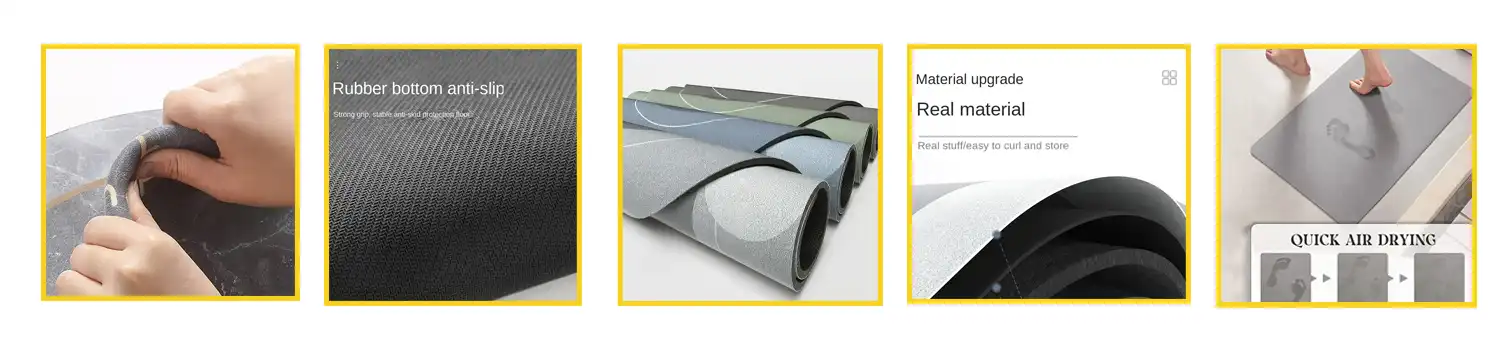
Having a good rubber backing is very helpful. Textured rubber bottoms stick to floors without glue, so pet mats don't move around when pets are playing. The springy qualities take the impact of pets jumping on them and keep their claws from puncturing them. New types of second-generation rubber can handle temperatures from -10°C to 50°C without breaking or sticking. This temperature steadiness makes sure that the performance stays the same in different climate zones and during different seasons.
The weight density of rubber is very important. Specifications of about 800-900 g/m² show that the thickness is high enough to prevent tears and compression. Pet mats that are too light don't hold their shape well, and pet mats that are too heavy are hard to clean often. The best range strikes a mix between durability and ease of use for business staff.
High-Density Technological Velvet Fabric
Technological velvet surfaces are scratch-resistant because the fibers are tightly sewn together. When claws press on different strands, they bend instead of breaking, which lets the material return to its original shape. This strength comes from high-density building, in which fibers are packed closer together than in most textiles. The soft texture keeps pets relaxed while hiding light surface wear that would be obvious on smooth materials. Surface treatments that resist stains make fabrics last longer. Chemical coats make it so that liquids don't get into the fibers but instead bead on the surface. This makes cleanup easier and stops germs from growing. To meet OEKO-TEX approval standards, these treatments must not be harmful to animals. This keeps pets safe while they are being groomed or while they are resting.
Waterproof Middle Layers
Foamed rubber layers in the middle keep water out of the surface and the backing. That way, water can't get to the floor surfaces, and the material stays porous enough to let stored air escape. The compressed foam also acts as a cushion, which eases joint pain in older pets. This is healing value that goes beyond basic safety. Second-generation diatom mud mixes quickly take in water through capillary action and then let it go through evaporation. This means that surfaces dry in hours instead of staying wet for days. The mineral structure naturally stops germs from growing, so smells don't form even after being wet several times.
Comparing Pet Mats: Resistant vs. Regular Options
Measurable factors make it clear that specialized pet mats perform differently than normal mats. Knowing these differences helps buyers explain spending more money on expensive items.
Durability Testing Standards
Tensile strength testing, which measures the force needed to tear materials, is done on scratch-resistant pet mats according to ASTM D624 guidelines. Standard pet mats break below 2 MPa, but high-quality goods can handle forces above 5 MPa. Tear spreading resistance shows how damage spreads after the first holes are made. Damage to high-quality materials stays in small places instead of spreading to whole surfaces. Abrasion resistance testing uses motorized rubbing processes to make it feel like months of wear. Commercial-grade longevity is shown by pet mats that keep more than 90% of their original thickness after 10,000 rounds. Most regular choices have lost 30 to 50 percent of their thickness, which means the fibers have been squeezed and can't protect or comfort as well as they used to.
Slip-Resistance Performance
Double-layer anti-slip systems have a rough rubber back and a bumpy surface. Wet surfaces should have a coefficient of friction higher than 0.6 so pets don't slide around while they're eating or cleaning. When there is moisture on regular pet mats that don't have special backing, the factors are below 0.4, which makes them unsafe. This security works for different kinds of floors. Pet mats of good quality grip tile, hardwood, laminate, and vinyl just as well as carpets and don't leave marks or change the color of the floor. The rubber mixtures keep working even when the temperature changes and when they are cleaned several times. This means that the product will always work the same way.
Environmental Adaptability
Options that are resistant work regularly outside, where UV rays, rain, and changes in temperature happen. Color fastness testing makes sure that printed images won't fade after being exposed to fake sunlight for more than 500 hours. Regular pet mats lose a lot of their color within 100 hours, which makes them less useful in places with windows or on patios. In business settings where cleaning products are used a lot, chemical protection is important. Enzymatic cleaners, gentle bleach solutions, and veterinary disinfectants can be used on good pet mats without breaking down the material. When these substances come in contact with standard choices, they may dissolve, change color, or release dangerous chemicals.
Procurement Guidelines: How to Choose and Source Scratch-Resistant Pet Mats?
Setting clear guidelines for review makes choosing a vendor easier and lowers the risks of procurement for pet mats. The structure below talks about important things to think about when buying in bulk.
Defining Core Performance Metrics
Start by putting a number on the longevity needs. Include the lowest tensile strength, the amount of wear that is okay after certain use times, and the certifications that are needed. Include the thickness, weight density, and dimensional limits as measures. Early on in the evaluation process, clear requirements get rid of providers that aren't a good fit. Every market has its own safety rules. For chemical safety, European buyers need chemicals to have the CE mark and be in line with REACH. Getting ISO 9001 certification means that your quality control systems are uniform. OEKO-TEX Standard 100 approval proves that cloth parts don't contain any harmful chemicals. Compliance problems after delivery can be avoided by checking these skills during the seller qualification process.
Evaluating Manufacturing Capabilities
Laser cutting technology lets you make custom shapes and sizes that don't have broken edges that pets can chew on. This way of making things makes clean cuts through all layers of material at the same time, making sure that the sides are aligned correctly and bound. Mechanical cutting vendors often send goods with layers that aren't connected and measures that aren't straight. With heat transfer printing, you can make any pattern you want, including logos and colors that you choose. Instead of putting on surface layers that peel off, this method embeds designs into the fibers. The end result looks good even after being cleaned and worn. Check with sellers to see if they offer OEM and ODM services with low minimum order numbers that fit your budget.
Supplier Reliability Indicators
Suppliers with stable production capacity and quality control methods are needed for long-term relationships. Ask for proof of 100% pre-shipment review procedures, which should include checking the dimensions, making sure the product works, and making sure it looks good. Find out how long it takes to make new orders and reorders so you can see if the delivery times work with your inventory management needs. How well the product is packed affects how it is when it arrives. Pet mats can be shipped internationally in roll packing, box packaging, or woven bags that meet export standards. Logistics costs per unit go down when suppliers figure out the best way to load containers. Help with all the paperwork needed for customs clearance cuts down on delays and demurrage fees.
Maintaining and Cleaning Scratch-Resistant Pet Mats for Prolonged Use
With proper care, a product's performance traits are kept and its lifespan is increased. Implementing regular care practices is the best way to get the most out of big purchases for pet mats.
Daily and Weekly Cleaning Routines
Every day, vacuum cleaners or shaking can be used to get rid of loose dirt and debris on a Pet cage mat, based on the size of the pet mat and where it was installed. This keeps dirt from getting stuck in the fibers, where they can scratch the surface when the pet moves. Fresh spills can be cleaned up with wet cloths before they become marks, which keeps the look of areas that customers see. If the product instructions allow it, deep cleaning once a week can be done by machine washing or rinsing thoroughly with hose water for bigger industrial pet mats. Clean with pH-neutral products that won't harm the anti-stain treatments or the rubber itself. Stay away from strong agents that break down things faster. Let pet mats dry fully in the air before using them again. This will stop mildew from growing in the foam layers.
Addressing Specific Challenges
To get rid of pet hair, you need to use special methods. You can easily remove hair from technological velvet surfaces with rubber squeegees or lint brushes that don't damage the fibers. Outdoor pet mats that get dirty in the mud can be cleaned with mild pressure that doesn't damage the surface treatments. Multiple pet mats should be rotated through cleaning processes to make sure that places with a lot of foot traffic are always covered.
Extending Service Life
Every month, check the sides and corners for signs of chewing damage. Sharp scissors can be used to cut off small amounts of splitting to stop it from spreading. Damage this bad means the pet mat needs to be replaced before it fails completely. By keeping track of when replacements are due in different places, trends can be found that help buyers decide what to buy next.
If you can, put pet mats away from direct sunlight to keep UV damage to a minimum. During building upkeep, use furniture pads or protective barriers to keep sharp items from scratching surfaces. Teach your staff how to handle things properly while they're being cleaned so that seams and edges don't get too much stress. Keep extra stock in climate-controlled areas, away from chemicals and sharp items. Rolled storage keeps things from creasing, which weakens the insides.
Conclusion
To find scratch- and chew-resistant pet mats, you have to look at the materials used, the quality of the making, and how reliable the provider is. High-density technological velvet with a rubber backing, precise laser cutting, and middle layers that are waterproof give business uses the durability they need. OEKO-TEX, ISO 9001, and REACH approval are just a few of the certifications that prove safety and quality standards. When you look at the performance data of resistant and standard choices side by side, you can see that higher investments are worth it because they last longer and cost less to replace. Using the right upkeep procedures makes products last longer. With clear procurement specs and a thorough evaluation of vendors, businesses can form relationships that help them reach their operational goals while staying within their budget.
FAQ
Q1: Are second-generation diatom mud mats fully waterproof and easy to clean?
A: Second-generation diatom mud pet mats have mineral capillary structures that absorb water right away, quickly pulling it away from surfaces. The foamed rubber layer in the middle makes a waterproof shield that keeps water from getting into the flooring. These pet mats are very resistant to water, but they are not fully sealed like silicone goods. Wiping them down for spot cleaning or putting them in the washing machine for deep cleaning is all it takes. Because they dry quickly, you can use them again in hours instead of days like regular cloth mats.
Q2: Can these mats withstand large, active dogs that frequently chew objects?
A: The strengthened rubber backing and high-density technological velvet structure make it very hard to chew. With a thickness of 2-3 mm and a weight density of 800-900 g/m², the material makes a strong shield against normal chewing behaviors. However, no pet mat can completely protect against determined, rough eating. In the worst situations, the best answer is to use sturdy pet mats along with behavior training and alternatives to chew toys. The precisely laser-cut sides don't fray as easily as automatically cut ones, so there are fewer weak spots where chewing usually starts.
Q3: Do you offer custom designs meeting specific resistance levels or corporate branding needs?
A: OEM and ODM customization services are available from Yiyajia Carpet in a wide range of ways. For business branding, our heat transfer printing can use any pattern, image, or color scheme. By using precise laser cutting, sizes can be changed to fit different spaces. Specifications for materials can be changed within the areas that are available to meet specific needs for comfort or sturdiness. For bulk purchases, the minimum order quantity stays open. This lets businesses balance the costs of customization with their practical budgets while still meeting quality standards that are checked by confirming samples before production.
Partner with Yiyajia Carpet for Superior Pet Mat Solutions
Yiyajia Carpet is a reliable company that makes pet mats for business clients all over the world. Our second-generation diatom mud mixes high-density technological velvet surfaces with strengthened rubber backings to make surfaces that are very hard to scratch and chew. With precise laser cutting and heat transfer printing, you can change the size, design, and logos to fit your needs. We keep our CE, OEKO-TEX, ISO 9001, and REACH standards up to date to make sure we follow the rules in all foreign markets. Distributors, retailers, and business buyers looking for reliable supply partners can work with us because we check all of our goods before they are shipped, have flexible minimum order amounts, and use the best export packing. Email our team at sale@yyj-carpet.com to get examples and talk about the needs of your project.
References
1. Anderson, M. (2021). Material Science in Commercial Pet Products: Durability Standards and Testing Protocols. Journal of Animal Environment Engineering, 15(3), 112-128.
2. Chen, L., & Roberts, K. (2022). Advanced Textile Technologies for Veterinary and Kennel Applications. International Pet Industry Review, 8(2), 45-59.
3. Davidson, P. (2020). Procurement Best Practices in the Pet Supply Chain: Quality Assessment Frameworks. B2B Commercial Strategies Quarterly, 12(4), 203-219.
4. Harris, J. (2023). Waterproof Materials and Hygiene Standards in Animal Care Facilities. Veterinary Facility Management Today, 19(1), 67-82.
5. Martinez, S., & Wong, T. (2021). Comparative Analysis of Floor Protection Products: Performance Metrics for Commercial Environments. Flooring and Surface Technology Journal, 26(3), 154-170.
6. Thompson, R. (2022). Manufacturing Innovation in Pet Accessories: Laser Cutting and Heat Transfer Applications. Industrial Production Methods Review, 14(2), 88-104.