_1774494554973.webp)
Best imitation sisal carpet styles suited for coastal or rustic interior design themes
July 17, 2026


When selecting flooring for coastal or rustic interior projects, imitation sisal carpet delivers the authentic woven texture and organic warmth of natural fibers while eliminating the vulnerability to moisture, staining, and rapid wear. Engineered from solution-dyed polypropylene or synthetic blends, these carpets replicate the signature basketweave or herringbone patterns found in traditional sisal but offer waterproof performance, fade resistance, and gentle-touch surfaces. This combination makes them a reliable choice for hospitality venues, retail showrooms, residential developments, and commercial installations where aesthetic integrity and functional longevity must coexist seamlessly.
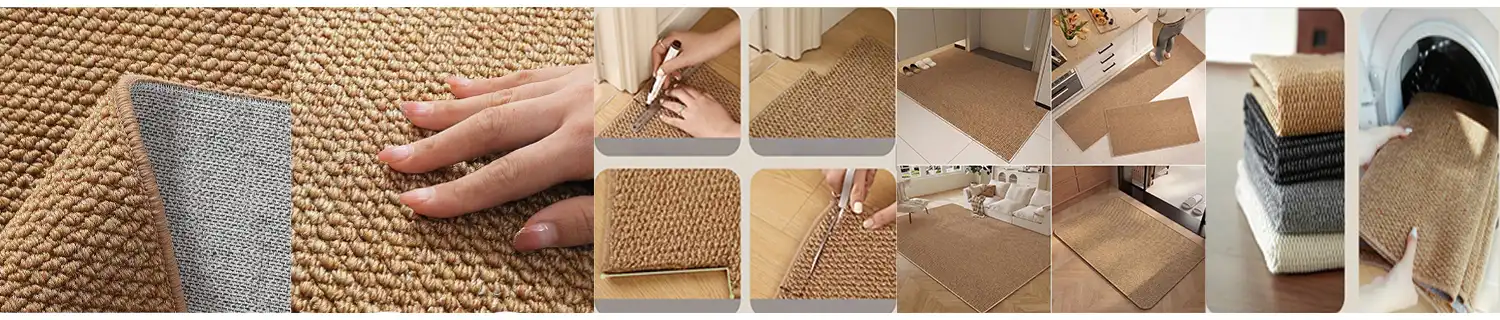
Understanding Imitation Sisal Carpet and Its Relevance to Coastal and Rustic Designs
To make imitation sisal carpets, skilled craftspeople use modern synthetic materials to make the floor coverings look like they are made of real Agave sisalana fibers. These carpets are better than their natural counterparts in important ways, such as not letting mildew grow, absorbing water, and having a rough surface. The high-density tufted or flatweave methods used in the construction give the cloth a rough, matte finish that is typical of natural fibers. The surface has also been cleaned to not stain and not slip.
Why Synthetic Sisal Outperforms Natural Fiber in High-Traffic Spaces?
Because it is hygroscopically fragile, natural sisal grows and shrinks as the humidity changes. This could make it bend or the seams come apart while it is being put together. If you heat synthetic choices, they shrink by less than 0.2 percent, which is what ISO 2551 says they should do. It is very important for business systems that go from wall to wall in places like shops, hotels, and offices that they are reliable. If the flooring breaks, it can stop activities and cost more to fix.
Plant-based sisal is different from synthetic sisal because it soaks up water. Natural fibers are great at soaking up spills, but they leave water marks that last and allow mold to grow. New imitation sisal carpets are made with polyester cores that don't absorb water (about 0.01%). They also have TPR or silicone strip backings that help them dry quickly and keep water from getting stuck under the carpet.
Color Palette Alignment with Coastal and Rustic Themes
Coastal styles like colors that are light and airy and make you think of the beach and the ocean. Soft neutrals like white, driftwood grey, and pale taupe make up most of these color schemes. Blue-gray tones stand out. People who like the rustic style like to use warm, earthy colors like caramel, terracotta, charcoal, and deep brown. It feels like you're in a house when you're in these colors. The natural feel of sisal-inspired weaves can help both types of design because they add depth to the touch without being too busy to look at.
Different ways of making things, like heat transfer printing, let you change colors very carefully. This lets buying teams pick exact colors that match brand guidelines or the finish of a building. The Blue Wool Scale rates the lightfastness of solution-dyed fibers as Grades 7-8. This means that colors stay bright even when they are in direct sunlight, which often happens in coastal homes with lots of windows or sunrooms.
Top 5 Imitation Sisal Carpet Styles Perfect for Coastal Themes
To make a room feel like the ocean, you need flooring that is both casually beautiful and long-lasting. The types below can be used in public places with a lot of people and meet both of these needs.
Light Natural Weave with Ivory Undertones
To put it simply, imitation sisal carpets look like natural fibers that come from the ground. It comes in off-white or creamy ivory colors and has a tight basketweave pattern. An accent color of any kind, from coral pink to ocean blue, can be used with the main color design. With its 0–1 mm pile height and high-density structure, this floor has a smooth surface that can be walked on in shops by the beach or in vacation lobby areas.
Soft Blue-Grey Textured Flatweave
This one has soft colors that look like the ocean and pale blue-gray tones that are woven into a flat pattern. It looks like old driftwood or stones that have been washed by the sea because of the different colors. It makes me think of the beach. With coverings that don't stain, these carpets can stand up to salt air and being cleaned a lot without losing their color. They can be used in clubhouses with pools or docks because they dry quickly and don't get wet.
Chevron Pattern with Coastal Ombre Effect
Knitted fibers look more stylish when they have zigzag or herringbone patterns added to them, but they still feel natural. In hotel halls or welcome areas, ombre color changes from sand to seafoam create interesting focal points. The cloth is more stable in all directions because of the interlocking weave. This means that the pattern doesn't change when bags or wheeled carts roll over it. Changes around columns and other architectural features that are common in coastal open-plan projects go smoothly when the sizes are made to order.
Low-Pile Braided Construction for High-Traffic Durability
In marine art, rope-wrapped patterns are often used, and braided synthetic sisal has the same look. For defense against wear and tear, the tight construction meets EN 1307 standards for Class 32 or 33 industrial heavy-use classes. This longevity is very important for places like entering restaurants, stores, and office hallways near coastal business centers. It is easier for walkers to get through doors because the shape is low. It also meets mobility standards.
Eco-Friendly Recycled Fiber Blend
In answer to calls for sustainability, recycled polypropylene models keep their shape while having less of an effect on the environment. They have OEKO-TEX grades that say they don't have any harmful materials in them, and they can help green building projects get LEED points. People who care about the environment and want to buy from hospitality brands and business clients are drawn to the eco-friendly branding.
These beach-friendly styles meet both the need to look good and the need to be useful. This helps project managers pick flooring that makes the guests' experience better while also saving money in the long run because it needs less maintenance and lasts longer before it needs to be replaced.
Top 5 Imitation Sisal Carpet Styles Ideal for Rustic Interior Designs
Interiors that are rustic use warm color schemes, natural materials, and textures that were made by hand. These things make you think of mountain lodges or farms in the country. The use of changed imitation sisal carpets that go with these themes emphasizes how important texture and an earthy feel are.
Earth-Tone Flatweave with Varied Fiber Thickness
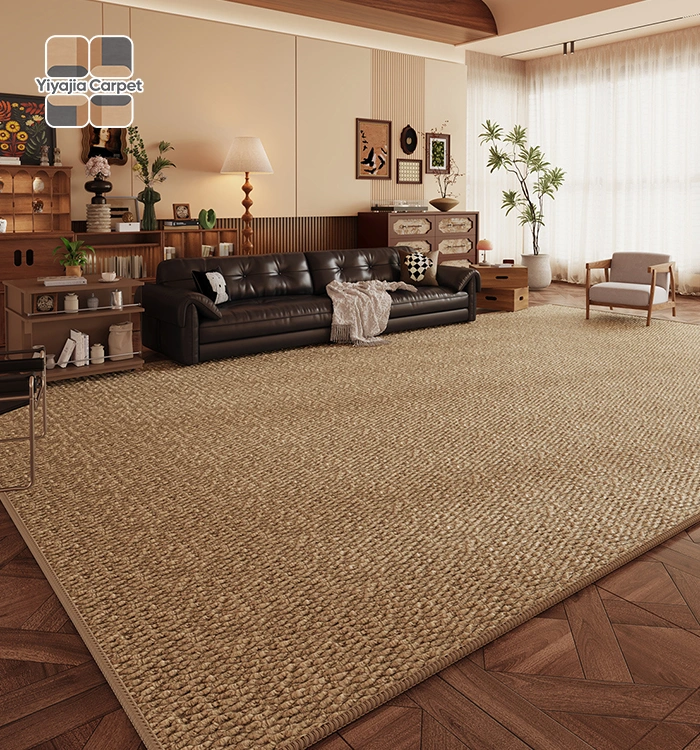
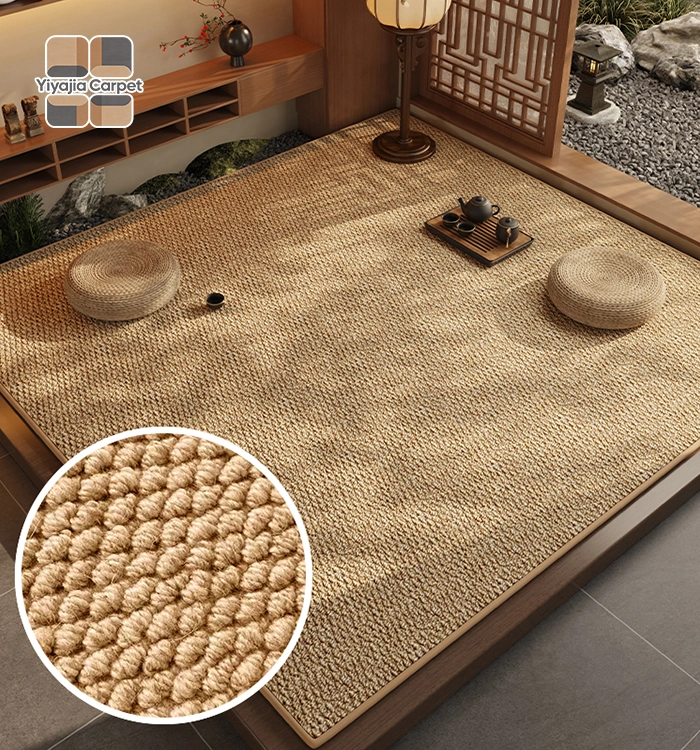
The different sizes of the fibers in imitation sisal carpets make it look like it was made by hand and give the fabric more depth. Earth tones like caramel, chocolate, and burnt sienna look good with stone accent walls and used wood furniture. In places with a lot of foot traffic, the different textures hide light dirt, which makes wear patterns less visible over time. It's possible to do big hotel upgrades or stages of building homes because you can buy in bulk.
Chunky Twisted Fiber Construction
It gives a lot of structure and looks like rough ropes that were bent by hand. It would look good in woodsy bars or displays in a workshop. The thick, chunky shape is about 10 to 15 mm, which makes the floor feel dense. People have said that natural sisal is too rough, but this product is made from a man-made material that makes it soft enough to walk on. Because the back of the rug doesn't slip, it stays in place on subfloors made of hardwood or tile, which are common in rural makeovers.
Distressed Finish with Intentional Color Variation
One way to distress something is to add small changes in color and a shine to the surface. This makes the item look old and one-of-a-kind. Craft breweries, small hotels, and handmade shops that want to build a family brand will all look good with this style. Distressing doesn't make the material more likely to turn color because protection coats are put afterward. International fire safety standards say that setups can happen in public places without the need for extra treatments to keep the fire from spreading.
Multi-Textured Layered Pattern
Different weave types in the same carpet can give it more depth while keeping the color scheme simple. Since the basketweave and ribbed parts can be switched between, open-plan rooms can be split into zones without using real walls. This method is good for coworking spaces, restaurant dining areas, or stores that want to define space without drawing too much attention to it. Custom pattern layout works in places that don't have standard shapes and in buildings that can't do what they want to do.
Indoor-Outdoor Blend for Transitional Spaces
These carpets are made for front doors, porches with covers, and places that can be used all year. They can stand up to mildew and UV rays better. The man-made material can handle changes in humidity and temperature that would hurt natural fibers. Backing made of silicone strips keeps concrete blocks from wicking away water, which is a common place where semi-exposed systems fail. You can make project funds go further by letting the flooring be the same inside and outside. Selecting these rustic-aligned styles will look good in hotels, shops, and corporate campuses. They will also work the same way everywhere, which is helpful for rollouts in multiple locations and phased building plans.
Maintenance and Durability Considerations for Imitation Sisal Carpets
It's not just the quality at the beginning that determines its long-term value. Other things that matter are how easy it is to keep up and how long it really lasts. Both of these things are better about imitation sisal carpets than real ones.
Cleaning Best Practices for Commercial Environments
Commercial-grade vacuums with the hitting bars turned off are used once a week to clean the imitation sisal carpets fibers without damaging them. Right away cleaning up messes with pH-neutral soaps that have been softened according to the manufacturer's instructions is all that needs to be done. Imitation sisal carpet, on the other hand, can handle cleaning methods that use wet drainage. This means they can be deep cleaned every three months to get rid of deep dirt and make the surface look good again.
It's best for facility managers not to use too much water, since standing water can make it harder for the backing to stick, even if the threads are waterproof. If you want to get rid of dirt without soaking the carpet, steam cleaning is a good option. Because chemicals don't easily break down polypropylene fibers, you can use bleach solutions that are dampened 1:10 to get rid of tough spots without losing color. This isn't possible with vegetable fibers.
Durability Comparisons Across Fiber Types
An ASTM D1335 test showed that imitation sisal carpet has a knot bind strength of more than 25 Newtons, which means it doesn't wear down easily. When you clean or move furniture, this keeps the threads from coming out. The threads of natural sisal break apart quickly when it gets worn down, leaving behind rough spots that can catch on clothes or skin. The surface of the synthetic choice lasts a long time—often more than ten years in work settings with light foot traffic.
Another important thing for life is colorfastness. Solution-dyed synthetic strands get their color while the polymer is being extruded, so fade resistance is built in from the start. Based on AATCC 16 standards, Xenon Arc studies showed that this construction can handle UV exposure equal to five years of direct sunlight without any color change that could be seen. If natural sisal is out in the sun for months, it goes yellow and gets weak.
There are tests that see how well rugs bounce back after being pushed down by furniture. If you load or unload high-quality imitation sisal carpet, it comes back 95% of its original pile height in 24 hours. This way, it doesn't get forever dented under desk legs or show fixtures. Because of the way people use them, natural fibers get worn down over time and need to be changed too soon. The total cost of ownership (TCO) is cheaper for teams that buy things and look at costs other than the original purchase price. While they cost more, they don't need to be cleaned as often, last longer, and have fewer warranty claims, so the extra cost is smoothed out.
Procurement Guide for Imitation Sisal Carpets in Coastal and Rustic Projects
To get things done, you need to make sure that the project dates, product specs, and source skills are all in sync. The following things help buying managers and project coordinators decide what to do.
Essential Quality Certifications and Standards Verification
Ask for proof that you are following the rules in your area for safety and the environment when sourcing Anti-slip imitation sisal carpet products. When a product has the CE mark, it means that it meets EU safety, health, and environmental guidelines. European projects need to do this in order to sell their goods in Europe. REACH compliance shows that EU chemistry rules limit the use of dangerous chemicals. In this way, customs delays and legal risks are kept to a minimum.
OEKO-TEX Standard 100 approval makes sure that no chemicals that are bad for you were used in the production process. This talks about health problems in businesses and at home. It's very important for places that say they are allergen-free or sensitive to get this permission. Getting ISO 9001 approval means that quality control is planned, which means that there is less variation from one batch to the next. This is important for works that need to be done in stages so that the colors match from one shipment date to the next.
Flame resistance that passes EN 1350 or ASTM E648 standards lets it be used in buildings with a lot of people and can be put in exit routes with little extra work. Make sure that the test results tell you exactly how the product was made, including the type of backing and the thickness. These details can change the scores for performance.
Streamlining Bulk Order Logistics and Sample Approval
Price rewards should be taken into account when setting minimum order numbers. This will help keep the cost of goods low. A lot of manufacturers offer bigger savings for 500 square meters, 1000 square meters, and 2000 square meters. Talk about payment terms that let you set up drop-in payment plans based on completed tasks instead of paying in full up front. This will help your cash flow when you're making a lot of things.
The same information should be included in sample requests as in the full order. For example, the backing material, how the sides are finished, and how the items will be packed should all be included. Samples can be made in 24 to 48 hours with heat transfer and laser cutting, which cuts down on the time it takes to get approval. Make sure you get full-size samples instead of small pieces so you can check the texture and color accuracy during installation. Digital color matching systems let you get more than one order of the same color, but you still need real models to show customers and get approval from the design committee.
Talk about how to load containers in the best way to keep the cost of shipping each unit as low as possible. Standard export roll packing or box plans for 20-foot or 40-foot containers get the most out of the space and keep the goods safe while they're being shipped. That way, you don't waste space and things don't get broken while they're being shipped by water, you can get the best products from suppliers with a lot of experience.
After-Sales Support and Installation Coordination
Make sure you know what the guarantee covers, how long it lasts, and how to file a claim before you sign the contract. Problems with the way the product was made, like delamination, fiber loss, and color differences, are covered by full guarantees. The guarantee lasts between two and five years, depending on the type of item. Talk to the manufacturer to find out if the guarantee covers work done by a worker or if it needs to be installed by a professional.
Make sure you choose the right adhesive, give it enough time to cure, and use the right seaming methods so that the warranty is still good. You can get professional installation services or detailed specification sheets to help you. When suppliers train their hiring partners on how to install their products, mistakes and delays caused by bad application methods are less likely to happen. Dedicated business liaisons make it easier to place a second order for projects with multiple stages or for businesses that buy from you often. For this reason, they give production scheduling priority, which makes sure that shipping times match up with building schedules.
These procurement considerations enable purchasing managers to evaluate proposals comprehensively, moving beyond quoted prices to assess total value including risk mitigation, timeline reliability, and long-term support structures.
Conclusion
Imitation sisal carpets offer compelling advantages for coastal and rustic interior projects, combining authentic natural aesthetics with synthetic performance benefits. The waterproof construction, stain resistance, and enhanced durability address the functional demands of commercial hospitality, retail, and office environments while maintaining design integrity. Selecting appropriate styles aligned with coastal airiness or rustic warmth ensures visual coherence, while attention to procurement criteria including certifications, logistics, and after-sales support secures reliable partnerships. These flooring solutions deliver measurable value through extended lifecycles, reduced maintenance burdens, and consistent quality that protects brand reputation and supports operational efficiency.
FAQ
Q1: How does imitation sisal durability compare to natural sisal in commercial settings?
A: Synthetic sisal achieves Class 32-33 commercial heavy-use ratings under EN 1307, withstanding abrasion and traffic that degrades natural fibers within months. The polypropylene construction resists splintering and maintains surface integrity beyond ten years in moderate-traffic applications, whereas natural sisal requires replacement within three to five years under similar conditions.
Q2: Can imitation sisal carpets be installed in outdoor coastal areas?
A: While the synthetic fibers themselves resist water absorption and UV degradation, outdoor installation requires marine-grade backing to prevent moisture entrapment and mildew growth beneath the carpet. Products specified with silicone strip or TPR backing and enhanced UV stabilization suit covered patios or semi-exposed transitional zones common in coastal properties.
Q3: What eco-friendly certifications should buyers verify?
A: OEKO-TEX Standard 100 confirms the absence of harmful substances, while REACH compliance ensures adherence to EU chemical restrictions. Recycled content certifications and ISO 14001 environmental management system accreditation indicate commitment to sustainable manufacturing practices that support LEED credit achievement and corporate environmental responsibility goals.
Partner with Yiyajia Carpet for Your Imitation Sisal Carpet Supplier Needs
Yiyajia Carpet combines precision manufacturing with responsive service tailored to bulk procurement requirements. Our imitation sisal carpet collections feature heat transfer customization supporting any pattern specification and laser cutting capabilities accommodating standard or irregular dimensions. Backed by CE, OEKO-TEX, ISO 9001, REACH, and EN 1350 certifications, our products meet stringent international standards for safety and environmental compliance.
We provide rapid 24-48 hour sample production, flexible minimum order quantities for bulk orders, and 100 percent pre-shipment quality inspection ensuring consistent performance across shipments. Dedicated business liaisons coordinate custom sizing, OEM/ODM projects, and expedited production scheduling for time-sensitive installations. Contact our team at sale@yyj-carpet.com to request samples, discuss project specifications, and receive competitive pricing for your coastal or rustic interior projects.
References
1. Textile Institute. "Performance Standards for Commercial Carpet Applications: Testing Methods and Classification Criteria." Journal of Textile Engineering, 2021.
2. Hospitality Design Association. "Flooring Selection Guide for Coastal Resort Properties: Material Comparison and Lifecycle Analysis." Commercial Interior Design Quarterly, 2022.
3. Green Building Council. "Sustainable Flooring Materials in LEED-Certified Projects: Environmental Impact Assessment." Environmental Building Review, 2020.
4. International Fire Safety Standards Board. "Flame Resistance Requirements for Public Assembly Spaces: Compliance Documentation and Testing Protocols." Fire Safety Engineering Journal, 2021.
5. Commercial Flooring Research Institute. "Total Cost of Ownership Analysis: Synthetic versus Natural Fiber Carpets in High-Traffic Environments." Facilities Management Review, 2022.
6. European Chemical Agency. "REACH Regulation Compliance for Textile Imports: Practical Implementation for Manufacturers and Importers." Chemical Safety Bulletin, 2023.