_1774494554973.webp)
How to choose the right wire coil floor mat for high-traffic areas?
August 7, 2026


When picking the right Wire coil floor mat for a high-traffic area, you need to look at the thickness, weight density, material makeup, and backing type to make sure it will last under constant foot traffic. High-quality mats are made of PVC thread loops and have an anti-slip backing. They usually weigh 2.2 kg per square metre or more and are about 8 mm thick to give you good grip and durability. Safety and environmental standards like CE, OEKO-TEX, and ISO 9001 are confirmed by certification standards. Customisation options let you change the size, pattern, and logo for use in commercial, retail, and hospitality settings where both performance and appearance are important.
Understanding Wire Coil Floor Mats: Key Features and Benefits
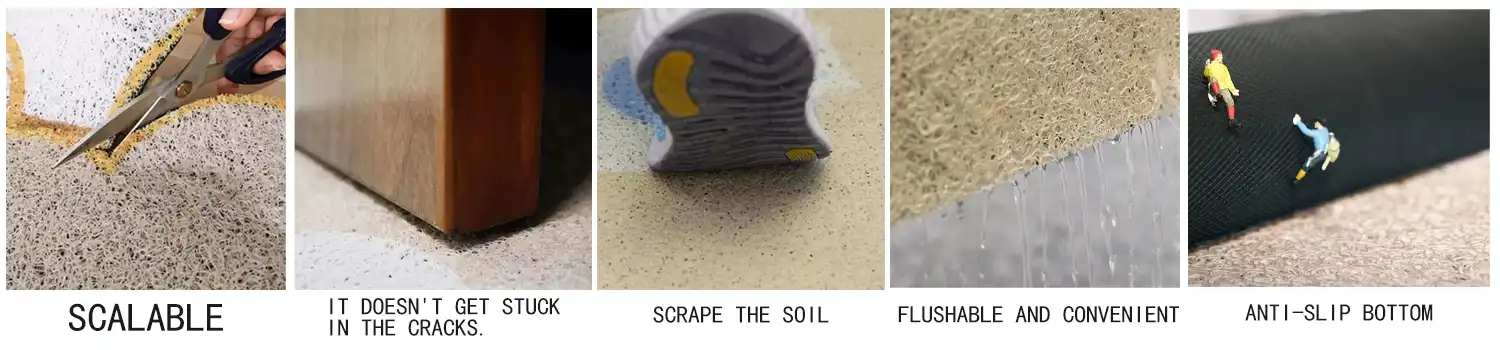
Mats at the entrance keep the floors inside from getting wet, dirty, and damaged by visitors and staff. Due to their distinctive design, Wire coil floor mats stand out in this group. These mats are different from regular woven carpet mats because they have continuous PVC strands set up in a random-loop structure. This plan makes a network that is open and porous. The loops trap soil particles inside them and let water drain away from the contact surface.
Why PVC Loop Construction Outperforms Traditional Mats?
Because PVC is hydrophobic, these mats don't soak up water. This means that mould, mildew, and bacteria can't grow on them naturally. This trait is useful in places where it rains or snows a lot, because too much wetness can make cleanliness standards less strict. Because dirt falls below the walking surface instead of building up on top, the open-loop structure keeps the mat surface looking pretty clean even during busy times. Facilities managers in stores, offices and hotels like this "scrape-and-hide" feature because it keeps dirt from building up in places where it needs to be cleaned right away.
Durability and Safety Combined
High-density loop construction keeps its shape even when foot traffic keeps pushing it down. Mats that weigh about 2400 grams per square metre are stable and won't bunch up or move around while you use them. The two-part anti-slip system has a heavy-duty PVC backing that sticks to floors firmly and a textured loop surface that keeps your feet from slipping. Slip-and-fall risks are reduced by this combination in both dry and wet situations, meeting safety standards in business settings.
Another layer of value is added by low maintenance. To clean the mat once a week, you have to lift it up, shake out any dirt that's stuck in it, and hose it down with water and mild detergent. Because it dries quickly, there is little downtime, and the mat can be used again within hours. Over time, this makes them cheaper to clean than mats that need to be steam cleaned by a professional or treated in a special way.
Essential Criteria for Selecting Wire Coil Floor Mats in High-Traffic Zones
A systematic look at operational needs and product specifications can help with purchasing decisions. High-traffic areas are very different in terms of the weather, the amount of foot traffic, and the amount of room available. To get the best performance, mat features should be matched to these factors.
Material Composition and Thickness Standards
PVC is still the best material for a Sand-scrapping doormat because it is strong, flexible, and doesn't get damaged by the weather. When looking at different sources, make sure that the PVC they use has UV stabilisers in it to keep the colour from fading and the material from breaking down in the sun. Most of the time, thickness is between 8mm and 20mm. For most commercial entrances, an 8mm thickness is fine. However, industrial buildings that get a lot of heavy machinery may need thicker options that can handle higher impact forces.
Weight and Density as Performance Indicators
Mat weight is directly related to how stable and long-lasting it is. Products that weigh 2.2 kg per square metre are good for moderate traffic, while products that weigh more than 2.4 kg per square metre are better for places where people are always walking on them. Density also affects the durability of the filament. Loops that are denser don't smooth out too quickly when compressed, so the mat will keep scraping well for a longer time.
Backing Systems and Safety Certifications
How well the mat stays in place depends on the backing. Tile, concrete, and smooth stone are just a few of the hard floors that PVC backing works best on. Some uses, like wet places like pool decks or industrial kitchens, benefit from drainage-through designs with little or no backing. Safety certifications prove that rules are being followed. The CE mark means that the mat meets European health and safety standards, and the OEKO-TEX label means that it doesn't contain any harmful materials. REACH compliance makes sure that chemicals sold in the EU are safe, and EN 13501 classifies building materials based on how they behave in fire.
Wire Coil Floor Mats vs. Alternative Flooring Solutions: Making an Informed Choice
Before making a purchase, people who make decisions often look at a number of different matting options. Knowing how different types of mats work in different situations helps match the product choice with the needs of the operation.
Comparing Performance Across Mat Categories
Because they cushion and keep you from getting tired, rubber mats are good for places where people stand for long periods of time. Rubber, on the other hand, soaks up water and needs to be deep cleaned more often to keep smells from building up. Carpet mats look nice and are good at absorbing dirt, but they hold on to water longer, which can be slippery and needs special extraction cleaning equipment.
Wire coil entrance mats are great at letting water drain quickly and removing dirt. With its open-loop design, the construction lets water flow right through, so there is no standing water on the walking area. Because they dry quickly, mats don't need to be cleaned as often and can be used again sooner. The stiff PVC threads scrape shoe feet hard, getting rid of dirt that softer materials might miss. Because of these qualities, Wire coil floor mats work especially well in areas where you need to remove contaminants quickly and easily when going from outside to inside.
Cost-Efficiency and Longevity Considerations
Different types of mats require different amounts of money up front, but the total cost of ownership includes repairs and replacements. If there is a lot of foot traffic, rubber mats might need to be replaced every two to three years. On the other hand, Wire coil floor mats that are properly installed usually last five years or longer. The lower replacement rate and less work needed to clean the mat make it a better investment over its lifetime. This long-term value is appreciated by facilities on tight budgets, especially those that are in charge of various sites with consistent matting needs.
Procurement Insights: How to Buy Quality Wire Coil Floor Mats for Your Business?
Getting entrance mats through well-known outlets ensures the quality of the product and help after the sale. B2B buyers face different problems than retail buyers because of the size of their orders, the need for customisation, and the difficulties of shipping goods across borders.
Evaluating Suppliers and Manufacturers
Working directly with makers like Yiyajia Carpet has benefits like more customisation options, clear prices, and better quality control. Manufacturers who use advanced heat transfer and precise laser cutting technologies can meet specific colour needs, logo inlays, and custom dimensions without having to limit their inventory to mass production. Make sure that your suppliers keep their ISO 9001 certification, which shows that they follow quality management systems all the way through production.
Before you place a large order, ask for samples. A sample turnaround time of 24 to 48 hours shows that production can be done quickly and accurately, and it lets you check that the patterns, sizes, and material requirements are what you expected. Product descriptions alone can't show how something feels or how it's put together. But physical samples can. Testing samples in real-life conditions on the site gives you confidence that they will work well enough to meet operational needs.
Order Structuring and Minimum Quantity Considerations
Minimum order quantities that are flexible can be used for both pilot programs and large-scale rollouts. Some providers have minimums of one container load, while others will work with smaller amounts at a different price. Make it clear if the price you're given includes customisation services like adding a logo or making the size not standard. Understanding the different types of packaging—for example, roll packaging for easy storage vs. carton packaging for direct site distribution—helps keep logistics costs as low as possible.
Terms of payment and delivery schedules affect how cash flows are managed. When a manufacturer offers 100% pre-shipment checking, the chance of getting faulty goods is lower. Clear production schedules help with accurate project planning, especially for building new homes or remodelling existing ones with set end dates. Getting in touch with Wire coil floor mat suppliers who put a high value on on-time delivery can help you avoid costly project delays.
Installation and Maintenance Guide for Prolonged Mat Performance
When mats are installed correctly and cared for regularly, they last longer and continue to be safe. Even the best door mat won't work well if it's not put down correctly or kept up properly.
Site Preparation and Placement Strategy
Before installing, clean the floor to get rid of any dirt or dust that might stop the backing from sticking properly. To get the most dirt off of the floor before people even get to the carpeting inside, make sure you accurately measure the area where people enter the building so that the mat can cover at least three full steps inside the doorway, which is usually three to four meters. Place mats so that they are flush with door openings to keep people from tripping and make sure that the building is wheelchair accessible.
To make a level transition in recessed mat wells, make sure that the depth of the recess matches the thickness of the mat. If you want to keep your surface-mounted mats from catching on wheels or shoe edges, the edges should be bevelled or ramped. For outdoor uses that will be affected by wind, you might want to think about anchor systems or weights to keep things from moving during storms.
Cleaning Protocols and Troubleshooting
Every day, you should lift and shake the mat or use a hoover with strong suction to get rid of any loose dirt or dust. To deep clean the mat once a week, you need to use a neutral pH detergent and water at moderate pressure (no more than 60 bar) to avoid damaging the filaments. The slippery PVC lets water drain right away, and the open structure helps it dry quickly in the air.
Deal with common problems before they happen. Mat movement means there isn't enough weight or backing grip. This can be fixed by moving to a heavier version or adding anchor strips. Uneven wear patterns show that there are a lot of traffic lanes. Every few months, turn the mat 180 degrees to spread out the wear more evenly. If loops start to flatten, check to see if the density of the mat matches the amount of traffic—if not, you may need to upgrade to a higher-density option for longer-lasting performance.
Conclusion
Choosing the right entrance matting system protects the inside of buildings, lowers maintenance costs, and makes them safer for people who live or work there. Wire coil floor mats are very useful in commercial settings with a lot of foot traffic because they remove dirt better, let water drain quickly, and don't need much maintenance. To get the best performance that meets practical needs, good procurement combines material requirements, source dependability, and total cost of ownership. By knowing the technical factors that affect safety and durability, decision-makers can choose goods that will work successfully in a wide range of weather conditions and road conditions.
FAQ
Q1: What thickness should I specify for hotel lobby entrances?
A: A lot of people walk through hotel lobbies during business hours. An 8mm thickness is strong enough to scratch and last long enough for standard lobby entrances without being too thick and creating a big step that could get in the way of luggage carts or accessibility equipment. Luxury hotels with a lot of guests might want to look into 10mm to 12mm options to extend the time between replacements.
Q2: Can wire coil mats function effectively in freezing temperatures?
A: Good PVC formulas stay flexible even at -20°C, which keeps them from becoming brittle and cracking. If you put mats in outdoor vestibules or cold climate entryways that aren't heated, they should be made for cold weather. Because water flows through the open-loop structure instead of pooling on the top, ice doesn't form. This means that the structure keeps its grip even in the winter.
Q3: How do I verify that a supplier's certifications are legitimate?
A: Ask for copies of the certification papers and check the certificate numbers directly with the organisations that issued them. When something is marked with CE, it should have a notified body number on it. OEKO-TEX certificates show unique identification codes, and ISO 9001 certificates name the authorised registrar. As part of their quality assurance openness, reputable makers don't hesitate to give this information.
Partner with Yiyajia Carpet for Reliable Entrance Matting Solutions
Yiyajia Carpet meets the needs of importers, distributors, and project managers looking for reliable Wire coil floor mat suppliers by combining advanced manufacturing with a wide range of customisation services. Our precise laser cutting and high-definition heat transfer technologies let you add logos, make changes to the size, and match patterns so that your brand looks the same in all of your places. Our products are certified by CE, OEKO-TEX, ISO 9001, REACH, and EN 13501, which means they meet strict international safety and environmental standards that are needed for doing business across borders.
We know that low pricing isn't the only thing that's needed for large purchases. Reliable delivery, regular quality, and quick contact are also important for long-term relationship success. Our process for 100% pre-shipment inspection and optimised export packing reduce logistics risks, and our flexible minimum order numbers can be used for both small orders and large-scale deployments. Email our team at sale@yyj-carpet.com to get samples, talk about how we can customise the products, or get detailed product specifications that are made to fit the needs of your project.
References
1. Smith, J. & Anderson, K. (2021). Commercial Flooring Systems: Performance Standards and Selection Criteria. Facilities Management Press.
2. European Committee for Standardization (2019). EN 13501: Fire Classification of Construction Products and Building Elements. CEN Publications.
3. Martinez, R. (2020). "Comparative Analysis of Entrance Mat Systems in High-Traffic Commercial Environments." Journal of Building Maintenance and Safety, 14(3), 112-128.
4. Thompson, L. (2022). Procurement Best Practices for Facility Supplies: A Guide for Purchasing Managers. Industrial Supply Institute.
5. International Organization for Standardization (2018). ISO 9001:2015 Quality Management Systems – Requirements. ISO Standards Catalog.
6. Williams, D. & Chen, M. (2023). "Long-Term Performance Evaluation of PVC-Based Entrance Matting in Hospitality Applications." Facilities Engineering Quarterly, 29(1), 45-62.