_1774494554973.webp)
How to choose the most suitable size for the entrance door mat?
May 30, 2026


To get the right size entrance mat, measure the width of your opening and add 12 to 24 inches to make sure it covers the whole traffic area. A utility door mat of the right size should go at least 15 feet inside business entrances with a lot of foot traffic to catch 80% of the dirt and moisture that comes in. This lowers the cost of upkeep and the risk of slipping. Match the size of the mat to the amount of foot traffic, the space for door swings, and the type of building to make sure safety rules are followed and the mat is bought at the lowest cost.
Comprehending the Importance of Door Mat Size in B2B Procurement
Getting the right size door mat is essential for managing foot traffic and keeping the building in good shape. Unlike welcome mats that are just for looks, commercial-grade door matting is useful in places with a lot of foot traffic because it keeps dirt, wetness, and wear patterns in check.
How Sizing Impacts Safety and Compliance?
The right size affects safety directly by reducing trip risks and improves lifespan by distributing foot traffic evenly across the mat's surface. When mats are too small, the ends curl from too much use, which can lead to accidents that could lead to lawsuit claims against the facility. The Americans with Disabilities Act (ADA) says that mat sides can't be more than 0.5 inches high. To be in compliance, door systems must be flat and the right size. Utility door mats made with a TPR thermoplastic rubber backing offer a firm grip without being too thick, meeting accessibility standards while keeping you from slipping on smooth floors.
The Cost of Incorrect Mat Dimensions
On the other hand, mats that aren't the right size result in higher upkeep costs and greater safety risks. Facilities that don't have enough door mats spend an extra $600 a year cleaning the floors inside each entry. Tile and terrazzo floors can become slippery when water gets around small mats, and artistic areas get scratched, which shortens their life. This makes it clear what the mat's main purposes are and how important size is for industrial-grade performance in lobbies, entrances to healthcare facilities, manufacturing facilities, and store vestibules.
Key Metrics and Principles for Choosing the Right Door Mat Size
Knowing the most important factors helps buying teams choose mats that improve performance in a way that can be measured. How well your door system cleans and holds up against heavy traffic depends on its width, length, and thickness.
Standard Dimensions and Customization Options
Standard sizes are a good place to start, but they often need to be changed to fit different openings, like those with double doors or raised entrances. Most business lengths are between 36 and 72 inches, which is the same size as most single and double door frames. Length suggestions change depending on the use. For example, 10 to 15 feet of matting is usually enough for multiple walks in a store door, but 20 feet or more may be needed in an industrial setting for forklift traffic zones.
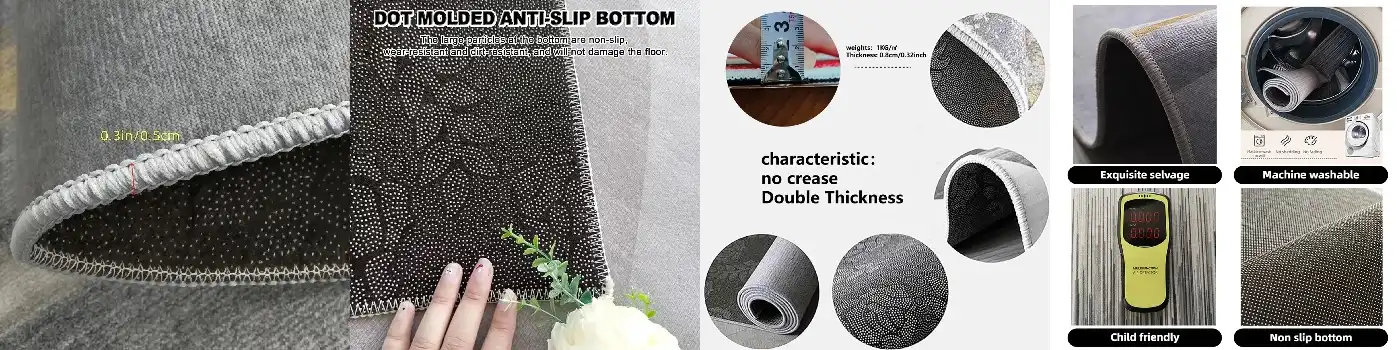
Using precise laser cutting technology, products with smooth fake cashmere surfaces and long-lasting TPR backings can be made in almost any size. This gives mats the ability to follow the shape of an irregular entrance without sacrificing covering, and it gets rid of gaps at door jambs.
Measuring Techniques for Precision Fit
Accurate measurements lead to a perfect fit, which is necessary to keep dirt inside and keep people safe. How wide is the inside of the door frame at its tightest point? Add 4 to 6 inches to each side to account for the full swing path. The length should go inside far enough to record at least six footsteps, which is about 12 to 15 feet for a normal adult's stride. Take a measurement from the fully open door to make sure the mat doesn't get in the way of the door swing.
Thickness Considerations for Different Applications
Mat width affects how long it lasts when there is a lot of foot traffic and how well it meets ADA standards. Commercial-grade door mats are usually between 0.25 and 0.5 inches thick, which is the right thickness for both keeping dirt and people from slipping and falling and meeting mobility needs. In bi-level designs, where raised fibers rub against shoes and recessed passageways hold water, thicker profiles trap more water. Machine-woven edge locking keeps the mat from coming apart, even in areas with more than 1,000 daily crosses. This way, the mat stays the same thickness over its lifetime.
Whether the area is indoors or outdoors affects the choices that can be made about ventilation and weather protection. For outdoor mats, aggressive scraper surfaces and perforated backings are needed so that water can drain. Indoor mats, on the other hand, need thick fiber constructions to absorb wetness. By learning about these measures, B2B buyers can make smart choices about what to buy that match technical requirements with practical needs.
Decision-Making Framework for B2B Buyers: Sizing Based on Specific Needs
To choose the best utility door mat sizes, B2B buyers have to think about things like traffic flow, the surroundings, and their budgets. Different businesses have different usage patterns, which directly affect size requirements.
Industry-Specific Sizing Guidelines
During business hours, stores get a lot of extra traffic, so they need bigger mats that can handle people moving side to side as they look at displays in windows near the doors. Large-format stores may need modular systems that are 10 feet wide and 20 feet deep, while medium-sized stores may be fine with systems that are 6 feet wide and 15 feet deep.
There are different problems that factories and warehouses have to deal with. Forklifts and pallet jacks need to be able to get in and out of loading docks, so industrial-weight mats that are at least 8 feet wide and have a backing that is strong and doesn't absorb oils or chemicals are needed. Healthcare facilities need mats that are big enough to cover the full width of automatic doors, which is usually 6 to 8 feet. The mats need to be antibacterial and have smooth surfaces that can handle wheelchairs and hospital beds.
Traffic Volume and Mat Coverage Area
Over 500 people visit high-volume locations every day, so they need longer covering to avoid saturation. As a general rule, 15 square feet of matting should be used for every 100 daily foot passes. Zoned matting systems are helpful for hotels and business offices. An outdoor scraper mat gets rid of heavy debris, and then an inner wiper mat soaks up any remaining wetness. This stacked method lets smaller mats work instead of one big piece, which makes cleaning easier and extends the time between replacements.
Custom Sizing Advantages for Bulk Procurement
Custom sizing saves a lot of money on big orders because it cuts down on lost covering and the number of times that products need to be replaced. Manufacturers who offer flexible design can make mats that fit your exact doorway measurements with as few as 50 pieces needed for size and color changes. This low bar means that even small to medium-sized businesses with multiple sites can get custom solutions.
Products that are approved to CE and ROHS standards make sure that they work on all foreign markets. This is especially important for importers and wholesalers who do business in North America and Europe. logo customization and getting them delivered in 7 days lets hotel chains and business sites build their brands while still meeting tight project deadlines. These features help buyers make sure that their purchases are in line with business goals and industry standards, whether they are setting up a main location or putting in place standard entrance solutions across regional properties.
Comparison of Sizing Strategies: Best Practices Versus Common Pitfalls
Traditional door mat sizes are based on set rules that might not work for modern, complex building entrances, which wastes time and money. By looking at these methods, we can find ways to make them better.
Conventional Fixed-Size Limitations
Standard catalog size believes that all doorways are the same shape, but modern building often has entrances, vestibules, and approaches that are offset from each other. When you buy off-the-shelf 4-foot by 6-foot mats for an 8-foot double door, there are gaps where dirt and moisture can get around the mats. These open spots defeat the purpose of the mat by letting dirt and other things into the inner and causing uneven wear patterns that shorten the mat's life. To make up for it, facilities managers often combine several smaller mats, which creates gaps that trap dirt, make it easier to trip, and make cleaning more difficult.
Innovative Modular and Tailored Approaches
To fix these problems, more advanced sizing methods use customization and flexible design. Modular matting systems use tiles or sections that fit together and can be expanded to fit odd-shaped areas while still providing continuous covering. When buildings remodel or add on to their doors, these configurations can easily be changed without having to replace all the mats.
Custom-made, one-piece mats that are made to exact specs don't have any splits at all. With laser cutting technology, mats can be made to fit precisely around curvy walls, angled corners, and entryways that are set back from the wall. This method worked well for a recent hospitality job where a high-end hotel needed semicircular mats for the entrance to its famous dome. Custom-cut mats with a diameter of 12 feet covered the whole area and fit the style of the building while collecting debris from all sides.
Common Sizing Errors and Their Consequences
Undersizing a utility door mat causes more problems than just less dirt being captured. If the mat isn't 12 to 15 feet long, shoe soles don't dry completely, leaving wet footprints that track dirt deeper into buildings. Narrow mats fail to capture foot traffic at entrance edges where people naturally walk to avoid crowded center paths. These edge areas receive heavy wear and need mat protection.
When you go too big, you face new problems. It costs more to buy, clean, and replace mats that are too big. Mats that go too far into hallways get in the way of placing furniture and making the space look nice. Maintenance teams have a hard time cleaning large mats, so they leave them in place longer than suggested, which makes them less useful as their moisture capacity runs out.
To get the most out of your budget, you should right-size based on actual traffic data instead of guessing. Facilities that use door counters to track foot traffic can figure out exactly how much mat covering they need, so they don't underestimate risks or overestimate waste. This data-driven method makes sure that safety and cost-effectiveness are in line with how things work in the real world.
Maintenance and Longevity Tips Related to Mat Size and Usage
The size and placement of the mat have a direct effect on how well it works and how often it needs to be replaced. When buying teams understand these connections, they can choose options that have the lowest total cost of ownership.
Cleaning Requirements Based on Mat Dimensions
For larger mats to keep working, they need to be cleaned in ways that are specific to how much foot traffic they get. In business areas with a lot of foot traffic, entrance mats should be vacuumed every day and deep-cleaned once a week to keep the fibers from getting too saturated. Professional extraction cleaning services are good for mats that are longer than 6 feet because they get rid of buried grit and repair the mat's ability to absorb water. Products that are machine-woven can be washed many times in an industrial washer without delaminating or shrinking. They keep their shape after hundreds of washings.
Smaller mats that are placed in key places make upkeep easier. A 4x10-foot mat is easy to roll up and move for cleaning off-site, but an 8x20-foot special installation might need extraction tools to be brought to the site. With a daily production capacity of 2,000 square meters, new mats can be sent out quickly, so buildings can switch out mats while they're being cleaned without leaving entrances vulnerable.
Optimal Placement for Maximum Effectiveness
If you place your utility door mat correctly, it will collect more dirt and moisture and drain better—especially important for outdoor mats. Place outdoor scraper mats flush with the threshold, leaving no gaps that allow debris to bypass the cleaning zone. Interior mats should start right outside the doors and go out far enough to cover the full stride pattern before foot traffic spreads out to the sides and into the hallways.
Outdoor mats have deep wells that make the surface of the mat flush with the ground around it. This keeps people from tripping and keeps the edges from wearing down from foot traffic. In addition, wells keep the mat in place even when it's exposed to wind and weather. The TPR backing works well on both smooth and rough concrete surfaces and doesn't need to be attached with glue.
Material Durability and Sizing Synergy
The choice of material is very important for durability, and sturdy constructions paired with the right size make mats last a lot longer. Looped polypropylene doesn't mat or crush as easily as fine faux cashmere fiber surfaces, so they stay scrapable longer even when there is a lot of traffic. Edge-locked construction stops tearing at the edges of the mat, which is where most small mats fail because the edges wear out faster than the rest of the mat.
When buying things, being environmentally careful means choosing sizes and materials that reduce waste and make recycling easier. When mats are the right size, they use less material during production and produce less trash when they're no longer useful. The CE and ROHS approvals show that mat materials are safe for the environment and don't contain any dangerous chemicals that make them harder to get rid of. Formulations that are safe for babies and don't have any smells allow for instant installation without worries about off-gassing, which supports sustainable building management goals and protects the quality of the air inside.
Conclusion
To get the best performance, choosing the right utility door mat size means combining technical requirements, traffic patterns, building layouts, and management budgets. Mats that are the right size, 12 to 20 feet long and the same width as the door plus 4 to 6 inches, can catch up to 80% of tracked-in dirt and grime, which lowers upkeep costs and slip-and-fall accidents. Laser cutting and heat transfer technologies can be used for custom manufacturing, which allows for exact control of dimensions for irregular openings, modular installations, and branding solutions.
When you combine strong building materials like TPR backing with machine-woven edges, you get products that last even in heavy business traffic and meet international safety and environmental standards. When doing business with other businesses, it's best to work with makers that offer open customization thresholds, quick samples, and stable production capacity to meet ongoing procurement needs across multiple building sites and project timelines.
FAQ
How Do I Measure My Entrance for Mat Sizing?
To cover the whole traffic area, add 8 to 12 inches to the door frame's inner width at its tightest point, or 4 to 6 inches on each side. Measure the length from the door opening inward for at least 15 feet, or until the hallway is naturally spread out by foot traffic. To keep things from getting in the way, measure from the fully open door position to account for door swing space.
Can I Order Custom Sizes for Irregular Doorways?
Custom-sized mats can fit through doors that aren't straight or square, as well as ones that are bent, angled, or too big. Laser cutting can make any shape accurately, so it can fit into building details without any gaps. For size and color customization, the minimum order quantity starts at 50 pieces. This means that custom solutions can be made for rollouts in multiple locations and facilities with unique needs.
What Mat Size Works Best for High-Rainfall Outdoor Areas?
In places with a lot of wetness, outdoor entrances need 15 to 20 feet of shade to dry shoes properly before going inside. Buildings with two levels, higher scraping surfaces, and recessed moisture pathways can handle large amounts of water well. The TPR backing doesn't let water through and stays sticky on wet surfaces, so the mat doesn't move around during storms.
Partner with Yiyajia Carpet for Precision-Sized Entrance Solutions
B2B buyers who need reliable entrance mat solutions are frustrated by problems with procurement such as uneven seller quality, late deliveries, and a lack of customization options. Yiyajia Carpet gets rid of these problems by using modern manufacturing techniques and customer service that is responsive and suited to business needs.
Every day, our factory makes 2,000 square meters using high-definition heat transfer and precise laser cutting, which lets us make doors in any size or shape. Whether you need standard sizes or custom forms for architectural entrances, our engineering team can send you models within 24 to 48 hours that are an exact copy of the final production specs. This fast development cuts down on the costs of trying things out and making mistakes, and it speeds up the project timeline from idea to installation.
Long-term partnerships benefit from having committed business liaisons who handle repeat orders well, make regular ideas for improvement, and make sure there are stable supplies with no backorders. Our full after-sales service includes free repair for any problems with printing, cutting, or size quality, and Yiyajia pays for all shipping costs. Contact our team at sale@yyj-carpet.com right away to talk about your door mat needs and get personalized size suggestions that will improve safety, lower care costs, and make a better first impression for your business.
References
1. International Facility Management Association (2021). "Entrance Matting Systems: Impact on Building Maintenance Costs and Indoor Air Quality." IFMA Research Report Series.
2. National Floor Safety Institute (2020). "Slip, Trip, and Fall Prevention: The Role of Entrance Matting in Commercial Facilities." NFSI Technical Guidelines.
3. American Society for Testing and Materials (2022). "ASTM F1637-22: Standard Practice for Safe Walking Surfaces." ASTM International Standards.
4. Building Owners and Managers Association (2019). "Preventive Maintenance Best Practices for Commercial Building Entrances." BOMA Building Management Journal.
5. Green Building Council (2021). "Sustainable Facility Management: Material Selection and Waste Reduction in High-Traffic Zones." USGBC Environmental Guidelines.
6. Occupational Safety and Health Administration (2020). "Walking-Working Surfaces: Compliance Guidelines for Commercial and Industrial Facilities." OSHA Publication 3851.