_1774494554973.webp)
Find out more about prayer rugs: their history, types, and cleaning methods
May 27, 2026


For spiritual people, prayer rugs are important because they give people a clean, quiet place to pray in their homes, churches, and workplaces all over the world. To find the best prayer rugs for your business, you should learn about their past, the different kinds of materials they are made of, and how to keep them in good shape. Many generations of people have learned how to make these fabrics, and now they are being made with both old and new methods. They give hiring workers choices that they can trust and that are useful and respectful of other cultures. If you're buying high-quality prayer rugs for retail, hospitality projects, or internet stores, you should know about their background, how they were made, and how to take care of them. You can keep prices low and supplies steady this way and still meet the wants of many customers.
The History and Cultural Significance of Prayer Rugs
How prayer mats came to be and what different cultures believe they represent?
Origins Spanning Centuries
It was around the 7th century when prayer rugs were first made as portable shrines so that Muslims could say Salah on clean floors wherever they were. It is thought that the first ones were probably simple knitting cloths made from natural fibers that were easy to find, like cotton and wool. In Persia, Turkey, Central Asia, and the Arabian Peninsula, different styles grew over time. Each of these styles had its own patterns and ways of weaving that came from the way artists traditionally did things.
Symbolic Design Elements
On the best prayer rugs, the patterns mean a lot just like on traditional ones. There is an opening in the design that looks like an arch called the mihrab. It shows the way to pray, which is toward Mecca. Some color schemes and geometric patterns can stand for mental states, while others can stand for heaven and God's work. When procurement workers buy things for places with big Muslim populations, like North America, Europe, and the Middle East, they need to know why certain styles appeal to certain groups of people.
Market Influence on Modern Procurement
People still buy things in current markets based on their cultural past. Stores that sell to traditional communities often look for hand-made rugs with patterns that are typical of the area. On the other hand, people who buy rugs for hotels want ones that will last and still look good. Importers and wholesalers can make sure that customers get what they want by knowing these tastes. This helps them stay competitive in the market and keeps customers coming back.
Types and Materials of Prayer Rugs: How to Choose the Best for Your Business?
Material Composition and Performance
For a product to last and make a customer happy, it needs to be made of the right materials. There are different kinds of fibers used to make modern prayer mats, and each one has its own benefits:
Natural wool is great for high-end shops because it lasts a long time and keeps the body at the right temperature. The price may be too high for people on a tight budget, though, and people with allergies may not be able to use it. Polyester that doesn't damage and keeps its color is a good choice for businesses that have a lot of things to store. It feels soft and rich like real cashmere, but it also has useful qualities like synthetic materials, which is a mix that is very popular right now.
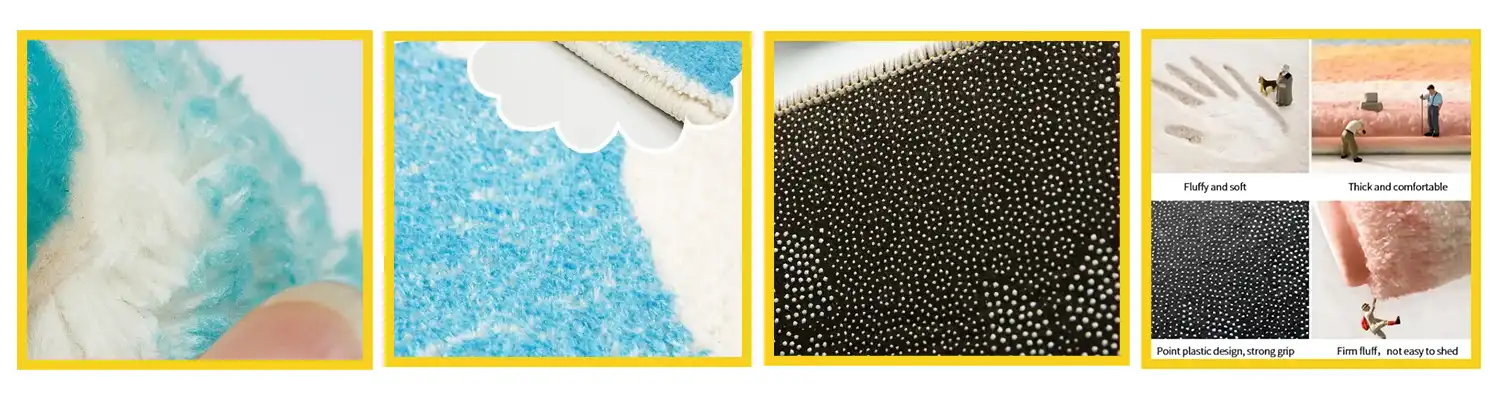
Our main goal at Yiyajia Carpet when we make rugs is to use high-density weaving structures to make imitation cashmere. It's soft like real cashmere, so this is a good pick. In addition, it's strong enough to be used every day. At 800 g/m², it feels solid without being too heavy. It's the right weight for both homes and businesses that need comfort and strength.
Construction Methods and Features
How best prayer rugs are made has a big effect on how good they are when finished. When you need a lot of rugs, machine-tufted rugs are great because they are always the same size. A lot of care is also put into making sure the standard stays good. We use a 5 mm pile height because it's just the right amount of cushioning for knees without making the floor uneven when lying down.
Having features that work makes it easy to use in different scenarios. Things don't move around dangerously on smooth floors because of the non-slip backing. This is a big safety issue in both homes and businesses. Surface products that don't stain last longer and need less maintenance. This is very helpful for people who run mosques or hotels and have to deal with places where a lot of people come to pray.
Customization Capabilities
And more and more, big buyers want solutions that are made just for their brands or projects. You can change the size to fit a lot of different architectural spaces, from small prayer places in homes to huge churches. When shops can change patterns, they can offer unique designs that make their goods stand out from competitors. Putting names on things helps with giving gifts as a business and making guest amenities that are branded.
Cleaning and Maintenance of Prayer Rugs: Best Practices for Longevity
Understanding Wear Patterns
People put a lot of weight on the knees, face, and hands where they touch prayer cloths. This makes worn patterns that are easy to predict. The things that make up these places change how they break down over time. Synthetic fibers don't stick together as much as natural fibers do most of the time. What makes the ends curl or split over time is how strong the backing is. We use pointy plastic backing at Yiyajia Carpet that stays in shape and is easy to grip. This makes the carpet strong and safe.
Systematic Cleaning Protocol
With proper care, products last much longer, which means they don't need to be replaced as often and the total cost of ownership is cheaper for big buyers. When you clean it often, the surface is free of dust and small bits don't get stuck in the fibers. It is better to use a setting that only suctions the fibers than a moving brush, which can damage the evenness of the pile height over time.
Spot cleaning gets rid of certain spots without having to wash the whole thing. If you use mild soap and cool water right away, you can get rid of most spots. This cleaning works even better because of the stain-resistant treatment we use when we make it. You can quickly fix the problem without having to use special products or call a professional.
Each build can wash in a machine in different ways. When you wash rugs with foam bases, be careful not to break the structure. Rugs with covers that can be replaced can be washed more often. If you need to, you can wash our imitation cashmere rugs in a soft machine. However, if you wash them by hand in cool water, they will last longer because the fibers and backing glue won't be under as much stress.
Storage and Preventive Care
Things don't get broken when they're not in use if they are stored properly. When you roll rugs instead of fold them, the seam lines that get in the way of the fibers' direction are taken care of. Mold can't grow in places that are managed by climate because the humidity is low. For natural fiber content, this is very important. Rotation plans at schools spread wear out evenly across several rugs. This makes it longer before they need to be replaced and cheaper to do so.
Top Prayer Rugs in the Market 2026: A Comparison for Smart Procurement
Evaluating Supplier Capabilities
Twenty-four years from now, many sellers will offer goods at different prices, including the best prayer rugs. Traditional cloth makers in the area who have been around for a long time make designs that are true to culture. Newer cloth makers, like Yiyajia Carpet, use cutting-edge technologies to make sure the quality stays the same, even for the best prayer rugs. You should look at more than just unit price when choosing a partner.
Production skills determine whether a company can meet large or regular orders on time. Our production lines are old enough that they can handle big orders quickly and with strict quality control. Because supplies aren't always stable, it's hard for shops to plan their goods and projects so they get done on time. Before a rug leaves our building, it is checked one hundred percent of the way as part of our pre-shipment process.
Getting a license lowers the chance of breaking the rules when you join a managed market. When something is OEKO-TEX-approved, it means it doesn't have any harmful chemicals in it. This is very important for things that will be touching your skin while you pray. The CE mark means that the item is safe according to European rules. This speeds up the customs process and lowers the chance of being held up at the port. The fact that the company has ISO 9001 certification means that they use organized quality control methods to make sure that every batch is the same. To work with stores that care about quality, suppliers must do this.
Logistical Considerations
The rules for shipping and packing have a big impact on how much the things cost to land and how they are packed when they get there. Export-standard packaging keeps items dry and stops damage while they're being sent abroad, which cuts down on claims and makes customers happy. Optimized container packing makes the best use of space, which lowers freight costs per unit, which in turn affects a business's ability to offer prices that are competitive.
Minimum order numbers that are easy to change can work for companies of all kinds. Some buyers want small and medium-sized businesses to make claims they can't keep. This keeps these businesses from trying out new markets. Our method strikes a mix between making things quickly and making them easy for customers to get. This lets companies that are growing set up their supply lines without having to spend a lot of money.
Customization and After-Sales Support
To keep a service relationship going, it's important to respond quickly and solve problems. Account managers make sure that you are always in touch about changes to requirements, work plans, and quality problems. Getting technical help from sellers helps buyers pick the best materials and features for each job. This lowers the cost of mistakes made while making the product.
You can make just about any picture you can think of with our heat transfer printing and laser cutting. Copying patterns exactly meets the needs of a brand, while making shapes that aren't straight meets the needs of building codes or personal taste when it comes to decorating. Since we have a lot of different tools, we are more than just a store that sells products. In areas with a lot of competition, this helps our customers stand out.
Conclusion
Prayer mats represent a blend of religious tradition and functional textile technology. Similarly, the best prayer rugs balance guest comfort with high-traffic resilience. This means that people who work in buying need to find a mix between being culturally accurate and getting the job done. To place yourself in the market, you need to know what they mean historically, and to make choices that meet customer needs and stay within price, you need to know about the materials. If you do the right care on a product, it will last longer. This cuts the total cost of ownership for big buyers and makes customers happier in stores. Since the market is always changing in 2026, it's important to work with service providers that offer stable quality, easy customization, on-time delivery, and full support throughout the business relationship.
FAQ
What material works best for customers with sensitive skin?
Wool that isn't natural can trap allergens and be bad for your skin, but imitation cashmere and polyester are more likely to not cause allergic reactions. Our imitation cashmere is soft and won't bother you with pollen, as real cashmere does. This means that a lot of people, even kids and people with skin problems, can use it.
How frequently should prayer rugs be cleaned in commercial settings?
Places of worship that get a lot of use should be swept once a week and given a good clean once a month. Plans that use different rugs on a regular basis allow for less intensive care to be done more often while still keeping surfaces clean. Soil can't get through stain-resistant materials, so they don't need to be cleaned as often.
Can bulk orders include custom designs or halal certifications?
Brands can get the customization services they need, like OEM/ODM, picture placement, color codes, and size changes. Halal approval is mostly used for food and drinks, but buyers from places that serve religious groups can ask about where the materials come from and how they are made to make sure they are religiously acceptable.
What distinguishes high-density construction from standard alternatives?
There are more fibers per square centimeter in high-density tufted structures. This makes a covering with a bigger pile that doesn't mat and keeps its look longer, even after being used a lot. The normal weight of 800 g/m² means that the item is well-made and can handle being kneeled on every day without getting too flat. When it comes to durability, this is a key difference between high-end goods and cheaper ones.
Partner with Yiyajia Carpet for Reliable Prayer Rug Supply
If you want to buy prayer mats from a company you can trust, Yiyajia Carpet has the quality and dependability your business needs. Our prayer mats that look like imitation cashmere are soft and stylish, and they are made to last. They follow several rules, like ISO 9001, CE, and OEKO-TEX. You can make any changes you want to the rug with modern heat transfer printing and exact laser cutting. Before the rug is shipped, it is subject to strict quality control to make sure it meets the highest standards.
It doesn't matter if you're an online store owner adding more goods, a distributor working with a wide range of retail customers, or a project manager looking for supplies for hotel installations. Our low minimum order quantity (MOQ) and skilled export packing for the best prayer rugs lower your buying risks. Write to our team at sale@yyj-carpet.com to talk about your needs and find out why smart people choose Yiyajia Carpet as their trusted prayer rug maker for a steady supply and great value.
References
1. Bloom, Jonathan M. Arts of the City Victorious: Islamic Art and Architecture in Fatimid North Africa and Egypt. Yale University Press, 2007.
2. Erdmann, Kurt. Seven Hundred Years of Oriental Carpets. University of California Press, 1970.
3. Helfgott, Leonard M. "The Structural Foundations of the National Minority Problem in Revolutionary Iran." Iranian Studies, vol. 13, no. 1/4, 1980, pp. 195-214.
4. Housego, Jenny. Tribal Rugs: An Introduction to the Weaving of the Tribes of Iran. Scorpion Publications, 1978.
5. Pinner, Robert and Walter B. Denny. Oriental Carpet and Textile Studies II. Hali Publications, 1986.
6. Stone, Peter F. The Oriental Rug Lexicon. University of Washington Press, 1997.