_1774494554973.webp)
Essential Features of PVC Coil Mats for Office Lobby Decor and Practicality
June 2, 2026


In a contemporary office foyer, the floor does more than cushion your steps. First line of defense against tracked-in dirt, dampness, and slip risks is a Wire coil floor mat. It also impacts guests' first impressions of your firm. Special entry systems combine extruded polyvinyl chloride loops' scraping capability with a customisable design. They help businesses improve productivity and brand appearance.
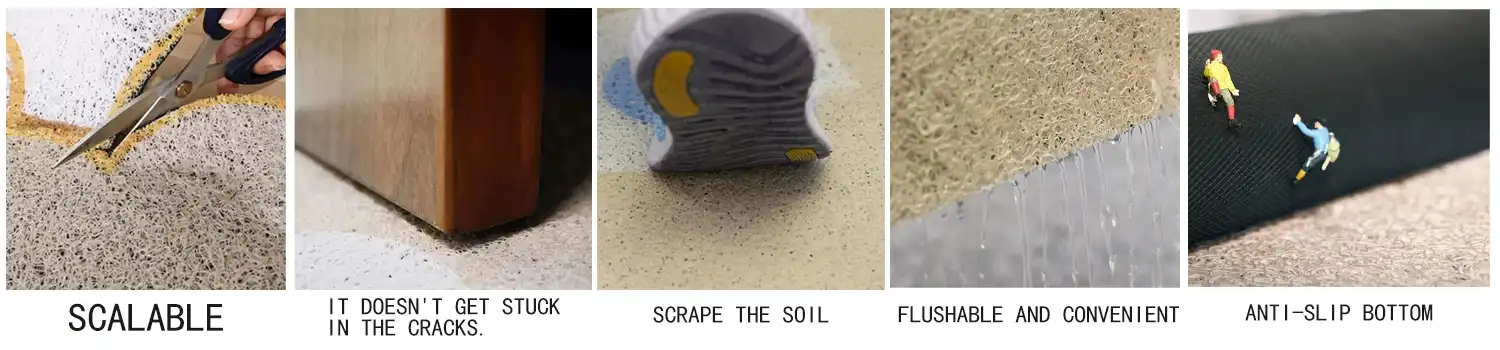
Understanding PVC Coil Mats: Composition and Core Benefits
Office and facility managers are often seeking for durable, attractive flooring. PVC coil mats are unique entrance mats due to their construction. These mats include continuous vinyl loops instead of weaving threads or flat rubber surfaces, creating an open, three-dimensional structure that collects dirt.
Why Material Composition Matters?
Door mats are nice because of their materials. New or premium recovered PVC is blended with precisely calculated UV stabilizers and plasticizers to make high-quality Wire coil floor mats. This innovation makes the material flexible even when the temperature changes and doesn't break like lesser solutions. You can trust mats with densities exceeding 2.2 kg per square meter to withstand years of high foot activity without succumbing. PVC provides advantages over water-absorbing materials since it doesn't absorb water. Carpeted entrance mats retain water and germs, whereas plastic loop systems swiftly remove it. In rainy or snowy areas, conventional mats get wet and make it easier to slip, hence this feature is crucial.
Functional Benefits for High-Traffic Environments
Commercial halls are busy in the morning, lunch, and evening. Door mats like a Wire coil floor mat must operate routinely without supervision during busy periods. Engineers integrated a "scrape-and-hide" mechanism into coil mats' random-loop structure. Rigid vinyl filaments swiftly remove dirt particles that fall through the open mesh on shoe steps. This approach maintains things clean all day, reducing cleaning staff time. Building managers value these products' safety certifications. Good mat manufacturers meet DIN 51130 R11 slip resistance criteria. They ensure flame-resistant carpets fulfill ASTM D2859 and EN 13501. The certifications confirm that the structure has been tested to safeguard residents and property owners from liability.
How PVC Coil Mats Work: Functionality and Maintenance Explained
Buyers may make better judgments for their company when they grasp coil matting. Performance depends on coil density, backing design, and installation.
The Science Behind Dirt Capture
Every square meter of a good mat includes thousands of vinyl loops in random designs. The loops flex and scrape against the shoe treads when shoes strike this surface, automatically eliminating contaminants. So waste may move through, the loops' spaces normally manage particles from extremely fine sand to larger pebbles. This stops the surface from getting wet like ordinary mats do when their fibers become filthy. Commercial-grade products capture particles best at 8 mm, which prevents tripping. Thick mats make adjustments difficult and restrict accessibility, whereas small mats store less dirt.
Maintenance Protocols That Extend Service Life
Facility managers enjoy low-cost business supplies. Due to their ease of maintenance, coil mats are a good investment. Daily cleaning involves lifting and shaking the mat to remove dust and grime. This takes around two minutes. Open construction enables loose particles fall away immediately, making cleaning easy. Weekly thorough cleaning is easy too. Normal commercial tools can be used for high-pressure washing because water doesn't harm the mat. Mild pH-neutral cleaners and 60°C can restore the mat's appearance without hurting the PVC. Hydrophobic material dries fast, so it may be used again without being pulled out of service for lengthy periods, which would hinder building processes. Due to fiber wear, textile-based door mats must be cleaned with specialist extraction equipment, dried for a long period, and replaced regularly. Labor savings alone justify the investment in effective vinyl loop systems over three years.
Comparing PVC Coil Mats with Alternative Floor Mats
Comparing items objectively is crucial while buying. Different door mats have perks and downsides that you should consider.
Rubber Versus PVC Performance Analysis
Car shops benefit from rubber mats' durability and grease resistance. But thicker ones can't contain as much dirt. To operate, the surface must be cleaned periodically since particles linger. Rubber is heavy—often more than 5 kg per square meter—and smelly, making it difficult to clean in climate-controlled workplaces. Wire coil floor mats drain water better than others, making them ideal for moist locations. Unlike thick rubber, its open form lets water travel through without pooling. According to job safety data, slip-and-fall incidents are one of the leading causes of workplace injuries. This drainage feature reduces them.
Textile Mats and Hygiene Concerns
Designers like carpet-style door mats for their plush appeal, but they're hard to clean. Soft fibers that seem good retain water, allowing mildew and pests to thrive. Cleaning-intensive environments like hospitals and restaurants don't suit textile selections. PVC doesn't require anything, thus biological concerns are gone. The material doesn't develop microorganisms or hold scents, so it stays clean without antibacterial treatments that might pollute or degrade.
Selecting the Best PVC Coil Mat for Your Office Needs
Strategic selection strategies consider more than dimensions. Purchasing managers who operate with several properties should understand how specification decisions impact performance and cost over time.
Customization Options That Align With Brand Identity
Modern production methods allow for customization without sacrificing quality or durability. Standard rectangular mats leave gaps along the corners, but precision laser cutting can fit into non-square lobby forms. Modern buildings with bending welcome desks or entryways benefit from this characteristic. Customizing colors goes beyond picking basic shades. Modern inlay allows brand names, directional patterns, and multi-color graphics. Inlay structure binds multiple colored coils together over the mat, unlike printed surface treatments that fade in months. The style stays the same throughout the product's life, maintaining the brand's image. Clients should ensure customisation doesn't alter structure. Quality providers maintain 2.2 kg/m³ density and 8 mm breadth, regardless of color or pattern. This prevents ornamentation from compromising utility.
Certifications and Compliance Documentation
You must follow several rules while doing business abroad. Reliable manufacturers provide multi-area approval packages. CE marking shows admission to the EU market, and OEKO-TEX accreditation shows no dangerous elements, which is vital for health-conscious green construction enterprises. REACH guidelines for U.S. markets ensure chemical safety, while California Proposition 65 protects against cancer- and reproduction-causing substances. These certificates demand regular testing and workplace checks, distinguishing sincere manufactures from dishonest ones that offer uncertified items at low rates. Environmental product declarations (EPDs) and carbon footprint studies influence purchase decisions as more companies seek LEED certification or other sustainable standards. Leading suppliers provide lifetime analysis statistics showing how much their products harm the environment from raw materials to recycling.
Evaluating Supplier Reliability for Long-Term Partnerships
Maintaining product quality is more essential than pricing for developing vendor relationships. Procurement professionals should investigate vendors' quality control procedures and choose partners that use 100% pre-shipment inspection instead of statistical sampling. This all-around strategy detects defects in items before they leave the plant, preventing costly delays and quality difficulties after delivery.
Packaging standards for a Pet anti-slip mat affect product quality upon arrival. Export-grade materials that won't get wet or damaged during ocean freight protect your investment. International logistics experts load containers efficiently, lowering unit costs. These savings frequently offset slight price disparities between more experienced suppliers and less experienced rivals. Minimum order quantities must be considered. Small test sales and large-scale rollouts across numerous locations can be handled with loose MOQ restrictions. Suppliers who provide scalable order sizes show customer attention, which strengthens partnerships.
Practical Use Cases and Testimonials from Office Environments
Theory is less important than performance. Looking at coil matting systems in action helps us understand how to use them.
Corporate Headquarters Success Stories
A worldwide financial services organization has installed entry mats on all 47 buildings. The facilities director reported that switching from textile mats to vinyl loop systems reduced entry cleaning by 40% and hallway filth by 40%. Slips and falls at building entrances reduced 73% in the first winter with the new technologies compared to the five-year average. The firm saved enough on liability insurance to pay for the renovation in 18 months. The mats performed well in harsh weather for the firm. Even in heavy rain, the new coil mats worked effectively, while the previous fabric systems were saturated and had to be replaced within minutes. Their rapid drainage prevented water buildup, keeping the tunnel safe during rush hour following storms.
Hospitality Industry Applications
Hotel administrators must combine attractiveness and durability, which presents unique challenges. A small coastal hotel chain with 12 locations picked custom coil mats with their brand colors and emblem. The general manager said customers regularly remarked on how professional it appeared, and the housekeeping crew loved how little maintenance it needed despite being exposed to beach sand and sea air. Despite being utilized by over two million guests a year across the company, the mats exhibited no damage after three years. The UV-resistant treatment prevented their existing mats' color from fading, preserving their brand appeal.
Addressing Common Implementation Challenges
Not all installations go well. You may prevent predictable difficulties by learning from others' failures. Initially, a property management company requested coil mats with too low a weight density, which led them to shift during heavy foot activity. After consulting with their source, they upgraded to heavier-duty standards with stronger backing, which solved the problem. Another customer experienced some sliding when placing on smooth tile. Adding gripper backing—a simple alteration that reputable manufacturers can make—kept the mats in place without adhesive, which would have harmed the tile sheen.
Conclusion
Modern businesses require Wire coil floor mats' beneficial engineering and aesthetic freedom. Their innovative design improves safety, maintenance, and long-term cost compared to traditional entry mats. Buyers acquire reliable products with a professional brand image when procurement managers prioritize seller certifications, backing setups, and density standards. These systems are the greatest choice for businesses that seek entrance solutions that secure premises and guests since they last, need little maintenance, and can be customized.
FAQ
Q1: How long do quality PVC coil mats typically last in commercial settings?
A: If properly maintained, commercial-grade vinyl loop mats endure 5–7 years in high-traffic business halls with over 500 visitors daily. How often people walk on it, how much UV radiation it absorbs, and how often you clean it determine its longevity. Thicker (8 mm) mats with a density of more than 2.2 kg per square meter survive longer. Because ISO 9001 organizations maintain quality throughout the production process, their products typically perform better.
Q2: Can these mats accommodate wheelchair and mobility device traffic?
A: Correctly specified coil mats fulfill ADA accessibility criteria when fitted with correct edge transitions. When paired with beveled steps, the 8mm thickness makes for a small change in elevation, making it easy for wheelchairs to move. Solid rolling resistance without the sinking effect of thick carpet matting makes it easier to navigate than lighter choices. Building managers should level transitions to reduce tripping and maintain mats in place so they don't slide when wheels are used.
Q3: What maintenance schedule optimizes mat performance and longevity?
A: Dusting or shaking daily prevents particles from building up and speeding wear. Deep cleaning the mat weekly using pressure cleaners and pH-neutral soaps removes grime and restores its appearance. Avoid powerful chemicals and acids that break down PVC plasticizers. During seasonal shifts, when tracked-in rubbish accumulates, temporarily boosting cleaning frequency improves performance. This easy method maximizes mat functionality with minimal effort.
Partner With Yiyajia Carpet for Your Wire Coil Floor Mat Requirements
Yiyajia Carpet, a leading global provider of precision-engineered entry mats to wholesalers, contractors, and facility managers, is renowned in North America, Europe, and developing countries. Our firm uses advanced heat transfer printing and laser cutting to meet construction requirements while printing unique logos and complex patterns. Each Wire coil floor mat is tested for chemical safety compliance with CE, OEKO-TEX, ISO 9001, REACH, and EN 13501 requirements, filament bonding strength, backing stickiness, and weight uniformity before shipping.
We realize procurement managers need reliable supply lines for new projects and current programs to ensure they have enough supplies. Our MOQ rules allow orders from sample confirmation to container filling. Our professional export documentation staff ensures that all shipments pass customs smoothly, regardless of the laws. Send an email to sale@yyj-carpet.com to discuss your specific needs with professionals who can help you locate the right specs. Whether you need entry mats for a single high-end property or a portfolio of properties worldwide, Yiyajia Carpet's quality, speed, and affordable costs build connections.
References
1. Anderson, M. & Thompson, R. (2021). Commercial Entrance Systems: Performance Evaluation and Selection Criteria. Building Materials Research Institute.
2. Chen, L. (2022). "Comparative Analysis of Entrance Matting Technologies in High-Traffic Commercial Environments." Journal of Facility Management Studies, 18(3), 127-145.
3. International Facility Management Association. (2023). Maintenance Cost Analysis: Entrance Matting Systems in Corporate Environments. IFMA Research Report Series.
4. Peterson, K. (2020). Slip Resistance and Safety: Flooring Solutions for Commercial Applications. Construction Industry Press.
5. Williams, D. & Garcia, S. (2022). "Lifecycle Assessment of Synthetic Flooring Materials in Commercial Construction." Sustainable Building Journal, 14(2), 88-104.
6. Zhang, H. (2023). Advanced PVC Manufacturing: Material Science and Quality Control in Floor Covering Production. Polymer Engineering Publications.