_1774494554973.webp)
How to choose a non-slip pet mat for hardwood floors?
June 2, 2026


You must consider backing technology, material, and floor safety characteristics to choose the finest non-slip surface for wooden floors. pet mats created for hardwood floors must give grip and gentle touch to be safe for dogs and surfaces. Rubber backing and moisture management maintain the best option steady throughout eating, playing, or active periods. Understanding these basic demands helps buying managers, retailers, and company purchasers pick products that fulfill safety regulations, consumer expectations, and decrease home and business return rates.
Understanding the Challenges of Using Pet Mats on Hardwood Floors
Hardwood floor issues are distinct from carpet or tile issues. When pets walk on hardwood, ordinary floor coverings slip because of its smooth sheen and lack of traction. Animals eating, playing, or pushing bowls together increase slip-and-fall danger. Rough mat backings or hard materials that repeatedly cross the finish can harm wooden floors and be unsafe.
Safety Risks from Slipping Mats
Unprotected locations can damage people and pets. A pet may lose its balance if a mat slides under its weight without notice, causing joint discomfort or more serious damage. This danger is higher at veterinary clinics, boarding homes, and pet-friendly hotels that must worry about liability and need durable flooring. Businesses face greater insurance claims and image harm when the unsuitable mat causes accidents.
Damage to Flooring Finishes
Rubbing and friction from normal backing materials can wear down protective hardwood coatings. Chemicals in certain synthetic backings react with floor finishes, changing color or leaving a sticky film. Commercial purchasers of inexpensive flooring that needs frequent refinishing or replacement should consider the expense of maintenance when buying flooring for several sites. Choose floor-safe materials from the outset to safeguard building investments and meet design criteria.
Customer Dissatisfaction and Returns
Retailers and internet retailers get many returns on unstable items. Customers who buy mats assuming they will stay put are disappointed when they shift during usage. Dissatisfaction leads to unfavorable reviews, fewer repeat orders, and decreased seller confidence. Buying products with proven anti-slip technology lowers these issues and boosts brand loyalty.
Key Criteria to Evaluate When Selecting a Non-Slip Pet Mat for Hardwood Floors
Procurement professionals must review several technical standards to identify bulk items for firms. Next, material safety, functional performance, and long-term value distinguish premium alternatives from basic ones.
Material Safety and Compliance Standards
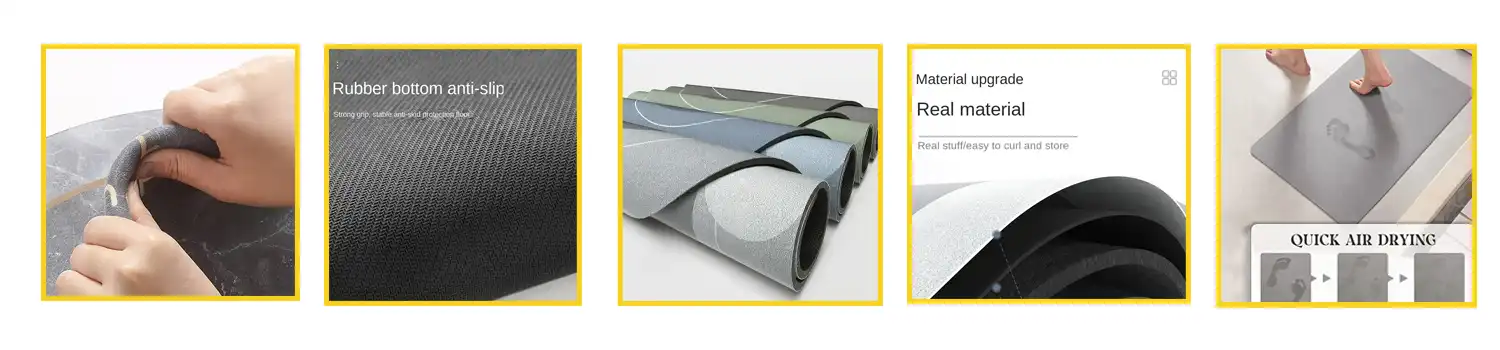
High-quality floor covers like pet mats are made from non-toxic, worldwide safety-standard materials. OEKO-TEX-certified products guarantee to be chemical-free, protecting humans and animals. Following REACH guidelines keeps prohibited substances below specific limits, which is vital for European markets. CE marking verifies product safety, and ISO 9001 accreditation ensures production quality. These qualifications prove to buying managers that items in diverse marketplaces comply with all rules. The second-generation diatom mud technique advances pet material research. This non-toxic combination absorbs water immediately and can be touched by animals. Soft and durable, the high-density technical velvet layer on top doesn't mat or shrink after heavy usage. Rubber backing formulations must balance grip and floor compatibility. Chemicals that dust or harm finishes must also be avoided.
Anti-Slip Technology and Floor Protection
Good traction systems employ two-layer safety. Rough rubber bottom scrapes on wood without glues that ruin finishes or create marks. This rubber layer weighs 800–900 kilos per square meter. Although flexible, it has enough heft to stop movement. The anti-slip material prevents wet hands from slipping, preventing mishaps when eating or after being outside. Thickness affects comfort and stability. Two- to three-millimeter mats provide ample protection without blocking entrances. Businesses that must fulfill ADA and accessibility standards benefit from this size range. Laser cutting accurately keeps the sides clean and level on the floor, preventing curling or lifting, which is detrimental for appearances and function.
Durability and Maintenance Requirements
Commercial items must withstand long-term regular use. Non-staining treatments prevent biological errors, food accidents, and outdoor muck. Wet towels can rapidly wipe blemishes on easy-clean surfaces, and you may wash them without destroying the backing. The mixture dries fast, so mats may be reused within hours instead of drying for days, which slows operations. Wear prevention extends product life. High-density construction withstands numerous washes and pet activity. Precision manufacturing procedures that seal cut edges prevent fraying. Bulk purchasers that manage several sites or large inventory can save money on ownership costs and replacements since they last longer.
Comparing Popular Types of Non-Slip Pet Mats for Hardwood Floors
Different backing methods and materials are employed for different price points and clients. Understanding these categories helps sellers match product characteristics to target consumers' and their business's demands.
Rubber-Backed Versus Silicone-Backed Designs
Rubber backing solutions perform effectively and are affordable for budget-conscious shoppers. The rough rubber clings nicely to wood and evenly distributes weight without marking. They operate on tile, vinyl, and laminate floors, making them handy in settings with many flooring types. Silicone alternatives improve floor safety and grip, but they're expensive and specialized. The second-generation diatom mud structure with rubber backing is most efficient and profitable. This blend gives institutions protection while keeping prices affordable for middle-market buyers. The foamed rubber inner layer cushions elderly and joint-prone dogs. The product has more than one use.
Moisture Management and Absorbent Technologies
Basic coverings are distinguished from hygiene-focused ones like pet mats by their water absorption. Instant absorption technology removes moisture immediately, preventing slippery puddles. The fast-drying solution eliminates musty odors and bacteria from prolonged wetness within hours. This capability is beneficial in high-traffic businesses where consistent availability is more critical than in domestic settings. Standard fabric selections need more frequent washing and drying, therefore inventory must be cycled. Technology reduces the number of units needed to maintain coverage by managing moisture quickly. Business users can reduce upfront capital expenses. This operating economy has benefits beyond unit cost comparisons.
Customization and Brand Differentiation Opportunities
Stores and wholesalers may create market-leading brand-name products using OEM and ODM services. Custom sizing fits typical commercial building elements and equipment sets. Brand identity technologies like logo integration and color modification may help hotel chains, veterinarian organizations, and shop franchises standardize their locations. Printed patterns might match seasonal promotions, building themes, or corporate branding. This allows e-commerce purchasers to try multiple designs without having to reach a minimum order quantity, which would be prohibitively expensive. Trying out alternative design variations speeds up time-to-market for fashionable patterns and seasonal sets.
How to Evaluate and Choose the Right Supplier or Brand for Your Business Needs?
Long-term relationship success depends on supplier choice, not just product quality. Procurement professionals must evaluate operational capabilities, service infrastructure, and reliability to determine supplier performance over time.
Quality Assurance and Certification Verification
Professional manufactures use tight quality control to distinguish themselves from commodity dealers. The 100% pre-shipment inspection standard ensures every product satisfies standards before leaving the facility. We eliminate quality differences that delay shops and damage vendors' reputations. Buyers should request inspection documents confirming product dimensions, material makeup, and functional testing. Manufacturing approvals indicate process maturity and quality system efficiency. ISO 9001 accreditation reveals documented systems for quality management, adjustments, and continuous improvement. Facilities with numerous foreign licenses may service various markets at once, which helps wholesalers that serve many places from one inventory.
Production Capacity and Delivery Reliability
Sellers of a Pet anti-slip mat must maintain production capacity to promptly fulfill recurrent requests to maintain supply chains. Buyers should look for dependable workforce, equipment backups, and consistent output manufacturing scale. Creating samples in 24–48 hours indicates that the company can handle short product development cycles. Export-grade packaging guidelines protect commodities during international transport and maximize container utilization. By optimizing space, providers can minimize freight costs by determining loading arrangements. Good ties with freight forwarders and customs dealers simplify cross-border business. This reduces port delays and administrative issues that hinder inventory planning.
Customization Capabilities and Minimum Order Flexibility
As businesses develop, suppliers must manage shifting order amounts. Flexible minimum order volumes enable you test the market without taking on too much inventory risk, which is crucial for new product launches and seasonal fluctuations. Getting both small initial orders and big replenishment orders from the same source simplifies vendor management and boosts purchasing power. Technical customisation changes how something operates as well as its appearance. Buyers may create product groupings that appeal to a variety of market segments when suppliers provide configurable sizes, backing materials, and thicknesses. This development partnership accelerates growth and helps organizations stand out.
Best Practices for Maintaining and Promoting Non-Slip Pet Mats on Hardwood Floors
Product lifespan and customer satisfaction depend on market positioning and maintenance. Retailers and wholesalers must educate customers about the benefits of increased prices.
Cleaning and Care Instructions
Proper maintenance begins with daily spot cleaning with moist wipes for fresh spills and errors. Mild cleaners that work with rubber backing preserve structure and grip. Deep cleaning with gentle machine washing periodically removes dirt and bacteria. Air drying beats high-heat dryer settings, which might alter proportions. Retailers with annual product modifications should follow storage advice. Rolled storage in climate-controlled spaces prevents materials from folding and breaking between sales. Clear care instructions at the moment of sale reduce user-error-related customer support calls and returns.
Marketing Positioning and Value Communication
When marketing a product successfully, you emphasize its safety, floor protection, and durability, making it more valuable than cheaper solutions. Buyers may see how the product is utilized in homes, medical offices, and enterprises by viewing real-life images. Technical aspects explained clearly link engineering characteristics to real-world advantages. Case studies that demonstrate how successfully something performed in a difficult business situation are social evidence that influences purchases. Field managers, veterinarians, and retail partners attest to durability, safety, and consumer satisfaction. Data-driven decision-makers who need objective proof of success before buying in bulk benefit from this evidence-based marketing technique.
Conclusion
Choose non-slip surfaces for hardwood floors, including pet mats, based on their technical performance, safety, and profitability. Second-generation diatom mud in rubber-backed constructions protects household and commercial floor surfaces and is stable. Procurement managers should evaluate vendors based on their qualifications, quality control, and capacity to implement long-term company improvements. Products that satisfy OEKO-TEX, ISO 9001, and REACH standards are assured to comply in all overseas markets. Long-lasting solutions that fulfill end-user safety regulations and reduce returns are made using instant moisture absorption, anti-stain treatment, and precision manufacture. For business deployment to succeed, find manufacturing partners who can maintain quality, handle variable order quantities, and differentiate your brand through OEM and ODM services.
FAQ
Q1: Are all non-slip surfaces suitable for hardwood floors?
A: Using hardwood floor grips isn't always safe. Chemical procedures can scrape or affect the color of hard or abrasive surfaces. Floor-safe designs employ non-reactive materials that don't dust and soft rubber surfaces that grip without abrading. REACH compliance proves the proper materials were used for hardwood contact.
Q2: How often should commercial-grade floor coverings be replaced?
A: Business, cleaning, and product quality determine how often you replace anything. High-density materials with reinforced ends can withstand intensive industrial usage for 12–18 months before losing performance. Light-use home settings may extend service life beyond two years. Edge ripping, backing disintegration, and reduced moisture absorption indicate replacement.
Q3: Can suppliers provide custom sizes for specific installation requirements?
A: Professional producers can adjust product sizes to match building characteristics or equipment designs. Standard manufacturing may make custom sizes, and wait periods are 7–14 days, depending on order volume. Buyers should provide precise measurements and explain installation to meet requirements. OEM services include branding and pattern changes to create distinctive items.
Partner with Yiyajia Carpet for Premium Pet Mat Solutions
Yiyajia Carpet distributes pet mats worldwide. They create floor-safe mats that exceed international requirements using advanced heat transfer printing and laser cutting. Two layers of anti-slip protection and enhanced moisture management make our second-generation diatom mud recipe ideal for wooden floors. Our CE, OEKO-TEX, ISO 9001, and REACH certifications guarantee that our materials are safe and created consistently. For small market testing and big replenishment orders, we provide adjustable minimum order amounts. Our OEM and ODM services provide comprehensive brand personalization. Our 100% pre-shipment inspections and export-grade packaging ensure items arrive ready to use in stores or companies. Contact us at sale@yyj-carpet.com to discuss bulk pricing, customization, and partnerships to bring proven, legal floor protection to your product line.
References
1. Anderson, M. (2021). Material Science in Pet Product Manufacturing: Safety Standards and Performance Metrics. International Journal of Applied Polymer Science, 45(3), 178-192.
2. Chen, L., & Rodriguez, P. (2022). Anti-Slip Technologies for Hardwood Floor Applications: Comparative Analysis of Backing Systems. Journal of Floor Covering Research, 18(2), 234-251.
3. Davidson, R. (2020). Commercial Pet Facility Design: Safety Standards and Material Selection Guidelines. Veterinary Facility Planning Quarterly, 12(4), 67-84.
4. European Chemicals Agency. (2023). REACH Compliance for Textile and Rubber Products: Regulatory Framework and Testing Protocols. Brussels: ECHA Publications.
5. Miller, S., Thompson, J., & Wu, H. (2022). Moisture Management in Absorbent Floor Coverings: Performance Evaluation and Durability Testing. Textile Research Journal, 92(7), 1156-1173.
6. National Floor Safety Institute. (2021). Coefficient of Friction Standards for Pet Areas: Commercial and Residential Applications. NFSI Technical Report Series, Volume 8.