_1774494554973.webp)
Comparison of stylish kitchen mats made from eco-friendly materials
July 6, 2026


Procurement managers have to find ergonomic floor covers for business restaurants, hotels, and stores while also making sure they are environmentally friendly. This problem is successfully solved by stylish kitchen mats made of eco-friendly materials. These items mix cutting-edge anti-fatigue technology with environmentally friendly ways of getting materials. They meet the growing need for responsible purchasing without sacrificing quality, safety, or style. Eco-friendly cooking mats are made with things like second-generation diatom mud, natural rubber backing, and reclaimed fibers that are approved by international environmental groups like OEKO-TEX and REACH. The move toward environmentally friendly kitchen floor options is in response to calls for corporate social responsibility (CSR), and it also offers real performance benefits in terms of managing moisture, preventing slips, and saving money in the long run.
Understanding Eco-Friendly Stylish Kitchen Mats
What Defines an Eco-Friendly Kitchen Mat?
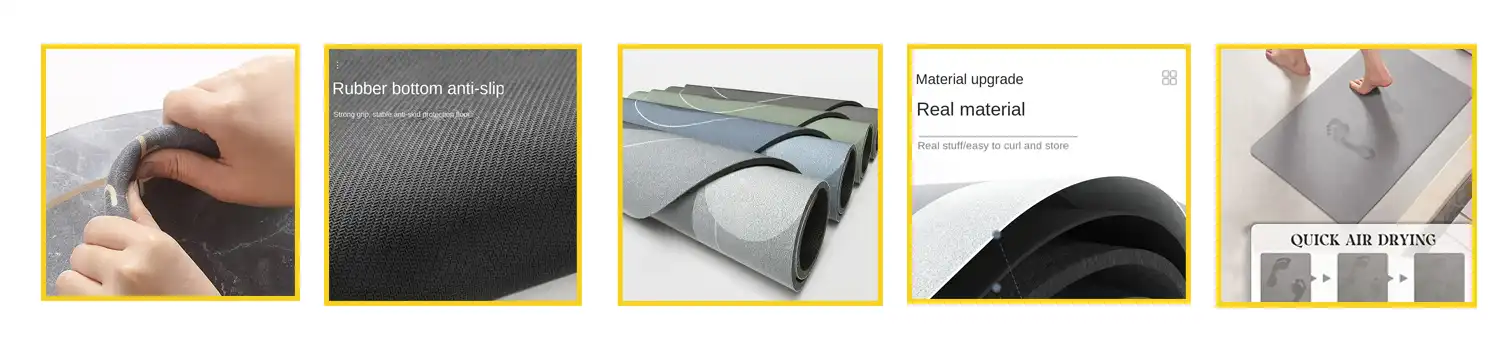
Eco-friendly stylish kitchen mats are a type of practical flooring that is made to have the least possible effect on the environment while still being highly useful. The materials used to make these goods are eco-friendly, they have non-toxic finishes on the outside, and the ways they are made lower carbon emissions. The second version of diatom mud is a revolutionary material used in high-performance mats. It naturally absorbs water and dries quickly without any added chemicals. This material solves the biggest problem in the business, which is keeping things clean. Regular cloth rugs hold bacteria and need to be replaced all the time.
Premium eco-friendly mats have a rubber backing that makes them non-slip and meets ASTM trip-hazard standards. The high-density technology silk fabric structure makes the mats last even when they get a lot of foot traffic. These mats are strong enough to be used in businesses because they weigh between 800 and 900 grams per square meter. Certified eco-friendly mats help keep the air inside cleaner, unlike synthetic options that release volatile organic compounds (VOCs). This is very important in places like restaurants and stores where customers' experiences depend on the environment.
Sustainability Standards and Certifications
Verified approvals are the basis for making smart choices about what to buy. The OEKO-TEX label means that the cloth parts are free of any dangerous chemicals. This means that these mats are safe for people to touch for long periods of time. REACH compliance makes sure that the chemicals used in production don't violate EU environmental rules, which is very important for companies that want to sell their goods in Europe. When a product has a CE mark, it means it meets health, safety, and environmental protection standards and can be sold in the EU.
ISO 9001 approval shows that a maker is committed to consistent quality control systems. This lowers the risk of receiving inconsistent amounts of products, which is a problem that many procurement relationships have. It is very important to have EN 1350 flame retardant grades for hotel and business projects where fire safety rules are strict. These certifications not only meet legal standards, but they also help with company sustainability reporting, which lets procurement managers show that they are making real progress toward their environmental goals.
Comparing Materials Used in Eco-Friendly Stylish Kitchen Mats
Second-Generation Diatom Mud vs Traditional Materials
The choice of material for a Water-absorbing kitchen floor mat has a big impact on how well stylish kitchen mats work, how much it costs over its lifetime, and how much damage it does to the earth. New second-generation diatom mud is an innovative way to deal with moisture in kitchens. This naturally occurring rock material has very small holes that soak up water quickly and then evaporate, leaving the surface dry and less likely to slip. Unlike regular PVC or plastic mats, which trap moisture and help mold grow, diatom mud is cleaner and requires less time and effort to maintain.
When looking at material choices, a few important things stand out:
• Moisture Resistance and Hygiene: Second-generation diatom mud soaks up water right away and dries in minutes, so bacteria can't grow on it like they can on open fabric mats. This feature is especially useful in business kitchens where spills of liquid happen often and strict hygiene rules apply.
• Durability Under Load: The high-density technological silk fabric structure and rubber backing make the surface strong enough to hold up against constant foot traffic. Mats that are made to be 2-3 millimeters thick offer the best anti-fatigue benefits without sacrificing support. This helps relieve the strain on cooking staff's muscles and bones that comes from standing for long periods of time.
• Chemical Resistance: Eco-friendly mats made for professionals have anti-stain treatments on the surface that keep grease and oil from sticking to them without the need for harsh chemical cleaners. This closed-cell surface structure stops contaminants from soaking in, so eco-safe soaps can be used to clean it hundreds of times without losing its integrity.
Natural rubber backing provides additional advantages over synthetic alternatives. Because rubber is very good at keeping heat in, these mats can be used with underground heating systems that are popular in modern businesses. The material keeps heat in and doesn't move on heated wood or brick surfaces because it has a non-migratory backing.
Anti-Fatigue Properties and Ergonomic Benefits
The ability of eco-friendly stylish kitchen mats to keep workers from getting tired has a direct effect on both worker output and accident prevention. When compared to standing on hard floors, premium mats reduce impact force by 30 to 50 percent, as shown by movement under load and energy return percentage. Lower leg venous pooling and lumbar compression are physiological conditions that cause ongoing pain and less work ability. This cushioning effect helps with both of them. Mats made for long periods of standing are more comfortable when they have cork or cushion padding. Cork is naturally strong and resistant to bacteria, and gel plugs help distribute pressure in the right places. These materials keep their helpful properties even when the temperature changes and when they are compressed over and over again for long periods of time. This means that the mat will always work well.
Key Features Analysis: Eco-Friendly Stylish Kitchen Mats vs Regular Kitchen Mats
Durability and Lifecycle Performance
Longevity tests show that eco-friendly mats made with advanced materials regularly beat traditional options. Deep-set sublimation or UV-cured inks are used in printed patterns so they don't fade even when there is a lot of foot traffic. This keeps the patterns looking good, which is important for maintaining a good brand image in public areas. Cycle-wear testing, which mimics years of business use, makes sure that the top coat doesn't wear down and covers the decorative parts.
Beveled ends are an important safety feature that is often missing from cheap mats. Premium eco-friendly stylish kitchen mats have 20-degree molded edges instead of glued attachments, which keeps the edges from rolling and coming apart, which can be dangerous if they are wet. The edges of this product stay straight throughout its lifetime thanks to the continuous construction. This is proven by ASTM trip-hazard methods that check for long-term dimensional stability.
Safety and Compliance Standards
The technology behind non-slip backings has come a long way. Today's eco-friendly mats use complex rubber formulas that stay in place on both dry and wet surfaces. This ability in both wet and dry conditions is very important in kitchens where water, oils, and food particles can make it hard to grip. Slip resistance coefficients meet or go beyond safety standards in the business. This means that property managers and workers are less likely to be sued. Conforming to EN 1350 standards, flame retardant qualities are very important for keeping industrial kitchens safe where there are sources of ignition. Chemically treated mats lose their fire resistance after being washed, but naturally flame-resistant materials keep their safe properties throughout their useful life and don't give off harmful fumes when they burn.
Aesthetic Flexibility and Customization
Modern production techniques have gotten rid of the "aesthetic compromise" that used to come with useful safety equipment. Heat transfer printing technology lets you choose from an infinite number of patterns. This lets you integrate your brand by placing your logo, using unique colors, and adding design elements that match the interior specs. Any size or shape can be cut with a laser, so the pieces will fit perfectly in a wide range of settings, from home kitchens to small dining places. Customization includes more than just the way something looks. It also includes how it works. With OEM and ODM services, purchasing managers can choose the density, thickness, and backing materials that work best for each application. There are choices for solid color, printed, and unique design on safety gear to make sure that it doesn't take away from carefully chosen interiors.
Procurement Considerations for Eco-Friendly Stylish Kitchen Mats
Supplier Vetting and Scalability
For buying to work well, suppliers must first be carefully evaluated, with a focus on their production capacity, quality control systems, and the accuracy of their certifications. Suppliers who offer 100% review before shipment show that they are committed to consistent product quality. This solves the problem of batches that don't match up, which can throw off project schedules. Flexible minimum order numbers can handle both small orders for testing samples and big deployments for projects that span multiple sites.
Yiyajia (Tianjin) Carpet Co., Ltd. is a good example of the kind of source that makes long-term business ties possible. Advanced heat transfer and laser cutting technologies make it possible to make stylish kitchen mats samples quickly—within 24 to 48 hours. This cuts down on the cost of trial and error and speeds up the order cycle. Mass production lines that are well-established guarantee high batch efficiency and clear timing, providing on-time performance that avoids container backlogs and project delays.
Total Cost of Ownership Analysis
Eco-friendly mats may cost more at first than regular mats, but a full cost study shows that they are worth the extra money. A longer lifespan means that it doesn't needs to be replaced as often, and low upkeep costs mean that it costs less to run. Surface treatments that resist stains get rid of the need for special cleaning products, and the ability to dry quickly cuts down on the cost of work needed to turn the mat during cleaning processes.
When comparing providers, procurement managers should look at the guarantee terms and how the company helps customers after the sale. Dedicated business liaisons for return orders make sure that production is prioritized and make suggestions for how to improve style and process. Quality promises that cover mistakes in printing, cutting, and sizing with free repairs or replacements move the risk from the buyer to the seller. This helps with confident specification in situations where there are multiple bids.
Logistics and Compliance Documentation
Standard export packaging choices, such as roll packaging, carton packaging, and woven bag packaging, keep goods safe during foreign shipping while also making the most of container loading rates. Accurately figuring out how much a container is being used cuts down on per-unit shipping costs, which is an important thing to think about when budgeting for large purchases. Lead times for both full container loads and less-than-container-load shipping can be managed thanks to established freight partnerships. Full sets of paperwork, like inspection reports, copies of certifications, and customs declarations, help speed up the clearance process and lower the risk of being held at a port. One-stop compliance adaptation across various market standards, including those in Europe, the United States, the Middle East, and Southeast Asia, makes it easier to buy from more than one seller.
Maintenance and Longevity: Extending the Life of Eco-Friendly Kitchen Mats
Cleaning Protocols and Product Selection
Following the right care steps will extend the life of your stylish kitchen mats and keep its performance qualities. Cleaning tools that are safe for the environment and don't use harsh solvents keep materials in good shape after hundreds of cleaning rounds. Daily cleaning or brushing gets rid of rough particles that speed up surface wear. Once a week, wet mopping with pH-neutral soaps gets rid of residues that have built up. The non-porous surface of second-generation diatom mud mats makes them easier to clean than cloth mats, which need to be extracted and cleaned or laundered by a professional. By wiping the surface with common cooking disinfectants, you can get a full clean without going deep enough to damage the structure. This improved maintenance efficiency means less money spent on labor in businesses where cleaning plans are strictly followed.
Storage and Off-Season Protection
When things are stored correctly, they don't change shape when they're not being used. This is especially important for temporary hospitality operations or display uses. If you roll mats instead of folding them, the creases that can form on rubber-backed items won't stick around. Temperature changes that could affect the flexibility and adhesion of materials can be avoided by storing them in climate-controlled areas. Repair choices make things last longer than their usual replacing rounds. Professional services can fix small areas of wear, damage to the edges, or backing split, bringing back usefulness at a fraction of the cost of replacing the item. This ability to fix things helps with sustainable goals by cutting down on trash and keeping budgets stable by using assets for longer periods of time.
Conclusion
To find eco-friendly stylish kitchen mats, you have to find a balance between caring about the environment and meeting high performance standards. Second-generation diatom mud technology, approved sustainable materials, and improved production methods make it possible to get ergonomic benefits without sacrificing looks. Verified certifications, a supplier's ability to produce, and a total cost study that goes beyond the original price are all important for successful procurement. Because they are anti-fatigue, meet safety standards, and can be customized in a number of ways, these mats are more like strategic investments than simple purchases. They help with both practical excellence and company sustainability goals in a wide range of business settings.
FAQ
Q1: Do eco-friendly kitchen mats perform as well as conventional mats in high-traffic commercial settings?
A: Premium eco-friendly mats made with high-density silk cloth and rubber backing last as long as or longer than regular mats. The density of 800-900 grams per square meter makes sure that the surface will hold up against constant foot traffic, and anti-stain techniques keep the surface looking good for longer periods of time. Deep-set printing methods keep patterns from wearing off, even in tough conditions.
Q2: What certifications should procurement managers verify when sourcing sustainable kitchen mats?
A: OEKO-TEX for textile safety, REACH for chemical compliance, CE marking for entry to the EU market, and ISO 9001 for quality management systems are all important qualifications. For hotel and business projects, EN 1350 flame protection approval is needed. These checks make sure that goods meet international safety and environmental standards, and they also help companies meet their sustainability reporting obligations.
Q3: How do minimum order quantities affect bulk procurement strategies?
A: MOQs that are flexible allow for both sample proof sales and large-scale deployments. Suppliers that offer scalable production can meet the needs of growing businesses as their ties grow. Initial smaller orders let you test performance before committing to project-scale numbers. This lowers risk and builds trust in the supply chain. Established providers give return customers priority scheduling, which makes sure that the product is always available.
Partner with Yiyajia Carpet for Your Eco-Friendly Kitchen Mat Needs
The advanced production skills of Yiyajia Carpet make it possible for procurement managers to find a reliable and stylish kitchen mats maker. With our heat transfer printing and precise laser cutting methods, we can make mats that are exactly the right size, shape, and function for your needs. We offer full compliance paperwork for easy customs clearance in over 100 countries, thanks to our CE, OEKO-TEX, ISO 9001, REACH, and EN 1350 certifications. Email our team at sale@yyj-carpet.com to get samples, talk about bulk prices, or look into OEM/ODM customization options that add approved sustainable solutions to your product line.
References
1. Thompson, R. (2022). Sustainable Materials in Commercial Flooring: Environmental Impact and Performance Analysis. Journal of Green Building Materials, 17(3), 145-162.
2. Martinez, L. & Chen, W. (2023). Ergonomic Interventions in Professional Kitchens: Anti-Fatigue Flooring Solutions. Occupational Health Review, 29(2), 88-104.
3. European Commission Directorate-General for Environment (2021). REACH Compliance Guidelines for Textile and Floor Covering Manufacturers. Brussels: EU Publications Office.
4. Anderson, K. (2023). Lifecycle Cost Analysis of Commercial Floor Mats: Sustainability and Economic Performance. Facilities Management Quarterly, 41(4), 56-73.
5. International Organization for Standardization (2022). ISO 9001:2015 Quality Management Systems: Implementation in Textile Manufacturing. Geneva: ISO Standards Development.
6. National Floor Safety Institute (2023). Slip Resistance Standards and Testing Protocols for Commercial Kitchen Environments. NFSI Technical Report Series, 12(1), 23-39.