_1774494554973.webp)
How to spot quality imitation sisal carpet before buying
July 6, 2026


Before buying an imitation sisal carpet, you need to look at its fiber makeup, backing sturdiness, weave density, and performance certificates. Synthetic sisal of high quality is made from UV-stabilized polypropylene that has been treated to prevent stains. It also has a waterproof backing system that includes TPR or silicone strips and meets international fire safety standards. Premium imitation sisal carpet is of constant quality, unlike natural sisal, which can break down when it gets wet, grow mold, or get stained by water, all of which are problems that organic fibers have in business settings.
Understanding Imitation Sisal Carpet: What Makes It Different?
Composition and Manufacturing Process
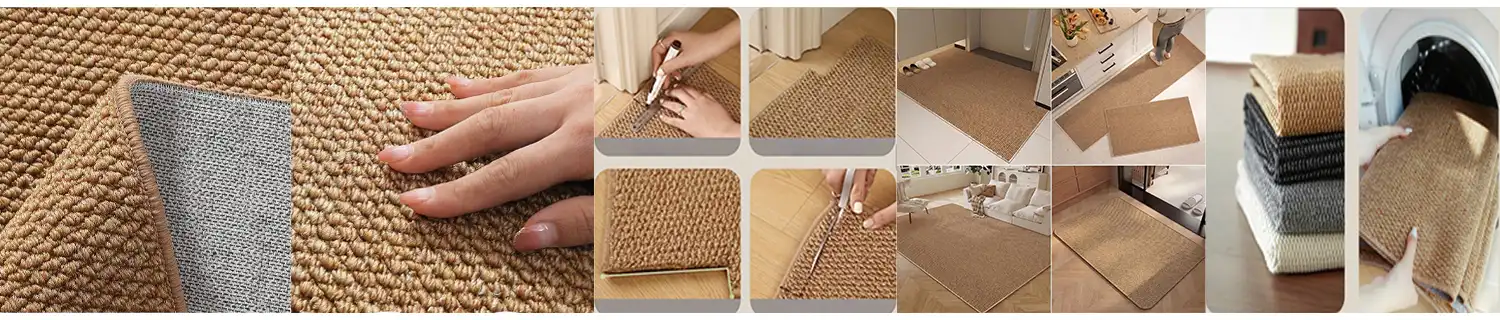
Imitation sisal carpet flooring uses man-made plastics instead of plant-based materials to copy the natural feel of Agave sisalana. To make it, precise flat-weaving methods are used to make designs that look like the basketweave or twisted patterns found in natural sisal. Solution-dyed polypropylene or polyamide fibers are used in modern factories. These fibers are chemically neutral and don't absorb water, which is a big benefit over natural fibers that do.
The backing systems usually use TPR (thermoplastic rubber), point plastic, or silicone strip technologies that keep the shape and stop the layers from coming apart when business traffic loads are put on them. Fibers are treated on the outside during production to make them immune to stains and less slippery. These treatments fix the main problems with natural sisal's functionality while keeping the natural look that builders and designers want for commercial, residential, and hotel projects. The pile height stays low at 0–1 mm, making a flat shape that is good for places with a lot of foot traffic and rolling furniture.
Key Differences from Natural and Synthetic Alternatives
When spills happen on natural sisal rugs, they get lasting stains that can't be fixed by cleaning. Plant fibers' hygroscopic expansion and contraction also cause physical instability, which can cause installations to buckle and seams to come apart. Standard loop-pile rugs and other synthetic options are durable, but they don't have the natural look that is important in high-end business settings.
Quality imitation sisal carpet fills this gap by combining the desired natural fiber look with designed performance features. The rate of wetness absorption is close to 0.01%, which means that mold can't grow in damp places. Facility management teams can get rid of tough spots without damaging the fibers because they can be cleaned with bleach. This is not possible with natural veggie fibers because they break down when they come in contact with harsh cleaning agents.
Benefits and Realistic Limitations
The cost-saving benefit becomes clear when you look at the whole process. The starting cost may be about the same as mid-range carpet tiles, but the total cost of ownership is much lower because they don't need to be replaced as often. In high-traffic areas like lobbies and hallways, where there is a lot of foot traffic, real estate investors and hotel buyers like the predictable care costs and longer service life. Environmental concerns have changed a lot over the years. Recycled polymers and low-VOC backing systems are used in modern production, which has led to OEKO-TEX certifications that prove the non-toxic makeup. Compared to natural fibers, which need to be replaced every 3 to 5 years in business settings, the longevity means that less waste ends up in landfills.
Most of the limitations come from differences in how things feel. Some people like the way that natural sisal has slight irregularities in the texture, but new developments in heat transfer printing can now successfully copy these natural differences. Because they are made of synthetic materials, they don't store carbon like plant-based materials do. However, they do save energy on an operating level by requiring less cleaning, which partly makes up for this.
Key Criteria to Spot Quality Imitation Sisal Carpet
Fiber Quality and Weave Density Assessment
Checking the fiber quality and weave density of an imitation sisal carpet reveals foundational quality signs that tell the difference between high-end goods and cheaper options. For industrial heavy-duty classifications, buildings with a high density and weights of between 1 and 2 kg/m² are what you need. Synthetic yarns should have a matte finish instead of a shiny one. Lower-quality yarns use raw polypropylene that looks like plastic and takes away from the look of natural fibers.
The performance of longevity is directly related to the depth of the weave. Purchasing managers can do easy tests in the field by pressing down on something with a hard object to see how it recovers. Quality goods go back to their original shape in seconds, but low-density alternatives permanently get compressed, which makes traffic patterns obvious within months of installation. Solution-dyeing, not surface-dyeing, is likely what happened because the color is the same across the fiber cross-section. Cutting a small fiber sample shows if the color goes all the way through. Solution-dyed materials keep their color even when they are worn down, so they don't fade or show wear patterns like surface-treated materials do.
Performance Metrics for Commercial Environments
Knowing about technical grades helps buyers match goods to the needs of their applications. The EN 1307 classification system sets uniform standards. Class 32 means the item is suitable for light commercial traffic, and Class 33 means it is suitable for heavy commercial traffic. Hotels and stores should set a minimum of Class 33 to make sure they can handle ongoing loads.
The test results for caster chairs show that they are stable in terms of size when rolling furniture, which is an important thing to think about in the office. Good goods can be washed and dried 25,000 times without the fibers or backing coming apart. Compliance with fire protection standards varies by market. For example, EN 13501 classes set the standards in Europe, while ASTM E648 covers the needs of North America. Buyers who serve customers in more than one geographic area benefit when providers keep their certifications up to date across all legal systems. The recommended width ranges from 10 to 15 mm, and it includes backing systems that improve soundproofing and comfort underfoot. When it comes to hard surfaces, TPR backing works better than latex options. This makes transition zones between types of floors safer for people who might slip.
Certifications and Sustainability Validation
Claims about the environment that are common in marketing materials are clearer when they are certified by a third party. OEKO-TEX Standard 100 approval specifically covers tests for dangerous substances, giving you peace of mind that chemical residues will stay below the levels set for direct skin contact. There is a lot of weight behind this approval in hospitality settings where choices about specifications are based on guest safety.
REACH compliance paperwork shows that chemical limits in the European Union are being followed, which is very important for businesses that import chemicals or trade with the EU. Over 200 substances of very high worry are limited by the rule, and suppliers should give full information instead of general compliance statements. Having ISO 9001 certification means that there are systematic quality control methods in place for all production processes. This certification gives procurement workers peace of mind about the uniformity of production, which fixes the problem of "inconsistent quality" that makes long-term seller relationships unstable and leads to expensive rework situations.
Waterproofing and Maintenance Requirements
The waterproof performance label needs to be explained in a way that goes beyond marketing speak. For building to be truly waterproof, the backing must be sealed so that water can't get into the subfloor materials. The testing procedures should show that the fabric can stand up to water for 24 hours without leaking or backing delaminating. This feature is very important in places like food service, hotel bathrooms, and entryways where wetness is present on a daily basis.
Quick-drying features work with protection to cut down on the time you have to wait after cleaning with water. Because synthetic fibers naturally don't absorb water, the water that is extracted evaporates within two to three hours in regular air flow, which is a lot faster than the 24 to 48 hours it takes for natural fiber goods. Instead of closing overnight, facility management teams can plan cleaning to happen during business hours.
How to Evaluate Samples and Suppliers for Bulk Orders?
Sample Inspection Protocol
By asking for samples of imitation sisal carpets, you can do your research and avoid making mistakes that cost a lot of money when you place a big order. Texture testing should be done in a variety of lighting conditions, since direct lighting can show up fake sheens that might not be typical of installation settings. By moving your hands over the surface in different directions, you can tell if the fiber tips have been physically treated to make them softer, which is a sign of high-quality goods.
To check the quality of the adhesive, the face fiber has to be separated from the backing material during the backing inspection. To test tuft tie strength, you can try to pull fibers away from the backing. Good goods don't come apart even when you apply a lot of force. If you look at the backing material, you can tell if the grip is provided by TPR, point plastic, or silicone strips.
You can test for colorfastness on your own using regular home bleach diluted to standard cleaning ratios. By putting the solution on a small, unseen area of the product and then rinsing it off, you can see if the colors stay stable or start to bleed. This is a failure sign that can predict maintenance issues throughout the product's lifecycle. Assessing smells can tell you about chemical processes and the quality of materials. Some new samples may have light polymer smells that go away when they get some air flow, but strong chemical smells are a sign of VOC problems that could affect the indoor air quality certifications needed for LEED projects and health-conscious business settings.
Supplier Selection Criteria
Third-party validation through industry groups and certification bodies is another way to check a manufacturer's image, in addition to comments on their website. Suppliers who stay members of groups like the Carpet and Rug Institute show they care about upholding industry standards and continuing their professional growth. Asking for references from clients who have worked on similar projects of the same size and purpose gives you a straight look at how reliable the delivery is and how good the after-sale help is.
Lead times and transportation costs are greatly affected by where things are located. Suppliers that are close to major shipping ports lower the cost of sending goods within the country and give you more options for combining containers. Being able to make models in 24 to 48 hours shows that the production process is flexible, which is great for people who sell things online or work as workers who have to meet tight deadlines.
Certification openness tells you which sources you can trust and which ones are just making claims. Full certification paperwork should be easy to find, such as test results with exact performance numbers instead of just "pass" or "fail" statements. Suppliers who won't give you detailed technical data sheets probably don't have the quality control systems you need for regular bulk production.
Commercial Terms and Customization Options
Different suppliers have very different minimum order amounts (MOQs). Importers trying new markets or retailers controlling inventory risk can benefit the most from MOQs that are flexible. Figuring out if MOQ is based on color, design, or total order value shows how flexible a company really is and changes how they buy things. The level of modification should be taken into account when setting prices. Standard solid colors usually have base prices, but heat transfer printed patterns and custom sizes cost more because they need to be set up and make production less efficient. Asking for detailed quotes instead of bundled prices shows you what the real cost drivers are and helps you make a better project budget.
If a provider can meet brand-specific needs like unique designs, custom measurements, and package specs, then they have the OEM and ODM capabilities to do so. E-commerce buyers benefit a lot from providers who offer logo integration and retail-ready packaging, which means that the goods don't have to be handled again before they are sent to the customer. Lead time promises must be written into contracts, along with punishment terms for late deliveries. The pain point of "delayed delivery" is one of the most annoying parts of buying carpet for businesses.
Comparison Insights: Imitation Sisal vs. Other Carpet Types
Performance and Durability Analysis
When you look at the lifetime performance of different types of floors, you can see where imitation sisal carpet really shines. Natural sisal carpets need to be replaced every three to five years in business settings with mild traffic because cleaning and water damage the fibers. Wool carpets are more luxurious, but they need to be cleaned in a certain way and cost 200 to 300 percent more than synthetic carpets.
Standard synthetic rugs with loop-pile or cut-pile constructions last as long as high-quality fake sisal, but the way they look is what determines the price. Interior designers choose sisal textures because they add an organic look to biophilic design schemes. Synthetic alternatives that don't have this texture can't meet the design purpose, even if they work similarly. While jute rugs look a lot like real sisal, they both have problems with being sensitive to moisture. When upkeep problems and a shorter service life are taken into account, the lower cost compared to sisal is no longer important. Imitation sisal gets rid of all of these problems.
Cost-Benefit Evaluation for Bulk Procurement
Looking at the total cost of ownership instead of the unit purchase price shows the economic benefits that lead to choices about specifications. The cost is shown by a comparison model that looks at an installation in a 10,000-square-foot hotel hallway. At $8/square foot, natural sisal needs to be replaced every four years and needs to be professionally cleaned once a year at a cost of $0.50/square foot. The total cost comes to $180,000 over 10 years.
At $6/square foot, good imitation sisal carpet lasts 10 years or more with regular industrial cleaning at $0.25/square foot per year, saving a total of $85,000, or 53%. Getting rid of the costs of hiring new workers and stopping operations for repairs adds value that can't be seen in simple cost comparisons. Imitation sisal carpet makes it possible for properties to be standardized, which is good for procurement managers who work with more than one property fleet. The constant quality and predictable upkeep needs make property management practices easier to follow in all places, which is a big help for real estate developers and hotel chains that are in charge of hundreds of properties.
Application-Specific Recommendations
Certain use cases particularly favor imitation sisal carpet specifications. In areas that go from inside to outside, like sunrooms and covered patios, the floors are subject to changes in temperature and UV rays that quickly break down natural fibers. UV-stabilized synthetic sisal gets lightfastness scores of Grade 7-8, which means that the color stays the same after years of being in the sun. For homes and businesses that allow pets, the surfaces need to be easy to clean and not permanently stained by biological events.
The ability of manufactured fibers to be cleaned with bleach makes them completely sanitary, which isn't possible with natural fibers that soak up liquids and let germs grow. Exhibition and trade show floors need to be able to handle a lot of moving equipment being set up and taken down. Quality synthetic sisal doesn't lose its shape or wear down easily like natural options do after a few event cycles. This is because it is resistant to losing fibers and backing delamination.
Maintenance and Longevity: Ensuring Your Investment Lasts
Understanding Wear Patterns and Environmental Stressors
There are a lot of ways that commercial systems like the Customizable imitation sisal doormat can break down, and repair plans need to take them all into account. When people walk on carpets, the rough soil particles that are tracked on cause tiny fiber damage by grinding against the carpet. Entry mat systems that catch 80% of arriving dirt before it gets to the main carpet areas greatly extend the service life by lowering this main source of wear. When raw synthetic fibers are exposed to UV light through windows, they break down, leaving behind surface chalking and polymer chains.
When high-quality goods are made, UV stabilizers are added during the fiber extrusion process. However, even stabilized materials can benefit from window covers that block direct sunlight during the hottest hours. When furniture loads a low-density product, it forms compression zones that stay in place. Rotating where furniture is placed once a year changes the way it is loaded and keeps it from crushing in one place. Using the right furniture mats spreads the weight over a bigger area, which lowers the pressure concentration.
Practical Cleaning and Maintenance Guidelines
Setting up regular repair plans for an imitation sisal carpet keeps small problems from getting worse and requiring replacement. Daily cleaning with equipment that has height-adjustable beater bars set to the right pile height gets rid of top dirt before it gets deep into the fibers. Weekly wet mopping with pH-neutral cleaners gets rid of spills and stops residue from building up, which makes the floor more porous.
Deep cleaning every three months with hot water extraction tools gets rid of dirt that a cleaner can't reach. Quality goods have waterproof backing systems that let you clean them with water very hard without worrying about delamination. Mildew can't grow if the item dries completely within two to three hours. In wet areas, air movers or dehumidifiers can speed up the drying process.
Spot cleaning procedures should be written down and shared with building staff so that they are always followed. If you don't rub spills, they won't damage the fibers or change the shape of the pile. By testing cleaning solutions on areas that won't be seen before using them on areas that will be seen, chemical reactions that could permanently change the color are stopped.
Product Recommendations and Cost Optimization
Choosing cleaning tools that are safe for synthetic fibers gets the best results while keeping costs low. Cleaners that are based on enzymes break down organic spots well without using strong solvents that could damage fiber treatments. When you don't use oil-based cleaners, you don't leave behind residue that attracts dirt and makes surfaces slippery. The total cost of ownership is lower when preventive care is used instead of reactive cleaning that fixes damage that has already happened. A relatively small expense, entrance matting systems get rid of most of the dirt before it gets to the main flooring. The return on investment is seen within a few months, as cleaning is done less often and repair rounds are lengthened.
Conclusion
In conclusion, a thorough analysis of the fiber content, backing construction, performance approvals, and source skills is needed to find high-quality imitation sisal carpet. Synthetic options are better than natural ones because they are waterproof, don't stain, and keep their shape. This makes them the smart choice for business uses where long-term value is driven by durability and low upkeep. When procurement professionals test samples thoroughly and check that suppliers are certified, their companies can avoid the problems that often come up with B2B flooring projects, like quality issues and deliveries that aren't on time. When lifecycle factors are properly taken into account along with the initial purchase price, the comparison cost analysis shows that there are substantial total ownership saves.
FAQ
Q1: Can imitation sisal carpet be used in outdoor or wet environments?
A: Synthetic sisal items of good quality that have waterproof backings work well in covered outdoor areas and wet places like hotel pool decks. The UV-stabilized fibers protect against damage from the sun, and the non-absorbent material stops bacteria from growing. Installing things outside that can't drain should be avoided because standing water can damage the covering over time.
Q2: How long does imitation sisal last in commercial spaces?
A: Products that are properly defined and rated Class 33 for business heavy traffic usually last between 10 and 15 years in hotel hallways and stores. How long something lasts relies on how often it is maintained and how much traffic it gets. Areas with a lot of foot traffic may show wear in 7–8 years, while secondary routes usually last longer than 15 years before they need to be replaced.
Q3: What customization options are available for bulk orders?
A: Reliable makers offer full customization, such as heat transfer printed patterns that can match any design, laser cutting to exact measurements and odd shapes, custom color matching, and branded packaging for store use. OEM and ODM services can work with custom designs and keep the MOQ low so that you can try how the market reacts before committing to big production runs.
Ready to Source Premium Imitation Sisal Carpet?
Yiyajia Carpet consistently provides the standard of goods and reliable supply that purchasing professionals look for in an imitation sisal carpet maker. Our heat transfer printing technology lets you change the patterns in any way you want, and our precise laser cutting can handle projects of any size. Every sale goes through a 100% pre-shipment inspection, and we stand behind our quality promise by replacing any defective goods for free, and Yiyajia pays for all of the shipping costs.
Certifications like CE, OEKO-TEX, ISO 9001, REACH, and EN 1350 show that your products are in line with regulations and make it easier to get them through customs in global markets. Our dedicated export team keeps clear lines of communication open throughout production. Samples are ready in 24 to 48 hours, and shipping dates are always the same, so you don't have to worry about the unknowns of getting goods overseas. Email our team at sale@yyj-carpet.com to get examples or talk about the needs of your particular project.
References
1. Carpet and Rug Institute. (2022). Commercial Carpet Performance Standards and Testing Protocols. CRI Technical Bulletin Series.
2. European Committee for Standardization. (2021). EN 1307: Textile Floor Coverings - Classification of Pile Carpets. CEN Standards Publication.
3. OEKO-TEX Association. (2023). Standard 100: Testing Criteria and Limit Values for Textile Products. OEKO-TEX Technical Documentation.
4. Sustainable Furnishings Council. (2022). Lifecycle Assessment of Natural vs. Synthetic Floor Coverings in Commercial Applications. SFC Research Report.
5. American Society for Testing and Materials. (2021). ASTM D3936: Standard Test Method for Delamination Strength of Secondary Backing of Pile Floor Coverings. ASTM International.
6. International Organization for Standardization. (2023). ISO 105-B02: Textiles - Tests for Colour Fastness - Part B02: Colour Fastness to Artificial Light. ISO Standards Catalog.