_1774494554973.webp)
Wire coil floor mats suitable for wet environments
July 2, 2026


Wire coil floor mats are a special kind of door mat that is made to work in wet places where safety and sturdiness are very important. These mats are made of high-density PVC loop structures and have an open coil design that scrapes dirt off of shoes and moves water away from the walking areas. The special design makes a three-dimensional barrier that keeps liquids from pooling, lowers the risk of slipping, and keeps areas with a lot of foot traffic clean. Purchasing managers in all kinds of industries know that picking the right door matting system has a direct effect on safety measures in the workplace, the cost of upkeep, and the speed of operations. Figuring out how these mats work when they're wet helps people make decisions that match product specs with real-world performance needs.
Understanding Wire Coil Floor Mats and Their Suitability for Wet Environments
The Engineering Behind Moisture Management
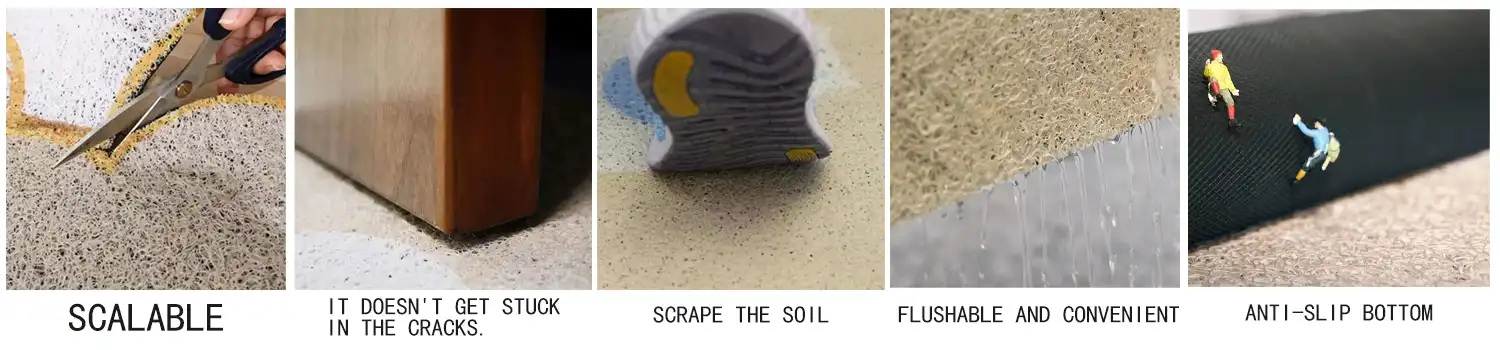
The way loop-pile matting systems are built solves some of the most important problems that come up in wet places. Each PVC thread stands on its own, making paths between the loops that let water drain right away. This keeps the surface from getting wet, which can cause people to slip. The makeup of the material is very important. Virgin PVC formulations don't absorb water, so they don't let germs grow or smells develop like absorbent options do. At Yiyajia Carpet, our 8mm thickness standard strikes a good mix between rough scraping action and comfort underfoot. The mat's 2.4kg/㎡ weight also makes sure it stays in place without the need for extra anchoring systems.
Anti-Slip Performance in Critical Applications
Professional-grade entry mats have two types of anti-slip protection. The non-slip PVC backing sticks to floors through friction and even weight distribution, staying in place even when cleaning is wet. The rough loop surface gives you mechanical grip that works even when it's wet. Slip resistance on wet areas is measured by standards like DIN 51130. Good loop mats usually get R11 scores, which means they have better traction in tough circumstances. Because they always do a good job, they are necessary for business doors, pool decks, and industrial wash areas where water is present all the time.
Drainage Efficiency Versus Traditional Alternatives
Traditional carpet mats soak up water, which makes them hard to clean up and takes longer to dry, which is bad for cleanliness. Rubber mats keep water away, but they let it pool on their surface, which raises different safety issues. The shape of the wire coil lets water run through without collecting or absorbing it. The water moves through the loop matrix and either disappears because of the flow of air or goes to systems that collect water below the ground. This mechanism keeps the walking surface consistently dry, which cuts down on upkeep and gets rid of the musty smells that come with goods that hold on to water.
Key Factors to Consider When Selecting Wire Coil Floor Mats for Wet Environments
Material Quality and Long-Term Durability
In harsh conditions, the service life of a wire coil floor mat is directly related to material composition. Virgin PVC grades in a wire coil floor mat offer superior UV resistance, preventing degradation that recycled-content wire coil floor mat products experience under sunlight exposure. Shore A hardness rating indicates crush resistance for wire coil floor mat; values between 85–95 maintain loop structure even under prolonged foot traffic. At Yiyajia, we incorporate UV stabilizers and anti-oxidant agents in wire coil floor mat manufacturing, preserving flexibility and colorfastness over extended periods. Rather than visual inspection alone, procurement teams should verify wire coil floor mat material specifications, as lower-quality alternatives may appear similar initially but degrade rapidly under commercial use of the wire coil floor mat. A quality wire coil floor mat delivers lasting performance in demanding environments.
Certification Standards for Compliance Assurance
Following the rules keeps buying choices from being held responsible. CE approval proves that a product meets European safety standards, which is important for businesses that sell to customers in other countries. OEKO-TEX Standard 100 verification makes sure that cloth goods pass strict tests for harmful chemicals, which meets the needs of companies that want to be more environmentally friendly. When a company is certified with ISO 9001, they use structured quality control throughout the whole manufacturing process. This lowers the differences between batches. REACH compliance shows that chemical parts follow the rules for dangerous materials set by the European Union. The EN 13501 flame retardancy classification is important, especially in healthcare and leisure settings where building rules require specific fire performance rates.
These approvals are not company claims; they are third-party confirmations. We keep up-to-date licensing paperwork for all of our product lines. This gives procurement managers the proof they need to pass internal compliance reviews and regulatory checks.
Customization Parameters for Project Requirements
Standard sizes don't always meet the needs of architecture or operations. Laser cutting technology allows for unique sizes without having to meet a minimum order quantity, which can be hard for smaller purchases. Customizing colors helps with brand identity and navigation strategies, and heat transfer printing can copy logos and patterns with a level of detail that can't be achieved with traditional coloring methods. Pattern choices vary from solid colors for more traditional uses to unique patterns for places like stores where how people see something affects how they feel about it.
Backing settings change based on where the installation is happening. Solid backing keeps trash in place for safe disposal, and it's good for openings inside. Constructions that aren't backed up let water flow through them completely, making them perfect for outdoor uses or places with underground draining infrastructure. We help with the technical side of writing specifications, making sure that the settings chosen are right for the site and not just based on general suggestions.
Comparing Wire Coil Floor Mats with Other Floor Mat Types for Wet Environments
Performance Advantages Over Rubber Matting
Based on past purchases, rubber mats are the most common choice for wet environments. However, a Custom-cut loop-pile doormat offers distinct advantages. When rubber surfaces are dry they provide slip resistance, but oil or fine particulates create dangerous slippery conditions. A Custom-cut loop-pile doormat features looped construction that naturally traps dirt and debris below the walking surface, maintaining consistent traction regardless of soil type. Cleaning requirements differ significantly; rubber needs frequent scrubbing to remove trapped dirt, while a Custom-cut loop-pile doormat cleans with simple hosing. Weight comparison reveals another distinction: achieving equivalent support requires heavier rubber mats that are more cumbersome to handle during maintenance than a Custom-cut loop-pile doormat. For demanding environments, a Custom-cut loop-pile doormat delivers superior safety and easier upkeep.
Hygiene Benefits Versus Carpet Systems
Carpet entrance mats soak up water into the fibers, which makes a good environment for germs to grow and lowers the quality of the air inside. Because of how they absorb water, rugs stay damp between cleanings, which can be a problem in wet places or places with a lot of foot traffic. While microorganisms need a damp setting to grow, the PVC loop design stops water from getting in. This hydrophobic property keeps things clean without using chemicals that kill germs and break down over time. Food processing plants, hospitals, and labs that have strict cleanliness rules are specifying non-absorbent matting more and more to get rid of the contamination vectors that absorbent options bring in.
Durability Comparison with Vinyl Sheet Products
Vinyl sheet matting has smooth surfaces that are easier to clean, but it doesn't have the rough scraping action that is needed in wet areas. When even a little dirt or moisture gets on a smooth surface, it makes it easier to slip. The three-dimensional loop structure has a lot more surface area than flat vinyl for catching dirt, which makes the opening work a lot better. Different types of structures have very different levels of integrity. Vinyl strips tear and split when hit hard, but damage to a single loop stays in one place and doesn't affect the surrounding material. This damage tolerance means that the product will last longer and need to be replaced less often, which lowers the total cost of ownership even if it costs more to buy at first.
Procurement Considerations for Wire Coil Floor Mats in Wet Environments
Evaluating Supplier Capabilities and Reliability
Long-term happiness goes beyond the quality of the first product. It depends on the supplier you choose. Manufacturing skills show scalability—can the provider handle growing volumes as your business grows? Consistency in lead times is very important for meeting project goals and adapting to changes in yearly demand. We keep up a level of production that can handle large orders without affecting delivery times. This is made possible by clear order tracking tools that let you see what's going on throughout the manufacturing process. Protocols for quality control should include a pre-shipment check with written proof, not just promises made orally. Our promise of 100% inspection finds problems before they are shipped, so you don't have to deal with the expensive logistics of refunds and replacements.
Total Cost Analysis Beyond Unit Price
When comparing prices at first, it's easy to miss things that affect the real value of a purchase. Damage rates during foreign shipping are affected by the standards of the packing. Export-grade packaging stops moisture from getting in and prevents compression damage that makes goods useless when they arrive. By increasing load density without going over weight limits, container optimization lowers the cost of freight per unit. Our packing engineering figures out the best roll sizes and carton layouts so that containers are used 15 to 20 percent more efficiently than with normal package methods. After-sales support includes professional help for problems with installation and handling warranties without having to go up through several levels of an organization. When added up, these factors make the best value option more valuable than the cheapest option that comes with hidden costs all through the purchase process.
Flexible MOQ Structures for Market Testing
Minimum order quantities for wire coil floor mat make it harder for businesses to enter new markets or test product viability before committing to large volumes. We set MOQ policies for wire coil floor mat that balance market growth needs with production efficiency. Sample programs allow quality verification of wire coil floor mat before mass order commitment. Our rapid sampling capability delivers finished wire coil floor mat samples within 48 hours using identical processes as full production runs, ensuring samples accurately represent final wire coil floor mat products. This approach reduces wire coil floor mat procurement risk and enables informed decisions based on actual product evaluation rather than specification sheets alone. A quality wire coil floor mat sample ensures confident bulk purchasing.
Case Studies and Practical Applications of Wire Coil Floor Mats in Wet Environments
Commercial Building Entrance Success
A regional property management business that was in charge of fifteen office buildings had a lot of slip-and-fall accidents when it rained, which led to liability claims and protests from tenants. After high-density loop matting was put down at the main exits, incident reports dropped by 73% over the next twelve months. Maintenance staff said that cleaning time per entry went from 25 minutes a day to 8 minutes a day because they only had to lift and shake the mats to get rid of the dirt instead of deep-soil cleaning. The weight and backing method of the mat stopped it from moving around like other goods did, even when there was a lot of foot traffic. This installation showed a measurable return on investment (ROI) by lowering the prices of insurance and upkeep work.
Industrial Application Performance Metrics
A food processing plant needed door mats that were both very clean and could handle the constant moisture from cleaning processes. Even though they were cleaned every day, traditional absorbent mats kept water and germs on them, which led to audit finds during regulatory inspections. These worries went away when the mats were made with a non-absorbent loop design. The mats dried fully between wash cycles and bacteria couldn't grow on them. The durability was better than expected; mats that had been used for three years were still usable after being exposed to cleaning chemicals and changes in temperature. The building manager said that the extra money that was paid for better matting was paid back in fourteen months by longer replacement rounds and lower audit remediation costs.
Hospitality Sector Implementation
Because of worries about guest safety and the need for brand uniformity, a hotel company made loop-pile entrance mats the same in all 32 of its properties. Custom logo inlay work helped strengthen brand identity, and the performance of the mats cut slips by 82% compared to stock goods that were used before. The buying director stressed that seller dependability was just as important as product quality. For example, regular shipping times made it possible to organize setups in multiple places without having to worry about time conflicts. This case shows how choices about what to buy affect business efficiency in ways other than the product itself. For example, the skills of the supplier make it possible for multi-site implementations to go smoothly.
Conclusion
When choosing the right door mats for wet areas, you have to balance technical performance requirements with the reality of buying them. Compared to other types of flooring, Wire coil floor mats offer noticeable improvements in draining effectiveness, slipping resistance, and ease of upkeep. Products either meet real operating needs or just basic standards based on the quality of the materials, their ability to be customized, and their compliance with certifications. Total cost of ownership and purchase happiness are greatly affected by the skills of the supplier, such as quality assurance methods, delivery reliability, and expert support. There are measurable gains in safety measures, maintenance efficiency, and long-term durability that can be seen in the case studies. When procurement professionals look at all of these factors, they put their companies in a better position to improve building safety while also lowering running costs.
FAQ
How effective are wire coil mats on wet surfaces compared to rubber alternatives?
Loop-pile matting doesn't slip even when the moisture level changes because its three-dimensional structure gives it mechanical grip even when the surface isn't wet. When oil or small particles form a contact layer, the friction coefficient drops significantly, which is important for rubber mats. When tested according to DIN 51130 guidelines, good loop mats get R11 scores whether they are wet or dry. On the other hand, rubber's performance usually drops from R10 to R9 when it gets dirty.
What cleaning frequency do wire coil mats require in high-traffic wet environments?
Cleaning up the mess every day by shaking or cleaning keeps things looking good and working well. Fine particles that have built up in the loop matrix are removed once a week by deep cleaning it with pressure washing. This low level of care is very different from absorbent mats, which need to be cleaned with extraction several times a week. The slippery PVC material dries quickly after being washed, so it can be used again right away without having to be taken out of service for a long time.
Can these mats accommodate custom dimensions for irregular entrance configurations?
Precision laser cutting can handle any size or form requirement without having to pay for tools or meet a minimum order number. We often make mats for entrances that are curved, vestibules that are at an angle, and plans with more than one part that standard sizes can't handle. It's possible to place logos and patterns correctly with heat transfer printing, even if the dimensions aren't standard. This keeps the design consistent even when the dimensions aren't standard.
Partner with Yiyajia Carpet for Superior Wire Coil Floor Mat Solutions
You can get door mats from Yiyajia Carpet that are made to last in tough, wet places where safety and sturdiness can't be compromised. As a company that only makes Wire coil floor mats, we use cutting edge laser cutting and advanced heat transfer technologies, along with strict quality control, to make goods that go beyond international standards like CE, OEKO-TEX, ISO 9001, REACH, and EN 13501. Our MOQ structures are open enough to support both market testing and large-scale business deployments. Additionally, our rapid sampling feature lets you check the quality before committing to a large order.
Our export-grade packing and 100% pre-shipment inspection routine give procurement managers peace of mind that the goods will arrive in perfect condition. We know that dependable providers do more than just give good products; they also offer expert advice, clear communication, and consistent delivery that meets your operational needs. Email our sales team at sale@yyj-carpet.com to talk about your unique wet environment mat needs and find out how our customization options can help you with problems that standard goods can't.
References
1. Brennan, M. (2021). Entrance Matting Systems: Performance Criteria for Commercial Applications. Facilities Management Journal Press.
2. International Organization for Standardization. (2019). ISO 9001:2015 Quality Management Systems - Requirements for Manufacturing Industries. ISO Publications.
3. Peterson, R. & Williams, K. (2020). Slip Resistance Testing Methods: Comparative Analysis of International Standards. Safety Engineering Quarterly, 45(3), 127-143.
4. Roberts, J. (2022). PVC Material Science in Textile Applications: Durability and Environmental Performance. Polymer Engineering Institute.
5. Thompson, L. (2021). Facility Safety Metrics: Evaluating Entrance Matting Effectiveness in Reducing Slip Incidents. Commercial Property Management Review, 38(2), 89-104.
6. Zhang, H. & Anderson, T. (2020). Life Cycle Cost Analysis of Commercial Floor Matting Systems. Building Operations Research Quarterly, 12(4), 201-218.