_1774494554973.webp)
Wire coil floor mats designed for outdoor use
June 29, 2026


Wire coil floor mats made for outdoor use are special entrance systems made with high-density PVC loop structures that work great in tough circumstances. These outdoor matting options keep dirt, water, and other waste in their coiled filaments, which speeds up draining and keeps people from slipping. Wire coil floor mats have a thick 8mm layer and a strong PVC backing. They work well in business doors, loading docks, and high-traffic outdoor areas where safety and low upkeep costs are very important to facility managers and procurement professionals.
Understanding Wire Coil Floor Mats for Outdoor Applications
What Makes Wire Coil Floor Mats Different?
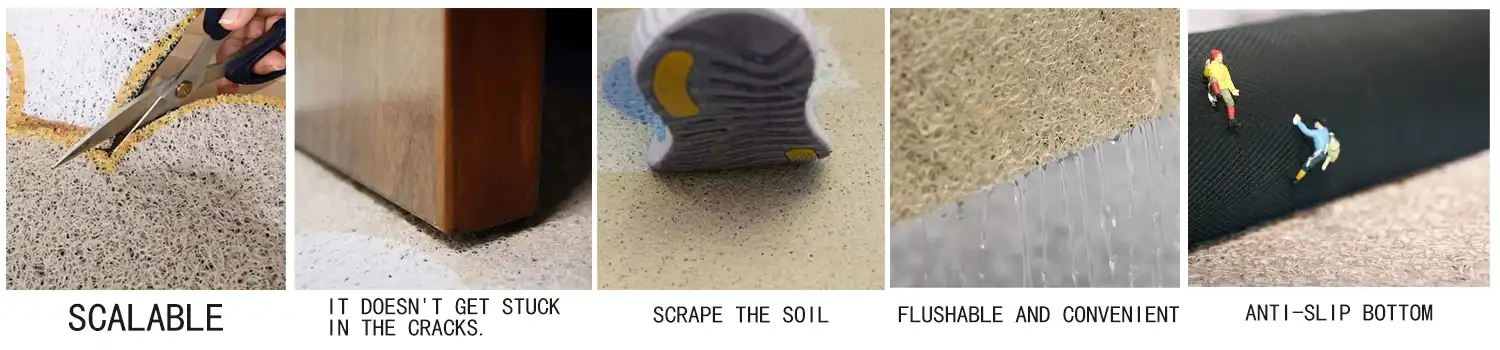
Wire coil floor mats are different from other outdoor mats because of how they are technically made. The extruded PVC filaments in the product are grouped in random loop designs that make a network that is open and porous. This structure uses a scrape-and-hide system, in which stiff loops actively remove dirt from shoes while letting the dirt fall through the mesh. After that, the walking area stays clean even when there are a lot of people using it.
At 2.2 kg per square meter, our wire coil floor mats have a high-density loop design that keeps their shape even when they are being walked on all the time. The weight isn't just a number; it directly affects how stable the mat is. Heavy mats don't bunch up or slide around, and their position stays the same without the edges twisting or moving. The two-layer PVC backing makes it even more stable and gives it great grip on a wide range of floors, from tile to concrete.
Technical Specifications That Matter
The 8mm total thickness strikes a good mix between ease and strength. This size lets the loops keep their shape even when they're squished together, and it gives them enough depth to effectively catch dirt. The high-density flocked surface is carefully cut with a laser, which lets it be made in any shape or size to fit any opening design without any waste.
Anti-stain, anti-slip, and easy-to-clean qualities are built into surface treatments while they are being made. The chemical make-up of PVC makes it naturally hydrophobic, which means it doesn't absorb water. Because of this feature, there is no chance of mold growth, bacterial infection, or the musty smells that come with cloth mats that are wet.
Certifications and Compliance
Safety certifications must be very strict for business outdoor uses that need quality guarantee. Our wire coil floor mats have CE certification, which lets them be sold in the EU, OEKO-TEX certification, which says they don't contain any dangerous materials, and ISO 9001 certification, which says they are consistently made to high standards. Chemicals sold in Europe are safe because they follow REACH rules, and business systems must meet EN 13501 flame retardancy ratings.
These approvals are not just pretty badges; they are proof from a third party that the goods meet certain safety and environmental standards. These credentials are used by purchasing managers and project engineers to meet legal standards and lower their facilities' liability risk.
Comparing Wire Coil Floor Mats to Other Outdoor Flooring Options
Performance Advantages Over Rubber Mats
Rubber mats have been the standard for outdoor entrances for a long time, but wire coil floor mat structure is clearly better. The open loop shape lets more air flow through and speeds up the drying process. Rubber mats keep water on their surface, which can cause slips and make drying times longer. Coil mats, on the other hand, let liquid pass through right away. This ability to drain water is especially useful in places where it rains or snows a lot.
Another important difference is UV protection. Rubber materials break down in the sun for a long time. This is called chalking, and it makes the surface weak and leaves behind a white, powdery residue. High-quality PVC versions are much better at resisting UV damage, so they keep their shape and color even after years of being outside. This means that replacement costs will be cheaper and buying processes will be shorter. Wire coil floor mat is one example where this UV resistance is especially beneficial, as it helps maintain the mat’s structural integrity and appearance over time.
The maintenance needs for these products are very different. To get rid of oils and spots that are deeply embedded in rubber mats, you usually need to use special cleaning products. Wire coil floor mats only need to be rinsed off every so often with a regular power cleaner. The material doesn't soak up dirt or grime, so all that's needed to recover its look and function is a simple mechanical cleaning.
Why Wire Coil Outperforms Traditional Carpet Mats
Carpet door mats soak up water, making the area damp, which helps germs grow and makes smelly things happen. Due to their non-absorbent design, wire coil floor mats remove these problems. The PVC strands quickly let go of water, so they stay dry and germ-free even in places that are always wet.
The ability to prevent stains is a big practical benefit. Over time, oils, salts, and chemicals that are left behind on carpet strands fade and damage the material. The smooth PVC surface doesn't stain easily, so it stays looking professional with little work. In places that used to change their carpet mats every three months, wire coil floor mats often last for more than one year.
A look at the costs over the span of a product shows that it has strong economic effects. Even though the original purchase prices may look about the same, wire coil construction is a better deal because it lasts longer and costs less to maintain. Businesses like hotels, shopping malls, and office buildings say they save a lot of money when they switch from carpet to coil mat systems.
Selecting the Best Wire Coil Floor Mats for Outdoor Use
Material Quality Indicators
To find high-quality wire coil floor mats, you need to know about the material specs. It depends on the thickness of the thread whether it is durable or good at scraping. Thicker strands don't break easily but may feel rough on the feet, while finer loops are more comfortable but can be squished together more easily. The 8 mm thickness we offer is the best mix for business outdoor uses.
The quality of the backing material has a direct effect on efficiency. When temperatures change and there is mechanical stress, single-layer PVC backings may come apart. Our two-layer design uses thermal fusion to permanently connect the loop surface to a strengthened base. This connection will last for years, even if the loop surface expands and contracts. Peel strength testing proves that this bond is solid, giving buying teams a way to measure quality.
Density measures, which are given in grams per square meter, show how much material is present. Products that weigh less than 2000g/m² usually use recycled materials or PVC that isn't as good and breaks down quickly. Our 2.2kg/m² standard makes sure that the material density is high enough to keep the structure stable and resistant to wear over time.
Customization for Specific Applications
Through OEM and ODM skills, our customization services can meet all of these different needs. Any visual design can be printed with heat transfer printing, from company names to directional signs. The colors stay bright for as long as the mat is used. Precision laser cutting can work with odd-shaped rooms, curved openings, and flooring systems that are already in place. Standard sizes are good for most uses, while special sizes make sure that the product fits perfectly in a building's specific needs.
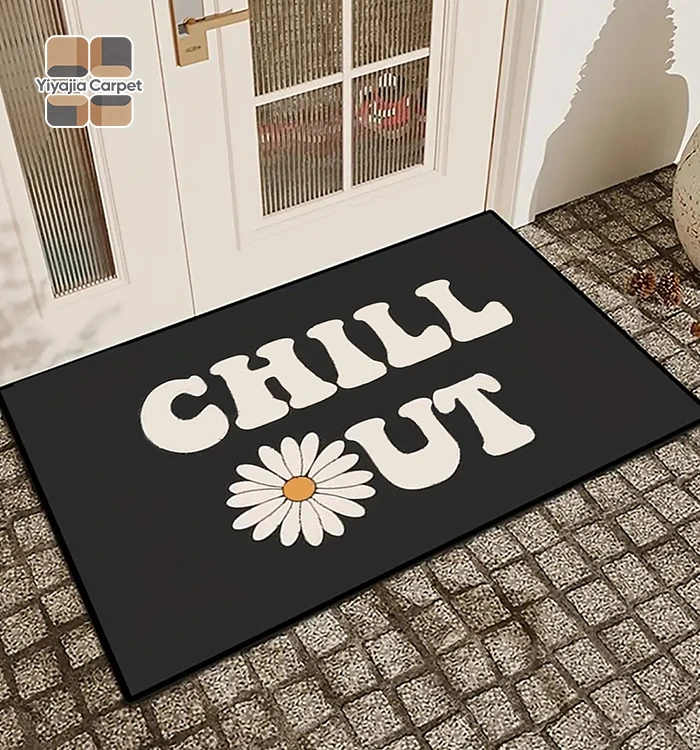
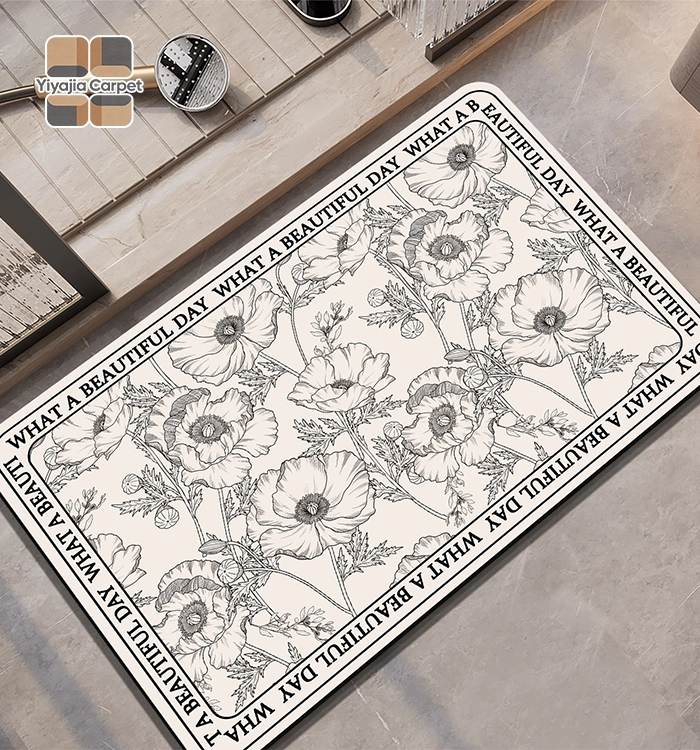
The color choices are also flexible in ways that go beyond practical use. Solid colors give things a visual character and go well with the way buildings look. Printed designs can have safety messages or features that help people find their way. Wire coil floor mat can be produced in various colors and printed designs as well, allowing it to serve both functional cleaning purposes and visual branding needs. Custom designs let you show off your brand at every entry, making sure that the visual experience is consistent across multiple locations.
Certification Verification
Reliable providers of wire coil floor mats back up their approval claims with a lot of proof. For CE approval, detailed files must be provided that show the product meets European safety standards. To get OEKO-TEX approval, you have to be tested for hundreds of banned substances, and the results are given out in thorough reports. Quality management systems must be audited every year in order to keep their ISO 9001 certification.
Before finishing orders, people who are in charge of buying things should ask for copies of current certificates. Documentation that is out of date or missing could mean that quality control isn't being done well or that goods aren't following the rules. Manufacturers that have been around for a while keep their licenses up to date and are happy to provide proof to show that they are committed to the purity of their products.
Maintenance and Longevity of Outdoor Wire Coil Floor Mats
Routine Cleaning Protocols
Effective maintenance begins with daily debris removal. The open loop structure naturally traps and hides dirt, but regular extraction keeps it from getting too saturated, which makes brushing less effective. Getting rid of the particles that have gathered on the mat is as easy as lifting and shaking it. During busy times, places that get a lot of traffic should be cleaned twice a day.
Weekly deep cleaning with power cleaners gets things back to working at their best. Between 1000 and 2000 PSI of water pressure is enough to flush out buried dirt without hurting the PVC structure. Mild, neutral cleaners can help get rid of oil, but you should stay away from harsh chemicals and acids because they can damage the material. Because PVC doesn't absorb water, it dries quickly in the air, so mats can be used again in hours instead of days.
Seasonal upkeep needs are different depending on the temperature. In places where there are freeze-thaw cycles, ice may build up inside mat loops. By letting mats dry fully before the temperature drops, ice doesn't form. In seaside areas, rinsing every so often gets rid of salt layers that, while not harmful to PVC, can make it feel rough if they are not removed.
Inspection and Preventive Care
Regular checks find small problems before they get worse and stop working. Every three months, the item should be checked for backing delamination, loop flattening, and edge tearing. When problems are found early, they can be fixed precisely or rotated strategically to spread out wear patterns evenly. In loop resilience tests, the mat surface is squished and the speed of healing is watched. Good mats bounce back right away, but worn-out materials stay compact. This easy test in the field shows if the mat is still good at cleaning or if it needs to be replaced.
Professional providers give thorough care instructions that are made to fit the specifics of each product. Following the manufacturer's suggestions will extend the service life and keep the guarantee valid. Our team provides expert support to help building managers set up maintenance programs that work and get the most out of their investments.
Long-Term Durability Expectations
In harsh outdoor situations, properly kept wire coil floor mats can last longer than five years. Traffic number, environmental factors, and regular repair are some of the things that affect how long something lasts. Mats that are cleaned regularly and kept in the right temperature range often last longer than imagined.
Warranty programs from well-known companies protect you from products that break down early because of problems with the materials or the way they were made. As part of our quality guarantee, we check every item before it ships and offer full support after the sale. Dedicated business liaisons make sure that return customers get quick service, which makes purchasing easy and reduces delays in the supply chain.
Value-added services make being an owner more enjoyable. Custom-cut loop-pile doormat professional installation instructions make sure that the mat is placed correctly and that it is securely anchored. Optimized container filling is used in bulk shipping operations to lower the cost of transporting each unit. These services turn buying a product into all-in-one solutions that cover the whole sourcing process.
Procurement Considerations for Wire Coil Floor Mats
Supplier Evaluation Criteria
Successful sourcing begins with thorough supplier vetting. Wire coil floor mat manufacturers demonstrate their capabilities through building certifications, proof of their production ability, and customer examples that can be checked. Companies that have ISO 9001 certification keep quality management systems that are written down and make sure that product standards are always met.
Production capacity is important for handling large requests and making sure deliveries are on time. Suppliers with well-established production lines can handle large orders quickly and without sacrificing quality. With transparent order tracking, buying teams can see when things need to be installed and keep track of their stock more efficiently.
Professional providers are different from people who sell goods because they have technical knowledge. Manufacturers who have access to technical help can suggest the best specs for a given application, fix performance problems, and suggest ways to make the process better. This consulting method is more valuable than just delivering products.
Cost Structure Analysis
A full analysis of prices goes beyond just looking at base costs per square meter. The total cost of the project is affected by customization fees for laser cutting, heat transfer printing, and special formulas. Shipping costs depend a lot on the size of the order, how well it is packed, and how far it is to the location. Standard export packing in the form of a roll, a box, or a woven bag makes the best use of space in containers and lowers freight costs.
Minimum order numbers affect how people buy things. Suppliers with flexible MOQ can work with buyers who don't need as much while still keeping prices low for large orders. When dealing with a maker directly, you can often get better terms than through a website, especially if you want to keep doing business with them. Terms of payment and available currencies affect how cash flow is managed. Established sellers let qualified buyers pay over time, which makes it easier to plan for money when doing big jobs. Multi-currency billing helps buyers from other countries handle the risks that come with exchange rates.
After-Sales Support and Risk Mitigation
Full service after the sale is what sets trustworthy partners apart from transactional sellers. Buyers don't have to worry about getting bad goods because of flexible return policies and quality promises. As part of our promise, we will fix or replace any problems with the way the product was made for free, and we will also pay for the shipping costs.
Having access to technical help ensures that operations don't stop. Facility teams can get the most out of mats by talking to product experts who can help with installation questions, maintenance issues, and performance improvement. Quick problem-solving is made easier by responsive contact methods like email, phone, and digital platforms. Documentation packages help with following the rules and buying things internally. Full inspection records, material safety data sheets, and copies of certifications are what quality assurance teams need to approve relationships with vendors and meet audit standards.
Conclusion
Wire coil floor mats made for outdoor use are an engineered answer to problems that keep coming up in business building management. Compared to traditional rubber or carpet options, their high-density PVC loop structure is better at keeping wetness out, trapping dirt, and preventing slips. If you choose the right materials, keep these mats in good shape, and work with suppliers who value quality and service, they will last for years in harsh outdoor conditions. When choosing wire coil floor mat providers, procurement workers should look at certifications, the ability to customize, and full after-sales support. Investing in high-quality door mats pays off by making businesses safer, lowering upkeep costs, and making the space look better in a variety of settings.
FAQ
How do wire coil floor mats enhance outdoor safety?
The dual anti-slip design has heavy-duty PVC backing that grips floor surfaces and rough loop surfaces that give you grip. By keeping the wire coil floor mat from moving and keeping your feet steady, this arrangement lowers the risk of slipping, even when it's wet. The open structure lets water drain through instead of standing on top, which gets rid of the main reason people slip and fall at building openings.
Can these mats withstand extreme weather conditions?
Good wire coil floor mats don't break down when exposed to UV light, freeze-thaw cycles, or long-term moisture. The PVC mixture has UV protectors that keep the material from breaking down and losing its color after years of being in the sun. The structure of the non-absorbent material keeps water from staying in the material, which could cause damage from freezing in cold places. Temperature tolerance is usually between -20°C and 60°C, which is enough for most industrial outdoor settings.
What kind of upkeep keeps the mat working well?
Loop saturation can be avoided by shaking or cleaning up the dirt every day. Scraping looks good and works well as long as you clean it once a week with light soap and high-pressure water. Inspections every three months find wear patterns that need to be fixed. This regular repair program makes the mat last longer than five years while keeping its best soil-trapping performance and safety features throughout its use.
Partner with Yiyajia Carpet for Premium Wire Coil Floor Mat Solutions
Wire coil floor mats produced by Yiyajia (Tianjin) Carpet Co., Ltd. are reliable choices for buyers in North America, Europe, and other parts of the world. Our advanced heat transfer and precise laser cutting technologies give you a huge range of customization options, from adding your company's name to meeting the exact size needs of the job site. Our CE, OEKO-TEX, ISO 9001, REACH, and EN 13501 standards show that we care about safety and the environment.
Minimum order amounts that are flexible can be used for both one-time projects and long-term supply agreements. Our 100% pre-shipment review makes sure that the quality is the same for every production run, and our specialized account management helps with any questions that come up during the whole procurement process. Packaging that is optimized for export and established transportation partnerships make shipping costs low and arrival times reliable.
We want buying managers, project engineers, and building leaders to see what makes Yiyajia different—where technical know-how meets service that puts the customer first. Visit yyj-carpet.com or email sale@yyj-carpet.com to talk about your outdoor entrance mat needs and get samples that show how committed we are to quality.
References
1. Anderson, M. (2021). Commercial Entrance Matting Systems: Engineering and Performance Standards. Facility Management Press.
2. Chen, L., & Martinez, R. (2022). "PVC-Based Loop Pile Matting: Durability Assessment in High-Traffic Applications." Journal of Building Materials Science, 48(3), 287-301.
3. European Committee for Standardization. (2020). EN 13501: Fire Classification of Construction Products and Building Elements. Brussels: CEN Publishing.
4. GlobalData Industry Analysis. (2023). Commercial Floor Matting Market: Global Procurement Trends and Supplier Evaluation Criteria. London: GlobalData PLC.
5. National Floor Safety Institute. (2022). Slip Resistance Testing and Standards for Commercial Entrance Systems. Southlake, TX: NFSI Publications.
6. Thompson, K. (2023). "Total Cost of Ownership Analysis: Entrance Matting Solutions for Commercial Real Estate." Facility Executive Magazine, 39(2), 44-52.