_1774494554973.webp)
Where can I buy hotel-grade carpets suitable for high-traffic areas?
July 28, 2026


To find the best hotel carpet for areas with a lot of foot traffic, it's often helpful to know where reliable suppliers are located and what they really provide. Quality companies like Yiyajia (Tianjin) Carpet Co., Ltd. make flooring solutions that are long-lasting and can be customised for commercial and hospitality spaces. With the help of cutting-edge production technologies and strict quality control, these suppliers make products that look good even after years of use. When purchasing managers are looking for reliable sources, they can talk to direct manufacturer partnerships, wholesale distributors, and business flooring providers who know how to meet the specific needs of hotel settings.

Understanding Hotel-Grade Carpets for High-Traffic Areas
What Defines Hotel-Grade Carpeting?
Hotel-grade flooring is very different from flooring for homes because it has to deal with operational issues that homeowners never have to deal with. Every day, suitcase carts roll over the fibres of these rugs thousands of times, and they also have to deal with spills from room service trays and cleaning methods that use heavy machinery. The best hotel carpets are made from materials that are designed to be strong and durable. These are usually synthetic fibres like nylon or polypropylene, which don't get stained or crushed and keep their look even after years of use.
Material Innovation and Performance
Today's commercial-grade goods are made with materials that are both comfortable and useful. The faux cashmere surfaces make the area feel luxury, which guests like, and the TPR thermoplastic rubber backing keeps it stable and stops it from moving. This combination takes care of two very important issues: making sure guests are happy and following safety rules. The surface texture hides dirt well between cleanings, so intensive maintenance isn't needed as often. With lockstitching and machine-woven construction, the edges are smooth and won't fray. This gets rid of the unsightly wear patterns that hotels try to keep up a professional vibe.
Pattern Selection Strategy
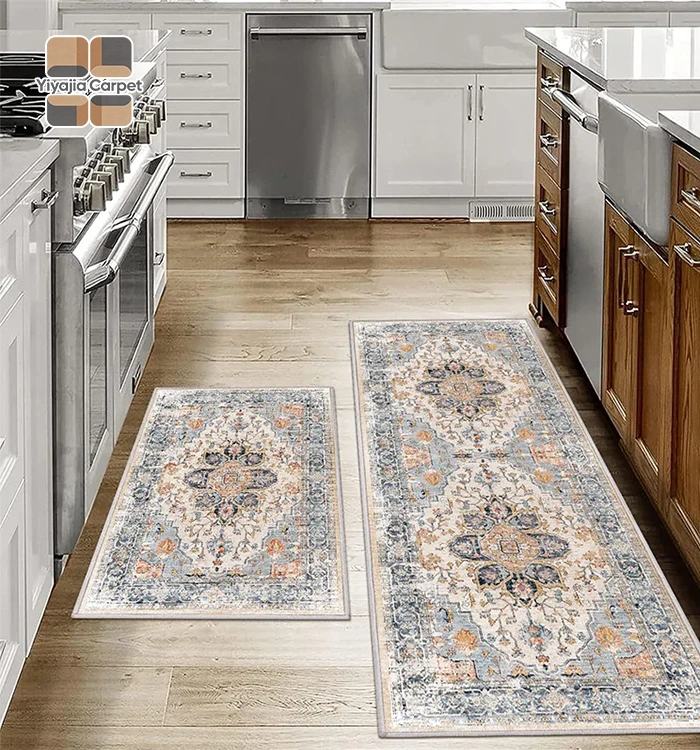
Design choices in hospitality flooring are made for reasons other than how they look. Traffic lanes and small stains are hidden by intricate patterns and multi-tonal colour schemes, making hallways and public spaces look cleaner for longer. These strategic design elements lessen the visible effects of daily wear and tear, so properties keep their high-end looks between replacement cycles. Hotels that cater to a wide range of international guests can benefit from patterns that are culturally neutral and go with a variety of design styles without limiting the chances of future renovations.
Key Factors to Consider When Buying Hotel-Grade Carpets
Durability Assessment Standards
To judge durability for best hotel carpet, you need to know how to use the traffic classification methods that are common in the hotel business. Heavy-traffic areas like the entrance to the lobby and the hallways leading to the lifts need carpets that are rated for extreme use. Guest rooms, on the other hand, can use carpets that are a little less heavy-duty. The quality of the construction determines how long something will last. Products with a reinforced backing and high-density pile construction can handle mechanical stress better than cheaper options. To compare options objectively, buyers should ask for detailed specs such as pile weight, density measurements, and backing composition.
Maintenance Requirements and Total Cost
Maintenance issues have a direct effect on how much it costs to run the business over the carpet's lifetime. Total ownership costs go up a lot for products that need special cleaning products or a lot of professional help. The most useful hotel flooring options work with the cleaning routines that have already been set by housekeeping, so they can be cleaned with pH-neutral cleaners and extraction tools without any damage. Stain-resistant treatments that are applied during manufacturing cut down on the number of times that spots need to be cleaned. This frees up staff for other tasks while keeping the property's appearance consistent.
Environmental Certifications Matter
As global standards for corporate responsibility get stricter, sustainability has gone from being a marketing preference to a requirement for buying things. CE and ROHS approvals show that a product meets the safety and environmental standards of the European Union, which are becoming more and more respected around the world. These certifications make sure that the materials don't contain any harmful chemicals. This means that carpets are safe for places where kids play and people who are easily upset live. OEKO-TEX certification specifically addresses textile safety, letting buyers know that finished products don't contain any harmful chemicals. This is especially important for properties that market themselves as family-friendly or health-conscious vacation spots.
Where to Buy Hotel-Grade Carpets in Bulk: Supplier Insights
Direct Manufacturer Advantages
When you buy directly from makers like Yiyajia for best hotel carpet, you skip the markups that come from middlemen and can customise your order in ways that sellers can't. When buying teams have direct relationships with suppliers, they can give accurate measurements, colour matching for renovation projects, and even logo integration for branded settings. Large projects can be completed without having to wait for longer lead times by manufacturers whose daily production capacities are 2,000 square meters. Being able to choose between foldable or carton packaging makes the best use of shipping containers, which lowers the cost of logistics per unit for buyers from other countries.
Evaluating Supplier Capabilities
Suppliers you can trust show their dedication by providing real quality control tools. Getting ISO 9001 certification means that quality is managed in a planned way throughout the whole production process. This makes sure that there is less variation between order batches. Suppliers who can turn around samples in 24 to 48 hours make project planning go quickly, and designers and purchasing managers can make sure the specs are correct before placing bulk orders. Low minimum order quantities, like 50 pieces for customising size and colour, make it possible for mid-sized hospitality groups that manage multiple properties to test out new suppliers without breaking the bank.
Geographic and Logistical Considerations
For international buying, you need providers who have a track record of exporting. Long-term ties with freight forwarders help manufacturers plan their shipping dates and make sure their paperwork is clear, which reduces the number of problems that come up with customs. Professional export packing that is resistant to damage from water and impacts keeps investments safe during transoceanic transport. Suppliers who figure out the best ways to load containers make the best use of space, which directly lowers shipping costs per square metre. This is a big deal when filling whole hotel rooms or multiple properties at the same time.
Comparing Hotel Carpet Solutions: Making the Informed Decision
Construction Methods and Performance Trade-offs
The hospitality market is mostly made up of tufted carpets because they are easy to make and don't cost much. However, woven carpets are more durable and are better for areas with a lot of foot traffic. Putting yarn into backing material and sticking it down with glue is what tufting is. This makes stable flooring that can be used in most hotel settings. The machine-woven method used in high-quality products makes the fibre attachment stronger by nature. This virtually eliminates the delamination risk that lower-quality tufted options sometimes have when they are cleaned harshly or put under heavy rolling loads.
Format Selection: Broadloom Versus Tiles
Broadloom flooring that is put in continuous rolls for Hotel room carpet looks smooth and is great for hallways and large ballrooms, but if any part gets damaged, it needs to be replaced in its entirety. Carpet tiles are easy to put and keep up because broken tiles can be changed one at a time without affecting the rest of the floor. Over time, properties that get small damages from events or moving equipment more often find tiles to be more cost-effective. Installing tile projects faster means that there is less downtime for operations, which is important for hotel managers who have to plan renovations around peak occupancy times.
Warranty and Performance Guarantees
Full warranties show that the company that made the product is confident in its durability. Quality suppliers offer warranties against mistakes in manufacturing, such as printing mistakes, incorrect cutting, and differences in size. These warranties cover both the cost of a replacement product and the shipping costs that go along with it. This shift of risk is especially helpful for buyers who are working with limited project budgets and no emergency funds. Extended performance warranties that cover premature wear give you even more peace of mind, but they usually need to be kept up by following certain maintenance procedures.
Procurement Process and Best Practices for B2B Buyers
Supplier Vetting Methodology
Systematic review of suppliers protects buying investments and makes sure the project is a success. Buyers should compare providers' production capabilities to project timelines to make sure they can meet targets without lowering quality. Checking certifications makes sure that they follow the rules of the target market. These rules include EN 1350 flame retardancy ratings, which are important for European projects, and REACH chemical limits for shipments going to the EU. Checking with current customers for references shows how responsive the supplier is when problems arise out of the blue, which is an important thing to think about because flooring failures in occupied hotels can cause major problems.
Sample Confirmation Protocol
Professional purchasing always involves checking a physical sample before ordering in bulk. Samples make sure that the colours are accurate in the property's lighting, that the texture is right for the environment, and that the sizes are the same as what was specified in the building plans. With the help of heat transfer printing and laser cutting technologies, suppliers can make samples that exactly match the final production specifications. This gets rid of the differences that used to make commercial flooring projects difficult. By briefly putting samples in hallways or guest rooms and trying them in real installation settings, you can learn things that you can't get from lab testing.
Negotiation and Order Structuring
When you buy in bulk, you can get better prices, but when you negotiate, you should look at the total value, not just the unit cost. In the long run, flexible payment terms, faster production schedules, and warranties that cover everything are often more valuable than small price cuts per unit. Setting up initial orders with reorder provisions locks in prices for later phases and gives suppliers the certainty of volume that justifies better terms. Buyers who are in charge of more than one property can save money by buying in bulk. By using the total volume across all of their properties, buyers can get manufacturer-direct prices that are usually only available to bigger businesses.
Conclusion
Finding the right business flooring for a hospitality setting means balancing the need for performance with the need for style, price, and operating timelines. The best hotel carpet options use long-lasting materials, tried-and-true building methods, and dependable suppliers to make floors that keep looking good even after a lot of use. Direct ties with manufacturers give you more options for customisation, peace of mind about quality, and price benefits that you can't get through standard routes of distribution. To be successful at procurement, you need to carefully evaluate suppliers, check samples, and know all about the certifications that are important to your target markets. When businesses buy quality flooring from reputable suppliers, they lower their long-term maintenance costs and give their guests a better experience, which leads to good reviews and repeat business.
FAQ
Q1: How quickly can I receive samples for project evaluation?
A: Because we use advanced manufacturing techniques, we can make samples in 24 to 48 hours. Heat transfer and laser cutting technologies exactly copy the final product specifications, so what you see matches your bulk order. Before you buy a lot of something, you should get samples to make sure the colours are accurate, the textures are right, and the sizes fit.
Q2: What certifications ensure safety for hotel environments?
A: Quality industrial carpeting has a number of safety certificates that show it meets certain standards. CE and ROHS make sure that products meet European environmental standards, and OEKO-TEX makes sure that textiles are safe and don't contain any harmful chemicals. ISO 9001 stands for systematic quality control, and EN 1350 talks about flame retardancy, which is very important in hospitality settings where guest safety is very important. These certificates aren't just marketing gimmicks; they show that the product meets international safety standards.
Q3: Can carpets be customized for specific brand requirements?
A: Customisation goes far beyond just choosing the right size. Modern manufacturing lets you add your logo, match your own colours, and change patterns to make your property more consistent with your brand. Even small businesses can afford to customise their items because the minimum order quantity (MOQ) is so low. For example, logo customisation can be delivered within seven days, and size or colour changes can be made with a MOQ of just 50 pieces.
Ready to Source Your Commercial Flooring Solution?
Yiyajia Carpet is a reliable best hotel carpet supplier that uses cutting-edge heat transfer and laser cutting technologies to create custom flooring options that meet the high standards of hospitality settings around the world. Our daily production capacity of 2,000 square meters keeps your project on schedule, and our full CE, ROHS, ISO 9001, REACH, and EN 1350 certifications make sure that we meet the standards of all foreign markets. You can talk to our team at sale@yyj-carpet.com about your specific needs, ask for samples, or find out how our flexible customisation options can meet the specific needs of your property with MOQs as low as 50 pieces.
References
1. Hospitality Flooring Procurement Standards and Best Practices, International Hotel Purchasing Association, 2023
2. Commercial Carpet Performance Testing Methods and Industry Benchmarks, Textile Research Institute, 2022
3. Lifecycle Cost Analysis for Hotel Flooring Solutions, Cornell School of Hotel Administration, 2023
4. Environmental Certifications in Commercial Textile Procurement, Global Sustainability Standards Board, 2022
5. High-Traffic Flooring Material Specifications for Hospitality Environments, American Society for Testing and Materials, 2023
6. Supply Chain Management Strategies for International Hotel Renovations, Hospitality Asset Management Association, 2022