_1774494554973.webp)
What leather floor mats are recommended for enhanced comfort and style?
September 3, 2026


When sourcing premium flooring solutions that balance elegance with functionality, the best leather floor mats emerge as the definitive choice for high-end residential, hospitality, and commercial environments. These mats combine sophisticated aesthetics with practical durability, offering anti-stain, anti-slip, and waterproof properties that standard options cannot match. Constructed from high-grade PVC leather with precision laser cutting and reinforced backing systems, they deliver the luxurious appearance of genuine leather while maintaining cost-effectiveness and long-term performance suitable for demanding applications.
Understanding Leather Floor Mats – Comfort and Style Defined
Leather-textured floor mats are a high-end type of protective flooring that is meant to make rooms look better thru the quality of the materials and the way they look. In contrast to traditional rubber or fabric alternatives, these mats are made of advanced synthetic leather composites that mimic the soft feel and rich look of real leather without the cost or difficulty of maintenance.
Material Characteristics and Performance Benefits
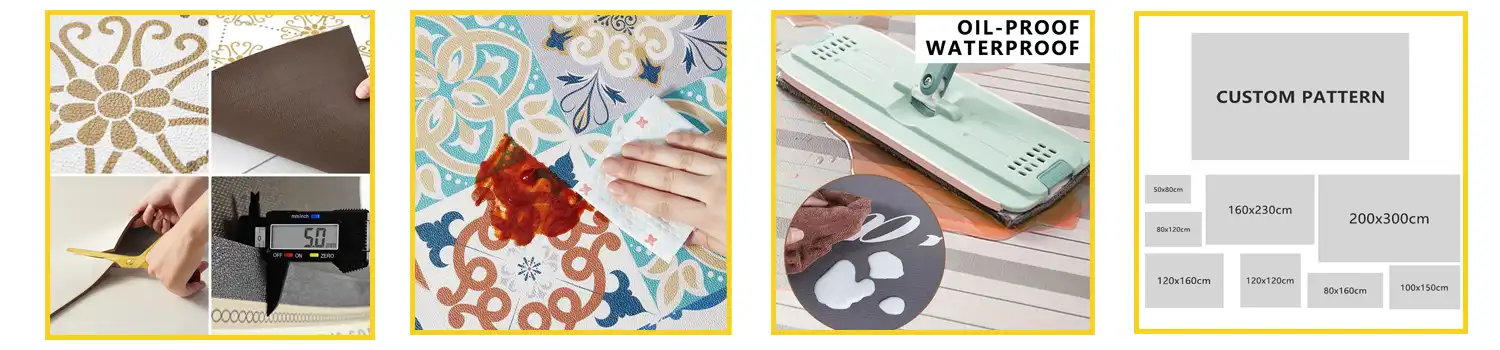
Modern leather floor mats have PVC leather surfaces that are attached to special backing systems. This makes a barrier that covers the floors below and helps keep noise down. The soft leather surface feels great on your feet, which is very different from the rough rubber mats or the absorbent cloth choices. This construction makes the floor waterproof, so spills stay on the surface and are easy to clean up instead of going thru to the subfloor.
The scientific benefit comes from the fact that the cloth doesn't wear down easily. Good leather floor covers can handle being walked on all the time without getting the compression marks that happen with foam-backed products or the frayed edges that happen with woven fabrics. The anti-stain surface treatment actively repels liquids and particles, keeping the view clear even in places like hotel hallways or store doors that get a lot of foot traffic, where first impressions are very important.
Comparative Analysis with Traditional Options
Rubber mats are commonly used in industrial settings because they are resistant to chemicals, but they don't have the nice looks that are needed for high-end brand environments. Fabric mats soak up moisture and trap allergens, which makes them hard to clean and doesn't meet hospitality standards. Leather-like options fill in this gap, offering commercial-grade sturdiness with the elegance of a home.
Their smooth surface makes them easy to clean between uses, which is very important for places that have a lot of customers every day. Because they look good together, they help interior designers keep the brand's personality across different useful areas without sacrificing safety.
Key Criteria for Selecting Leather Floor Mats – A Decision Support Approach
In the category of leather floor mats, buying decisions involve weighing a number of technical factors against specific operational needs. By understanding these factors, you can avoid expensive mismatches between what a product can do and what it needs to be used for.
Material Grade and Construction Integrity
The quality of synthetic leather from one source to the next changes a lot. Higher-quality goods use PU or strengthened PVC that doesn't break down easily and keeps its shape when temperature and humidity change. The backing material is also very important. For example, anti-slip PVC backing with rough gripping patterns keeps the mat from moving around on tile or stone floors that are smooth and shiny. Different people have different comfort and safety needs when it comes to thickness. Options ranging from 3mm to 8mm are common in restaurant settings because they balance cushioning and support.
Precision Fit and Customization Capabilities
Standard sizes often leave holes that make things look bad and don't work right. Custom-fit options made with laser cutting technology get rid of these problems by making mats that fit perfectly with building features and furniture arrangements. Brand managers can keep the color story consistent across all touchpoints by choosing colors ranging from deep browns to rich burgundies, and they can further elevate the interior experience by selecting the best leather floor mats, which combine luxury with durability. OEM customization includes logo embossing and custom packaging, which turns useful items into brand assets that help with positioning in the market.
Maintenance Requirements and Environmental Compliance
Long-term value depends on how easy it is to clean and how well regulations are followed. The best options only need to be cleaned with a damp cloth, not special cleaning products. This cuts down on costs and the need to train staff. Environmental approvals, such as REACH compliance and OEKO-TEX standards, make sure that no dangerous chemicals are used. This meets the growing demands of business social duty. For business sites where building rules require flame-resistant materials in public places, fire resistance ratings that meet EN 13501 standards are a must.
Top Recommended Leather Floor Mats for Enhanced Comfort and Style in 2026
There are a lot of different price ranges and feature sets available on the market right now. There are some things that set premium products apart from basic ones. Here are some of the most important things that make a solution a leader.
When manufacturers use high-definition heat transfer technology, they can make patterns that look like photos, which isn't possible with traditional printing methods. Color-locking treatments stop the fading that happens after many cleaning cycles and makes the effect less noticeable. Precision laser cutting makes sure that the edges stay clean and don't break, so the result looks professional for a long time. The weight range of 1 to 2.5 kg per square meter shows that the material is dense enough to not curl and is still easy to handle during installation and moving.
Absolute waterproof performance is better than water-resistant performance because it stops water from getting in and causing mold to grow in the materials below. Surface treatments that don't slip keep people safe even when the mat is wet, and backing that doesn't slip keeps the mat from becoming a hazard. Customization services that let logos be added, colors to be matched, and sizes to be changed let buying teams choose goods that strengthen brand identity instead of weakening it. All of these things make high-end best leather floor mats look like investments instead of disposable items.
When outfitting hotel chains, store networks, or business projects, it's important to think about buying in bulk. When manufacturers offer flexible minimum order quantities and quick turnaround times for samples, procurement managers can check the quality of the goods before committing to large orders. For bulk orders, production cycles that last an average of seven days keep projects on schedule without forcing early decisions about specifications.
Maintenance and Longevity – Maximizing the Life and Appeal of Leather Floor Mats
A few simple, constant care steps are all that's needed to keep leather floor mats looking good and working well. Learning the right way to maintain a product protects the original investment and makes it last longer.
Effective Cleaning Techniques
Simple damp-wiping with clean water or mild pH-neutral solutions is all that's needed for daily maintenance. The smooth leather surface doesn't hold dirt, so you don't have to scrub it rough, which can damage protected coatings. Do not use cleaners with solvents because they break down fake leather materials over time.
Deep cleaning with leather-specific products every so often can bring back the shine to high-traffic areas that are showing signs of wear. For owners who choose the best leather floor mats, the waterproof property makes rinsing especially hassle-free—because it is waterproof, you can rinse it well without worrying that the water will damage the backing or glue.
Avoiding Common Handling Mistakes
Even tho leather is strong, sharp furniture legs and chairs with wheels can puncture or scratch it. Protective pads under big things spread the weight out and stop compression marks from showing up. When storing mats, don't fold them up because the creases may become permanent on thicker materials. Keep them loose and roll them up with the leather side facing outward. Direct sunlight speeds up color fading, even in UV-resistant materials. For projects that will be in direct sunshine, window treatments are recommended.
When looked at over several years, leather floor mats are a cost-effective choice from the point of view of life. Under normal commercial use, high-quality products keep their look for three to five years, which is a lot longer than the time between replacements needed for fabric or low-quality rubber alternatives. This sturdiness lowers both the number of times it needs to be bought and the cost of throwing it away, while keeping the brand's look constant.
Procurement Insights – Streamlining the Purchase of Leather Floor Mats for B2B Clients
When you strategically source leather floor mats, you have to figure out how to deal with different suppliers' capabilities, pricing structures, and service ecosystems that affect more than just unit pricing.
Sourcing Pathways and Supplier Evaluation
Direct relationships with manufacturers get rid of the markups that distributors add, and they also give you access to customization options that you can't get thru retail channels. Platforms that connect international buyers with certified suppliers make it possible to compare prices from several vendors at the same time.
Regional relationships with well-known makers like Yiyajia Carpet have benefits, such as quick samples that can be sent within 24 to 48 hours so that you can see the carpet for yourself before committing to buy it. For buyers seeking premium vehicle interior upgrades, sourcing the best leather floor mats from these certified suppliers ensures both quality and compliance. Checking certifications like CE, ISO 9001, and REACH approval makes sure that factory standards and rules are followed.
Pricing Models and Volume Considerations
Most of the time, bulk pricing only applies to large orders that are meant to meet business needs, not personal ones. Discounts for larger orders get bigger over time, and big price cuts happen after the minimum levels are reached. Flexible MOQ policies allow for both small test orders and later large-scale deployments, making it easier for new suppliers to get involved. Export-standard packing that comes with large orders keeps goods safe during international shipping and improves the efficiency of container loading to keep per-unit logistics costs as low as possible.
Value-added services set capable suppliers apart from basic manufacturers. Installation instructions cut down on the time it takes to set up and stop mistakes that could void guarantees. Quality guaranties that cover flaws in the way the product was made and include free repair and return shipping get rid of the risk of buying something. Dedicated account management for repeat customers makes sure that production is prioritized and that communication stays clear during reorder cycles. These parts of the service turn ties with suppliers into smart partnerships that help businesses reach their long-term goals.
Conclusion
When choosing best leather floor mats for business or high-end home use, you have to weigh the need for good looks against the need for performance and the reality of buying them. The more expensive choices have PVC leather surfaces with non-slip backings, waterproof construction, and the ability to be customized in a way that meets brand standards. Anti-slip floor mat functionality is often integrated into these backing systems, but standalone versions can also be placed underneath for extra grip.
When you carefully consider the quality of the materials, how well they comply with environmental standards, and the skills of the suppliers, you can be sure that the choices you make will have both short-term and long-term benefits. These mats offer long-lasting protection and improve interior design consistency in a wide range of settings thanks to smart sourcing and low-maintenance guidelines.
FAQ
How Do Leather Floor Mats Compare to Rubber Mats for Durability?
Leather floor mats made with hydrolysis-resistant PU stay strong for three to five years when used in a business setting, lasting as long as or longer than rubber options. In industrial settings, rubber is better at resisting chemicals, but leather surfaces are better at hiding wear and tear and keeping their good looks in places where sight is just as important as function.
What Thickness Should I Choose for Hotel Applications?
Thicknesses between 5mm and 8mm are good for hotel rooms because they provide cushioning comfort for guests while staying stable under luggage carts and foot traffic. Thinner options (less than 4mm) wear out faster in hallways with a lot of foot traffic, while options that are too thick (more than 8mm) make people trip and look heavy.
Can Custom Colors Match Existing Brand Palettes?
Advanced makers use heat transfer technology to make exact copies of color specs from Pantone references or samples that are given to them. When you order custom colors, you usually need to buy more of them than when you buy stock colors, but they work perfectly with brand guidelines and interior design schemes.
Are These Mats Suitable for Kitchens with Frequent Spills?
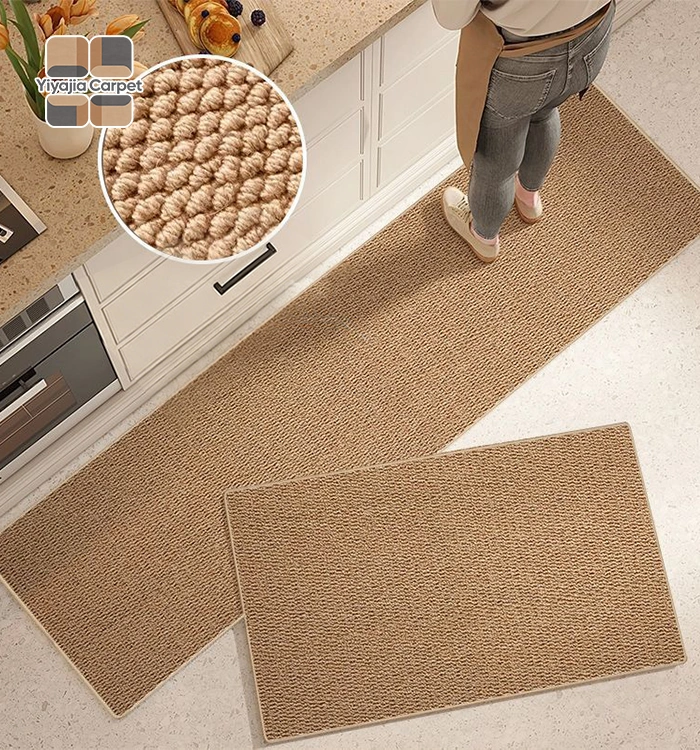
Leather floor mats are great for kitchens because they are waterproof and have a surface treatment that keeps stains from sticking. Instead of soaking thru, the liquid stays on top, making it easier to clean up right away. This stops mold from growing and meets the hygiene standards needed in food service areas.
How Quickly Can I Receive Samples for Evaluation?
Leading manufacturers offer 24-48 hour sampling turnaround, which lets you quickly check the quality of the materials, the accuracy of the colors, and the details of the construction before committing to large orders. Sample specs are the same as final production parameters, so there is stability between testing and delivery.
Partner with a Trusted Best Leather Floor Mats Supplier
It's exactly what procurement professionals and brand managers need from Yiyajia Carpet: high-quality best leather floor mats that look great and work better than others. With our advanced heat transfer technology and precise laser cutting, we can make goods that look great inside and can also handle tough business uses. We make sure that our products are legal in all foreign markets by getting approvals like CE, OEKO-TEX, ISO 9001, REACH, and EN 13501.
Our flexible bulk ordering can be used for both small-scale tests and large-scale operations. It's backed by 100% pre-shipment inspection and packing that meets export standards. See what a difference focused quality control and quick sampling make in the way you source goods. Email our team at sale@yyj-carpet.com to talk about your unique needs and get suggestions that are in line with your brand's standards and your business's needs.
References
1. International Textile Manufacturers Association. (2023). "Advanced Synthetic Leather Technologies in Commercial Flooring Applications." Industrial Materials Quarterly, 47(2), 112-128.
2. European Committee for Standardization. (2022). "Fire Safety Performance Requirements for Floor Coverings in Public Buildings: EN 13501 Implementation Guidelines." Brussels: CEN Publishing.
3. Zhang, L., & Martinez, R. (2023). "Comparative Analysis of Flooring Materials in Hospitality Environments: Durability, Maintenance, and Cost Effectiveness." Journal of Commercial Interior Design, 15(4), 201-219.
4. Sustainable Materials Research Institute. (2024). "Environmental Compliance Standards for Synthetic Leather Products: REACH and OEKO-TEX Certification Pathways." Amsterdam: SMRI Press.
5. Chen, W., Thompson, K., & O'Brien, M. (2023). "Procurement Strategies for Premium Floor Protection Systems in Luxury Retail and Hospitality Sectors." Global Supply Chain Management Review, 31(3), 87-104.
6. American Society for Testing and Materials. (2022). "Standard Test Methods for Evaluating Anti-Slip Properties and Abrasion Resistance in Synthetic Leather Floor Coverings." ASTM Technical Report F2913-22.