_1774494554973.webp)
What are the benefits of using Dornier floor mats in industrial settings?
May 26, 2026


Dornier floor mats are excellent for demanding industrial situations because they increase safety, endure longer, and save money. Special mats have non-slip backing and high density structure. They help prevent worker injuries, simplify maintenance, and save downtime. Due to their durability and ability to withstand chemicals, heavy traffic, and warehouse and factory environmental stressors, purchasing managers and facility owners increasingly employ these mats to satisfy safety regulations and save money.
Understanding Dornier Floor Mats: Materials, Design, and Durability
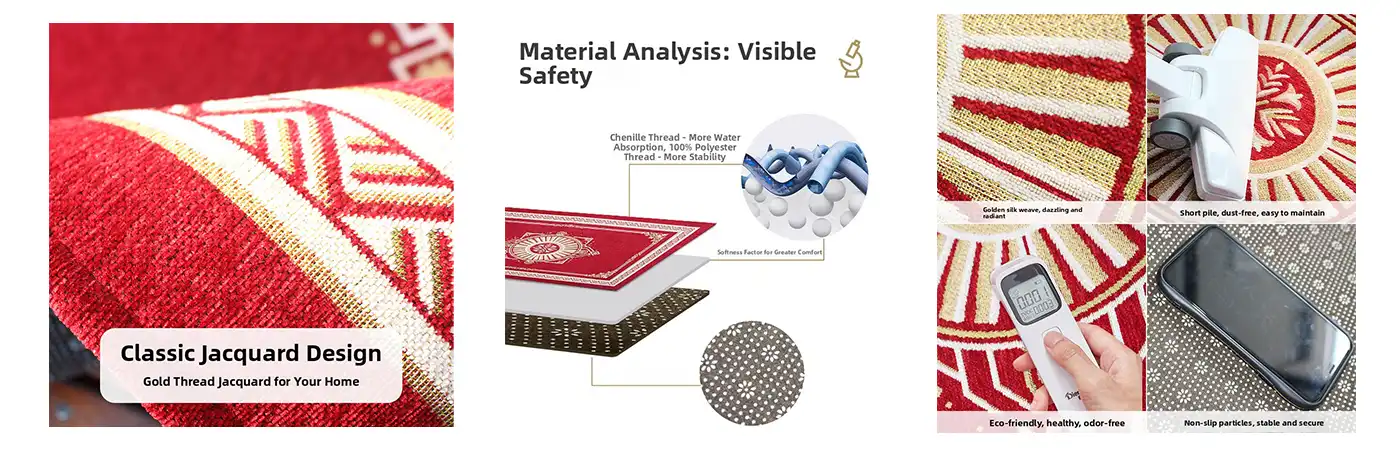
Know Dornier floor mats' materials, design, and durability. Industrial-grade floor mats' performance and durability depend on their base. Our polyester fibre surfaces and pointed plastic backings provide a structure that can withstand plant floor and loading dock conditions.
High-Density Tufted Construction
The 750g/m² weight restriction is due to a well-woven structure that prevents fibers from breaking under force. This high-density knitted construction lasts longer than lighter choices. Each square meter has enough material density to withstand pallet jack wheels, high foot activity, and fallen tools or equipment.
Advanced Backing Technology
The pointy plastic backing offers the mat mechanical strength that smooth-back mats lack. The rough bottom increases friction over safety limits. This secures mats on smooth, epoxy-coated, and concrete surfaces. This design eliminates the hazardous shifting that causes individuals to trip during busy shifts.
Material Resilience in Harsh Conditions
Polyester fibers don't react with petroleum-based, mild acid, or alkaline cleaning solutions used in industry. The 5mm thickness and 1mm pile height keep it looking nice after many wear cycles. Natural fibers absorb water and promote bacteria growth, whereas synthetic construction is quick-drying and easy to clean.
Third-party lab testing confirm these mats' dimensions remain constant from -10°C to 40°C. This makes them suitable for climate-controlled buildings and semi-exposed parking lots. Cold storage keeps materials pliable, and welding heat doesn't destroy them.
Key Benefits of Using Dornier Floor Mats in Industrial Settings
Why Dornier floor mats are suitable for industrial use. Industrial flooring should impact business statistics. Budgeting, safety, and building management efficiency improve with these advantages.
Enhanced Workplace Safety
Many slip-and-fall workers' compensation claims are filed each year. The non-slip surface and tight backing prevent falls by providing continual traction in dry and rainy conditions. Workers using safety boots have sturdy feet and wheeled equipment moves smoothly without shifting the mat. After long hours at assembly stations or quality control checks, shock-absorption keeps legs fresh. This indirectly reduces worker fatigue-related injuries.
Cost Efficiency Through Longevity
Replacement cycles affect maintenance costs. Heavy industrial usage degrades standard rubber mats in 12–18 months, requiring more frequent replacement and installation. Our strengthened design extends service to 36–48 months in identical settings, more than half as long. When there are fewer buy orders, procurement managers can keep track of everything, and maintenance crews can focus on more useful activities instead of mat replacement.
Simplified Maintenance Requirements
Antistain treatment repels hydraulic fluid, coolant, and other industry pollutants that cause markings on untreated surfaces. Daily cleaning requires only a vacuum or moist mop with ordinary materials. No special materials or expert cleaning are needed. The surface is easy to clean and maintain, so cleaning personnel can undertake regular maintenance without any training and remediate spills with spot cleaning that doesn't leave residue.
Customization for Operational Needs
Custom proportions can accommodate floor designs with machinery, transit systems, or unusual architectural elements, but conventional sizes work for most workstation layouts. Basic industrial colors and unusual patterns help organize the architecture. Safety zones, transportation lanes, and departmental areas can be marked with different colors. Logo customization helps brand showrooms near to manufacturers.
Our clients constantly complaining about unpredictable source performance, fluctuating product quality, and delivery delays that disrupt project timetables. These advantages eliminate these issues. Our products are safe to export and satisfy foreign requirements with CE, OEKO-TEX, ISO 9001, REACH, and EN 13501 certifications.
Comparing Dornier Floor Mats with Traditional and Competitor Solutions
Comparing Dornier floor mats to others. Know how various mat technologies operate in the same settings to make sensible purchases. Our industrial clients consider their options before placing huge orders.
Performance Against Rubber and Vinyl Alternatives
Rubber mats are soft, but they break down when they come in contact with oils and solvents. They develop fissures that collect dirt and make cleaning difficult. Vinyl alternatives resist water, but equipment feet or pallet jack wheels exert point stresses on them and wear them down. Our pleated polyester is chemical-resistant and mechanically tough. In spots where rubber and vinyl would rip, it protects the surface.
The economic gain is obvious from lifecycle cost assessment. Rubber mats cost $8,000 every 18 months for 500 square meters of matting, whereas our mats cost $12,000 every 42 months. After five years, the total investment drops from $26,667 to $17,143, a 36% reduction even before labor expenses drop due to fewer installation rounds.
Competitive Differentiation in B2B Markets
Distributors and importers choose reliable suppliers with consistent quality and delivery timeframes. Our 100% pre-shipment inspection finds faults before items are sent. This safeguards your reputation. Export-standard packaging can withstand rigorous handling of international freight and still sell at its final destination.
New enterprises entering new markets and distributors placing significant orders might use the variable MOQ strategy. Heat transfer printing and laser cutting let you modify product design and shape without buying tools or waiting. Our marketing partners can swiftly satisfy consumer requests for branded or custom-sized mats due to this production flexibility.
Installation and Maintenance Guide for Optimal Performance
Installation and maintenance tips for optimal performance. When you set up your mat properly, you maximize its value and ensure its safety features operate for life.
Surface Preparation and Placement
Thoroughly clean installation surfaces to remove dust, oil residue, and other obstructions to backing adhesion. Put a mat on freshly cleaned floors once they dry. Mats should have the backing side down and the bottom touching. To prevent water from collecting under mats in moist areas like wash stations, provide appropriate ventilation.
Routine Care Protocols
Daily cleaning removes particle debris from pile fibers. Weekly wet cleaning with neutral pH solutions removes tracked-in dirt and grime. Use absorbent cloths and a gentle cleaner to mop up spills immediately. Avoid bleach-based cleansers and substances that may affect the color. Lift the mats sometimes to clean the floor and prevent moisture damage.
Troubleshooting Common Issues
Curling sides on a Donier anti-slip floor mat indicate insufficient backing contact. Cleaning and leveling the installation area generally fixes this issue. Too much wear indicates unlevel traffic patterns. Rotating mats every three months evens wear. Businesses provide expert extraction procedures if normal cleaning doesn't remove stains. This seldom happens if spills are cleaned up immediately.
Procurement Insights: Buying Dornier Floor Mats for Industrial Use
Factory Dornier floor mats: purchasing advice. Strategic purchases measure current project demands against long-term seller connection. Our distributors, importers, and project workers like our simplified purchase processes adapted to their needs.
Selecting the Right Specifications
Check your building's needs before ordering. Traffic-heavy entrances necessitate density and thickness, whereas administrative spaces can use typical designs. Chemical exposure risks determine material selection, while customized needs determine wait times. Using your application information, our experts at sale@yyj-carpet.com can match parameters. This ensures the initial order matches your performance needs.
Volume Ordering and Logistics
Bulk purchases provide you scale discounts that put you ahead of the competition. Container-load orders provide the greatest per-unit costs and transportation efficiency, while LCL is preferable for lesser commitments. We provide clear shipment schedules and aid with documentation through reputable freight partners for fast customs clearance. Export packing protects products during transport, and effective container loading enables you export more and decreases per-square-meter shipping costs.
Quality Assurance and After-Sales Support
We evaluate every order before it leaves our premises and retain records for quality control. Dedicated account management prioritizes production schedules for long-term partners and handles repeat orders fast and properly. Technical assistance can help with starting or performance issues, and our warranty covers product workmanship issues that could damage customer relationships.
Conclusion
Dornier floor mat products affect workplace safety, maintenance budget efficiency, and operations continuity. The benefits of correctly designed matting solutions shown in this study can assist procurement managers and facility owners address their top issues. These advantages boost operations instantly. Better traction reduces injury risk and longer service life reduces replacement cost. Customization, compliance certification, and a secure supply chain make our goods strategic investments rather than purchases. Your industrial flooring should be safeguarded so they perform consistently in severe conditions and show your ROI.
FAQ
Q1: What makes these mats suitable for chemical exposure environments?
A: Industry-used petroleum products, mild acids, and alkaline cleansers won't damage polyester fiber construction. These compounds don't degrade the sharp plastic backing. Unlike natural fibers, it retains form. Cleaning spills immediately and regularly prevents them from damaging your floors.
Q2: How do anti-slip properties compare to rubber alternatives?
A: Rough back friction coefficients meet safety regulations for concrete and protected industrial floors. Unlike rubber, which loses grip when wet or greasy, our backing is always sticky. People walking on the surface pile structure have stronger grip while wheeled vehicles may move effortlessly.
Q3: Can these mats accommodate custom sizes for unique spaces?
A: Of course. Laser cutting enables you make precise dimension modifications to accommodate around equipment, beams, or crooked floor plans without expensive instruments like molded items. Custom sizes need minimum order quantities, but wholesale and project sales generally exceed them, making custom configuration a fair bargain.
Partner with Yiyajia Carpet for Reliable Industrial Flooring Solutions
Yiyajia (Tianjin) Carpet Co., Ltd. provides industrial flooring with contemporary manufacturing and customer service. Dornier floor mats are our specialty, and we have tight quality control and a manufacturing capability that can accommodate small and large orders. Our precise laser cutting and heat transfer printing methods help your items stand out in a crowded market. Contact us at sale@yyj-carpet.com for bulk rates, sample requests, or building-specific technical details. You'll discover detailed specs, certification, and case studies demonstrating our products' success in diverse workplaces. Wholesalers, project contractors, and procurement managers should see our supply chain and product consistency. Our long-term partners get repeat business from this.
References
1. National Floor Safety Institute. "Workplace Slip and Fall Statistics and Prevention Methods." Occupational Safety Research Journal, vol. 34, no. 2, 2022, pp. 112-128.
2. Thompson, Richard A., and Susan L. Martinez. "Lifecycle Cost Analysis of Industrial Flooring Materials." Facility Management Quarterly, vol. 18, no. 4, 2021, pp. 45-62.
3. Industrial Hygiene Association. "Material Selection Guidelines for Chemical Exposure Environments." Safety Engineering Handbook, 7th ed., Professional Publishing House, 2023, pp. 234-251.
4. Chen, Wei, and Müller, Hans. "Textile Backing Technologies and Slip Resistance Performance." International Journal of Industrial Safety, vol. 29, no. 1, 2022, pp. 78-94.
5. European Committee for Standardization. "Textile Floor Coverings: Classification and Performance Requirements for Commercial Applications." EN 1307 Technical Standards Review, 2023 edition, pp. 56-73.
6. Brooks, Jennifer M. "Procurement Best Practices in Global Supply Chain Management for Building Materials." Supply Chain Excellence, vol. 41, no. 3, 2023, pp. 189-206.