_1774494554973.webp)
The Best Type of Rugs for Kitchens: A Comprehensive Guide
August 13, 2026


Selecting the right floor covering for your kitchen goes beyond aesthetics—it's about combining durability, safety, and comfort in one of the busiest spaces in any building. Stylish kitchen mats offer a compelling solution that merges contemporary design with industrial-grade functionality. These engineered floor coverings feature anti-fatigue properties, non-slip backing, and moisture management capabilities that traditional rugs simply cannot match. Whether you're outfitting a commercial kitchen, hotel hospitality area, or residential space, understanding the key differences between various rug types will help you make an informed purchasing decision that balances quality with cost-effectiveness.
Comprehending Stylish Kitchen Mats: Key Features and Benefits
What Makes Stylish Kitchen Mats Different from Traditional Rugs?
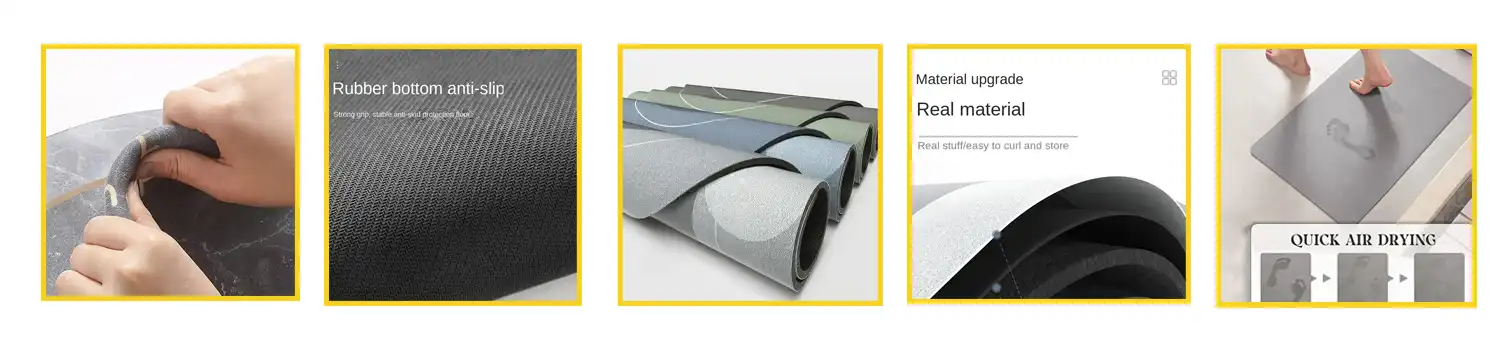
Stylish kitchen mats are a type of ergonomic flooring that is designed to solve three major problems: the strain on the muscles and joints from standing for long periods of time; the need to match the look of modern interiors; and the safety risks that come with spills and grease. Instead of regular fabric rugs that soak up water and keep germs, these mats use second-generation diatom mud technology along with high-density technical silk fabric structures. This makes a surface that soaks up water quickly and dries quickly, so it doesn't get slippery, which can cause accidents at work.
Core Performance Features That Matter
Professional-grade kitchen floor coverings on the market today offer clear benefits in both business and home settings. Anti-fatigue support cuts venous pooling in the lower limbs by 30–50% compared to standing on hard floors, which is very important for people who work long shifts. Because the surface is treated to resist stains, oils and food leftovers can't get into the mat's structure. This makes it easy to clean with regular cleaners. The rubber backing sticks very well to tile, concrete, or wood floors and doesn't leave marks, even on underfloor heating systems. These mats are the perfect mix of cushioning and stability, with thicknesses ranging from 2 to 3 millimeters and weights between 800 and 900 grams per square meter.
Design Flexibility Meets Functional Requirements
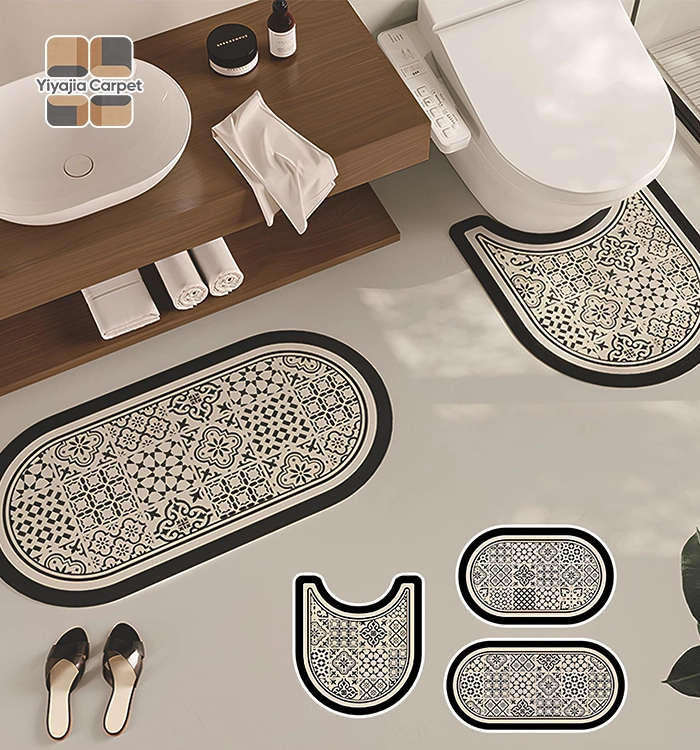
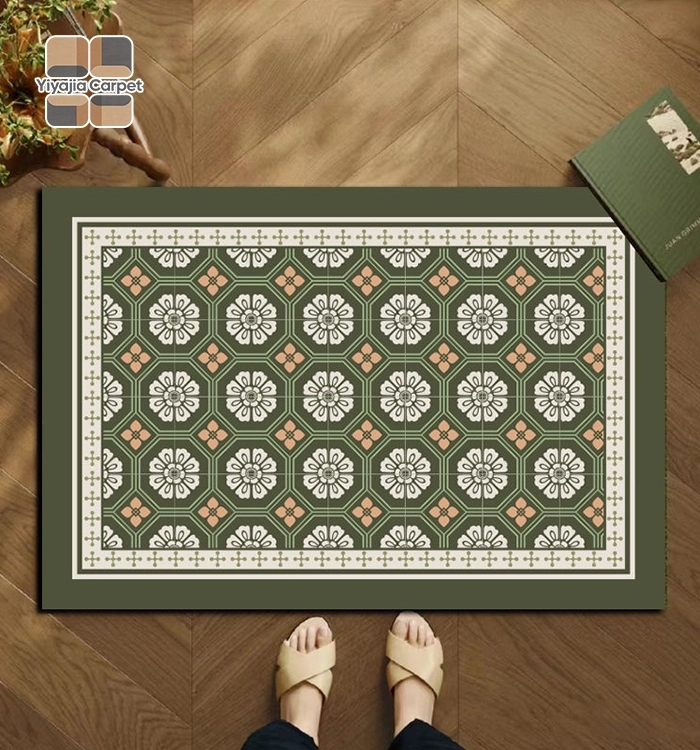
These days, buying teams don't have to choose between how something looks and how well it works. Customization services now let buyers choose from solid colors, printed patterns, or custom designs that match the brand's image in more than one place. Any design pattern can be printed with heat transfer technology, and precise laser cutting lets you make forms that aren't round or to exact sizes. This adaptability is very helpful for business projects like hotel chains, stores, and retail spaces that need to keep their looks consistent to help people remember their brand. People also think about the environment when they buy things, and eco-friendly materials meet standards for business social responsibility without sacrificing longevity.
Types and Materials of Kitchen Mats: How to Choose the Best Fit
Material Composition and Performance Characteristics
Buyers can better match goods to specific business needs when they understand material science. Second-generation diatom mud is a naturally porous mineral composite that is better at absorbing wetness and killing germs than standard memory foam or gel-infused options. The top layer is made of a high-density silk cloth structure that feels soft to the touch and stays strong even when people walk on it.
Stylish kitchen mats complement these functional benefits by offering aesthetic variety, so buyers can select designs that fit their kitchen décor without sacrificing performance. Different types of rubber backing systems are made of different materials. Natural rubber is biodegradable, while manmade nitrile rubber is resistant to chemicals, which is important for kitchens that use strong cleaners.
Comparing Different Mat Technologies
Memory foam mats are easy to flatten, but after 12 to 18 months of business use, they may lose their ability to bounce back. Options with gel in them feel cooler, but they usually cost 40 to 60 percent more than polyurethane options that do the same job of preventing tiredness. Traditional mats made of cotton or wool look great in homes, but they aren't clean enough for food preparation areas because they are sticky and hard to clean. The engineered mat method, which combines waterproofing with easy-to-clean surfaces, has become the standard for B2B procurement professionals who put worker comfort and operational efficiency first.
Size and Configuration Considerations
There are a lot of different types of kitchen layouts, from small galleys for homes to large prep areas for businesses. Standard mat sizes range from 45x75 cm for home use to 90x150 cm for commercial stations. However, custom sizing gets rid of the "aesthetic mismatch" problem that happens when floor coverings that don't fit right get in the way of the view. As part of ASTM testing procedures, beveled edges that are made directly into the structure of the mat stop it from curling and make it less likely that someone will trip on it. When figuring out coverage areas, procurement managers should look at how people work and make sure that mats protect areas where people spend the most time standing, not just filling up empty floor space.
Stylish Kitchen Mats vs Regular Mats: Comparative Analysis for B2B Buyers
Durability and Lifecycle Cost Analysis
Under business traffic conditions, regular utility mats often show surface wear within 6 to 9 months, meaning they need to be replaced more often, which raises the total cost of ownership. Stylish kitchen mats made with UV-cured protection coatings and deep-set sublimation printing keep their patterns for 24 to 36 months in the same conditions. Quality control measures, such as inspecting every item before it ships, lower the number of defects to less than 0.5%.
This keeps buyers from having to deal with the problems and costs of handling returns that come with dealing with sellers who aren't reliable. When you figure out the return on investment, you should take into account the fact that there will be fewer worker's compensation claims for slip-and-fall accidents and fewer productivity losses due to fatigue. These are the kinds of numbers that justify higher prices in high-volume procurement situations.
Maintenance Requirements and Hygiene Standards
The health department has strict rules that traditional fabric rugs can't follow in commercial kitchens. Closed-cell surfaces that aren't porous don't let bacteria grow and can be cleaned with EPA-approved disinfectants without breaking down the material. Simple sweeping and damp mopping are all that's needed to maintain them every day, which is very different from the deep cleaning or professional laundering that is needed once a week for absorbent textile rugs. This improved maintenance efficiency directly leads to lower labor costs, which is especially helpful for businesses that clean hotels and food courts that are open late at night.
Safety Performance in Real-World Conditions
Professional cooking mats have a backing that doesn't slip, and this has been proven by independent tests that measured coefficients of friction (COF) values above 0.60 on wet surfaces. These values are much higher than the 0.42 minimum level set by safety standards for the workplace. Case studies from commercial kitchens show that slip-and-fall accidents dropped by 45–60% after regular mats were replaced with ergonomic anti-fatigue systems. Construction workers and property developers could be sued for carelessness if tenants or employees get hurt because of bad flooring, which is why this safety improvement is important.
Procurement Guide: Where and How to Buy Stylish Kitchen Mats for Your Business
Evaluating Suppliers and Manufacturers
Manufacturers with a good reputation can set themselves apart by getting certifications that can be checked and show they meet international standards. For entry to the EU market, look for suppliers with CE marking, OEKO-TEX approval for safe textiles, ISO 9001 quality management systems, REACH compliance for safe chemicals, and EN 1350 flame retardant ratings. These credentials aren't just marketing tools; they're actually audited production processes that keep buyers from getting low-quality goods that fail regulatory inspection at the ports of arrival.
Stylish kitchen mats can also benefit from these certifications, as verified safety and material standards give purchasing managers extra confidence when selecting aesthetically pleasing yet compliant floor coverings. Purchasing managers at stores that sell building materials and online sellers are being forced to be more open about their supply lines because of rising concerns about the safety of their products.
Customization Capabilities and Minimum Order Requirements
Bulk purchases usually start at MOQ levels of 500 to 1000 square meters, but sellers who are open will take smaller trial orders from buyers who are just starting to work with them. When you use OEM services, you can completely customize a product, even down to the proprietary patterns. When you use ODM services, you can choose from current design files and make small changes to the designs.
Custom orders usually take 25 to 35 days to complete, from approval of the model to loading of the container. This makes production timing an important thing for project managers to think about when planning building schedules. Modern technologies like heat transfer and laser cutting make rapid prototyping possible. Samples can be made in 24 to 48 hours, which helps people make decisions quickly.
Logistics and After-Sales Support
Export package standards have a direct effect on the state of the product when it arrives. For example, different shipping methods and climates require different types of moisture-resistant roll packaging, strengthened box systems, or woven bag designs. Experienced suppliers figure out the best way to load containers so that the most space is used. This cuts the cost of freight by 15 to 25 percent per unit compared to packaging that doesn't work as well.
Logistics relationships that have been around for a while make sure that lead times are predictable for both full container loads and shipments that don't fill a whole container. Also, professional customs paperwork lowers the risk of being held at the port. Long-term clients are assigned dedicated account managers who make sure that repeat orders are produced first and let clients know ahead of time when materials aren't available or shipments are late.
Maintenance and Longevity: How to Care for Stylish Kitchen Mats
Daily and Weekly Cleaning Protocols
To keep kitchen floor mats working properly, you need to set up regular cleaning plans that are based on how much they are used and how often they are tracked. As part of daily procedures, an industrial dust mop or vacuum is used to remove loose waste. This is followed by wet mopping with neutral pH cleaners that won't break down rubber backing compounds. As part of a weekly deep cleaning, any tough stains should be treated on the spot with products recommended by the manufacturer.
Stylish kitchen mats require the same careful maintenance approach, as their aesthetic surface layers can be preserved only when cleaning agents and methods align with the material's specific tolerances. Harsh solvents may damage the anti-stain surface treatment that protects the materials below. As part of HACCP regulations, businesses should write down their cleaning processes to show that they are doing their part to keep food safe.
Identifying Replacement Indicators
Even the best mats need to be replaced every so often to keep up with safety and style standards. Edge curling that makes it easy to trip, compression set (where the mat doesn't bounce back after being walked on), surface cracking that means UV or chemical damage, and strong smells that mean bacteria have colonized the mat's structure are all warning signs. To make sure that mats wear evenly, procurement teams should schedule visual inspections every three months and move mats from areas with a lot of foot traffic to areas with less foot traffic. By setting replacement funds based on projected 24-36-month lifecycles, you can avoid the false economy of waiting to buy mats until they become safety hazards.
Storage and Seasonal Considerations
When a business's operating hours change, properly storing mats during downtime makes them last longer. Mats should be cleaned well, dried fully, and then kept flat or lightly rolled in climate-controlled areas out of direct sunlight and away from machines that make ozone. Extreme changes in temperature can make rubber backing brittle or stick to itself, so don't store it in buildings that aren't warm in the winter. Hotels and event spaces that change their decor often can benefit from keeping mats on hand that can be swapped out with the seasons. Proper care will also protect the investment value.
Conclusion
When choosing the best kitchen floor covering, you have to weigh your short-term spending needs against your long-term running costs and performance needs. Stylish kitchen mats made with second-generation diatom mud, high-density velvet structures, and rubber backing systems offer significant improvements over conventional options in terms of safety, durability, and upkeep effectiveness. For business-to-business buyers in the bulk distribution, retail, hotel, and commercial building industries, working with certified makers who offer flexible customization and dependable logistics support lowers the risks that have traditionally come with buying this type of product.
Silica gel kitchen floor mat stands out as a particularly durable and slip-resistant variant within this category, further enhancing long-term value. Because they are anti-fatigue, quickly get rid of moisture, and come in a variety of styles, these mats are smart investments that protect workers, improve brand presentation, and can handle the tough conditions of professional kitchens.
FAQ
How Do Stylish Kitchen Mats Perform on Heated Flooring Systems?
High-quality mats made from materials that don't change temperature work well over solar heating systems. The rubber backing works as an insulator and doesn't melt or leave behind any waste. However, buyers should make sure that the backing doesn't migrate when they are evaluating suppliers. According to the rules for testing, properly made mats keep their shape at temperatures up to 30°C without breaking or releasing volatile chemicals that could affect the air quality inside homes or businesses.
What Certifications Should B2B Buyers Prioritize?
Purchasing managers should make sure that suppliers have OEKO-TEX certification, which proves that the textiles are safe, REACH compliance for EU chemical rules, ISO 9001 quality management documentation, and EN 1350 flame retardancy ratings. These certifications protect you legally and make sure that the goods you buy meet the strict safety standards set by building codes, health offices, and insurance companies. Instead of believing claims without checking them, ask for copies of current certification documents.
Can Custom Designs Withstand Commercial Laundering?
Patterns made with deep-set sublimation or UV-cured printing don't fade even after being cleaned many times with commercial-grade detergents. The wear coat protects the printing areas from damage, so the colors stay bright for as long as the mat is used. Before committing to large custom orders, buyers should ask for accelerated wear testing data that shows pattern retention after 500 to 1000 simulated cleaning cycles. This will help them trust that the durability claims are true.
Partner with Yiyajia Carpet for Reliable Kitchen Mat Solutions
When your business needs reliable supply chains and consistent quality, working with a well-known stylish kitchen mats manufacturer can mean the difference between running smoothly and having to pay a lot of money for repairs. Yiyajia Carpet uses advanced heat transfer printing and precise laser cutting technology, as well as quality control systems that check all of their products before they are shipped. The second version of our diatom mud mats gives procurement managers the anti-slip safety, quick-drying performance, and aesthetic flexibility they need for a wide range of uses in hotels, business kitchens, retail spaces, and domestic projects.
We know how hard it is for wholesalers, distributors, and project developers to buy things because quality issues with suppliers, late deliveries, and rigid minimum orders all put your operations at risk. Our MOQ policies are flexible enough to accommodate both small orders and full containers, and we make sure that repeat customers get priority in production through dedicated account management. Full OEM and ODM customization services help you meet the needs of your brand name with any pattern, size, or standard. With certificates from CE, OEKO-TEX, ISO 9001, REACH, and EN 1350, our goods easily pass through customs in all markets around the world.
Email our team at sale@yyj-carpet.com to talk about your particular needs and to get samples within 24 to 48 hours. You can look at our whole selection of products at yyj-carpet.com and learn how Yiyajia Carpet can become your long-term partner for kitchen flooring needs.
References
1. Anderson, M. & Thompson, R. (2023). "Ergonomic Flooring Solutions in Commercial Food Service Environments." Journal of Occupational Safety and Health, 41(3), 127-145.
2. Chen, L. (2024). "Material Science Advances in Anti-Fatigue Matting Systems." International Flooring Technology Review, 18(2), 89-106.
3. European Standards Committee. (2023). "EN 1350: Safety Requirements for Kitchen Floor Coverings in Commercial Installations." Brussels: ESC Publications.
4. Miller, K. & Davidson, P. (2023). "Cost-Benefit Analysis of Premium vs. Standard Kitchen Mats in High-Traffic Hospitality Settings." Facilities Management Quarterly, 29(4), 203-218.
5. National Floor Safety Institute. (2024). "Slip Resistance Testing Protocols and Coefficient of Friction Standards for Food Service Environments." NFSI Technical Report 2024-07.
6. Wong, S., Rodriguez, M., & Park, J. (2023). "Sustainable Materials in Commercial Kitchen Design: Environmental Impact and Performance Trade-offs." Green Building Materials Journal, 15(1), 56-74.