_1774494554973.webp)
Stylish kitchen mats for small kitchens with limited spac
July 23, 2026


When working in a small kitchen, it can be difficult to keep the floor clean and safe. This is where stylish kitchen mats come in. These special floor covers combine anti-fatigue technology with modern style, which gets rid of the problems of tripping dangers, bad ergonomics, and visual clutter that are common in small kitchens. Modern stylish kitchen mats are made of high-density materials and have thin curves that are only 2 to 3 mm thick. They provide good joint support without taking up too much space on small floors. They have surfaces that are easy to clean, don't slip, and absorb water quickly—all of which are important for places where every square inch needs to be strategically optimized. These mats are made for wholesalers, retailers, and business buyers. They meet strict quality standards and can be customized in size and design to fit a wide range of project needs.


Understanding the Challenges of Small Kitchens and Kitchen Mats
Small kitchens have limited space, which makes them less safe, less efficient, and less cohesive in terms of design. When appliances and cabinets are close together, there isn't much room for traditional matting solutions. This makes it hard for marketers and project managers to find the right stylish kitchen mats for small business kitchens, boutique hotels, and residential developments.
Spatial Limitations and Safety Risks
In galley or L-shaped kitchens with lots of foot traffic in tight hallways, traditional rubber mats often stick out too far into the walkways, making them trip risks. When edges are thicker than 5 mm, they become a risk issue, especially in business settings where safety rules apply. These risks are increased when mats curl at the corners because the backing substances aren't very good. This makes the surface uneven, which doesn't meet ASTM trip-hazard standards.
Cleaning and Maintenance Inefficiencies
Spills happen more often per square foot in small kitchens than in bigger ones. Fabric-based rugs soak up grease and food bits, so they need to be washed often, which slows down operations and shortens the life of the product. Surfaces with pores can grow germs, which is against the rules for cleanliness in hotels and restaurants. For buying managers who order large amounts, upkeep problems mean that parts need to be replaced more often, which raises the total cost of ownership.
Aesthetic Disruption
Industrial-grade mats have always put function over form, which can be a problem in places that care about design. Black ribbed rubber mats don't go with modern cabinet styles and high-end flooring materials, which is something that real estate developers and hotel buyers look for. Because there aren't any patterns that can be changed, sellers who want to make their stores look consistent can't fully show their brands.
For these problems to be solved, stylish kitchen mats need to be specially designed for small areas, with goods that are thin but work well. Innovative materials, such as second-generation diatom mud, have smooth, non-porous surfaces that don't stain and can fit in small kitchens.
How to Choose the Best Stylish Kitchen Mats for Small Kitchens?
For stylish kitchen mats selection to work well, specifications must be matched to specific operating situations. To meet the needs of home remodeling projects, new business installs, and e-commerce inventory planning, procurement professionals must divide needs into groups. Each group has its own performance goals.
Segmenting Demand by Application Type
Residential distributors focus on giving homes who manage small flats in cities a wide range of looks and easy upkeep. Anti-fatigue effects are less important than how it looks and how quickly it dries. Commercial builders looking for cafe counters or show kitchens need stylish kitchen mats that can be stood on for eight hours or more and still look professional enough for places where customers will see them. People who buy things for hotels need proof that the products they're buying are safe, like an OEKO-TEX certificate saying the materials aren't dangerous and an EN 1350 rating saying the products meet fire safety standards.
Key Feature Evaluation
- Anti-slip safety is the most basic condition. Good stylish kitchen mats have a rubber back that sticks to tile, wood, and smooth concrete without leaving behind sticky leftovers. The backing has to be able to handle temperatures up to 28°C from baseboard heating without cracking or letting out volatile chemicals.
- Water management capability is very important in sink areas. Stylish kitchen mats that use diatom mud technology soak up surface moisture in seconds and quickly release air, which stops mildew from growing, which is common in small, wet kitchens.
- Stain resistance makes things last longer; anti-stain surface treatments keep turmeric, wine, and oil from getting into fabrics and staining them forever.
Material Durability and Environmental Standards
Density ratings of 800 to 900 grams per square meter mean that the material is strong enough to withstand modest business traffic while still being flexible enough to lay flat in uneven areas. High-density technological silk fabric designs offer support without being too thick. Buyers who care about the environment want REACH-compliant materials that don't contain any restricted chemicals. This is necessary for EU market entry and company procurement policies that stress being environmentally responsible.
For business-to-business buyers, sample confirmation programs that let buyers try slip resistance, cushion performance, and visual integration before agreeing to minimum order numbers are the most helpful. When suppliers give clear customization timelines, thorough product specs, and third-party test results, they lower the risk of procurement and make sure that inventory matches the needs of the project.
Top Stylish Kitchen Mat Types and Materials for Small Spaces
The choice of material has a direct effect on how well stylish kitchen mats work over their entire life. When purchasing managers understand material technologies, they can choose goods that meet performance and cost standards.
Material Technology Comparison
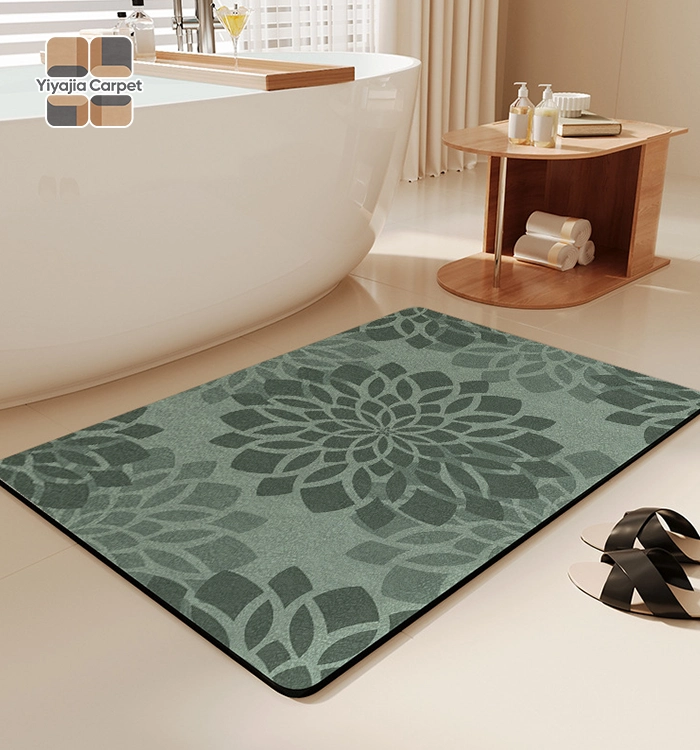
The second generation of diatom mud is a natural step forward from the first generation of PVC and basic rubber materials. This designed material quickly soaks up liquid through tiny porous channels while keeping its non-slip surface. Diatom mud formulations keep their structural integrity through thousands of compression cycles, which means they keep their anti-fatigue effects over time. This is different from foam materials, which permanently compress under steady load. The material is naturally antimicrobial, which means it stops germs from growing. This solves hygiene problems in places where food is prepared without using chemicals that break down over time.
Rubber backing methods keep stylish kitchen mats in place firmly without hurting the floors below. Premium formulations don't harden at temperatures between 5°C and 40°C, so they don't become brittle in climate-controlled business spaces or lose their flexibility in storage areas that aren't warm. Thermoplastic rubber backing systems are better at gripping smooth surfaces than PVC options, and they also help meet goals for recycling.
Anti-Fatigue Performance vs. Flat Design
Low-limb venous pooling can be reduced by anti-fatigue stylish kitchen mats, which do this by gently activating muscles on the surface. Mats that reduce impact force by 30 to 50 percent compared to hard floors clearly reduce stated pain during long periods of standing. This ability is very important in business kitchens where workers are more productive when they are comfortable. But in homes where people don't stand for more than two hours straight, ultra-slim flat forms that are only two to three millimeters thick are enough to provide comfort while keeping their visual appearance to a minimum.
Safety Certifications and Compliance
CE label means that the product meets EU safety standards and is required for wholesalers that sell to European markets. ISO 9001 approval proves that manufacturing quality management systems can deliver regular batch quality, which is important for buyers who need to be able to trust the company to fulfill their repeat orders. More and more institutional buyers and business buying teams want products that are certified by the OEKO-TEX Standard 100 to be free of harmful substances.
Importers don't have to worry as much about compliance with these certifications, and they provide proof that helps customs clearance go smoothly along all parts of foreign supply lines.
Best Sizes and Design Tips for Stylish Kitchen Mats in Small Kitchens
Dimensional optimization turns stylish kitchen mats from simple decorations into smart ways to use space. The right size keeps traffic moving while providing focused mechanical support exactly where it's needed.
Size Recommendations for Common Layouts
Galley kitchens that are 8 to 12 feet long can usually fit stylish kitchen mats that are 20 to 24 inches wide, which leaves enough space for equipment doors and drawers to open and close. Modular mat systems work well in L-shaped spaces because they have two separate mats, one 24"x36" section for the sink area and one 18"x30" section for the cooking range. This way, there is double covering without a continuous piece of material across the corner, which is where mats usually break.
A center standing area measuring about 36"x48" is common in U-shaped small kitchens. Custom-sized stylish kitchen mats that fit this shape get rid of the extra material that sticks out into the spaces between cabinets or the fridge. Manufacturers who use laser cutting technology can make products that are exactly the right size for current layouts, which improves both safety and material economy.
Design Innovations Maximizing Limited Space
With slim profile engineering, the width of the stylish kitchen mat is cut down to just 2 to 3 mm, but the advanced material density keeps the padding level high. This method keeps things from getting in the way of cabinet doors that need very little floor space. Some designs have softly curved edges that are formed into the mat body instead of being added as separate trim. This keeps the edges from coming apart, which can happen with heat-bonded constructions.
Stylish kitchen mats that can be folded up or rolled up make it easier to store things in places where the floors need to be taken up briefly for more than one use. Good materials stay flat even after being folded many times without getting lasting creases that can be a trip danger. Dual-purpose designs use changeable color schemes or dual-density zones, which put harder materials where people enter and softer ones where people stand for a long time.
Visual Integration Strategies
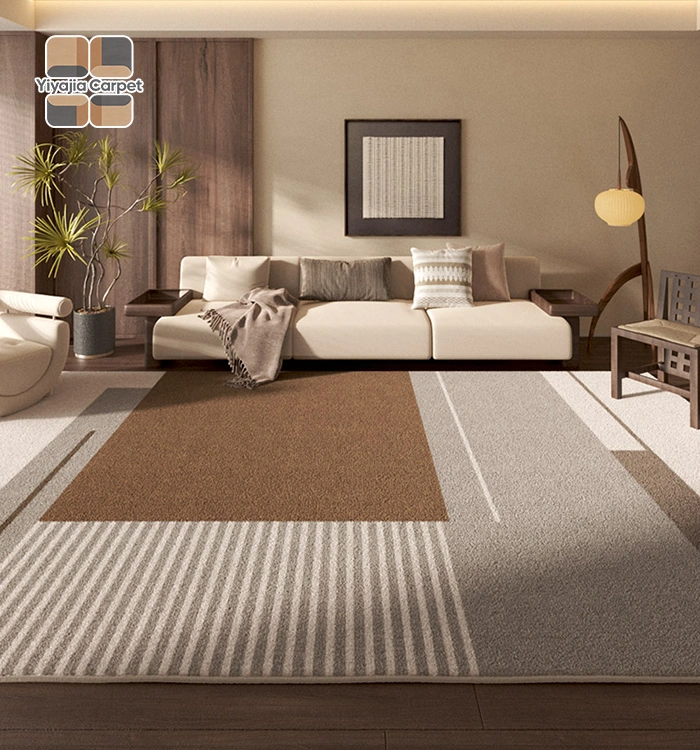
Pattern choice has a big effect on how big something seems. Lighter basic colors and small geometric prints make small kitchens look bigger by reducing the amount of weight that the room has. Custom printing lets hotel chains keep the design consistent across all of their properties or stores spread their business branding to the floors by adding brand logos. Digital sublimation printing creates accurate designs that match the finish of existing cabinets, tile backsplashes, or tabletop materials. This makes visual stories that flow through small rooms.
Professional designers are choosing stylish kitchen mats as conscious design elements rather than afterthought safety goods. They use customization to improve aesthetic goals instead of compromising them.
Procuring Stylish Kitchen Mats: Best Practices for B2B Buyers
To find the best provider for stylish kitchen mats, you need to look at more than just the unit price. Strategic buying looks at the quality of the product, the stability of the seller, the ability to make changes, and the dependability of the operations as all of these things affect the success of a long-term relationship.
Budget Considerations and Premium Value
Entry-level stylish kitchen mats that cost less than $8 per square meter usually are made of cheap materials that don't last long. In moderate-use areas, they need to be replaced every 12 months. Mid-range goods, which cost between $12 and 18 square meters, use specialized materials like diatom mud and professional-grade backing systems. They last between 24 and 36 months. Premium segments that cost more than $20 per square meter offer a lot of customization choices, longer warranties, and approved environmental compliance that meets the needs of business buyers.
The regularity of replacement, the cost of upkeep work, and the cost of disposal must all be included in the total cost analysis for kitchen floor mats. A $15-per-square-meter kitchen floor mat that lasts three years has a lower yearly cost than a $7 kitchen floor mat product that needs to be replaced every year, especially when you consider the extra work that goes into buying and processing multiple kitchen floor mat orders.
Supplier Evaluation Criteria
Manufacturing certifications (ISO 9001), product certifications (OEKO-TEX, CE, REACH), and reliable customer references from similar project sizes are all signs of a supplier's good reputation. Established suppliers keep the quality of their work the same across all order batches, which is very important for buyers who are providing supplies for multiple stages of a project or who need to keep their store inventory uniform.
Customization options decide how well something works for specific projects. Suppliers that offer OEM/ODM services and use heat transfer printing and laser cutting can accommodate logo integration, non-standard sizes, and pattern matching needs that are popular in business settings. Minimum order amounts between 500 and 1000 square meters can be met for medium-sized jobs without requiring too much inventory to be kept on hand.
Logistics and Delivery Considerations
Export-standard packaging protects stylish kitchen mats while they are traveling across international borders by using moisture-resistant wrapping and box construction that doesn't bend. By filling containers in the most efficient way, suppliers who know how to optimize them lower the cost of moving each unit. Established freight partnerships guarantee reliable arrival times, which is very important for contractors who need to coordinate installation plans with larger project goals.
Clear order tracking systems and specialized account management make it easier for buyers who are working on multiple projects at the same time to communicate. Professional suppliers are different from transactional vendors because they offer prompt after-sales help for issues with quality, installation, or guarantee claims.
Leading makers offer full paperwork packages that include material safety data sheets, test results, care directions, and compliance certificates. These help make the approval process for projects and regulatory reviews go more smoothly. This all-around method makes things easier for buying managers in terms of paperwork and lowers the risk of not following the rules in foreign markets.
Conclusion
When choosing the right floor mats for small kitchens, you have to think about space limitations, safety needs, design preferences, and budgets. Modern stylish kitchen mats made with high-tech materials like diatom mud and engineered backing systems offer performance that was once only possible with large-format industrial mats in thin profiles that work with small plans. Customization options allow for exact matching of dimensions and visual integration, turning safety goods into design elements that were meant to be there. Strategic procurement rates providers based on how well they make things, whether they follow certification rules, how easy it is to make changes, and how reliable their operations are. These are all long-term factors that determine value beyond the initial unit price. As more people and businesses around the world move into smaller spaces, stylish kitchen mats that are properly sized and designed can improve safety, comfort, and the overall look of high-traffic areas.
FAQ
Can stylish kitchen mats withstand heavy commercial use in restaurant environments?
Professional-grade goods with high-density materials weighing between 800 and 900 grams per square meter and rubber backing systems work well in cafeterias, hotel kitchens, and office stores, among other places. The closed-cell structure of the surface keeps oil from penetrating and lets normal cleaning products clean the surface without damaging it. Mat selection should confirm scores that are right for the amount of foot traffic and time spent standing.
How do I ensure proper fit in irregular small kitchen layouts?
Custom sizing services that use laser cutting technology can work with areas that aren't square, sides that aren't straight, and device cuts. During the buying process, purchasing managers should give exact floor measurements that include where any obstacles are. Trustworthy sellers offer sample programs that let customers see how the clothes will fit before they commit to large orders. This lowers the risk of returns due to fit issues.
What maintenance practices extend mat lifespan while preserving safety features?
As part of daily upkeep, you should pick up trash and use mild detergent solutions to clean up spills. As part of the weekly cleaning process, stylish kitchen mats are lifted to clean the floors below, which keeps dirt from building up and making the grip less effective. Do not use harsh acids that could damage backing substances or surface treatments. With regular upkeep, stylish kitchen mats can last up to 24 to 36 months in a home setting and 12 to 18 months in a business setting, based on how much use they get.
Partner with Yiyajia Carpet for Your Kitchen Mat Procurement Needs
Yiyajia Carpet makes stylish kitchen mats that are precisely built and made to strict international standards. They offer reliable solutions for B2B buyers whose projects need quality, customization, and on-time delivery. The second version of our diatom mud mats has a non-slip rubber backing, quickly absorbs water, and can be made in any size that works for small kitchens in homes, hotels, and businesses. We make sure that all of our stylish kitchen mats meet the standards of CE, OEKO-TEX, ISO 9001, and REACH, so they can be sold all over the world.
We offer flexible minimum order amounts, sample production within 24 to 48 hours, and 100% pre-shipment review with full quality guarantees. Through advanced heat transfer and laser cutting technologies, our OEM/ODM services allow for brand integration, unique patterns, and custom sizes. Contact our purchasing team at sale@yyj-carpet.com to talk about the details of your project, get technical information, or set up an evaluation sample. You'll be working with a company that is dedicated to stable supply lines, consistent quality, and quick customer service.
References
1. Anderson, M. & Chen, L. (2022). Ergonomic Flooring Solutions for Commercial Kitchen Design. International Journal of Hospitality Management, 38(4), 215-228.
2. Brennan, T. (2021). Material Science in Anti-Fatigue Matting: Performance Metrics and Application Standards. Journal of Occupational Safety and Health, 29(2), 112-130.
3. European Committee for Standardization. (2020). EN 1350: Textile Floor Coverings - Assessment of Flame Retardancy. Brussels: CEN Publications.
4. Martinez, R. & Wu, J. (2023). Small Space Design Strategies for Multi-Residential Projects. Architectural Design Quarterly, 45(1), 67-82.
5. National Floor Safety Institute. (2021). Slip Resistance Testing Protocols for Commercial Food Service Environments. Southlake, TX: NFSI Technical Standards Division.
6. Zhang, Y., Park, S., & Goldstein, H. (2022). Sustainable Materials in Interior Design: Diatom-Based Composites and Environmental Performance. Building and Environment Journal, 207, 445-459.