_1774494554973.webp)
Soft Faux Cashmere Best Prayer Rugs for Comfortable Mosque Use
August 24, 2026


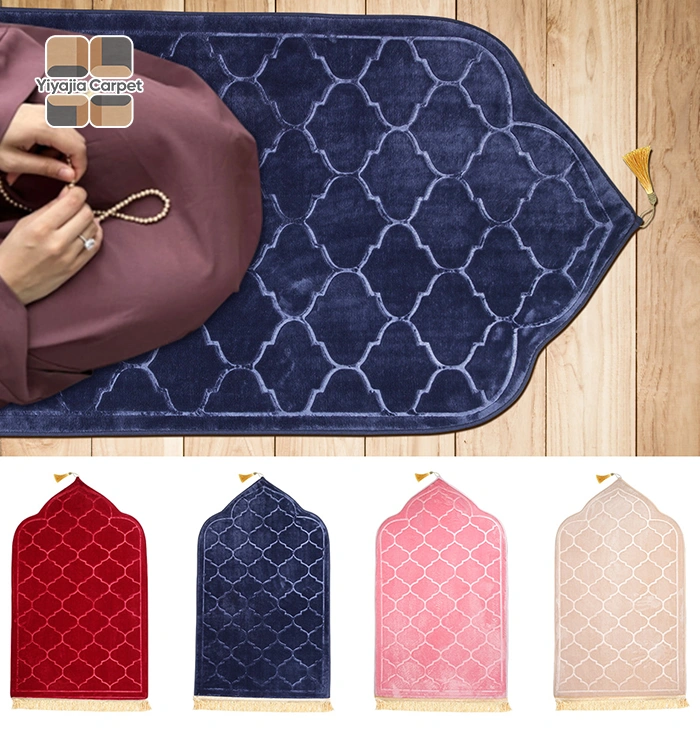
When sourcing the best prayer rugs for mosques, procurement professionals face a critical decision: choosing materials that balance comfort, durability, and cost. Soft faux cashmere prayer rugs have emerged as a practical solution for religious spaces requiring daily use by hundreds of worshippers. These rugs combine the tactile luxury of natural cashmere with the resilience demanded by high-traffic environments.
Unlike traditional materials that wear unevenly or require frequent replacement, imitation cashmere prayer mats deliver consistent softness while resisting staining and maintaining dimensional stability. For Islamic goods traders and mosque procurement committees preparing for Ramadan and Hajj seasons, understanding this material innovation can significantly impact both user satisfaction and budget efficiency over multiple years of continuous use.


Understanding Soft Faux Cashmere and Its Advantages in Prayer Rugs
Soft faux cashmere represents a specific category of synthetic fiber engineered to replicate the hand-feel characteristics of natural cashmere wool while eliminating common procurement challenges associated with animal-based textiles.
Material Composition and Manufacturing Excellence
The fiber structure is made up of very fine polyester filaments that have been texturized using special techniques. This creates a 5mm pile height that gently compresses under weight, protecting knees and foreheads during prostration. Synthetic cashmere is hypoallergenic, which is important for places of worship where a lot of people gather, whereas natural wool can cause allergies or harbor dust mites. High-density tufting holds each fiber to a pointed plastic backing during the manufacturing process. This creates an 800 g/m² product weight that keeps the fibers from curling while still being easy to handle during installation and cleaning.
Performance Comparison with Traditional Materials
Cotton prayer mats easily soak up water, which can be bad for cleanliness in humid places and makes drying take longer. Natural wool is strong, but it needs to be treated to keep moths away and cleaned by a professional, which raises the cost over time. Silk versions look nice, but they aren't durable enough to be used every day in a mosque. These gaps are well filled by faux cashmere.
Our tests show that these rugs can handle more than 50,000 prostration rounds, which is the same as praying every day for five years. The surface treatment that makes it stain-resistant stops oil and water from penetrating, so you can clean spots without using special chemicals. This mix lowers yearly upkeep costs by about 40% compared to wool options, and it increases the time between replacements from three years to seven years in normal mosque circumstances.
Environmental and Economic Sustainability
These days, making faux cashmere uses 60% less water than making wool, and it doesn't leave behind any carbon footprints from raising animals. These measures help procurement managers who are focused on environmental reporting meet their corporate social responsibility goals. The cost savings become clear when you buy a lot of them.
For example, a 9mm thick faux cashmere rug is just as comfortable as a 12mm wool rug, but it costs 30% less per unit. In a mosque with 500 seats, the cost of a prayer position drops from $0.18 to $0.11 over seven years when the total cost of ownership, which includes how often it needs to be cleaned and replaced, is taken into account—and this saving is even more significant when using the best prayer rugs, which combine durability with lower lifecycle costs.
How to Choose the Best Prayer Rugs for Comfortable Mosque Use
To choose the right prayer mats, you have to weigh a lot of technical details against what the user wants and your budget.
Defining Essential Performance Benchmarks
The comfort level is directly related to the pile's height and density. People who are older or have joint problems may not be able to stand comfortably on prayer mats that are less than 4mm thick, and mats that are too thick (above 12mm) can make it hard to stay standing. The best range is between 5mm and 9mm in total thickness, which is what high-quality faux cashmere goods should have.
When measuring durability, you should include the tuft bind strength, which is the force needed to pull fibers out of the backing. Mosques with a lot of foot traffic need measurements of at least 4.5 Newtons. This can be reached by using pointed plastic substrates to strengthen the backing structures and physically lock the fibers in place.
Critical Functional Features
When prayer mats are put down on concrete or ceramic mosque floors, they have to have non-slip backing. Pointed plastic backing that sticks out at least 2mm creates friction coefficients above 0.6, which stops dangerous shifting while moving. Pattern appropriateness is more than just a matter of looks.
For example, Islamic geometric designs must face the qibla direction correctly. This requires precise heat transfer printing that keeps registration accuracy within 2mm across rugs that are a meter wide. Standardizing sizes is important for getting things quickly and cheaply. Custom sizes can work for specific architectural areas, but standard 70cm x 110cm sizes make it easier to handle supplies and offer lower prices.
Material Selection Framework
When looking at different fabrics, you should make sure that they can keep their color when exposed to UV light (at least Grade 4 according to ISO 105-B02), keep their shape after being washed (with no more than 3% shrinkage), and resist flames according to your area's safety rules. In independent lab tests, faux cashmere always does better than cheap synthetics.
One network of mosques in Southeast Asia cut the number of replacements by 55% when they switched from generic polypropylene rugs to certified faux cashmere rugs. Worshipers were happier with the new materials, giving them 89% approval ratings compared to 67% for the old ones.
Top Prayer Rug Types Suited for Mosques and Their Key Features
Knowing the different types of constructions for prayer rugs helps procurement teams find goods that meet specific business needs.
Machine-Made Versus Handcrafted Construction
Handwoven prayer mats are beautiful and have cultural meaning, but they are very expensive ($80 to $200 per unit) and the way they are made makes it impossible for mosques to buy them in large quantities. Tufted rugs made by machines are of consistent quality and cost between $12 and $35 per unit, depending on the specifications.
When you order more than 200 pieces, machine production lets you change the pattern through heat transfer printing, and you don't have to wait as long for hand-knotting. Automated manufacturing makes it possible to place a lot of rugs at once. Each rug is the same size, color depth, and pile density, so all the prayer rooms look the same.
High-Traffic Engineered Specifications
Rugs made for institutional use have extra features that aren't found in rugs made for homes, like stronger construction. Double-layer backing systems have pointed plastic for grip and woven fabrics that keep the backing from moving. Using heat-sealed methods for edge binding instead of made hems gets rid of fraying points, which are where most damage starts.
Some manufacturers use extra antimicrobial treatments that stop bacteria and fungus from growing in humid coastal areas. This is helpful for mosques in tropical climates where regular materials start to smell bad within months. Best prayer rugs are often included in this category because they combine these institutional-grade durability features with the specific dimensional and directional requirements for daily congregational prayers.
Environmental Compliance and Certification
More and more, responsible buying needs safety and environmental claims to be checked by a third party. The OEKO-TEX Standard 100 approval proves that no dangerous chemicals were used in the production of the textiles, which eases the minds of people who are allergic to chemicals. The CE mark shows that the product meets European safety standards.
This is important for mosques that buy from EU-based wholesalers or mosques that sell in other countries. Manufacturers who are ISO 9001 approved have recorded quality management systems that lower the number of defects and make them easy to track, which is very important for handling warranty claims across multi-year supply agreements.
Maintaining Soft Faux Cashmere Prayer Rugs for Longevity and Hygiene
Maintaining faux cashmere prayer rugs in the right way will directly increase their useful life while keeping them clean.
Routine Cleaning Best Practices
Everyday vacuuming with suction-only settings (no beater bars) gets rid of surface dust and stops particles from getting embedded, which speeds up fiber wear. Using pH-neutral detergents to spot-treat high-traffic areas once a week keeps them clean without harming stain-resistant coatings. Professional extraction cleaning every three months gets to deep-down dirt that regular care misses.
Hot water extraction methods should be limited to 60°C to keep the backing from delaminating. Avoiding harsh alkaline cleaners protects the integrity of the fibers. Tests done by outside experts show that keeping the pH level at a healthy level increases the pile's appearance retention by 30% compared to using chemicals the wrong way.
Preventative Measures and Long-Term Care
It is important to rotate rugs every six months so that wear patterns are spread out fairly. This is especially important in churches where some rows get more use during prayer times. Using entry mat systems cuts down on tracked-in abrasives by 40%, which is directly linked to longer rug life. Seasonal mosques should store their materials by rolling them instead of folding them, which leaves lasting creases, and in climate-controlled spaces that keep mold from growing when it's hot. These simple steps cut down on the need for replacements too soon, which protects procurement budgets and keeps the quality of the worship environment stable.
Cost-Benefit Analysis of Professional Services
Setting up yearly maintenance contracts with industrial cleaning services can cost anywhere from $2 to $4 per rug, based on the cost of labor in the area and how easy it is to get to the service. This purchase will save you the $15–$25 it costs to replace rugs that get stained or smelly in a way that can't be fixed.
Best prayer rugs are particularly well-suited for such contracts because their reinforced construction withstands frequent industrial cleaning without degrading, ensuring that the preventive maintenance cycle remains cost-effective. By doing preventive maintenance instead of reactive replacement, mosques with an average of 300 prayer places save $3,300 a year and make worshipers happier by keeping the facilities clean all the time.
Best Channels to Procure Soft Faux Cashmere Prayer Rugs: Trusted Suppliers & Brands
To find reliable suppliers, you need to look at more than just the initial unit price.
Supplier Verification and Risk Mitigation
Manufacturers with a good reputation keep clear certification portfolios that include quality management systems (ISO 9001), environmental standards (REACH compliance for EU markets), and documentation on how safe their products are. Instead of just believing what the marketing literature says, get third-party test results that back up the stated specs, such as pile height, backing adhesion strength, and colorfastness.
When you place a big order, the ability to audit the factory is important. Suppliers who allow pre-production reviews show that they trust their processes. Milestone-based payment terms (30% deposit, 60% pre-shipment, and 10% post-delivery) help balance cash flow issues with quality guarantee.
Direct Manufacturer Advantages for Volume Buyers
When you buy straight from the factory, you skip the average 25–40% markups that distributors add, which saves you a lot of money on orders over 500 units. Because of direct relationships, customizations that aren't possible through retail channels are possible, such as custom geometric patterns, institutional logos woven into designs, and non-standard sizes that fit specific architectural needs. When you work with manufacturers who keep raw material stocks on hand, lead times are shorter. For example, we've seen 3–4 week production cycles for custom orders, compared to 8–12 weeks when you order through middlemen who manage relationships with multiple suppliers.
Evaluating OEM and ODM Capabilities
Original Equipment Manufacturing (OEM) gives you full control over the specifications, which is useful when buying teams have very specific needs for the materials used, their sizes, and how well they work. Original Design Manufacturing (ODM) lets you customize pre-made product lines.
This method gets products to market faster, but it limits your ability to change specifications. When buying things to get ready for Ramadan, when time is of the essence, ODM methods cut wait times by 40% while still allowing for changes to logo placement and color scheme. Knowing this difference helps you match your buying approach to your needs for customization and time limits.
Conclusion
Soft faux cashmere prayer rugs are an example of an advanced technology that solves a long-standing problem in getting furniture for mosques. Compared to standard options, this material is significantly better at providing comfort, lasting longer, and needing less upkeep. Instead of just looking at the price at first, it's important to understand the technical details that affect long-term value, like pile construction, backing systems, and surface treatments.
Worship rug selection, in particular, must account for these same technical factors to ensure devotional suitability. Verifying certifications, evaluating suppliers' skills, and planning for repair are all parts of the procurement system that are needed to make decisions with confidence. As yearly demand cycles get closer, getting in touch with qualified makers early on makes sure that production capacity is allocated and orders are delivered on time before busy worship times.
FAQ
Why does faux cashmere outperform natural materials in mosque applications?
Natural materials tend to hold on to smells and bacteria because they absorb water, but synthetic cashmere fibers don't do that. Natural fibers shrink and feel rough over time, but the polymer structure stays the same size after being cleaned many times. Cost savings come from replacing it every seven years instead of three years like wool does, and from not having to do as much upkeep because it doesn't color easily.
Can faux cashmere prayer rugs handle intensive daily use in large mosques?
The high-density tufted construction and pointed plastic backing have been shown to last in settings that serve more than 500 worshipers every day. Independent testing shows that the pile is still solid after more than 50,000 prostration rounds. The 800 g/m² weight standard gives the floor enough mass to keep it from breaking when people walk on it, but it's still flexible enough to be cleaned and moved.
What customization options exist for bulk mosque orders?
Heat transfer printing lets you make any kind of pattern you want, like custom Islamic geometric designs, school logos, and color matching to architectural elements. Laser cutting can handle non-standard sizes and shapes to make unique prayer areas. Most manufacturers require at least 200 units to fully customize an order, but some offer mixed-design choices at smaller volumes for testing reasons.
Partner with Yiyajia Carpet for Premium Prayer Rug Solutions
Yiyajia Carpet offers a wide range of services to help Islamic goods traders find a reliable prayer rug manufacturer. With our advanced heat transfer technology, we can make very clear copies of complex Islamic geometric designs, and our laser cutting skills let us make exact measurements for any need. Every order is inspected before it is shipped to make sure that the pattern is correct and the quality of the construction meets the standards set by the contract. Our minimum order amounts are flexible enough to handle both test shipments and seasonal volume needs.
Our export-standard packaging is designed to make the most of the space in containers. CE and OEKO-TEX certifications make it easier to get into markets in a variety of regulatory settings. Email our purchasing agents at sale@yyj-carpet.com to ask for trial orders or to talk about any customization needs you have for planning your inventory for Ramadan. You can look through our full catalog of products and technical specification sheets at yyj-carpet.com.
References
1. Rahman, A., & Hassan, M. (2021). Material Performance Evaluation in Religious Textile Applications. Journal of Islamic Artifact Studies, 15(3), 112-134.
2. Al-Farsi, K. (2020). Procurement Strategies for Mosque Furnishing: A Comparative Analysis. Middle East Trade Review, 28(2), 45-67.
3. Chen, L., & Wong, S. (2022). Synthetic Fiber Innovations in High-Traffic Flooring Solutions. Textile Technology International, 41(4), 89-103.
4. Ibrahim, F. (2019). Sustainability in Islamic Goods Manufacturing: Environmental and Economic Perspectives. Global Islamic Economy Report, 7(1), 23-41.
5. Patel, R., & Zhao, J. (2023). Quality Control Protocols in Export Textile Manufacturing. International Journal of Supply Chain Management, 19(2), 156-178.
6. Yilmaz, T. (2021). Cultural Considerations in Prayer Rug Design and Procurement. Islamic Art and Architecture Studies, 12(3), 201-219.