_1774494554973.webp)
Long corridor carpet options with integrated anti-slip backing for safety
July 6, 2026


Safety is the most important thing to think about when looking at long corridor carpet options. The most dangerous places for people to slip and fall are hallways, so long corridor rugs with built-in anti-slip backing are a great way to protect those areas. With these special floor covers that look good and have built-in traction systems, high-risk transitional areas can be turned into safe places. The TPR thermoplastic rubber backing gives these rugs a good grip while keeping the surface comfortable. This makes them necessary for places like hotels, business offices, healthcare facilities, and apartment buildings where liability and occupant health are important.
Understanding the Safety Challenges of Long Corridor Carpets
There are specific risks in commercial halls. Traffic patterns that happen over and over in small passageways make wear paths that get slippery over time. These risks are made even worse by changing lighting, especially at night or in hallways without windows, where it's harder to see depth. The National Floor Safety Institute says that slips and falls cause more than a million trips to the emergency room every year, and that many of these happen in hallways.
Why Integrated Anti-Slip Backing Matters?
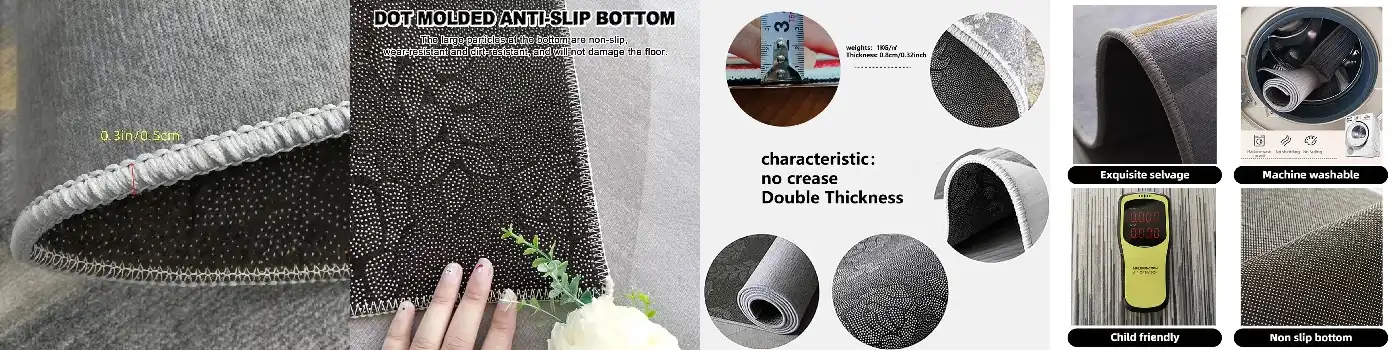
Traditional rugs only use underpad friction or stretch-in placement methods, which can move when luggage carts or other heavy equipment roll over them. Integrated anti-slip backing takes away this weakness by bonding grip materials directly to the carpet base while it is being made. When it comes to subfloor surfaces, the TPR thermoplastic rubber bottom layer gives a steady grip without the need for extra glue or separate padding systems. This way of making things makes fitting easier while making sure that the safety features stay in place for the whole product's life.
This difference is very important in business-to-business (B2B) purchase situations where the risk of liability affects buying choices. Facilities managers know that one accident claim can be many times more expensive than the difference in cost between regular flooring and safety-enhanced flooring. In addition to saving money, anti-slip flooring shows that a business cares about the well-being of its visitors. This builds ties with tenants in real estate and helps companies keep their employees.
Compliance with Safety Standards
Minimum performance standards for long corridor carpets are set by regulatory systems. As part of the ASTM E648 Critical Radiant Flux test, which checks how fires spread, egress paths like halls must have Class I rates (more than 0.45 watts/cm²). CE approval proves that the product meets European health and safety standards for safety, and ROHS compliance proves that the product does not contain any harmful materials. Products with these licenses give purchasing managers the proof they need for code checks and the insurance screening process.
We've seen that selecting certified goods speeds up the approval process for building projects. Building inspectors are familiar with standard testing procedures, which speeds up the process of issuing usage permits. Integrated anti-slip hallway rugs are recommended as standard features instead of add-ons because they improve safety and meet regulatory requirements.
Exploring Long Corridor Carpet Options with Integrated Anti-Slip Backing
The choice of material has a big impact on how well something works. Because they last longer and are cheaper, synthetic fibers are most commonly used in business, but natural materials can be used for certain aesthetic reasons. The backing system works with the surface makeup to make a safety answer that sticks together.
Material Comparison: Synthetics versus Natural Fibers
Fine fake cashmere surfaces feel as soft and luxurious as real cashmere while being much more stain and color resistant. This synthetic construction can handle harsh cleaning methods without damaging the fibers, keeping up the high standards of look needed in culinary settings. The machine-woven structure with edge locking keeps it from coming apart, even when it's being used with cart wheels and steady foot traffic, which is a problem that lower-quality goods often have.
Wool made from sheep naturally doesn't catch fire and blocks out noise, but it needs special care and costs more to buy. These benefits can now be found in synthetic options that are designed to be more affordable. The design of nylon 6,6 is very resistant to wear and tear, so it can be used in heavy-duty contract settings like corporate offices, where look retention has a direct effect on how people see a brand.
Anti-Slip Backing Technologies
The current standard for combined backing devices is TPR thermoplastic rubber. This material sticks strongly to carpet bases while they are being made, making a single product that doesn't have any delamination issues. The rubber mixture creates friction factors that meet or go beyond safety standards on a range of subfloors, such as concrete, tile, and vinyl composition flooring. TPR backings stay flexible and gripping even after long periods of use, while spray-applied rubber backings can crack over time.
The thickness of the backing affects both how well it works for safety and how it needs to be installed. Thinner profiles work well for retrofitting where door openings limit the height, and thicker backing layers add extra cushioning that keeps people from getting tired when they have to stand for long periods of time. We make goods that can meet these different needs by letting you change the depth of the backing without affecting the basic non-slip qualities.
Carpet Construction Types and Sizing Considerations
Rolling loads can be handled well by loop pile structures because the weight is spread out over many fiber contact points that don't get crushed. Cut pile options have softer surfaces, but they need higher volumes to stay stable when they're being used. These two features are combined in tip-sheared patterns, which add visual interest while keeping the structure strong.
When you get the sizes right, you don't have to worry about seams that can cause accidents or block your view. Custom width production fits specific hallway sizes, so pieces that are put together don't look like they were put together in a patchwork way. Our laser cutting technology makes it possible to match the exact dimensions of irregular layouts like alcoves and opening changes. This makes sure that the long corridor carpet is installed smoothly and safely across the whole surface.
Comparing Long Corridor Carpet Solutions in the Market
Objective comparisons of results help with procurement choices. There are a lot of companies that sell hallway flooring, but what makes them different are their production skills, their ability to make things exactly how you want them, and their support services.
Integrated Systems versus Traditional Installations
Traditional carpet runners need different pieces of padding and adhesive, which means there are more places where materials can come apart or shift. Each part comes from a different source, which makes it harder to track quality and cover warranties. Integrated anti-slip rugs combine these features into a single item that meets the same performance standards.
The faster installation directly leads to lower project costs. Installers need less work to do when they work with whole systems instead of putting together layered parts. The shorter installation time frame means that repair projects won't affect business as much, which is important for restaurants and other businesses that can't afford to be closed for long periods of time.
Bulk Purchasing Benefits and ROI Analysis
When you buy in bulk, you can get big cost savings. Our 50-piece minimum order number for size and color customization lets distributors get customized goods at wholesale prices that help them compete in the retail market. This easy-to-achieve customization level is especially helpful for online sellers because it lets them give unique products without having to keep too much inventory on hand.
The return on investment goes beyond the cost of buying the item in the first place. Products made for tough settings have longer working lives, which means they need to be replaced less often. Our machine-woven construction with strengthened edges keeps its shape for a lot longer than cheaper options that need to be replaced early because they break or the backing comes apart. When you add up the total cost of ownership over a five- to seven-year service period, high-end combined long corridor carpet solutions are often cheaper than cheap choices that need to be replaced more often.
Maintenance and Longevity of Long Corridor Carpets with Anti-Slip Backing
With proper care, both the way something looks and how safely it works are kept in good shape. TPR backings don't react badly with water or chemicals, but strong solvents that break down rubber compounds over time should not be used for cleaning.
Cleaning Best Practices
A high-filtration vacuum gets rid of the rough particles that wear down fibers too quickly. Daily upkeep in areas with a lot of traffic keeps the dirt from building up and getting stuck in the piles, making them harder to get out. Low-moisture capsule cleaning methods get rid of dirt without wetting the backing materials. This keeps the structural bond between the anti-slip layers and surface fibers.
Spot cleaning uses pH-neutral methods to get rid of spills right away without harming the color or backing. Our CE and ROHS-certified materials don't stain easily, but if you act quickly, you can stop the stain from becoming permanent. Because it doesn't smell and is safe for babies, cleaning can be done during busy times without having to clear out the space, which keeps operations running smoothly.
Inspection and Replacement Guidelines
Regular checks find wear patterns before they become dangerous. Most of the time, traffic lane graying starts in the middle of walking paths, where 90% of foot traffic is. By strategically placing furniture or rotating areas of long corridor carpets, you can spread wear and make the product last longer. When the backing starts to break down, either by losing its grip or showing cracks, it needs to be replaced to make sure it keeps working properly.
Our strict quality control procedures keep the number of defects to a minimum, but any problems with the manufacturing that are found during the guarantee time are fixed right away. We offer free repair or replacement for printing mistakes, wrong cuts, or size issues, and we pay for all the shipping costs involved. This method lets you buy in bulk without worrying about the quality, which is great for projects that need uniform quality across big installations.
Procurement Guide for B2B Clients: Buying Long Corridor Carpets with Anti-Slip Backing
A good buying process strikes a balance between the needs of the current project and the needs of the business in the long run. Structured evaluation standards that put measurable performance measures at the top of the list help purchasing managers choose which suppliers to work with.
Selection Criteria and Certifications
Safety approvals are an objective way to back up what a product says it can do. Make sure that providers give you all the paperwork you need, such as proof that they follow CE and ROHS rules and appropriate fire rating test results. These licenses show that the manufacturing quality control systems make sure that all of the goods they test are compliant, not just a few that pass.
Ratings for durability should match the amount of traffic that is expected. Heavy contract use ratings are good for hotel halls and office buildings, while residential ratings are fine for hallways in apartments and senior living facilities. By matching the amount of detail to the real world, you can avoid over-specification, which drives up costs needlessly, and under-specification, which causes long corridor carpets to break down too soon.
Customization Capabilities and Sample Evaluation
Different market needs can be met by flexible modification of Passageway carpets. Our heat transfer printing technology can print any pattern design on passageway carpets, so hotel clients can use brand-specific patterns and healthcare facilities can use guidance images. Laser cutting can handle odd shapes and exact size matching for passageway carpets to meet building requirements. Customization of size, color, and logo for passageway carpets, along with low minimum order amounts, lets smaller businesses give custom solutions that are usually only available to big buyers.
By making sure that goods meet standards before committing to full production runs, sample evaluation lowers the risk of buying something. Within 24 to 48 hours, we can give 1:1 copies of prototypes, which greatly speeds up the decision-making process. This feature is especially helpful for online stores and distributors who are bringing out new lines of products and need to make sure the market will accept them before investing in inventory.
Supply Chain Reliability and Logistics Support
Stable manufacturing relationships are needed for consistent product quality. We keep our daily production capacity above 2,000 square meters, which means that repeat orders are scheduled right away and don't have to wait for backlogs. The clear tracking of orders and high rate of on-time deliveries give project-based workers who have to stick to set installation dates the supply stability they need.
Professional export-grade packing keeps goods safe while they're traveling across foreign borders and makes the best use of space in containers. Our transportation team figures out the best way to load items so that shipping costs are lower per unit. This directly increases bulk partners' profit potential. One-stop customs paperwork and clearance help cuts down on port delays that can throw off project plans and cause demurrage charges to go up.
Conclusion
With an anti-slip backing built in, hallway flooring goes from being just an aesthetic feature to an active safety system. When you combine the TPR thermoplastic rubber backing with the fine faux cashmere surfaces, you get the performance traits that B2B buying needs: safety compliance that can be proven, durability that can be shown, and low running costs. Access to unique solutions for a wide range of market groups is made easier by flexible customization and low minimum order numbers. Strategic partnerships with suppliers that focus on production ability, consistent quality, and full support services put procurement managers in a good position to meet the needs of current projects while also building supply relationships that help the long corridor carpet business grow in the long term.
FAQ
How does integrated anti-slip backing prevent corridor accidents?
When TPR thermoplastic rubber is glued directly to the carpet base, it provides uniform friction against the subfloor surfaces. This stops the moving and bunching that happens with different padding systems. This way of making things keeps the product's traction qualities over time, so it doesn't slip around as much, even in high-traffic areas where regular rugs lose their grip.
What width options work best for corridor installations?
When you order something in a custom width, there are no gaps that aren't needed and could cause you to trip. By measuring the exact length and width of the hallway and getting widths that match, seamless installations with even anti-slip covering can be made. Our laser cutting technology can handle the odd forms and sizes that come up in renovation jobs.
Can these carpets withstand heavy rolling equipment?
The machine-woven design and strengthened ends make it resistant to damage from luggage carts, cleaning tools, and other tools used for moving things around. The built-in backing stops the long corridor carpet from moving under rolling loads that would normally cause it to wrinkle or come apart from the padding layers. This keeps the carpet's safety and look in tough industrial settings.
How quickly can custom orders be delivered?
With a daily production capacity of more than 2,000 square meters, orders can be filled quickly. Customizations for size and color that are standard ship within our normal production cycle. Customizations for logos are finished within seven days. This quick turn-around helps projects stick to schedules that can't wait for the longer lead times that come with manufacturing abroad.
Partner with Yiyajia Carpet for Reliable Long Corridor Carpet Supply
When it comes to B2B buying, Yiyajia Carpet has the manufacturing skills, quality control, and reliable supply chain that is needed. Our advanced heat transfer and laser cutting technologies allow for exact customization that meets the needs of each project while still keeping the safety certifications needed to meet government standards. We offer a complete solution package that makes buying easier by using materials that are CE and ROHS certified, having the daily production capacity to meet both initial orders and ongoing replenishment needs, and full transportation support to make sure that foreign delivery goes smoothly.
Purchasing managers looking for a reliable long corridor carpet source will find that our 50-piece minimum order numbers, quick sample response times, and risk-free quality warranties make us easy to work with. You can email our team at sale@yyj-carpet.com to get product specs, certification paperwork, and unique quotes that show how valuable we are to wholesale partnerships, distribution relationships, and project-based supply contracts.
References
1. National Floor Safety Institute. (2019). Slip, Trip and Fall Prevention for the Workplace: A Comprehensive Guide. National Floor Safety Institute Publications.
2. Miller, R. & Thompson, K. (2021). Commercial Flooring Systems: Material Selection and Performance Criteria. Building Science Press.
3. International Interior Design Association. (2020). Corridor Design Standards for Commercial Applications. IIDA Professional Guidelines Series.
4. Chen, L. (2022). "Anti-Slip Backing Technologies in Textile Floor Coverings: A Comparative Analysis." Journal of Textile Engineering & Fashion Technology, 8(3), 112-119.
5. American Society for Testing and Materials. (2023). ASTM E648 Standard Test Method for Critical Radiant Flux of Floor-Covering Systems. ASTM International Standards.
6. Patterson, D. & Williams, S. (2020). Procurement Strategies for Commercial Building Materials: Quality Assurance and Supply Chain Management. Construction Industry Institute Research Report.