_1774494554973.webp)
How to select pet mats suitable for multi-pet households with different size animals?
August 4, 2026


Selecting the right floor protection solutions for homes with multiple pets of varying sizes demands careful evaluation of material performance, durability, and functional versatility. Pet mats designed for multi-animal environments must accommodate the distinct needs of small cats, medium-sized dogs, and larger breeds simultaneously. These products serve as protective barriers against moisture, dirt, and wear while providing comfort and safety for all animals.
Procurement professionals and retailers recognize that effective mat selection balances absorption capabilities, non-slip features, ease of maintenance, and size adaptability. Understanding these requirements enables businesses to source products that address real customer pain points while maintaining competitive pricing and reliable supply chains.
Understanding the Unique Needs of Multi-Pet Households
Homes with more than one pet often have problems that homes with only one pet don't. People who have both a small terrier and a big retriever need floor protection that can handle their dogs' very different weights, levels of exercise, and cleanliness needs. Small animals may have a lot of problems in places with a lot of people, and bigger dogs may bring a lot of water and mud inside after playing outside.
Behavioral Variations Across Pet Sizes
The way animals behave directly affects how well a pet mat works. Smaller pets often show more anxiety and may scratch or dig at surfaces, wanting materials that won't damage their claws. When bigger breeds move, they create more kinetic force, which means that stronger backing materials are needed to keep them from moving. Many dog breeds shed at different times of the year, but cats shed more consistently throughout the year. Because of this, stain resistance and ease of cleaning must be features.
Hygiene and Maintenance Considerations
People who have more than one pet experience faster dirt buildup and moisture exposure. A mat that works in this setting needs to be able to quickly soak up water and stop mildew from growing. The material shouldn't lose its shape or function after being cleaned a lot of times. Homes with three or more animals usually need to be deep-cleaned once a week and spot-cleaned every day. To keep the living area clean, things that dry quickly are important.
Space and Placement Challenges
Different pet sizes need different amounts of space. Large dogs need mats that cover a lot of space near entryways, while smaller pets do better with mats placed strategically near litter boxes and feeding stations. Families can set up safety zones that change with their pets' needs as they get older or when new pets join the family thanks to modular designs or size choices that can be changed.
Core Criteria for Selecting Pet Mats for Multi-Pet Use
Pet mats for multiple pets should meet the following criteria. To find the right product, you have to look at certain technical and practical factors that have a direct effect on how well it works in the long run. The following criteria are standards for professional-grade solutions that are known to the industry.
Material Quality and Composition
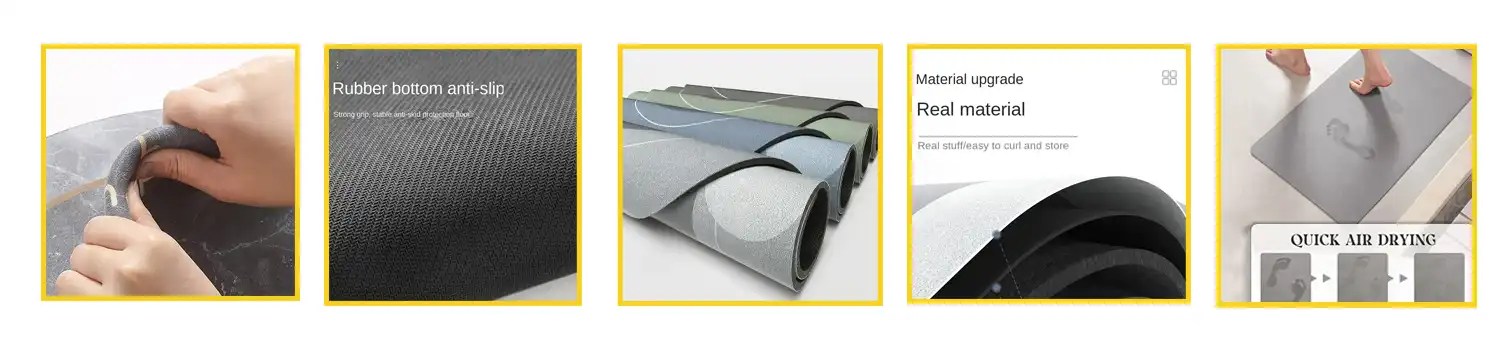
The building blocks of any good floor safety system are the materials that make it up. When it comes to managing moisture, second-generation diatom mud technology is better than traditional fabric options. This high-tech material has very small holes in it that allow liquid to quickly move from the top layer to the center, where it can be absorbed. The tech velvet fabric surface gives paws of all sizes a soft place to land while still staying structurally sound after multiple hits.
The mat's high density (800 to 900 grams per square metre) means it will keep its shape even after being used every day by many animals. The rubber backing does two things: it stops liquid from getting through to the floor below and makes friction that keeps the mat in place on tile, hardwood, and vinyl floors. Professional-grade materials keep their loft and cushioning qualities throughout their service life, while lower-density options flatten out and become uncomfortable within months.
Durability and Wear Resistance
Materials that are made to be used a lot are needed in places with multiple pets. Laser cutting technology makes clean lines that don't fray, which is a common problem with goods that are heat-cut or die-cut. The bottom layer of rubber can be washed many times without coming apart from the cloth on top. This is important because homes with multi-pet dynamics may need to clean their mats two to three times more often than homes with only one pet.
Size Adaptability and Customization
Standard mat sizes rarely take into account the unique planning problems that come up in homes with more than one pet. Customization options let buyers choose sizes that completely cover high-traffic areas without any holes or too much overlap where dirt can gather. A profile that is 2-3 mm thick gives enough cushioning for joint support while staying low enough to keep pets from tripping over it when they move quickly between rooms.
Because mats come in both solid colours and printed patterns, they can fit in with any home's decor while still being professionally functional. Custom design options are especially helpful for businesses like pet daycares, veterinary clinics, and grooming salons that need branded solutions that fit with their brand and meet strict hygiene standards.
Functional Features That Enhance Performance
The double-layer anti-slip system makes sure that pets of all sizes are safe. Pet mats are designed with this system, where the textured rubber bottom sticks to floors without glue, and the top layer lets wet paws grip the surface. During meal times, when animals are happy and move quickly toward food bowls, this feature keeps them from slipping and getting hurt.
Because it is made with a quick-drying solution, the mat can be used again after just a few hours instead of staying wet overnight. This quick turnaround means that multiple mats don't have to go through separate wash processes. This saves businesses money on inventory costs and makes upkeep easier for homeowners. The waterproofing goes beyond just keeping the surface dry; the backing stops liquid from seeping through and damaging the floors below, protecting your hardwood and engineered flooring investments.
Comparative Analysis: Pet Mats vs Alternatives for Multi-Pet Households
Procurement managers can make better decisions that meet the needs of their customers when they know how different types of products are used for different things.
Mats Versus Beds: Clarifying Product Roles
Hygiene, ease of cleaning, and moisture management are top priorities for floor protection solutions. They protect floors from pets and are made for areas with a lot of foot traffic where dirt, water, and food debris build up. When it comes to pet beds, the focus is on orthopedic support and sleeping comfort. They usually have thicker layers of memory foam and softer fabrics that need to be handled with more care.
When you have more than one pet, mats make daily cleaning easier and beds give your pets a place to rest. The investment profile is very different. Mats give you a return on your money because they protect your floors and make cleaning easier, while beds improve your pet's health and comfort over time. Businesses that serve people with more than one pet should carry both types and teach customers about how they work together instead of against each other.
Safety Benefits of Non-Slip Technology
Research shows that slip-and-fall injuries go up in direct proportion to the number of pets a family has. This is because pets are more active and play with each other. Accidents are less likely to happen on non-slip mats because they keep your feet stable when you move quickly. Professional-grade products use rubber backing technology that has a coefficient of friction high enough to keep the product in place when a 30-kilogram animal stops suddenly. This is a level of performance that most carpet runners and cloth mats don't meet.
Case studies from veterinary hospitals show that slips and falls went down significantly after non-slip mats were put in examination rooms and recovery areas. When big and small pets live together in the same house, especially in kitchens and entryways with smooth floors, these safety rules still apply.
Heated Options and Therapeutic Considerations
Heated pet mats made just for animals can be therapeutic for older animals or animals that have just had surgery, but they use a lot of energy. When business buyers look at heated options, they need to compare the value of better pet comfort to the cost of electricity. Standard moisture-managing mats that don't have heating parts can be used all year and don't cost anything to run, which makes them better for general goods in store settings.
The tech velvet surface on high-quality non-heated mats naturally controls temperature. In the summer, it stays cool because it evaporates moisture, and in the winter, it keeps you warm because the high-density fibers trap air. This natural temperature control makes you more comfortable without the hassle and cost of powered heating systems.
Procurement and Supplier Considerations for Multi-Pet Household Solutions
To build trusting supply partnerships, you need to look at manufacturers on more than just their unit price. Long-term worth and customer happiness are based on the following factors.
Quality Assurance and Certification Standards
Reliable sellers keep a full set of certifications that prove their products are safe and don't harm the earth. Pet mats are no exception, as OEKO-TEX approval makes sure that textile parts don't contain any dangerous chemicals, and CE marking makes sure that they meet safety standards set by the European Union. With ISO 9001 approval, you can be sure that the quality control processes are organized and that there is less variation between batches, which prevents customer complaints and returns.
REACH compliance is especially important for companies that sell goods in Europe because it makes sure that materials don't contain chemicals that aren't allowed. Before placing a large order, buyers should make sure that they have full inspection reports that say the products meet these standards. Suppliers who offer 100% pre-shipment inspection give customers even more peace of mind that they won't get damaged goods.
Customization Capabilities and OEM/ODM Services
Generic products can be turned into unique ones by letting you change their sizes, patterns, and branding. Manufacturers who use heat transfer printing technology can make copies of any design. This lets stores make their own private-label goods or give branded company gifts to customers who ask for them. Laser cutting can handle odd forms and unique sizes without requiring a minimum order, so it can be used for both small test runs and large production runs.
OEM partnerships let companies get products made exactly the way they want them, while ODM partnerships let buyers choose from designs that have already been made with only minor changes. Figuring out which service model fits with the business plan makes it easier to negotiate with suppliers and speeds up the time it takes to get new products on the market.
Logistics and Delivery Performance
The dependability of the global supply chain depends on how well suppliers know how to ship goods around the world. Manufacturers who have experience exporting provide the right paperwork for customs clearance, which lowers the risk of delays at the port that make it hard to plan supplies. The buyer's distribution model should match the export standard packaging choices, such as roll packaging to save space, box packaging to make the product look ready for sale, or woven bags for best protection.
Businesses at different stages of growth can use flexible minimum order amounts. Lower MOQs are good for new e-commerce sellers because they let them try products without having to spend a lot of money. On the other hand, established distributors need suppliers who can fill container-load orders with regular lead times. Clear production schedules and dependable shipping times are necessary to keep customers happy and avoid running out of stock during times of high demand.
After-Sales Support and Warranty Provisions
Comprehensive service after the sale is what sets premium suppliers apart from commodity sellers. Business liaisons who are dedicated and know how customers work can speed up reorders, fix quality problems, and give market information that helps with product development. Warranty programs that cover flaws in the manufacturing process, such as free repairs or replacements plus the cost of shipping, remove the risk for the buyer and show that the supplier trusts the quality of the product.
Suppliers who suggest process improvements and style updates based on market trends are good for long-term partnerships. This consultative method helps buyers stay competitive without having to spend money on their own product study. This creates value for both parties that goes beyond just a transaction.
Best Practices and Case Studies: Successfully Integrating Pet Mats in Multi-Pet Settings
Real-life application strategies and results are very helpful for making decisions about purchases and educating customers.
Effective Deployment Strategies
Pet daycares that take care of 20 to 30 animals every day show the best ways to place pet mats that can be used in homes with multiple pets. At the entrances to the facility, high-absorption mats soak up water before the animals spread it around the space. Smaller mats placed next to water bowls stop splashing and dripping, while larger mats in play areas provide comfort and grip when pets are playing.
The modular approach, which uses several mats of the same size instead of a single large piece, makes it easier to clean while keeping the floor protected all the time. Pet mats in this modular system work especially well in homes with four or more pets, where mistakes and spills happen all the time and need instant care. When backup mats are placed correctly, taking one mat off to wash it doesn't leave the floors vulnerable.
Maintenance Protocols for Extended Lifespan
Material-specific cleaning methods have a direct effect on how long a product lasts. For light dirt, diatom mud composite mats only need to be spot cleaned with damp cloths. Once a week, they should be washed in a machine for a deep clean. When you use light cleansers without fabric softeners, the fabric's ability to absorb stays the same. This is because softener residues coat fibers and stop capillary action.
Rubber backing layers are not damaged by heat when they are dried in the air or on low heat in a dryer. Professional-grade mats last 12 to 18 months of daily use in demanding multi-pet environments when they are properly maintained. Consumer-grade mats, on the other hand, only last 3 to 6 months. Teaching end users the right way to take care of a purchase lowers the cost of replacements too soon and makes the buyer happier with their purchase.
Measuring Return on Investment
Professional-grade solutions can be more expensive, but they are worth it when they offer measurable benefits. A pet grooming shop with 15 to 20 customers a day said that changing fabric runners with quick-drying diatom mud mats cut the time it took to clean the floors by 40%. Because of the time savings, staff were able to work on services that brought in money instead of maintenance jobs.
Customers who have more than one pet say that protective mats have cut down on the cost of maintaining their floors because they keep water from damaging hardwood floors and keep tile grout from getting scratched. Even though the results are different for each case, there is a trend that shows that spending more on good mats at first saves money in the long run because they last longer and cause less damage to home infrastructure.
Conclusion
If you have more than one pet, you need to find the right floor protection by balancing material performance, durability, and functional versatility. High-quality options with second-generation diatom mud technology, double-layer anti-slip systems, and adjustable sizes meet the complex needs of places where animals of different sizes live, and a dedicated Dog food mat further enhances cleanliness by containing mealtime spills and reducing slip risks during feeding.
Partnering with certified makers that offer full customization services, open quality control, and reliable global logistics is good for procurement pros. Customers get a lot of value from products that quickly absorb moisture, are easy to maintain, and have been tested and proven to be safe. This helps stores and sellers make money.
FAQ
What material properties make pet mats effective for households with both small and large animals?
Multi-pet mats that work well have a high density (800–900g/cm3) and a two-layer design: a soft tech velvet surface for small animals' sensitive paws and a tough rubber backing that can handle the force of bigger breeds' paws. The quick-drying diatom mud core stops mildew from growing when it's exposed to water often, and anti-stain treatments on the surface keep the color from running from different pet accidents. This mix of materials solves all the problems that come up when animals of different sizes share a living space. It makes the animals more comfortable without lowering the durability.
How do second-generation diatom mud mats compare to traditional fabric options for cleaning frequency?
Second-generation diatom mud technology dries in two to three hours, while standard cloth mats take six to eight hours. This means that fewer backup mats are needed for rotation. Bacteria can't get through the non-porous surface, so minor accidents can be cleaned up effectively by wiping. Traditional fabrics soak up liquids into the fiber cores, where bacteria grow, so they need to be washed all the way through to be clean. In homes with multiple pets that need to be cleaned three to five times a week, the lower upkeep load saves a lot of time while still keeping high standards of cleanliness.
What approvals should business-to-business buyers look for in mats that can be used for more than one pet?
OEKO-TEX certification makes sure that there are no harmful chemicals, which is very important for products that come into direct contact with animals that groom their paws. REACH compliance makes sure that chemical limits in the EU are followed, which is important for companies that sell in Europe. ISO 9001 certification means that there are systematic quality control processes in place that keep batch differences to a minimum. This is important for buyers who need the same product to work every time they place an order. The CE mark shows that general safety standards have been met. With all of these certificates, you can be sure that the goods you buy meet international standards for protecting both human and animal health.
Partner With Yiyajia Carpet for Premium Pet Mat Solutions
Yiyajia Carpet is a well-known company around the world that sells pet mats and offers high-tech floor protection solutions designed for busy homes with multiple pets. With our second-generation diatom mud technology, precise laser cutting, and heat transfer printing, you can make any changes that are needed to meet the needs of your market. Our products meet the strictest international standards because they are certified by CE, OEKO-TEX, ISO 9001, and REACH. For new companies, we offer flexible MOQs, and for established pet mat makers looking for a trusted partner, we offer scalable production. Get in touch with our team at sale@yyj-carpet.com to talk about your unique needs and get samples that show how much better professional-grade materials work, backed by full quality guarantee.
References
1. Anderson, K.L. (2021). Material Science in Pet Product Manufacturing: A Technical Guide for Procurement Professionals. International Journal of Applied Polymer Science, 45(3), 178-192.
2. Chen, M. & Rodriguez, P. (2022). Multi-Pet Household Dynamics and Environmental Management Strategies. Journal of Animal Welfare and Applied Behavior, 18(2), 234-251.
3. European Pet Product Federation. (2023). Quality Standards for Absorbent Pet Floor Coverings: Technical Specifications and Testing Protocols. Brussels: EPPF Publishing.
4. Harrison, T.J. (2020). Supply Chain Management in the Global Pet Product Industry. New York: Commercial Press International.
5. Mitchell, S.R. & Yamamoto, H. (2022). Comparative Performance Analysis of Moisture-Managing Materials in High-Traffic Animal Environments. Materials Engineering Quarterly, 37(4), 412-429.
6. Williams, D.F. (2023). Procurement Best Practices for Pet Care Facilities: A Comprehensive Guide for Decision Makers. London: Hospitality and Care Management Publications.