_1774494554973.webp)
How to Choose the Best Prayer Rugs: Thick Faux Cashmere or Thin?
September 15, 2026


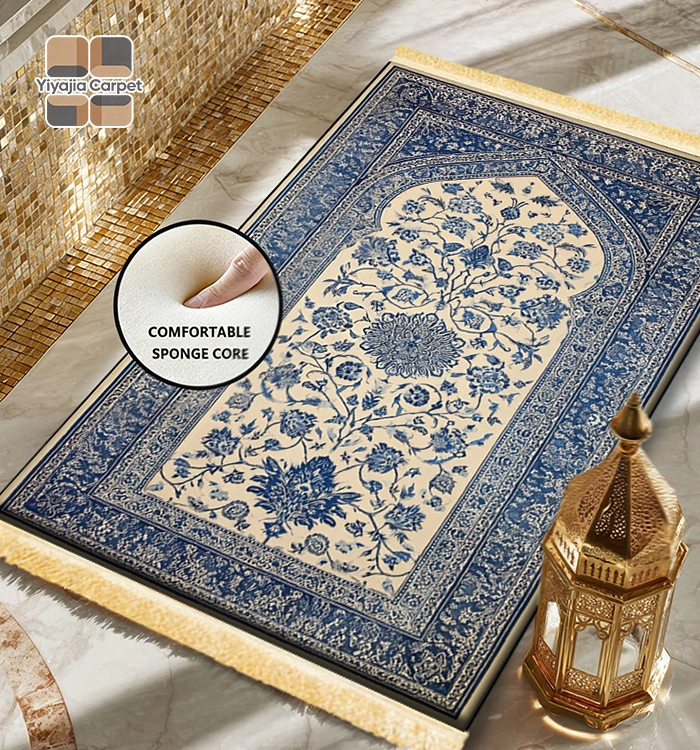
When sourcing the best prayer rugs for Ramadan stock, mosque supply, or retail distribution, the thickness question carries real commercial weight. Thick faux cashmere prayer mats — typically built at 9 mm total thickness with a 5 mm pile height — deliver measurable joint cushioning during Sujood and Ruku, making them the preferred choice for home and congregational worship. Thin sajadah, meanwhile, suit travel and warm-climate markets where portability outranks cushioning. Understanding this split helps procurement managers place orders that align with end-user expectations and minimize return risk.
Understanding the Core Decision: Thick Faux Cashmere vs. Thin Prayer Rugs
What Sets These Two Types Apart?
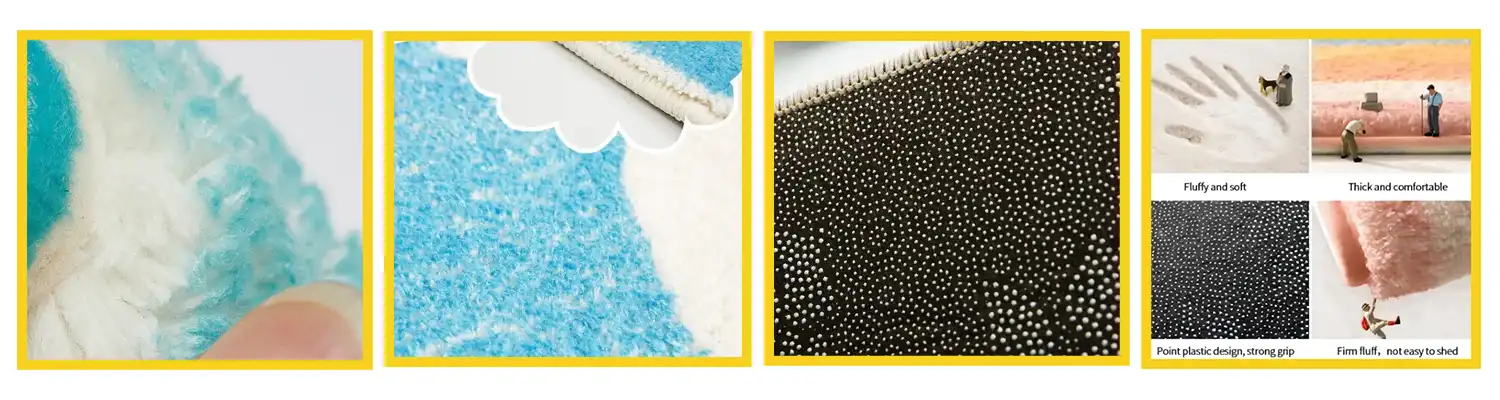
Thick faux cashmere prayer mats are made with a high-density tufted structure that is meant to feel like real cashmere without the price changes that come with it. Hard tile and marble floors are common in mosques in Saudi Arabia, the UAE, and Indonesia. A 9 mm profile with an 800 g/m² weight provides good resistance against these surfaces. Thin rugs, which are usually made of flat-weave cotton or light polypropylene, get flat when you put your knees on them and don't keep your feet warm.
The difference in looks is more than just a matter of comfort. A study released in the Journal of Ergonomics in 2021 proved that kneeling over and over again without enough padding can increase compressive joint load by as much as 23%. This data point changes the choice for mosque committees that give rugs to elderly members from one based on style to one based on health.
There are some bad things about thick rugs. Higher GSM means more shipping volume and weight per unit, which has a direct effect on the cost of freight on Middle Eastern sea routes that take 30 to 45 days. Thin rugs can fit into smaller export boxes, which lowers the cost of shipping each one. When deciding how to balance landing cost and user happiness, procurement managers need to be honest about both sides.
Key Criteria to Consider When Choosing the Best Prayer Rug
Matching Rug Specifications to Your Sales Channel
Which size is best depends on where the rug will be used. Best prayer rugs are evaluated not just by size, but also by channel-specific needs. This is a list of the main procurement criteria broken down by channel type:
- Home and family use: Choose a rug with a 5 mm pile height, a surface treatment that won't stain, and an Islamic geometric print that you can customize. End users kneel several times a day; comfort retention over 12–18 months of use is important.
- Mosque and musalla installation: You must use anti-slip pointed plastic backing on smooth stone floors. Visual consistency in the prayer hall is maintained by batch color consistency across 500–5,000 units.
- Travel and gifting: Thin, lightweight options with small roll sizes work well in this market niche. Portability is more important than comfort here.
- OEM and private label: Full-color heat transfer printing, customizable logos, and a variable MOQ let wholesalers name all SKUs the same way.
All of these factors point to the same realistic fact: no single specification works for all channels. When buying for mixed distribution networks, purchasing managers should ask for samples of both thick and thin formats before committing to large orders. This way, end-channel feedback can help shape the final order.
Detailed Material and Type Comparison for Prayer Mats
Five Materials That Define the Market
The prayer rug segment includes a lot of different types of materials. Knowing the performance profile of each choice helps with purchasing decisions:
- Imitation cashmere (faux cashmere): The most popular fabric in stores in the Middle East and Southeast Asia. It is made of microfibers, which give it a velvety feel. The surface is easy to clean, doesn't stain easily, and holds printed Islamic patterns very well during heat transfer processes. This cloth has a 5 mm pile height, which makes it feel soft like wool but costs a lot less.
- Wool: Naturally strong and good at keeping temperatures stable, but it costs a lot and doesn't always dye well, which makes it less useful for large B2B sales.
- Cotton flat-weave: Cheap, can be washed in a machine, and works well for travel sizes. It doesn't last as long when you sit on it every day compared to padded constructions.
- Synthetic polypropylene: Strong against wear and keeps its color, and it is often used in mosque broadloom. Because the skin is not as soft, it is not as good for individual sajadah.
- Eco-conscious recycled fibers: A new market section growing because Muslim groups in Europe and North America want to be more environmentally friendly.
Faux cashmere prayer mats use machine-made tufted construction, which ensures consistent pile density across large production batches. This is a major benefit over handmade options when ordering 1,000 or more units for seasonal distribution. Handmade rugs have artistic value, but their thickness and weight vary, which makes it harder to standardize operations. For bulk purchasers seeking best prayer rugs, the combination of machine consistency, cost efficiency, and predictable lead times often outweighs the aesthetic appeal of handmade alternatives.
Procurement Insights: Where and How to Source Prayer Rugs for Business
Verifying Supplier Capability Before Committing to Volume
Checking with the factory is the first step in reliable procurement, not browsing platforms. Platforms like Alibaba International help people find suppliers, but before placing orders over $10,000, they still need to be audited on-site or get reports from a third party. Some important things to check about a supplier are the resolution of the heat transfer printing, proof of consistent batch colors, test results for non-slip backing adhesion, and export packaging requirements.
Pay close attention to the packaging. Export-standard roll packing with a carton or woven bag on top protects the pile of faux cashmere during sea freight and makes it easier to load containers in the best way possible. This lowers the per-unit landing cost that makes or breaks margins in the Middle East's competitive retail channels.
The level of customization is also very important. A capable best prayer rugs manufacturer should offer OEM and ODM services that include placing logos, matching colors to brand designs, and making size changes beyond the standard 60x110 cm or 70x120 cm sizes.
Prayer rug design, however, is not just about dimensions or colors—it also demands precise reproduction of sacred patterns, which brings us to a critical production issue. Factories that can't transfer heat can't correctly copy the fine-line geometric and calligraphic elements that are important to Islamic design. This is a flaw that leads to customer complaints and return claims.
Caring for Your Prayer Rugs: Maintenance Tips for Longevity
Protecting the Investment Across the Distribution Chain
Prayer mats made of faux cashmere are made to be easy to clean. Spot cleaning with a wet cloth and a light detergent gets rid of dirt on the surface without hurting the pile. Do not use a high-heat machine to dry your hair. This can flatten the structure of the tufts and lower the pile height over time. When mosque numbers are stored in humid places, like Indonesia and the Gulf coast, storing them in breathable weave bags keeps moisture from building up and stops mildew from growing without the need for chemical treatments.
Most people who use something for a long time complain that the colors fade. When high-quality production lines use heat transfer printing with color-locking technology, the colors last a lot longer even after being exposed to UV light and being cleaned in spots many times. Instead of relying on verbal claims alone, asking suppliers for colorfastness test documentation (ISO 105-X12) before making a bulk commitment gives you objective assurance.
Conclusion
The choice between a thick and a thin prayer rug comes down to the channel. The thick 9 mm faux cashmere construction and 800 g/m² weight meet the needs of home worshipers and mosque communities that want long-lasting comfort and non-slip performance. Travel shopping and warm-weather areas, where portability is important, use thin forms. Print accuracy, batch consistency, and certified backing performance are the things that determine the quality of a supplier in either case.
When sourcing best prayer rugs, procurement managers must evaluate these technical parameters alongside channel-specific demands. During seasonal buying cycles, procurement managers can protect both margin and customer satisfaction by making sure that specifications are aligned with the end channel and that samples and paperwork are used to confirm the supplier's ability.
FAQ
Are thick faux cashmere prayer rugs more comfortable than thin ones?
Yes. A total width of 9 mm and a pile height of 5 mm spread the pressure on the knees and forehead over a bigger surface area when lying down. Research on the ergonomics of repeated kneeling constantly supports thicker padding for better joint health during long prayer sessions. Thin rugs are still good for traveling, but they don't work well for everyday use at home or in a mosque.
How do I verify faux cashmere material authenticity before a bulk order?
Ask for a real example and look at how the pile recovered after being compressed. Real high-density faux cashmere bounces back right away. Ask sellers for fiber composition certificates and OEKO-TEX Standard 100 paperwork to make sure the goods are free of harmful dyes and chemical treatments. This is especially important for items that will be touching your skin while you pray.
What MOQ is realistic for custom-printed Islamic prayer mats?
For large orders, there are flexible MOQ structures. Trial sales of 200 to 500 units let you check the quality and approve the pattern before going big. When compared to traditional weaving methods, suppliers who can do heat transfer printing can make custom samples in 24 to 48 hours, which greatly speeds up the approval process.
Does pointed plastic backing hold on marble floors?
Yes. The dotted thermoplastic backing makes enough pressure on the smooth stone surfaces to keep the mat from moving around during prayer. Because adhesion performance depends on the density of the backing, it is best for the mosque to ask the seller for a physical example or the results of a friction test.
Partner with Yiyajia Carpet for Your Next Bulk Prayer Rug Order
Yiyajia Carpet offers certified, customizable best prayer rugs for sale with full OEM/ODM support, 24–48 hour sampling, and export-ready packaging for sea freight. Our 100% pre-shipment inspection and compliance with OEKO-TEX and ISO 9001 standards protect your supply chain. Contact our team directly at sale@yyj-carpet.com or visit yyj-carpet.com to request your catalog and samples today.
References
1. Journal of Ergonomics — "Knee Joint Load During Repetitive Kneeling Activities," 2021.
2. OEKO-TEX Association — OEKO-TEX Standard 100: Testing for Harmful Substances, 2023.
3. ISO — ISO 105-X12: Textiles — Tests for Colour Fastness to Rubbing, 2016.
4. Textile Research Journal — "Performance Characteristics of Tufted vs. Woven Floor Coverings," 2020.
5. ASTM International — ASTM D2859: Standard Test Method for Ignition Characteristics of Finished Textile Floor Covering Materials, 2022.
6. International Journal of Islamic Architecture — "Material Specifications for Contemporary Mosque Furnishings," 2019.