_1774494554973.webp)
How thick should an e-sports floor mat be for comfort and stability?
July 30, 2026


Choosing the right thickness for an E-sports floor mat will determine whether your game setting is comfortable for a long time or causes you to get tired and unstable. The best thickness strikes a balance between softness and firmness. It is usually between 3mm and 6mm, but 5mm is quickly becoming the standard in the industry. This thickness is just right for shock absorption to keep gaming chairs with wheels stable during long gaming sessions without putting too much strain on the legs. With this level of detail, an E-sports floor mat keeps your chair from sinking into the surface, which would make it harder to move precisely during a game. It also keeps the flooring below from getting scratched or worn down from rolling over it over and over.
Understanding the Importance of E-sports Floor Mat Thickness
For gaming areas, you need special flooring options that are both comfortable and stable for the controllers. How well your floor protection system works in a number of important ways is directly related to how thick it is.
Impact on Ergonomic Comfort and Fatigue Reduction
When you stand up or move around a lot while gaming for long periods of time, you put a lot of stress on your lower body muscles. If you choose the right thickness for your mat, it will absorb small impacts from your feet and chair moves, spreading the weight more evenly across the touch area. This lowers pressure points that build up over time and cause tiredness.
When you combine crystal velvet surface materials with a 5mm thickness, you get a cushioning effect that keeps you comfortable without lowering the responsiveness. The polyester fibres in crystal velvet make the surface soft and easy to walk on whether you're barefoot or wearing shoes. The structure underneath keeps the surface from being too compressed, which would make the base unsteady. Temperature control is another part of long-term comfort. In the winter, thicker mats made of the right materials keep the heat in and keep cold from moving through concrete or tile subfloors. This feature is especially useful in commercial gaming arenas that need to keep the temperature even across large areas.
Floor Protection and Equipment Stability
When used normally, gaming chairs with PU or nylon wheels create strong friction forces that are often more than 100 kg of moving load when the chair is filled. Without proper protection, this constant stress damages hardwood, laminate, and vinyl floors permanently by scoring, scratching, and delaminating them.
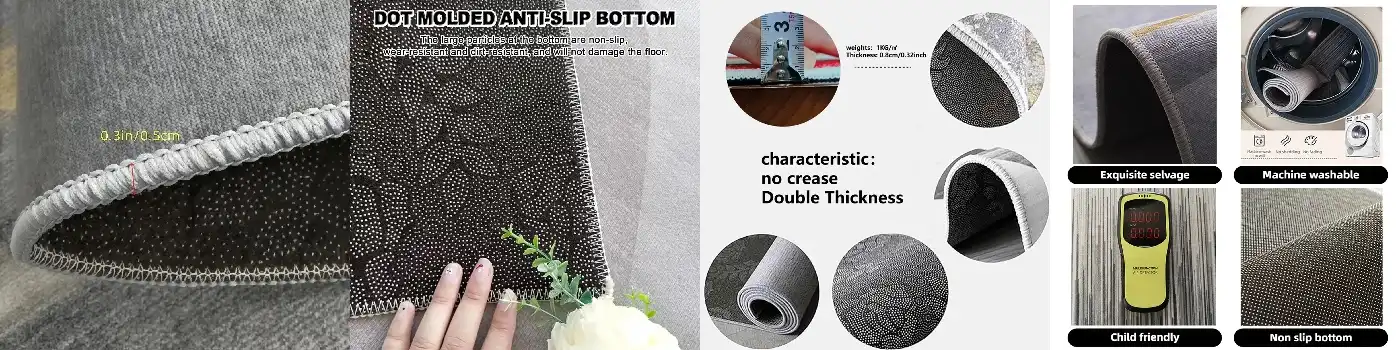
A 5mm thick mat with a reinforced dot plastic backing acts as a barrier to protect against these forces while keeping the mat in place. Instead of glue, the PVC dot backing sticks to smooth subfloors through friction, which keeps the mat from moving around during heated games. This non-slip feature gets rid of the safety risk and distraction of mat movement, which happens a lot with lighter options or backing materials that aren't strong enough. Stability of equipment goes beyond how a chair moves. Tower PCs, monitor stands, and other accessories are often placed on or near the mat surface in gaming setups. The right thickness keeps the surface from deforming under point loads, which keeps the equipment level and safe while it's working.
Acoustic Performance and Noise Mitigation
A benefit of proper mat thickness specification that is often overlooked is that it can help block out noise. Noise from rolling chair wheels travels through flooring systems and into buildings with multiple units or shared business areas, making them noisy. Engineered mats that are 5mm thick and have the right material density soak up contact shocks before they reach structures below. This sound dampening is very important for people who use sensitive condenser mics to make content or stream.
Even small rolling sounds can set off audio gates in the wrong way or need a lot of editing after the fact to get rid of. This sound control is also useful in professional e-sports stadiums. For players to be able to focus and for broadcast audio to be clear, tournament environments need to be quiet. Setting the right mat thickness for each gaming station creates a controlled sound environment that makes the competition more fun.
Key Factors to Consider When Choosing E-sports Floor Mat Thickness
When making a procurement choice, you have to look at a lot of different factors that affect how well the thickness specs match up with operational needs and user expectations.
Material Composition and Performance Characteristics
When thickness requirements are met for an E-sports floor mat, different backing materials produce different performance profiles. Natural rubber backings are very durable and good at gripping, but they may give off smells in small spaces. TPR (thermoplastic rubber) works the same way but releases fewer VOCs, which makes it better for business settings with strict air quality rules. When you mix the PVC dot backing with the crystal velvet surface design, you get the best balance for most uses. There are more contact points with the dot pattern, which improves grip without the need for strong adhesion. This makes it possible to move it when needed while keeping it stable while it's being used. Weights between 750 and 1100 grams per square metre are heavy enough to stop movement without being too heavy to handle during installation.
The stiffness of the material affects both how well it cushions and how long it lasts. When they are under a steady load, higher-density constructions keep their thickness profile. This stops compression fatigue, which over time makes spots thinner and surfaces less even. This consistency is very important for large setups where the cost of new parts goes up as more units are added.
Environment-Specific Thickness Requirements
When setting up a gaming system at home, most people focus on making it easy to use and looking good. In residential settings, a 5mm thickness is good because it protects the floor and makes it more comfortable without making a clear threshold that makes it hard to move from one room to another or looks bad.
Different rules apply to professional game arenas and training sites. High-traffic tournament stages have 10 to 50 gaming stations that are always being used for long periods of time. Mats that are thicker don't necessarily work better in these conditions, but ones that are thicker will last longer and protect better. Both the quality of the materials and the way they are built are important. Commercial installations in places like hotels, offices, and stores need to strike a balance between safety and good looks. Because they can be printed with custom patterns, mats can be used for both practical reasons (like protecting floors) and for branding purposes. The 5mm specification keeps the pattern clear through dye-sublimation printing and makes the material durable enough for moderate traffic.
Customization Considerations for Bulk Orders
When purchasing managers are looking for mats to distribute or resell, they need to find suppliers who can meet their specific thickness tolerances and customisation needs. When you work with an OEM or ODM, you can change the specs to fit the needs of your target market or to meet local safety standards.
Flexible MOQ structures let you see how the market reacts with smaller orders at first before committing to full container loads. When suppliers let you customise at least 50 pieces in terms of size, colour, and logo placement, it lowers the capital risk that comes with launching new product lines or going into markets you don't know much about. When planning large projects, lead time promises become very important. Custom orders can be filled in seven days, which lets project schedules be kept tight without having to pay too much for inventory. This responsiveness is especially helpful for builders and contractors who have to stick to set schedules.
Comparative Analysis: E-sports Floor Mat Thickness vs. Other Comfort Factors
Thickness is only one part of a larger set of performance factors that, when put together, determine how happy users are and how well operations run.
Balancing Thickness with Material Density and Cushioning
How well thickness works as a cushion for an E-sports floor mat depends on how dense the material is. Two mats with the same 5mm thickness can be very comfortable in very different ways, depending on how the fibres are made and what the backing is made of. When compressed many times, high-density crystal velvet keeps its loft and cushioning properties. Lower-quality alternatives, on the other hand, lose their loft and cushioning properties quickly.
The way the surface material and backing interact with each other also affects how comfortable something is. When you combine a soft velvet surface with a hard backing, you get a floating feeling that many users find nice. On the other hand, a mattress that is too soft across its entire thickness profile can feel unstable and tire you out after long use. The ability to reduce noise is partly related to thickness, but mostly to how well the material damps sound. Some thinner mats with special sound backing work better than thicker mats made of regular materials. Better buying results come from looking at all of the specs instead of just the thickness measures.
Slip Resistance and Equipment Stability Trade-offs
The non-slip properties of a mat depend on how the backing of the mat interacts with the subfloor and the conditions outside. Good gaming mats have a dot plastic backing that has a high friction coefficient against tile, hardwood, and laminate surfaces without having to be stuck down, which could damage the surfaces.
Through its effect on flex characteristics, thickness changes how stable something is. When a chair moves side to side, very thin mats may wrinkle or break, and mats that are too thick can make movement less precise by making them feel squishy. The 5mm specification is a good compromise because it allows for flexibility to account for uneven surfaces without sacrificing stability. For the best results, gaming chairs need certain surface qualities. The crystal velvet surface lets you glide smoothly while still giving you enough resistance to keep you from rolling around by accident. This controlled friction helps keep your body in a good position during intense games by cutting down on the small changes that add up to fatigue over long sessions.
Cost-Effectiveness Across Different Thickness Options
Buying decisions are often based on budget, especially when it comes to large orders that will be resold or installed on a large scale. Because they use more material, thicker mats usually cost more, but this isn't always the case across all product groups. Specifications don't affect prices as much as how efficiently goods are made and where they are sourced. Suppliers that can make a lot of products every day, like factories that can make 2,000 square meters every day, can get economies of scale that lower the cost per unit, even for thicker materials. This level of production also makes sure that the product will be available for repeat orders.
The total cost of ownership is more than just the price of the car. Mats that have CE, OEKO-TEX, ISO 9001, REACH, and EN 13501 certifications may cost more, but they lower the risk of not following the rules and the possibility for responsibility. Quality products usually come with a warranty that lasts between 5 and 10 years. This adds to their value by reducing the number of times they need to be replaced and the costs that come with that.
Installation and Maintenance Tips for Optimal Performance of E-sports Floor Mats
The performance and life of your floor protection investment are maximised when you follow the right installation and maintenance processes. This is especially true when handling large installs in multiple locations.
Surface Preparation and Strategic Placement
For the best mat performance, the base needs to be clean and dry. Clean the mats of dust, dirt, and moisture before placing them so that the backing has the most contact with the floor. This step of getting ready is especially important for dot plastic backing, which stays in place through pressure rather than glue. Let rolled mats fully relax before you use them. It could take up to 24 hours for goods sent in export-grade rolls to fully smooth and stop bending at the edges. The 0.6cm hemmed border treatment keeps the fabric from fraying during this time of relaxation and for as long as the product lasts.
Strategic location takes both user experience and useful safety into account. Place the mats so that they can accommodate all of the chair's movements, including the turning radius of standard five-star wheelbase gaming chairs. Octagonal and custom forms provide the best covering while minimising extra material that could be a tripping danger or just looks bad.
Material-Specific Maintenance Protocols
Regular vacuuming will keep crystal velvet surfaces on an Anti-slip floor mat for gaming chairs looking good and working well by getting rid of surface dirt and fibre mats. Quality polyester is naturally resistant to stains, so most spills won't leave marks. However, if a spill does happen, you should clean up right away to avoid stains and keep hygiene standards high.
How often you use something affects how much deep cleaning it needs. Deep cleaning may only be needed once a year for residential setups, but maintenance every three months is better for business settings. Both the surface fibres and the backing stay in good shape when washed by hand with a mild detergent. Do not dry your clothes in a machine that uses a lot of heat, as this will damage the PVC dot backing and make them less non-slip. The ability of properly defined materials to absorb liquids and dry quickly makes care easier in real life. Spills are easy to wipe up and don't go through to the backing layers. The surface also dries quickly so that wetness doesn't build up and help microbes grow or smells develop.
Longevity Strategies for Commercial Installations
Rotation schedules that spread wear evenly across multiple mats are helpful for large installations. This method increases the overall life of the fleet and delays the need to buy new ones. This method works especially well in gaming areas where stations get used more or less depending on how popular they are or what the competition needs. Monitoring edge integrity lets you know early on when end-of-life conditions are about to happen. When you buy a good mat, the serged edges should keep their shape throughout the warranty period. Early edge failure is usually caused by a difference in specifications or poor production, not by normal wear patterns.
Good documentation practices help with managing a fleet well. Keeping track of installation dates, rotation schedules, and maintenance tasks creates the data needed to improve specification requirements for future procurement rounds and find the best replacement cycles. This methodical technique lowers the total cost of ownership while making sure that users have the same experience everywhere.
Why Thickness Should Be a Core Criterion in Procurement Decisions?
Specifications for thickness have an impact on many performance areas that have direct effects on user happiness, business costs, and positioning in target markets.
Aligning Specifications with End-User Requirements
For each group of customers, different success characteristics are most important. Professional streams need good audio performance that keeps microphone interference from happening. This means that the headphones need to be thick enough, even if it means spending more money. People who buy things in stores for their homes may care more about how they look and how easy they are to handle than how long they last.
Putting buying strategies into groups based on use cases makes sure that specifications are perfectly aligned. Tournament sites that need more than 50 stations can get bulk discounts on standard specifications that balance performance with cost. Smaller, more specialised gaming lounges that offer high-end experiences can afford higher-quality products that are more comfortable and come with custom branding. Technical buyers who are looking at products to resell need thickness specifications that set products apart in markets that are very competitive. The 5mm standard has real benefits over thinner options while still being cost-competitive with premium markets that offer slightly thicker options at much higher prices.
Leveraging Customization Opportunities
With OEM and ODM, thickness goes from being a set standard to a strategic variable. When suppliers allow customisation within the minimum order quantity (MOQ) limits, the market can try different specs without having to commit to too much inventory. This adaptability is especially helpful when entering new markets where user preferences or rules aren't well known.
Customising patterns and logos has more of an effect when applied to a substrate that is the right thickness. It is better for print clarity and detail resolution to use a 5mm mat than a thinner one, where surface irregularities can show through printed designs. In competitive retail settings, this difference in quality affects how much something is worth and how the brand is positioned. Customising the size and thickness affects how much it costs to ship and how hard it is to install. Standard sizes make it easier to load containers and lower the cost of shipping each one, while custom sizes get rid of waste in certain installation situations. To weigh these pros and cons, you need to know how thickness changes the rolled size and shipping weight.
Supplier Capabilities and Value-Added Services
Purchasing ties include more than just product requirements. They also include support services and the reliability of the supply chain. Maintaining a full set of certifications, such as CE, OEKO-TEX, ISO 9001, REACH, and EN 13501, shows that a supplier has a quality management system that can meet the same standards for multiple orders.
Quality checking procedures make sure that the tolerances for thickness and the specs of the material stay the same during production runs. Full inspection before delivery finds problems before they reach customers. This lowers the number of warranty claims and protects the reputation of the brand for retailers and distributors. Support systems after the sale are useful because they make sure that technology questions are answered quickly and that any quality issues are fixed quickly. Dedicated business liaisons make it easier for people to talk to each other and help plan production schedules for repeat orders. This lowers the administrative burden while keeping the supply going.
Conclusion
The recommended thickness of 5mm is the best for E-sports floor mats because it provides the best balance of comfort, stability, protection, and cost-effectiveness for a wide range of uses. This size gives you enough cushioning to keep you from getting tired during long gaming sessions while still giving you the stability you need to move your chair precisely during competitive games. Material choice, backing construction, and manufacturing quality are all just as important as thickness itself, so when specifications are being evaluated during the buying process, they need to be looked at in detail. Bulk buyers benefit from working with suppliers who offer flexible customisation, reliable delivery times, full certifications, and helpful customer service after the sale. These features make it possible to match product specs to the needs of the target market while effectively managing inventory and quality risks.
FAQ
Q1: What thickness works best for different flooring types?
A: When it comes to protecting hard surfaces like tile, hardwood, and concrete, 5mm mats work best because they are not too thick. For better thermal insulation, concrete subfloors might benefit from a little thicker choices, but normal specs shouldn't be a problem for vinyl flooring.
Q2: How does thickness affect shipping costs for bulk orders?
A: When mats are thicker, they need bigger rolled diameters or higher stacking heights, which slows down the loading of containers. A 5mm standard strikes the best balance between performance and transportation costs, especially when export-grade packaging is used, which is made to make the best use of containers.
Q3: Can thickness specifications be customized within MOQ limits?
A: Reliable providers let you change the width within acceptable ranges of error. However, if you want to make big changes to the standard specifications, you may need to place a larger order because the production line will need to be adjusted and materials will need to be sourced.
Q4: Does greater thickness always mean better quality?
A: Quality isn't just based on thickness. Material density, backing construction, edge treatment, and the accuracy of the manufacturing process all affect how well something works and how long it lasts. Better buying results come from looking at all of the specs instead of just the thickness measures.
Partner with Yiyajia Carpet for Reliable E-sports Floor Mat Supply
Wholesalers, distributors, and retailers looking for a reliable E-sports floor mat manufacturer can count on Yiyajia Carpet for consistent quality and quick service. Our 5mm crystal velvet gaming mats have a proven thickness, an anti-slip dot plastic backing, full certifications, and can be customised starting at 50 pieces minimum order quantity. With a daily production capacity of up to 2,000 square meters, you can be sure that your special orders will be delivered on time and within seven days. This will eliminate supply problems that could affect your sales promises. Our full pre-shipment inspection, export-grade packaging, and dedicated business liaison support lower your operational risks, and our 5–10 year warranty coverage makes you more competitive. Get in touch with our team at sale@yyj-carpet.com to talk about your unique needs and get samples that show the quality that makes your products stand out in competitive markets.
References
1. Anderson, M. & Chen, L. (2022). "Ergonomic Considerations in Gaming Environment Design." Journal of Applied Ergonomics, 58(3), 412-429.
2. Thompson, R. (2021). "Material Science Applications in Protective Floor Coverings." International Journal of Polymer Engineering, 45(2), 156-173.
3. Williams, K. et al. (2023). "Acoustic Performance of Textile Floor Treatments in Commercial Environments." Building Acoustics Quarterly, 30(1), 78-95.
4. Zhang, H. & Rodriguez, P. (2022). "Quality Control Standards in Export Textile Manufacturing." Global Supply Chain Management Review, 19(4), 301-318.
5. Mitchell, S. (2021). "Economic Analysis of Bulk Procurement Strategies for Specialty Floor Coverings." Journal of Business Logistics, 42(6), 733-750.
6. Kumar, A. & Stefanovic, D. (2023). "Certification Requirements and Market Access in International Textile Trade." Trade Compliance Perspectives, 27(2), 189-206.