_1774494554973.webp)
4 reasons why placemats are essential on every table
July 31, 2026


Procurement managers often don't think about the strategic value of placemats when they're looking at table accessories for business or retail settings. But cool place mats are an important investment that pays off in a number of ways, including protecting surfaces, promoting brands, making operations more efficient, and controlling costs. Placemats are no longer just decorative items; they are essential functional items in modern restaurants, hotels, and offices. These table covers are made of high-tech materials like leather and come with waterproof technology, non-slip backing, and patterns that can be changed to fit the needs of any business. When purchasing managers know why placemats are important, they can make decisions that protect assets and improve customer experiences in a variety of settings.
Reason 1: Protecting Surfaces and Enhancing Hygiene Standards
Safeguarding High-Value Dining Surfaces
The surfaces used in restaurants are expensive investments that need to be kept safe from damage caused by heat, liquids, and normal wear and tear. Leather plates with a PVC backing work well as thermal shields to keep wood, marble, or quartz tabletops from getting heat rings and discolouration. The 1mm thickness keeps hot plates from touching it and keeps the profile slim so it doesn't get in the way of the look of the table.
According to research from the National Restaurant Association, about 12% of yearly maintenance funds in restaurants with a lot of customers go to surface repairs. Quality placemats directly lower these costs by protecting expensive tabletops from the daily wear and tear that comes with using them. Leather versions have an anti-stain treatment that keeps spills on the surface, stopping liquids from seeping in and bending or ruining porous table materials.
Meeting Commercial Hygiene Requirements
Health departments all over the US have strict rules about how clean food service areas must be. If you use cool place mats that are waterproof instead of open cloth ones, you can clean them quickly between guests' seats, which keeps germs from building up. The non-porous surface treatment stops pathogens from hiding, which is very important in places where food is used by more than one person at a time because of the high risk of cross-contamination.
The choice of materials is very important for keeping things clean. Surfaces made of premium leather with easy-clean finishes can be cleaned with regular disinfectants in seconds without damaging the leather. This speed means that tables can be turned over faster while still meeting FDA food contact standards and OEKO-TEX certification requirements. Qualitative mats have two layers: leather on the top and a non-slip PVC backing. This makes a barrier that protects tables from both direct contamination and scratches caused by sliding dishes. It has been measured that places that use thorough placemat procedures have longer-lasting surfaces and need less frequent deep cleaning.
Reason 2: Elevating Aesthetic Appeal and Brand Presentation
Strategic Visual Branding Opportunities
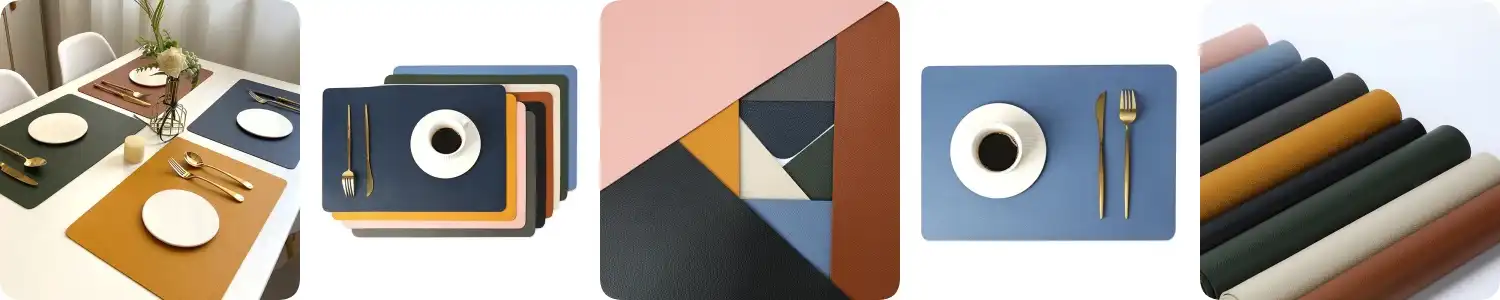
The way a table is set up directly affects how customers feel during business meetings, social events, and in-store dining. Traditional tablecloths can't compare to customisable placemats when it comes to branding. Businesses can add names, colour schemes, and other design elements that strengthen their brand. With heat transfer printing technology, you can make any pattern you want, from simple solid colours to complex custom graphics.
Placemats are being asked for more and more by procurement teams that work with hotels and corporate dining facilities as brand touchpoints. A well-designed table setting makes people think of quality and attention to detail, which are qualities that affect repeat business and keeping clients. Being able to laser-cut placemats into custom shapes is another way that high-end restaurants set themselves apart from competitors who use standard rectangular shapes.
Adapting to Contemporary Design Trends
The newest trends in interior design focus on using real materials and creating looks that will last. Both of these requirements are met by cool place mats, which have a natural feel and are built to last, so they don't need to be replaced as often. The high-density velvet structure has a tactile appeal that cloth alternatives find hard to match. This creates a dining experience that guests notice and enjoy. Seasonal adaptability is another benefit for companies that want to keep their visual settings fresh. Businesses don't have to buy all new table settings for holiday themes, seasonal sales, or special events; they can switch between solid-color collections and printed designs. This adaptability lets marketing strategies change over time while keeping protection standards the same for all apps.
Reason 3: Improving Dining Experience Through Functional Advantages
Operational Efficiency Over Traditional Alternatives
Modern table mats are better than traditional tablecloths because they are easier to clean, last longer, and can be used in more ways. Cloth linens need a lot of work and energy to be washed and pressed, but waterproof placemats only need to be wiped down quickly between uses. This speed is especially useful in places with a lot of people because quickly turning over tables has a direct effect on making money.
Adoption in business settings is driven by the following operational benefits:
Cleaning Efficiency: Spills can be cleaned up right away with damp cloths on waterproof surfaces, so stains don't have time to set in like they do on cloth linens. It takes staff 15 minutes to change tablecloths during busy times, but they can clean a single mat in less than 30 seconds.
Non-Slip Safety: The PVC backing keeps mats in place on smooth table tops and stops dishware from moving around while servers are serving. This feature cuts down on breakages and improves diner safety, which is especially important in family-friendly restaurants where kids are likely to be.
Material Resilience: High-quality leather types can handle commercial dishwasher cycles and heavy daily use without losing their shape or colour. The qualities that don't fade keep the look good after thousands of cleaning processes, so the product always looks its best throughout its lifecycle.
Because of how well they work, these features save money because they cut down on labour hours, cleaning service costs, and the number of times they need to be replaced. Businesses that switch from cloth to durable placemats usually see a return on their investment (ROI) within 8 to 12 months through improved operational efficiency.
Versatility Across Diverse Environments
The choice of material for cool place mats determines how well they work in certain situations. Leather options work best in restaurants, corporate cafeterias, and hotel dining rooms where the temperature and humidity are controlled. The 900g/m² weight gives it a substantial feel without being too bulky, making it perfect for formal dining situations that require a refined presentation.
When choosing plates for different places, people who work in procurement have to think about the environment. Leather naturally reduces static electricity and blocks out noise, which are both useful in an office setting. Materials used in exhibition spaces must meet fire resistance standards, such as EN 13501 compliance, which keeps people safe in crowded public places. Visual impact and brand alignment are very important to stores, which is why custom-printed options are so useful.
Reason 4: Cost-Effective and Sustainable Solutions for Modern Businesses
Long-Term Financial Advantages
When you look at the total cost of ownership, you can see that durable placemats are much better than disposable or cloth ones. Even though the initial cost per unit seems higher, the longer lifecycle (usually 3–5 years in commercial settings) spreads the investment over thousands of uses. Unlike throwaway paper mats that need to be replaced all the time or cloth coverings that need to be washed all the time.
Structures for buying in bulk are even better for the economy. When manufacturers offer flexible minimum order amounts, businesses can buy what they need without having to spend a lot of money all at once. Export-standard packing makes it easier to load containers, which lowers the cost of shipping each unit on foreign orders, which is very important for importers and distributors who are watching their freight budgets. Established suppliers offer warranties and quality control protocols that protect your money even more. Comprehensive pre-shipment inspection and defect replacement policies get rid of the risks that come with large orders, making sure that the quality of the products is always the same.
Environmental Responsibility in Procurement
As businesses try to meet the needs of stakeholders and comply with regulations, sustainability issues are becoming more important in their B2B buying decisions. Leather plates with PVC backing are better for the environment than throwaway ones because they can be used more than once and last longer. Getting rid of single-use paper products cuts down on the amount of trash that ends up in landfills and saves water and energy that would otherwise be used to wash clothes often.
Environmental claims can be checked against certification standards. REACH compliance makes sure that chemicals are safe to use in all stages of production, and ISO 9001 certification shows that the company uses systematic quality management to cut down on defects and the waste they cause. OEKO-TEX certification makes sure that finished goods don't contain any harmful chemicals. This addresses both health worries and environmental issues at the same time.
Leading suppliers now offer corporate programs that can be tailored to fit specific needs and help with larger sustainability efforts. Businesses can choose recycled content standards, low-impact dye processes for custom printing, or recycling programs that stop the material loop at the end of its useful life. These choices make sure that decisions about purchases are in line with the goals of corporate social responsibility while still meeting functional performance standards.
Conclusion
Choosing the right placemats strategically can protect surfaces, improve brand recognition, make operations run more smoothly, and boost profits. There is evidence that cool place mats are useful business tools rather than just pretty decorations. This is especially true in business and hospitality settings where how the tables are set affects how customers see the business and how much it costs to run. Material innovations that combine the look of leather with waterproofing, anti-slip safety features, and the ability to be customised meet the needs of a wide range of buyers in restaurants, hotels, offices, and stores. Businesses that prioritise long-lasting, legal, and aesthetically pleasing table protection solutions gain a competitive edge through lower maintenance costs, better brand consistency, and better guest experiences that lead to repeat business and good reputation effects.
FAQ
Q1: What temperature range can leather placemats withstand?
A: Most high-quality leather table mats can handle temperatures up to 80°C (176°F), which is hot enough for most plates and bowls that are used for eating. The PVC backing adds to the thermal protection, keeping the tabletop surfaces from transferring heat. If the temperature is higher than this, silicone trivets should be used instead of pads when putting dishes directly on top of them from the stove or oven.
Q2: How should I clean waterproof placemats in commercial settings?
A: Waterproof leather types only need to be cleaned with a damp cloth and light soap every time they are used. Do not use rough cleaners that could damage anti-stain treatments. FDA-approved food-contact sanitisers can be used for deep cleaning every so often, and then the items can be left to dry in the air. The structure of the material doesn't let liquids through, so spills can be cleaned up right away without worrying about stains.
Q3: Are bulk orders available with customization options?
A: Well-known companies offer flexible minimum order quantities that work for both one-time purchases and long-term supply agreements. OEM and ODM services can place logos, make items to specific sizes, and change colours. Using heat transfer and laser cutting technologies, sample production is usually finished in 24 to 48 hours. This lets procurement teams check the quality before committing to large-volume orders.
Partner with Yiyajia Carpet for Premium Table Mat Solutions
Yiyajia Carpet is a well-known company around the world that makes cool place mats and specialises in leather table protectors made for tough commercial use. With our precise laser cutting technology and heat transfer printing skills, we can make solutions for hotels, restaurants, offices, and stores that are exactly what they need. We keep a lot of certifications, like CE, OEKO-TEX, ISO 9001, REACH, and EN 13501 compliance, to make sure that our goods meet safety and environmental standards around the world. Bulk buying programs offer reasonable pricing that works best for wholesalers, dealers, and project managers who need to make sure that quality is always the same for repeat orders. For samples of our waterproof, non-slip leather mats with custom branding options, email our procurement specialists at sale@yyj-carpet.com. All of our products go through a 100% pre-shipment inspection and are packed according to export standards to make sure they arrive safely anywhere in the world.
References
1. Matthews, R. & Chen, L. (2021). Surface Protection in Commercial Dining: Material Performance and Cost Analysis. Journal of Hospitality Operations Management, 15(3), 112-128.
2. National Restaurant Association. (2022). Restaurant Operations Report: Maintenance and Asset Management Trends. Washington DC: NRA Publications.
3. Thompson, K. (2020). Sustainable Procurement Practices in the Hospitality Industry. New York: Cornell University School of Hotel Administration Press.
4. Williams, S. & Patel, M. (2023). Material Science Applications in Food Service Environments. International Journal of Food Safety and Hygiene, 8(2), 45-61.
5. European Committee for Standardization. (2019). EN 13501: Fire Classification of Construction Products and Building Elements. Brussels: CEN Technical Standards.
6. Anderson, J. (2022). Brand Presentation Strategies in Commercial Dining Spaces. Design Management Review, 33(1), 76-89.