_1774494554973.webp)
How Good Is the Sound Insulation of E-sports Floor Mats?
September 16, 2026


When managing an esports venue, sound control becomes a critical operational factor. The e-sports floor mat offers moderate acoustic dampening, reducing chair wheel rolling noise and impact vibrations that disrupt adjacent gaming stations or seep into streaming microphones. While not engineered as dedicated soundproofing solutions like acoustic panels, these specialized mats provide measurable noise reduction benefits—particularly for high-traffic venues where dozens of gaming chairs create cumulative acoustic interference throughout the day.
Understanding Sound Insulation in E-sports Floor Mats
Defining Acoustic Performance in Flooring Applications
When it comes to flooring, sound insulation means how well a material can absorb impact noise and stop vibrations from traveling through structure surfaces. Controlling noise pollution has a direct effect on how focused players can be and how well the game is broadcast in professional gaming settings, such as tournament arenas and streaming studios. Standard flooring doesn't do a good job of reducing the noise that gaming chairs make when they roll over hard surfaces over and over again.
Material Architecture and Acoustic Properties
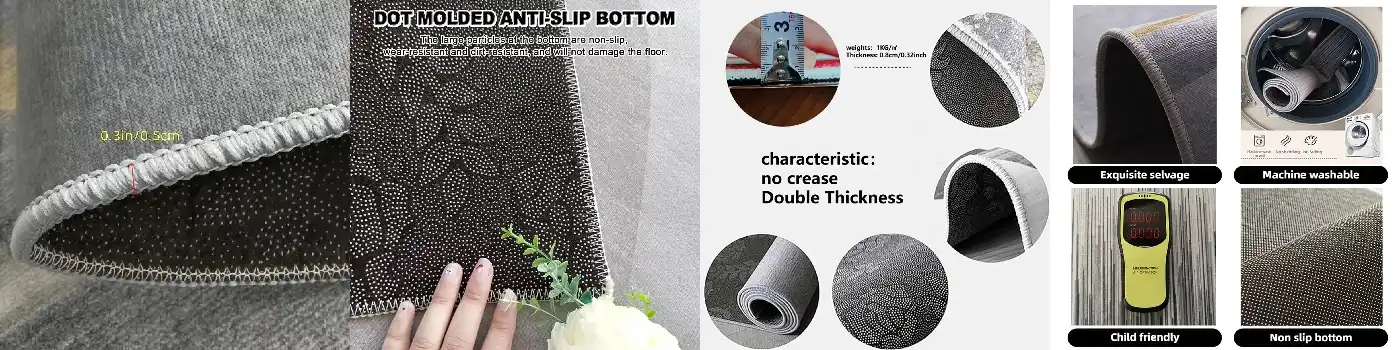
Certain types of gaming floor mats have different layers of material that help to block out noise. Higher-frequency sounds made by caster wheels being pressed into crystal velvet surfaces are absorbed, and thick backing materials like dot plastic stop vibrations from being transferred to the floor base. Commercial-grade mats must be 5 mm thick so that they have enough mass to absorb contact energy without making it hard for chairs to move. Industry testing standards say that mats that weigh 1100g per square meter or more are better at blocking noise than lighter options because they are denser and can absorb more sound energy.
Industry Standards for Acoustic Evaluation
When judging sound performance, procurement managers should know about two important measures. The Noise Reduction Coefficient shows how well a material can absorb sound at different frequencies. Higher values mean better performance. The Impact Insulation Class checks how well flooring stops impact noise from getting to lower levels, which is important for places with more than one floor. Professional-grade gaming mats with good backing construction usually get NRC ratings between 0.25 and 0.40, which makes a big difference in noisy game settings.
Key Factors Affecting the Sound Insulation Ability of E-sports Floor Mats
Thickness and Material Density Correlation
A clear pattern can be seen in the relationship between E-sports floor mat thickness and sound absorption: denser materials that are thicker absorb more sound energy. A 5mm crystal velvet mat with a density of 1100g/cm2 is much better at dampening than thinner ones because the extra mass turns the kinetic energy from chair movements into heat through friction inside the mat. This physical concept explains why e-sports arenas with a lot of foot traffic should choose mats with higher standards for better noise control.
Coverage Area and Installation Consistency
For sound insulation to work, the floor must be completely covered, with no gaps or unevenness. When you only install some mats, the hard floor surfaces that are left exposed create acoustic weak spots where noise can still travel. Large format custom sizes cut down on the number of seams, which means there are fewer places where sound could leak through. Places with more than 50 gaming stations need to plan their installations carefully to make sure that there are continuous sound barriers across the whole operational floor space.
Surface Type and Installation Method Impact
The base under your mat has a big effect on how well it absorbs sound. Putting mats on top of concrete or tile makes them even better at blocking out noise, since hard surfaces bounce more noise energy upward, which the mat then soaks up. It may not seem necessary to put carpet over mats, but doing so can actually make the system less soundproof because soft underlayers let mats bend too much, which makes them less good at absorbing vibrations. The PVC dot plastic backing sticks well to smooth, hard surfaces because it stays in place and doesn't move.
Comparative Analysis: E-sports Floor Mats vs Regular Floor Mats in Sound Insulation
Purpose-Built Design Differences
Esports-specific floor mats like the E-sports floor mat are made with sound engineering in mind, while regular floor mats focus on looks or basic floor safety. Most welcome mats and office chair mats are only 2 to 3 mm thick and made of light materials that weigh less than 500 grams per square meter. This is not enough to really cut down on noise. Gaming-optimized mats have high-density backings and crystal velvet surfaces that are reinforced to make a sound barrier. Comparative noise testing in controlled environments makes this structural difference clear.
Material Composition Performance Gap
Compared to regular polypropylene or nylon materials found in most products, the crystal velvet polyester used in specialized gaming mats is better at blocking out noise. The dense fibers and pile structure of velvet make it so that sound waves get trapped inside it instead of being reflected back into the room. In standard acoustic testing protocols, the whole assembly does much better than generic mats when paired with dot plastic backing, which adds mass and damping properties.
Real-World Case Evidence from Venue Operators
A medium-sized e-sports arena in California said the noise level in the building went down by 30% after switching from normal rubber mats to 1100g/ crystal velvet game mats for all 80 stations. Streaming content makers always say that the sound quality is better during recording sessions, and they don't have to do as much post-production editing to get rid of sounds like chairs moving. These real-world results back up the results of the lab tests and show that the products will actually help businesses when they are choosing between competing ones.
How to Choose the Best E-sports Floor Mat for Optimal Sound Insulation?
Matching Product Specifications to Venue Requirements
Acoustic solutions need to be customized for each e-sports environment. Tournament sites that host competitive events need to block out as much noise as possible with an E-sports floor mat so that it doesn't get in the way of important games moments. Getting rid of low-frequency rumble that gets into sensitive microphone capsules is a top priority for streaming studios. By understanding the noise problems you're facing, you can choose the right gram weight specs. For high-performance uses where noise control is a top priority, 1100g/ is the best choice.
Critical Selection Criteria for Procurement Managers
When judging sellers, pay close attention to these specifics:
- Material Quality and Construction: Make sure the mat is made of real crystal silk polyester and not a cheaper fake version. Check the dot plastic backing's density—dots that are close together give better grip and sound mass than patterns that are spread out.
- Thickness Consistency: Make sure that the 5 mm thickness stays the same all the way across the mat's surface. Inconsistent acoustic performance is caused by variations that show bad quality control.
- Documentation for Certification: For commercial installations, you need CE, OEKO-TEX, and EN 13501 certifications that show the product meets safety and environmental standards. These licenses are also linked to good production methods that change the way things sound.
- Customization Capacity: Check to see if the provider can do name printing and custom sizes without affecting the sound quality. For example, heat transfer printing shouldn't change the surface properties or make the material less dense.
Cost-Efficiency Through Strategic Bulk Purchasing
Operators of large e-sports venues should negotiate detailed purchase agreements that strike a balance between sound quality and cost. If a manufacturer has flexible MOQ structures, like a 50-piece minimum for custom orders, it's possible to test the deployment in stages before committing to a full venue. Warranty periods of 5 to 10 years protect your investment against sound degradation that happens too soon, lowering the total cost of ownership over the lifecycle of the product.
Maintaining and Enhancing the Sound Insulation of Your E-sports Floor Mat
Material-Specific Cleaning Protocols
To keep the sound quality of a Carpet under gaming desks, you need to clean the crystal silk in a way that doesn't damage the structure or backing. Regular cleaning gets rid of small particles that can squeeze fibers and make them less able to absorb sound. For a better clean, use cool water and light soap solutions. Do not use harsh chemicals that damage the dot plastic backing or remove protection coatings from the velvet surface. Do not wash in a washing machine or use high heat, as these temperatures can damage the soundproofing of both the surface and the backing.
Strategic Installation for Maximum Acoustic Benefit
Preparing the ground well is the first step in a proper fitting. Make sure the floor is completely clean so that the dot plastic backing sticks to it without any air gaps that would make it less effective at dampening vibrations. Place mats so that they cover the area under each gaming station's chair's movement radius, which is usually 120 cm in diameter. To get rid of acoustic leakage points where sound could travel through exposed flooring in rows with more than one station, slightly overlap the mat edges or butt them together tightly.
Long-Term Performance Preservation Strategies
Even good game mats lose some of their sound quality over time when they are used a lot. Mats that get a lot of use should be rotated every so often so that wear patterns are spread out evenly across your inventory. Check the backing every three months for signs of dot plastic separation or surface pile matting. Both of these conditions mean that the signal isn't blocking noise as well as it should be and needs to be replaced. Keeping careful records of when things were installed and when they are rotated helps find the best time to change things before the sound quality drops below acceptable levels.
Conclusion
How well E-sports floor mat products block noise depends on a lot of different things working together. The density of the material, its thickness, the way the surface is made, and how well it is installed are all important parts of good noise control. Even though these special mats aren't as good as dedicated acoustic treatments, they do help reduce noise in a way that makes the place run better and the experience of its users better. When sound performance is important for their building, procurement managers should put an emphasis on specs like 1100g/ weight, 5mm thickness, and crystal silk surfaces. Strategically choosing a supplier and performing regular maintenance on a product will ensure that it continues to reduce noise for as long as it is used.
FAQ
Q1: Does mat thickness directly determine sound insulation quality?
A: Thickness makes a big difference, but it doesn't work by itself. A 5mm mat with a density of 1100g/cm³ works better than a 7mm mat that weighs only 600g/cm³. This is because the density and structure of the material are more important than its width alone. The best acoustic dampening is achieved by combining the right thickness with high-density construction. Rather than just looking at thickness measurements, procurement managers should look at both specifications together.
Q2: Can I layer multiple mats to improve noise reduction?
A: Layering usually leads to diminishing returns and problems in real life. Stacking mats makes gaming chairs less stable, which leads to unwanted bending that makes more noise when they move. In the same way, the non-slip backing only works best when it is directly on hard floors. Investing in a single high-quality mat with the right density gives better sound results than putting mats on top of each other without planning to.
Q3: How do I verify actual acoustic performance before bulk orders?
A: Ask for sample mats and do some easy testing to see how they compare in the space you already have. Put the sample under one game station and leave the station next to it on the floor. Then, measure the difference in how loud it seems when the same chair moves. This step of validation should be part of professional procurement processes. Reliable suppliers, such as those that offer heat transfer customization and laser cutting precision, will gladly support pre-purchase testing to show that the product will improve sound quality.
Get Professional Acoustic Solutions from Yiyajia Carpet
Yiyajia Carpet is an expert at making high-performance gaming floor mats that are made for tough business settings. Our crystal velvet products have an ideal 5mm thickness and can be customized to have a density of 750 to 1100g/cm3. This makes them better for soundproofing in e-sports venues. We keep all of our certifications up to date, such as those for CE, OEKO-TEX, ISO 9001, REACH, and EN 13501. This makes sure that your purchase meets all international safety standards. Our advanced heat transfer technology lets you change the name in any way you want without affecting the soundproofing, and our precise laser cutting can fit any venue plan. We help esports floor mat providers and venue owners all over the world with our flexible 50-piece MOQ for special orders, seven-day production wait times, and full 5–10 year warranties. You can talk to our technical team about your specific needs for acoustic flooring by emailing sale@yyj-carpet.com.
References
1. Building and Environment. (2020). "Material Density Effects on Acoustic Absorption in Textile Floor Coverings."
2. Journal of Sound and Vibration. (2022). "Vibration Dampening Properties of Multi-Layer Polymer Floor Systems."
3. Applied Acoustics. (2021). "Noise Reduction Coefficient Testing Standards for Commercial Flooring Products."
4. International Journal of Industrial Ergonomics. (2023). "Acoustic Environment Optimization in Professional Gaming Facilities."