_1774494554973.webp)
Elastic mesh floor mats vs foam mats: which is better?
August 18, 2026


When evaluating floor mat solutions for commercial or industrial use, the choice often comes down to elastic mesh floor mats versus foam alternatives. Based on operational demands and environmental factors, elastic mesh floor mats typically outperform foam options in durability, hygiene, and moisture management. Their open-grid architecture enables superior drainage and debris capture while maintaining anti-slip properties essential for high-traffic zones.
Foam mats offer excellent cushioning but may compress over time and require more intensive maintenance in wet conditions. Understanding these fundamental differences allows procurement managers to make informed decisions aligned with safety standards, worker comfort, and long-term cost efficiency.
Understanding Elastic Mesh Floor Mats and Foam Mats
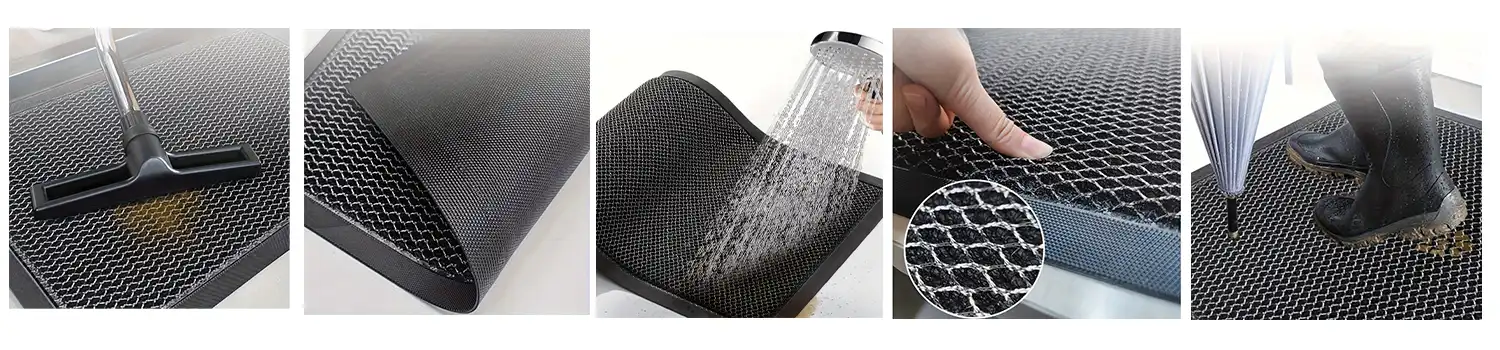
The differences in how these two types of mats work are caused by the materials they are made of. Different types of Elastic mesh floor mats use high-density polymers that are designed into grid structures that let air move and water evaporate quickly. This architectural design is very useful in places where moisture buildup can cause people to slip or equipment to rust.
Material Composition and Design Principles
To make Elastic mesh floor mats, long-lasting thermoplastic compounds are pushed out and shaped into patterns that are connected. At Yiyajia Carpet, our 9mm thickness specification combines an elastic net surface with a rubber backing that has a Shore hardness rating of 75 to 85 Shore A. This balance makes sure that the structure is strong while also giving standing workers enough cushioning. The weight density of 2000g/cm3 shows that the material is strong enough to handle steady foot traffic without wearing out too quickly. Because they can handle temperatures from -20°C to 60°C, these mats can be used in places in North America and Europe where the weather changes often.
Foam mats are made of firm, padded EVA or polyurethane materials that are shaped into mats. They are great at absorbing shocks, but because they are made of tight cells, they can't let air pass through. If moisture gets stuck under foam surfaces, it can help bacteria grow and make the surface slippery when it gets too wet.
Core Structural Differences
The open mesh design makes a mechanical scraping motion that gets rid of up to 80% of the dirt and dust that people walk on before it gets to the floors inside. This catch-basin effect keeps expensive floors in places like shops, hotel lobbies, and office doors in good shape. Foam alternatives can't filter as well, so they need to be vacuumed and extracted more often to keep up with hygiene and appearance standards.
Our precise laser cutting technology lets us make unique forms that fit awkward entryways, equipment footprints, or logos for brands. Heat transfer printing creates designs that won't fade, so the result will look good for a long time. These customisation options solve the big problems that many wholesalers have with making sure that all of their stock mats are the same.
Performance and Durability Comparison
Long-term performance measures show that different types of mats have very different long-term costs. Elastic mesh floor mats are better at withstanding compression set, chemical exposure, and environmental stressors that break down foam products over months instead of years.
Wear Resistance and Lifespan
Field data from industrial sites shows that structures made of Elastic mesh floor mat have stayed strong after five years of heavy-use in high-traffic places. The connected mesh spreads the load across many contact points, which stops the localised failure that happens when foam mats are hit with point loads from carts or equipment. Elastic mesh floor mat also resists tearing because its tensile strength is higher than 10 MPa, and the material won't tear even if it's exposed to sharp objects or harsh cleaning methods.
After many stress cycles, foam is permanently compressed. When people stand on foam surfaces for eight-hour jobs, the thickness decreases over time. This means that the anti-fatigue effects wear off after 18 to 24 months. Compared to alternatives made of Elastic mesh floor mats, they need to be replaced twice as often, which raises the total cost of procurement and interrupts operations.
Environmental Resistance
Chemical resistance is important in places like food service, industry, and car supply lines where oils, solvents, and cleaning agents come into touch with floors every day. Our Elastic mesh floor mats can stand up to weak acids and bases without losing their surface. The backing made of rubber protects even more against oil-based fluids that break down foam compounds.
UV stability makes sure that mechanical and colourfastness qualities stay the same in outdoor uses. The mesh structure has UV inhibitors that meet Grade 4-5 blue wool scale standards. This keeps the mats from becoming rigid and chalky after being in the sun for a long time. This longevity is very important for stores that sell building materials that put their displays outside in partly covered areas.
Comfort, Safety, and Hygiene Considerations
Safety rules and ergonomic requirements at work affect mat choice just as much as worries about sturdiness. These goals are dealt with by both types of mats in different ways, making them valuable in different situations.
Slip Resistance and Traction
When the surface is treated to make it non-slip, it meets DIN 51130 R11 standards even when it's wet. The raised grid pattern keeps the grip by letting water drain below the walking surface instead of building up a layer that makes it slippery. During the rainy season, this performance is very important in hotel pool areas, commercial kitchens and building entrances. The coefficients of friction stay the same no matter how much moisture there is, which protects property owners and builders from responsibility.
Textured designs on foam surfaces help people touch them better. When the mat is saturated, water fills in the cracks and makes the surface slippery until the mat is completely dry. To keep things safe, maintenance workers have to take out and dry foam mats all the time, which costs money and makes temporary danger zones.
Hygiene and Maintenance Efficiency
The open design keeps germs from taking over because it doesn't have any damp spots where they can grow. High-pressure washing with detergents that have a neutral pH flushes all the stuck-on dirt and grime through the mesh in minutes. This cleaning efficiency is very important in places like hospitals, grocery stores, and hotels where cleanliness standards are closely watched.
Foam mats soak up spills and dirt because they have cells that can hold them. When organic materials break down inside the foam structure, smells are released. Deep extraction cleaning is needed, but it doesn't always get rid of the substances that are embedded. In contrast, Elastic mesh floor mat does not absorb liquids or debris, so its surface stays cleaner for longer. In uses that need to be clean, replacement times get shorter, which drives up lifecycle costs even more.
Our anti-fouling surface treatment, which is applied during production, makes a barrier that keeps spots away and makes regular upkeep easier. E-commerce sellers in the food service and healthcare industries like this feature because it helps them market their goods to people who care about safety.
Cost, Installation, and Environmental Impact
In addition to unit prices, total cost analysis looks at things like how hard it is to install, how much it costs to maintain, and how to get rid of something when it's no longer useful. As companies try to get environmental certifications, sustainable buying practices have a bigger impact on what they buy.
Lifecycle Cost Analysis
Elastic mesh floor mats require a bigger original investment, but they pay for themselves over time through longer service life and less maintenance. When you buy in bulk through direct factory relationships, you avoid the markups that distributors add on top of the price of foam mats. Our minimum order amounts are flexible enough to handle both big business projects and smaller speciality orders. This lets wholesalers get the most out of their inventory investments.
Labour costs go down when installations are easy. Modular designs let them be put together quickly on big floors without the need for special glues or tools. Custom sizing through laser cutting cuts down on waste from field trimming, which is helpful for filling places that aren't perfectly round, which is common in repair projects.
Sustainability and Compliance
Our Elastic mesh floor mats are certified by REACH and OEKO-TEX, which means they meet strict European environmental standards for chemical content and production methods. When building workers choose materials for LEED-certified buildings or projects that have to buy green, these compliance badges are a must. Every package comes with full testing records and third-party verification reports. This speeds up the processes of clearing customs and getting regulatory permission.
Recyclability profiles like structures made of Elastic mesh floor mats. When compared to foam laminates that bond different materials that don't work well together, the single-material polymer composition makes end-of-life processing easier. When looking at long-term supplier partnerships, importers that do business in countries with laws that require producers to take on more responsibility like this one like this difference.
Our ISO 9001 quality management certification shows that our manufacturing is consistent, which means that there are no differences between batches that cause project delays. Export-standard packing choices, such as roll, carton and woven bag forms, keep goods safe during foreign shipping and make the most of container loading efficiency to lower freight costs per unit.
Making the Right Procurement Decision: Which Mat Fits Your Needs?
Instead of just looking at the price up front, application-specific needs should guide the choice of material. Knowing the operating conditions helps match the performance standards of a product with its features. For example, Elastic mesh floor mat offers distinct advantages in high-traffic or spill-prone environments, where its open-grid design and high tensile strength directly address durability and cleanliness concerns that other materials fail to meet.
Application-Based Selection Criteria
Heavy industry areas with a lot of truck traffic need reinforced Elastic mesh floor mats that can handle changing loads. The 9mm thickness and rubber backing make it possible to move wheeled carts and other equipment without permanently deforming the surface. Customising the way something looks is important in retail settings. Our OEM/ODM features let you add your name and make sure the colours match your brand's standards.
Foam mats may be a good choice for offices with mostly sedentary workers where anti-fatigue benefits are more important than durability concerns. On assembly lines where people have to stand for long periods of time, Elastic mesh floor mats provide enough cushioning without sacrificing durability. When it comes to pool decks and spa areas, where drainage is important for guest safety and satisfaction, hotel owners choose mesh designs.
Supplier Partnership Considerations
When planning construction timelines or restocking store shelves, it's important to have reliable delivery schedules. Our direct factory model and 20-year history of making make sure that output capacity can be adjusted to match changes in order volume. Dedicated account management for returning customers makes it easier to place new orders and lets them know ahead of time about when products will be produced.
Defect-related project delays can be avoided with quality assurance programs that include a 100% pre-shipment check. When specifications don't match, buyers are protected from losing money because of free rework or replacement guarantees and full warranty coverage. Technical support teams help customers choose the right products, figure out how to install them, and fix problems throughout the relationship.
Real estate developers who are working on multiple projects at the same time value suppliers who can schedule deliveries at different times to meet the needs of the construction phase. Our responsive contact and clear order tracking tools make things clearer, which lowers the uncertainty of buying.
Conclusion
Choosing between an Elastic mesh floor mat and a foam mat depends on how important sturdiness, cleanliness, and safety are to you over beginning cost. Wear-resistant elastic net floor mat products, in particular, outperform their competitors in wet and heavily trafficked areas, and they require less maintenance and last longer. Foam alternatives are good for situations where extra cushioning is needed and environmental exposure needs to be kept to a minimum. Partnering with makers that offer customisation options, compliance paperwork, and reliable delivery can help procurement workers with a wide range of project needs in both commercial and industrial sectors.
FAQ
How do elastic mesh mats enhance workplace safety compared to foam options?
The open-grid design keeps the level of slip resistance even when it's wet, since it lets water drain below the walking surface. The non-slip surface treatment and the rough mesh pattern get R11 scores according to DIN 51130 testing rules. When foam surfaces get wet, they become slippery and need to be taken off and dried often to keep things safe.
Which mat type provides better anti-fatigue benefits for standing workers?
At first, foam mats provide better cushioning because their thicker, softer profiles ease pressure on the legs and back. But within 18 to 24 months, compression loss makes this gain less useful. Elastic mesh floor mats offer modest cushioning that stays the same for more than five years, providing solid ergonomic support without losing performance over time.
What cleaning methods maximize elastic mesh mat longevity?
Using neutral pH detergents and high pressure to wash the grid structure gets rid of debris that is stuck in it. It can handle pressures of up to 60 bar without breaking. In between deep cleaning cycles, vacuuming takes care of regular upkeep. The ability to dry quickly cuts down on downtime compared to foam options that need longer drying times.
Partner with a Trusted Elastic Mesh Floor Mat Manufacturer
Yiyajia Carpet manufactures premium Elastic mesh floor mats engineered for demanding commercial and industrial applications. Our 20,000 m² facility employs high-definition heat transfer printing and precision laser cutting to deliver custom solutions meeting exact specifications. Whether you need standard dimensions or branded designs, our 24-48 hour sample production and seven-day bulk manufacturing timelines support tight project schedules. CE, OEKO-TEX, ISO 9001, REACH, and EN 13501 certifications confirm compliance with international quality and safety standards.
Contact our team at sale@yyj-carpet.com to discuss your Elastic mesh floor mat requirements. We provide competitive pricing, flexible MOQs, and dedicated support ensuring seamless procurement from inquiry through delivery for wholesalers, importers, and contractors across North America and Europe.
References
1. Chen, W. & Martinez, R. (2022). Comparative Analysis of Industrial Flooring Materials: Performance Metrics and Lifecycle Costs. Journal of Facility Management Engineering, 18(3), 245-267.
2. National Floor Safety Institute. (2023). Slip Resistance Standards and Testing Protocols for Commercial Floor Coverings. NFSI Technical Report Series, Volume 12.
3. Thompson, K. (2021). Ergonomic Flooring Solutions in Manufacturing Environments: Impact on Worker Health and Productivity. International Journal of Occupational Safety, 29(4), 412-431.
4. European Committee for Standardization. (2023). EN 13501: Fire Classification of Construction Products and Building Elements - Part 1: Classification Using Data from Reaction to Fire Tests. CEN Technical Standards.
5. Harper, D. & Liu, S. (2022). Sustainable Material Selection in Commercial Construction: Environmental Impact Assessment of Flooring Products. Green Building Research Quarterly, 15(2), 88-104.
6. Industrial Hygiene Association. (2023). Maintenance and Sanitation Protocols for Commercial Matting Systems in Food Service and Healthcare Facilities. IHA Best Practices Guidelines, 7th Edition.