_1774494554973.webp)
Durability comparison between real sisal and imitation sisal carpet
June 1, 2026


The difference in lifespan between real and fake sisal is obvious. The Agave sisalana plant produces natural sisal carpets, which are beautiful but difficult to clean, color, and wear in high-traffic locations. Another alternative is imitation sisal carpet, which looks natural but is created from sophisticated synthetic materials without these issues. An artificial counterpart is superior at avoiding water damage, retaining its form, and withstanding harsh pressures. This makes it the finest choice for corporate needs that require superb appearances and durability.
Understanding the Durability of Real Sisal Carpets
Real sisal provides rooms an organic feel. Many artists admire the natural and eco-friendly textures made from agave plant strands. The material has high tensile strength under regulated conditions, so it doesn't wear out easily.
Natural Fiber Strength and Limitations
Real sisal is robust because of its fibers. Power comes from cellulose chains in each thread. Before placing large purchases, buying managers should recognize these natural fibers' shortcomings. Instead of synthetic choices, genuine sisal absorbs water, causing size fluctuations, mildew growth, and persistent stains. The material also roughens over time, making it uncomfortable for barefoot walking.
Maintenance Challenges and Lifecycle Considerations
Following these standards keeps real sisal looking good. Regular cleaning removes surface filth and dust, but liquid spills present immediate concerns. Water-based cleaners grow and color fibers. Professional carpet cleaners seldom use standard equipment on natural sisal because they might harm it. In moderate-traffic businesses, replacement rounds last three to five years, far less than synthetic options. Even if the original price is lower, these things boost ownership costs.
Durability Profile of Imitation Sisal Carpets
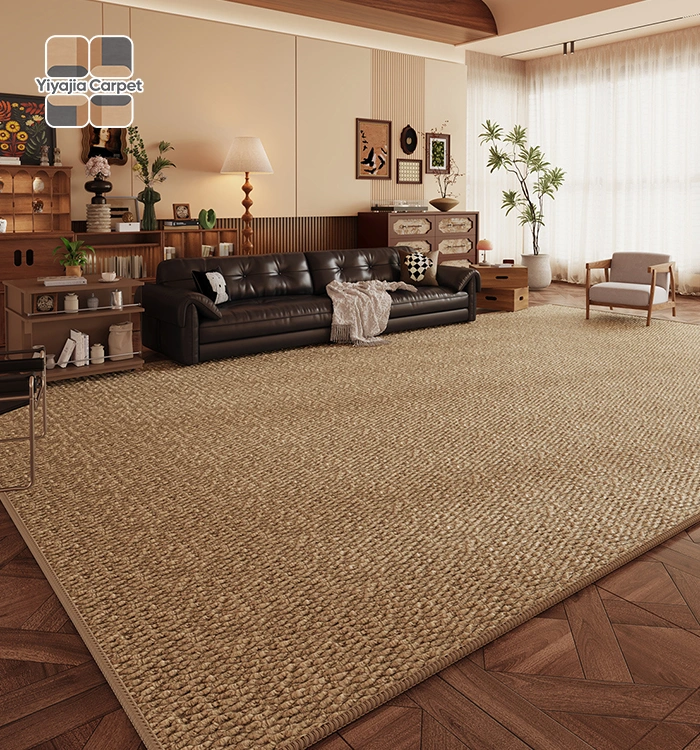
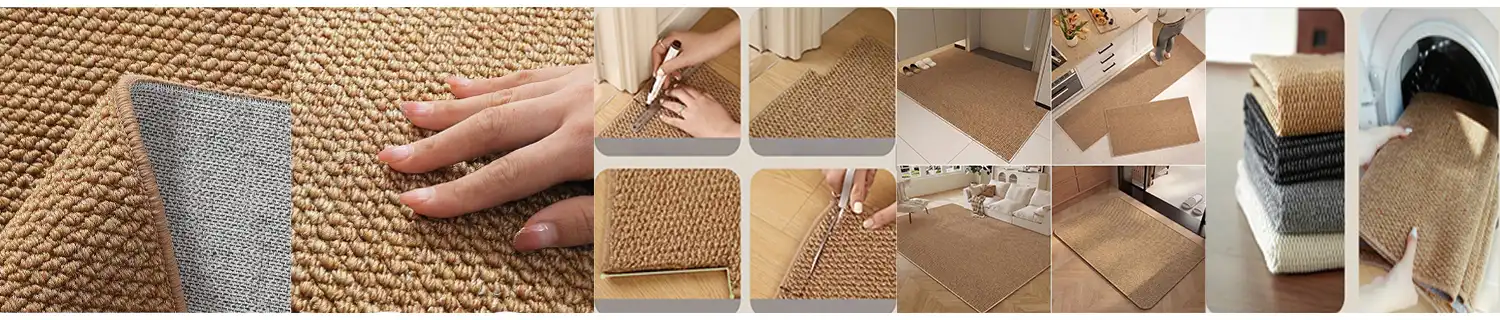
Synthetic sisal looks and feels like real strands but has none of the issues. Modern production processes have improved sisal's basketweave and herringbone patterns, providing goods that suit design objectives without losing performance.
Synthetic Material Advantages
Fake sisal carpets employ solution-dyed polypropylene or polyamide strands. These materials don't absorb much water, therefore they don't watermark like sisal. Synthetic fibers keep the color consistent, so wear on the exterior doesn't display changing tints underneath. The appearance lasts longer because UV defenders integrated into the fabrics during manufacture prevent fading even in direct sunshine. Commercial-grade synthetic sisal fulfills EN 1307 Class 32 or 33 wear rates, making it suitable for high-traffic areas.
Enhanced Cleaning and Upkeep Protocols
Fake choices simplify upkeep. Standard wet drainage methods work effectively and don't harm carpets. This material can remove difficult stains with mild bleach solutions, unlike natural fibers. Synthetic threads don't break or shed like genuine sisal, so vacuuming works throughout its lifespan. Yiyajia Carpet's synthetic sisal has non-slip backings and stain-resistant surface treatments, unlike natural alternatives.
Head-to-Head Durability Comparison: Real Sisal vs Imitation Sisal
Putting these materials side by side demonstrates considerable disparities in performance, which affects project success and budget planning.
Abrasion and Wear Resistance Testing
Standard Martindale wear testing in the building sector favor synthetic materials. Fibers break in real sisal after 15,000 to 20,000 cycles. Given the same foot activity, a decent imitation sisal carpet will last twice as long before showing symptoms of wear. Luggage carts and equipment dollies have a larger performance difference since natural fibers break down quicker and synthetics last longer.
Environmental Response and Stability
Moisture affects efficiency most. Natural sisal hygroscopically swells in humid conditions, buckling and separating wall-to-wall seams. Synthetic versions don't fit difficulties because they retain the same size from 20% to 80% humidity. UV radiation degrades natural sisal in 12 months near windows, whereas UV-stabilized synthetics last five years or more. Copy goods are needed in situations where you may travel inside and outdoors, sunrooms, and hospitality settings with variable temperature controls.
Total Cost Analysis Over Product Lifecycle
Due to the price disparity between real and synthetic sisal, people often make unwise purchases. Natural options may initially cost less per square meter, but maintenance rapidly changes this. Real sisal costs 40% to 60% more than synthetic since it must be changed every four years and properly cleaned by a specialist every three months. Synthetic sisal lasts eight to ten years and requires little maintenance, making it a better investment for enterprises with many buildings or a lot of square feet.
Types of Imitation Sisal Carpets and Their Durability Variations
Understanding synthetic fibre kinds helps locate goods that fulfill application requirements.
Polypropylene Construction Benefits
Most industrial sisal is derived from polypropylene fiber. The material is affordable and water- and stain-resistant. Because it doesn't absorb water, spills stay on top longer, making cleaning easier. Yiyajia Carpet's high-density knotted polypropylene imitation sisal carpet features a 0–1 mm pile height. It is sturdy enough for businesses, workplaces, and guest halls. The floor has a solid feel with a weight of 1-2 kg/m² and a breadth of 10-15 mm, allowing for TPR or silicone strip backing for slip resistance.
Nylon Performance Characteristics
Nylon-based faux sisal is best for wear and tear resistance. Strong and flexible, the fiber rebounds from compression better than other choices. This characteristic helps in settings with immobile furniture or equipment and indentation concerns. In conference centers, airport hubs, and hotel halls with hundreds of visitors every day, the material is more expensive than polypropylene but worth it.
Construction Methods and Traffic Suitability
In addition to fiber choice, construction method impacts lifetime. Loop pile patterns disperse wear across fiber tops, extending business floor life. Quality faux sisal is flat-woven to seem authentic and have various uses. Backing systems significantly impact performance. Point plastic backing holds its form for glue-down installations, while TPR backing is suitable for loose-lay installations that need to be removed and reinstalled.
Procurement Considerations for Durable Sisal Carpets
Strategic buyers understand that picking the ideal carpet requires more than just a product. Several other factors determine whether durability leads to success.
Supplier Certification and Quality Assurance
Partnering with certified producers for an Imitation sisal doormat reduces buying risk. CE certification means the product is lawful to sell in the EU, and OEKO-TEX accreditation means it doesn't contain dangerous chemicals, addressing health and safety concerns. ISO 9001 accreditation indicates that quality control systems ensure production run criteria are fulfilled. EN 1350 flame retardant ratings fulfill building code requirements for corporate locations, and REACH compliance ensures chemical safety in the EU. Yiyajia Carpet maintains these certifications and follows stringent 100% pre-shipment inspection procedures. This proves compliance with all international market restrictions.
Volume Pricing and Bulk Order Incentives
Bulk buys of imitation sisal carpet are cheaper. Manufacturers use tiered pricing to lower unit costs when more are purchased. varying vendors have varying minimum order amounts, however flexible terms can be employed for project-specific ordering and stocking. Buyers of several sites or phased installations benefit from framework arrangements that lock in rates and allow staggered delivery. When ordering custom sizes or colors, lead times are crucial. Standard orders are shipped within days, but custom orders may take two to four weeks.
Installation Quality and Professional Support
Even the strongest carpet will wear out rapidly if not laid properly. Professional fitting ensures optimal substrate preparation, glue selection, and seam placement for maximum longevity. Buyers should get repair guarantees in addition to product warranties to verify labor qualifications. They fully secure the premises. Great suppliers stand out with after-sales support. Owners get piece of mind with timely customer care replies, replacement warranties for manufacturing defects, and professional help for unique installation conditions.
Conclusion
Real sisal and synthetic alternatives are evaluated for durability. For business, synthetic alternatives are superior. While real sisal seems more natural, it's more susceptible to dampness, stains, and quick wear than synthetic sisal. Real sisal carpet looks great, but imitation sisal carpet is more resilient, doesn't fade in tough situations, and is simpler to maintain. Even if the initial investment is the same or more, the longer lifespan and cheaper maintenance costs lower the overall cost of ownership. Synthetic sisal is the natural choice for procurement managers who desire reliability, consistency, and longevity.
FAQ
Q1: Does synthetic sisal provide the same texture as natural fiber?
A: Modern manufacture can replicate natural sisal's basketweave and herringbone patterns. Some fakes have smooth surfaces to avoid seeming like cheap plastic. These treatments make artificial materials seem like real fibers and make walking on them more pleasant.
Q2: Can imitation sisal carpet handle outdoor installations?
A: The fiber blocks water and UV radiation well, making it suitable for covered outdoor use. However, backing determines its outdoor performance. Outdoor- or marine-grade backing prevents water from becoming trapped under the carpet, preventing mold formation in exposed installations.
Q3: How do cleaning requirements differ between natural and synthetic options?
A: Natural sisal cannot be wet cleaned because the strands might swell and leave stains. Maintenance is confined to dry vacuuming and occasional professional dry-cleaning. Wet extraction cleaning, diluted bleach treatments for stubborn places, and industrial carpet cleaning equipment damage may be handled by synthetic substitutes, making upkeep easier.
Q4: What warranty coverage should buyers expect?
A: Reputable manufacturers guarantee product defects including delamination, excessive shedding, and premature wear in specified driving situations. Two- to five-year warranties are typical for commercial items. To ensure quality, Yiyajia Carpet will rectify or replace any printing, cutting, or sizing concerns during manufacturing. They will also cover shipping.
Partner With Yiyajia Carpet for Reliable Imitation Sisal Carpet Supply
Yiyajia Carpet solves company purchasers' flooring issues. Our advanced heat transfer and laser cutting technologies allow us to accurately adjust designs, sizes, and shapes for many project demands. Our large-scale production expertise allow us to deliver consistent quality for solid colors, printed patterns, and completely bespoke OEM solutions. As a leading imitation sisal carpet manufacturer, we maintain CE, OEKO-TEX, ISO 9001, REACH, and EN 1350 requirements to ensure product legality worldwide. Our rigorous quality control verifies every product before shipping. This eliminates supplier quality issues that delay projects. We provide flexible minimum order amounts, affordable bulk rates, and competent export packaging to maximize container capacity for wholesalers, shops, builders, and online sellers to develop long-term supply partnerships. Contact sale@yyj-carpet.com to discuss your demands and request samples of high-quality synthetic sisal compared to cheaper solutions.
References
1. Textile Institute. "Synthetic Floor Covering Performance Standards and Testing Methodologies." Journal of Commercial Textile Engineering, 2021.
2. European Committee for Standardization. "EN 1307 Textile Floor Coverings Classification." Brussels: CEN Publications, 2020.
3. Cleaning Industry Research Institute. "Maintenance Protocols for Natural and Synthetic Carpet Fibers." Commercial Cleaning Best Practices, 2022.
4. International Facility Management Association. "Lifecycle Cost Analysis for Commercial Flooring Materials." Facilities Management Quarterly, 2021.
5. American Society for Testing and Materials. "ASTM D3936 Standard Test Method for Delamination Strength of Textile Floor Coverings." West Conshohocken: ASTM International, 2019.
6. Global Floor Covering Alliance. "Comparative Durability Assessment of Natural and Synthetic Sisal Products." Industry Technical Report, 2022.