_1774494554973.webp)
Discover the Beauty and Durability of Faux Sisal Rugs
May 23, 2026


When building directors and procurement managers look for flooring that looks natural and works well enough for a business, they often run into problems with natural fibers. As a practical answer, imitation sisal carpet comes to the fore. It has the elegant smooth look of real sisal without being sensitive to moisture, easily stained, or of varying quality. These floor covers are made from solution-dyed polyester and advanced synthetic fibers. They give buyers the warmth and good looks they want, along with waterproof durability and low maintenance needs that natural materials can't match.
What Is an Imitation Sisal Carpet? Understanding Faux Sisal Rugs
Composition and Manufacturing Innovation
Imitation sisal carpet are well-made textiles that are made to look like the basketweave and herringbone designs found in Agave sisalana fibers. Modern production uses high-density tufting structures made from polypropylene or polyamide yarns. This makes a surface with pile heights between 0 and 1 mm that looks and feels like natural materials. Organic sisal absorbs water at rates higher than 10%, but synthetic options keep moisture absorption near 0.01%.
This keeps watermarks and mold growth from happening, which happen with vegetable-based fibers. Heat transfer printing technology is used in the production process at places like Yiyajia. This lets customers choose from basic colors, detailed printed designs, or branded patterns, and the products still keep their color fastness rating at Blue Wool Scale Grade 7-8 under ISO 105-B02 standards.
Fiber Structure and Quality Control Advantages
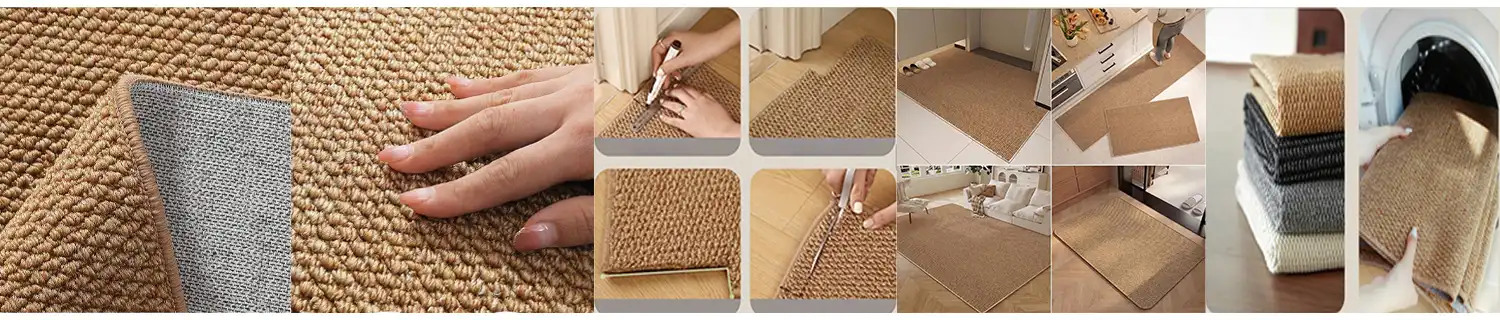
Good imitation sisal carpet is woven on a flat loom that is supported by TPR, point plastic, or silicone strip systems. These systems give the fabric stability in dimensions that real sisal doesn't have. This backing setup makes sure that the product won't slip, which is important for business settings, while still letting air flow. The weights and thicknesses range from 1-2 kg/m² and 10-15 mm, respectively.
These amounts are meant to match the need for comfort underfoot with the need for durability. As part of quality control in manufacturing, all products are inspected before they are shipped. This solves the problem of inconsistent batch quality, which is a pain point for buyers. This methodical approach is very different from wild sisal, which has naturally variable fiber strength and color uniformity.
Key Benefits and Durability of Faux Sisal Carpets for Commercial Use
Performance Superiority in High-Traffic Environments
Flooring that can handle thousands of feet of foot traffic every day is needed in hotel hallways, store displays, and office halls. Imitation sisal carpet is rated Commercial Heavy (Class 32–33 under EN 1307 standards), which means they can withstand being crushed by a castor chair, which would damage natural fibers forever. The surface treatment that makes it stain-resistant was applied during production. This means that normal wet extraction methods can be used to clean up coffee spills, tracked-in mud, or food accidents. This is because wet extraction methods destroy hygroscopic natural sisal by leaving permanent water stains.
Polypropylene construction is waterproof and dries quickly, which is useful for real estate producers who are choosing materials for mixed-use buildings. Covered patios and pool deck edges are examples of indoor-outdoor transition zones that keep their look even when the temperature changes, while natural options would rot or grow mildew within months. The fire resistance meets international safety standards, such as EN 13501-1 ratings. This reduces the risk of liability for people who buy business space and construction workers who have to follow strict building codes.
Cost-Efficiency Through Extended Lifecycle
Calculating the total cost of ownership is more important than the original unit price when deciding to buy in bulk. Synthetic sisal choices are more valuable because they don't need to be replaced as often. In business settings, they can last over 10 years, while natural sisal only lasts 3 to 5 years under the same traffic loads. Maintenance costs go down because cleaning methods are made easier, since natural fibers don't need as much special care. The people who clean hotels can steam clean or use regular professional cleaners on the fabrics without damaging them. This saves time and money on chemicals.
For dealers and shippers who work with price-conscious customers, these economic benefits are a great fit. Competitive prices per square meter, low minimum order amounts, and customizable size choices make it easy for wholesalers to keep an inventory that serves a wide range of customers without putting too much strain on their finances. Export-standard roll packing or carton configurations improve the rate at which containers are loaded, lowering the cost of operations per unit, which is important for keeping margins competitive in global markets.
Imitation Sisal Carpet vs Competitors: Making an Informed Choice
Comparative Performance Analysis
When buying teams look at different flooring options, knowing the trade-offs between materials helps them make specification choices. It looks like real organic materials, but natural sisal is rough, which means it can't be used in homes, and it can get lasting watermarks from wetness and alkaline cleaners. Jute has a similar natural beauty to sisal, but it breaks down faster when it gets wet and is subject to the same wear and tear. Seagrass makes things smoother, but it doesn't take dye well, so you can't use many colors. Although wool rugs are soft and look expensive, they are more expensive to buy and clean, and they can cause allergies in some people.
Imitation sisal carpet fills in these gaps in performance by giving creators the rough, natural-looking look they want while also adding useful benefits. The solution-dyed fiber design makes it naturally stain-resistant because the color goes through the fiber instead of just covering the surface. This chemical makeup makes bleach cleanable in a way that natural options can't, which is a big deal for property managers in healthcare or food service settings. UV stability scores of Grades 7-8 mean that areas that are exposed to sunlight will keep their color for years, which is better than natural fibers, which fade within months of installation.
Total Cost of Ownership Considerations
Purchasing managers who are careful with their budgets look at more than just the cost of purchase. They also look at recurring costs and replacement times. The lower price of natural sisal at first seems appealing, but it's not as cheap when you consider how hard it is to clean, how short its lifespan is, and how easily it can get damaged by common things like spilled drinks. Synthetic options cost a little more up front, but they don't have these secret costs. The high-density pleated structure doesn't show wear patterns like natural fibers would after months of being in high-traffic areas, which extends the time it takes for capital investments to pay for themselves.
This value promise really hits home for online sellers who have to deal with slim profit margins on sites like Amazon. When synthetic choices can handle pet accidents and spills from kids that would forever stain natural materials, the number of returns goes down by a huge amount. Customers don't have to complain as much about hand-made natural fiber goods that have color variations or building flaws that happen from batch to batch because industrial manufacturing methods make the quality constant.
How to Procure Faux Sisal Rugs: Buying Guide for B2B Clients
Supplier Selection and Quality Verification
Finding makers of imitation sisal carpet with the right certifications that lower compliance risks is the first step to efficient buying. CE marking makes sure that goods can be sold in the EU, and OEKO-TEX approval makes sure that the textiles are made in a way that doesn't harm the environment or people, which is something that more and more businesses are asking for. Getting ISO 9001 certification means that quality control is being done in a planned way, which solves the problem of suppliers not always doing what they say they will do. Documentation showing REACH compliance shows that chemicals are safe for use in Europe, and EN 1350 flame retardant ratings meet fire marshal standards for projects involving catering and public gatherings.
By asking for samples, buying teams can check the texture, quality of the backing, and accuracy of the colors before committing to large orders. Suppliers who use heat transfer and laser cutting can make models in 24 to 48 hours that are an exact copy of the final production specs. When compared to natural fiber providers who need weeks to make unique samples, this quick prototyping feature speeds up the decision-making process. When remote evaluation is needed, digital assessment tools like high-resolution images and thorough technical specification sheets are used in addition to physical samples.
Negotiation Strategies and Logistics Optimization
Volume price structures are better for people who need to buy a lot of things at once. This is popular among stores that sell building materials and construction workers who are working on several projects at once. By building long-term ties with suppliers, you can get better prices and make sure that your production slots are filled first during busy times. Customization services, such as OEM/ODM choices, brand integration, and custom sizing, make sure that goods are exactly what the project needs without the high prices that smaller sellers usually charge for custom work.
Dependability in delivery has a direct effect on project deadlines and punishment terms for contractors. Suppliers who run stable bulk shipping networks with freight forwarder partnerships can more accurately predict lead times than those whose operations depend on third-party coordination. Professional help with export paperwork and customs clearing gets rid of the risks of being held up at the port, which delays the release of containers. Export-standard packing that is resistant to damage from moisture and compression keeps products safe while they are being shipped internationally. This cuts down on claims and new shipments, which cut into profits.
Installation and Maintenance Best Practices for Faux Sisal Rugs
Professional Installation Techniques
The efficiency features built into imitation sisal carpet products are at their best when they are installed correctly. For the anti-slip backing systems to work best, the subflooring needs to be clean and dry. This is true whether the backing is made of TPR, polypropylene, or silicone strips. Professional workers check the conditions of the base and choose adhesives that work with both the backing material and the current floor. Before they are installed, rolled goods need to be exposed to the air's temperature and humidity for 24 to 48 hours. Skipping this step can cause the goods to buckle or gape after installation, which is not good.
When installing things over a big area, seaming methods need to be very precise so that the design stays the same across joins. Heat-activated seam tapes made for synthetic backings make strong ties that can stand up to moving suitcase carts or cleaning equipment. At doors and where materials change, transition strips keep the ends from fraying and allow for small differences in floor height. These installation considerations are simple for business flooring contractors with a lot of experience, but they make the difference between professional results and do-it-yourself jobs that void maker warranties.
Routine Care and Troubleshooting
To keep things looking good and make them last longer, you need to set up cleaning schedules that are right for the amount of traffic. Dry vacuuming with suction-only settings is part of daily upkeep. This gets rid of loose dirt before it gets embedded in the low pile structure. If you wet mop once a week with pH-neutral cleaners, you can get rid of light dirt without adding too much water. Deep cleaning with hot water extraction tools once a month gets rid of deep-down dirt. The waterproof construction can handle this without damage, unlike natural sisal, which would forever mark with water.
No matter what stain-resistant treatment was used, stains need to be fixed right away. Quickly blotting up spills stops horizontal spreading, and using the right spot cleaners for the stain type—enzymatic solutions for organic matter and solvent-based cleaners for oil—restores the look of the area without affecting the surrounding areas. Over time, areas with a lot of foot traffic may get some pile crushing. Professional cleaning with counter-rotating brush tools can bring back the texture. The solutions-dyed structure means that any wear spots show up slowly instead of losing their color all at once. This means that the carpet will still look good even as it gets older.
Conclusion
Imitation sisal carpet flooring brings together the natural look of sisal with the performance needs of businesses. Procurement workers get a strong, low-maintenance option that doesn't react badly to moisture and doesn't have uneven quality like natural alternatives do. These goods are ideal for hospitals, stores, and offices because they can be designed in a variety of ways, their supply lines are reliable, and they are cheaper overall. When it comes to buying things, the main problems that buyers face are quality control, making quick decisions, and staying within their budget. Manufacturers who offer full certifications, quick samples, and flexible order numbers can help with all of these issues.
FAQ
Can synthetic sisal handle high-traffic commercial environments?
According to EN 1307 guidelines, imitation sisal carpet can handle being walked on by thousands of people every day without showing any signs of wear or crushing. They can be used in places like hotel lobbies, store floors, and office hallways where natural fibers would wear out in months because of their stain-resistant surface treatment and high-density pleated structure.
How do customization options work for bulk orders?
Manufacturers like Yiyajia offer OEM/ODM services that let customers choose their own shapes, colors, designs, and even add their own logos using heat transfer printing. Within 24 to 48 hours, samples that are exact copies of the final production specs can be made. This allows for project-specific customization without having to wait longer for lead times.
What certifications should buyers verify before procurement?
Priority certifications include OEKO-TEX for textile safety, CE marking for EU market access, ISO 9001 for quality management systems, REACH for chemical compliance, and EN 1350 for flame retardancy. These credentials mitigate compliance risks and satisfy commercial building requirements across international markets.
Partner with Yiyajia Carpet for Reliable Imitation Sisal Carpet Solutions
Yiyajia Carpet is a reputable imitation sisal carpet producer serving dealers, exporters, and business project managers worldwide. Our advanced heat transfer and precise laser cutting tools let us make any design or size configuration. We also offer full quality control, which includes a 100% check before shipping. We keep up with our CE, OEKO-TEX, ISO 9001, REACH, and EN 1350 certifications, which means that your purchase will meet foreign standards without having to go through extra checks.
Our professional export packing and transportation partnerships ensure on-time delivery, which protects your project timelines. We offer flexible minimum order amounts to meet the needs of both initial trials and ongoing bulk supply needs. Email our purchasing agents at sale@yyj-carpet.com to ask for examples, talk about any customization needs, and get competitive volume discounts that are suited to your business.
References
1. Carpet and Rug Institute. "Performance Standards for Commercial Carpet: Classification and Testing Protocols." Commercial Flooring Technical Guide, 2022.
2. International Organization for Standardization. "ISO 105-B02: Textiles — Tests for Colour Fastness — Part B02: Colour Fastness to Artificial Light." Geneva: ISO Standards Publication, 2021.
3. European Committee for Standardization. "EN 1307: Textile Floor Coverings — Classification of Pile Carpets." Brussels: CEN Publications, 2020.
4. OEKO-TEX Association. "Standard 100 by OEKO-TEX: Testing and Certification System for Textile Products." Zurich: OEKO-TEX International, 2023.
5. Building Research Establishment. "Fire Safety in Commercial Buildings: Flooring Material Standards and Compliance." BRE Trust Technical Report Series, 2021.
6. Procurement Management Institute. "Total Cost of Ownership Analysis for Commercial Flooring: A Strategic Buying Guide." Journal of Corporate Procurement Strategies, Volume 18, 2022.