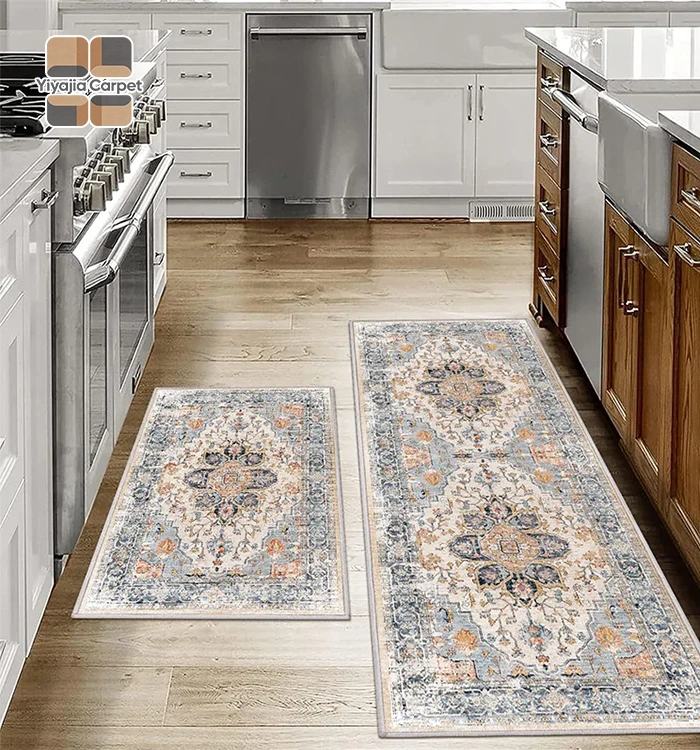
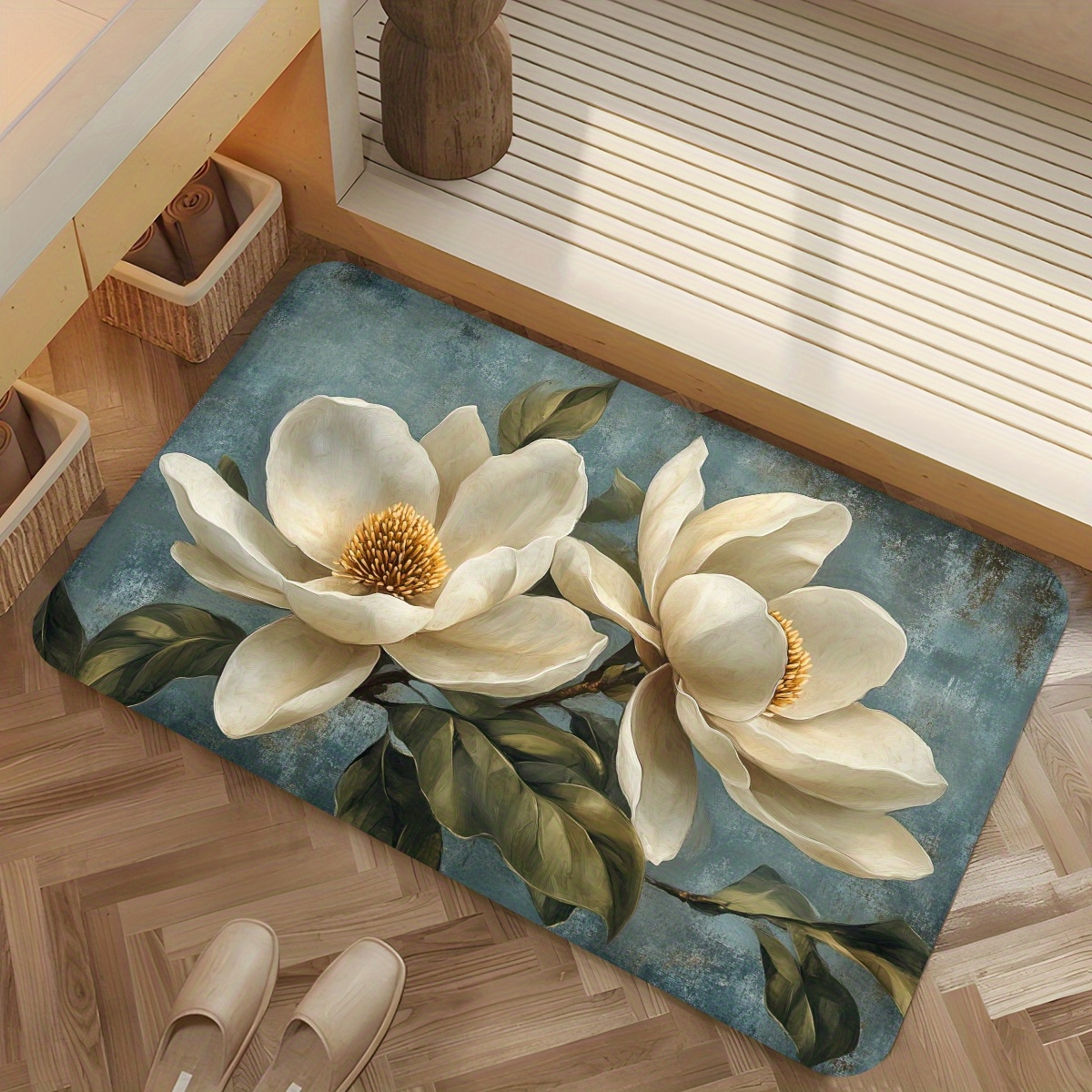
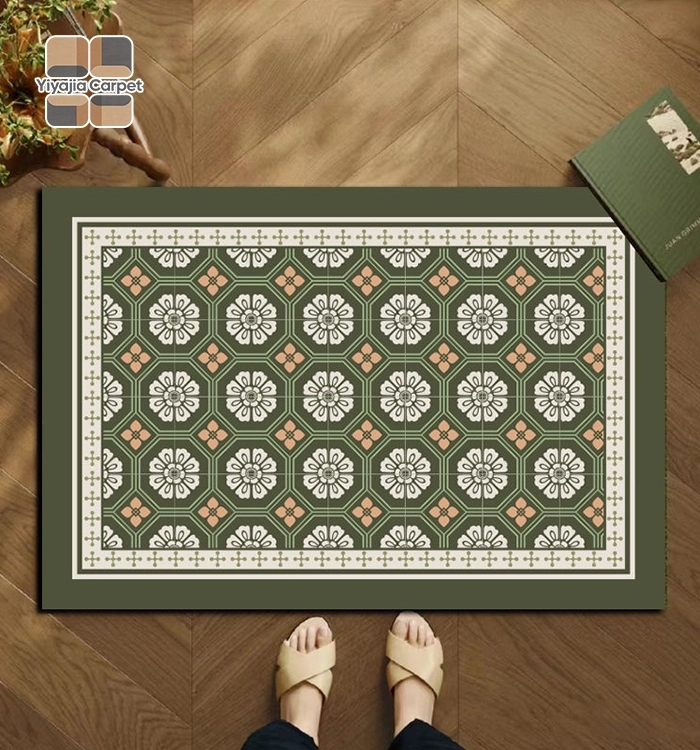
_1774494554973.webp)
How to Choose the Right Prayer Mat for You
May 22, 2026


There's more to picking out the best prayer rugs than just looking at how they look on the outside. For B2B buying managers, wholesalers, and dealers, the choice affects how happy customers are, how well the brand is known, and how often they buy from that company again. Good prayer mats do two things: they help people feel better spiritually and they show that you care about quality work and material purity. To make competitive product lines that sell in a wide range of markets, procurement workers need to think about how long materials will last, how flexible designs can be, and how consistent suppliers are. This guide talks about important things to think about when buying, like how well the fabric works, what the measurements should be, how to take care of it, and how to judge a seller. By knowing these things, you can easily negotiate the buying process, set your products apart from others, and build long-lasting relationships that will help your specialized prayer mat business grow.
Understanding Prayer Mats: History, Purpose, and Practical Benefits
Cultural and Historical Significance
Prayer mats have their roots in the early Islamic faith, where they were used to keep the worshiper from touching the ground. Persian flower patterns, Turkish geometric medallions, and Arabian calligraphic elements are just a few of the design themes that came about because of regional craftsmanship. Understanding these cultural differences helps procurement managers place goods in the right way for their target groups, whether they are selling to people in the West who like modern simplicity or people in the Middle East who value traditional aesthetics.
Functional Requirements in Modern Contexts
In addition to their spiritual value, prayer mats are useful for keeping you clean and comfortable. They make a marked clean space (Tahir) that is needed for religious practice, especially in places that are used for more than one thing. The way something feels—whether it has enough surface area, grips that don't slip, and padding for the knees when lying down—has a direct effect on how happy the user is. Distributors who offer goods with better practical features, like memory foam or orthopedic support layers, can command higher prices and attract customers who care about their health.
B2B Differentiation Through Quality
When buying in bulk, the quality of the goods is what sets valued partners apart from commodity sellers. High-performance prayer rugs get good reviews, cut down on returns, and urge people to buy them again. In faith-based communities, where word-of-mouth suggestions are very important, stores that stock high-quality goods build brand loyalty. When buying things, putting an emphasis on durability and authentic design integrity leads to better placement in the market and steady profit margins across all lines of sales.
Key Criteria for Choosing the Best Prayer Mat Material and Fabric
Imitation Cashmere: Performance and Value Balance
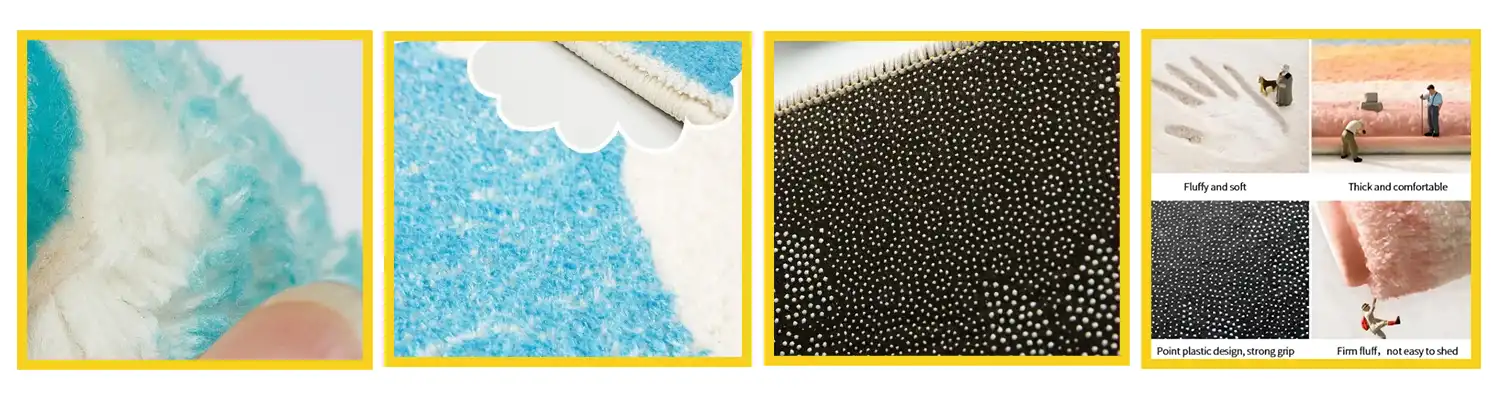
Best prayer rugs increasingly utilize modern manufactured materials like faux cashmere, which provide luxurious softness without the price volatility of natural fibers. These engineered fabrics have a consistent pile height (usually 5 mm), so the look is the same from batch to batch, which is very important for large sales. The material is nontoxic, which is good for people who are allergic to it, and it's also very light (about 800 g/m²), which helps keep shipping costs low. Purchasing managers who are looking to buy things for mid-range to high-end markets find that fake cashmere is a great deal because it feels good and is easier to clean.
Surface Treatment Technologies
Stain-resistant techniques make products last a lot longer, especially mats that are used in places of worship that get a lot of use or in homes with kids. Chemical bonding creates molecular walls that stop liquids from absorbing, so drips stick to the surface and are easy to clean up. On tile, hardwood, or marble floors, anti-slip backing, which is usually made of pointy plastic or thermoplastic rubber, makes the floor safer. These functional improvements make it less likely for business buyers to be sued, which boosts end-user trust and speeds up sales for distributors.
Density and Structural Integrity
Durability is closely linked to high-density tufted structure, which is measured in points per square meter. Tightly packed fibers in products keep them from sticking, keep their pile's strength under repeated pressure, and keep their color better over years of use. The backing's thickness (usually 9 mm all together) keeps the structure stable and stops the edges from twisting and the dimensions from changing. When evaluating suppliers, people in charge of buying things should ask for information on the backing's makeup and density. These technical factors are better at predicting how a product will work in the long run than just looking at it.
When choosing a material, think about how the qualities of the fabric match the tastes of your target market. Retailers on a budget may choose polyester because it is cheap and doesn't stain easily, while high-end shops may choose silk-blend fabrics because they look nice even though they need more care. By understanding these trade-offs, you can make smart choices about your goods that match the features of your products with what customers want and how sensitive they are to price.
Size, Thickness, and Design: Tailoring Prayer Rugs to Client Needs
Standard Versus Custom Dimensions
Size rules for prayer mats change around the world. For example, Turkish models are usually 110x70 cm, while Arabic models are usually 120x80 cm. When providers offer both standard sizes and custom sizes, they show that they are flexible partners who can work with a wide range of national groups. Custom choices are popular with business clients buying religious housing supplies, mosque procurement committees that need wall-to-wall installs, and hotel chains that want branded guest amenities. In a B2B market with a lot of different players, being able to meet OEM requirements without having to meet large minimum order amounts sets you apart from the competition.
Thickness Considerations for Different Use Cases
The width and pile height (5 mm pile on 9 mm total build) affect how portable and comfortable the mattress is. Thinner profiles are better for travelers who want to pack light, while thicker builds are better for older users or people with sensitive joints who need more padding. Procurement managers who work with e-commerce sites can help customers choose the right thickness by giving them a range of choices based on how they usually use the product. This approach of offering a wider range of products raises the average order value while lowering the number of questions customers ask about comfort standards.
Design Elements as Marketing Assets
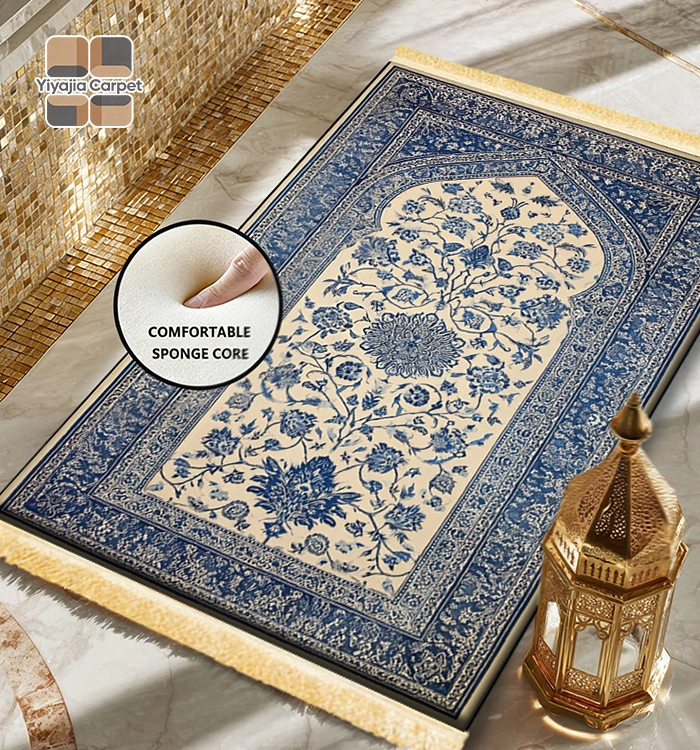
Pattern choice is more than just a way to decorate; it also shows respect for other cultures and your brand's character. Traditional designs for the mihrab (prayer nook) show that the building is real, while modern geometric patterns appeal to younger people. For business or professional buyers who value neutral style, solid colors offer a lot of options. Printed customizing made possible by heat transfer technology lets stores create unique patterns that set their products apart from general imports. The design files and customization turnaround times of providers should be looked at by procurement professionals because they affect how quickly seasonal collections or special event product launches can happen.
Different levels of products are shown in catalogs based on their size, thickness, and style. Entry-level items may have standard sizes and simple patterns, middle-range items may have custom sizes and classic patterns, and top-of-the-line items will have custom sizes with unique artwork and extra comfort layers. This strategy segmentation lets dealers deal with a range of price points while keeping the brand's story consistent across all product lines.
Cleaning, Maintenance, and Durability: What Procurement Managers Should Know?
Care Instructions by Material Type
Simple care routines for the best prayer rugs made from faux cashmere are good for maintaining the material. Regular vacuuming without beater bars keeps the pile intact, and spot cleaning with light chemicals gets rid of stains in specific areas. The stain-resistant process stops stains from going deep, so most spills can be cleaned up with a wet cloth. Natural wool needs to be cleaned by a professional, but synthetic choices can be washed in a machine on gentle processes, which lowers the long-term costs of ownership. Care directions for store partners should be included in the procurement specifications. Clear maintenance instructions lower the number of returns and raise customer happiness scores.
Durability Metrics and Testing Standards
Reliable sellers give you hard numbers about how well their products work, like how resistant they are to wear in Martindale cycles, how long they last in color according to AATCC standards, and how stable their dimensions are when the temperature changes. Products that have OEKO-TEX approval show that they don't contain any dangerous substances, which is good for health-conscious customers. When something has a CE mark on it, it means that it meets EU safety and environmental standards. Procurement managers should ask for third-party test records to back up these claims, since written performance numbers help avoid quality disputes and make sure that warranty responsibilities are met.
Warranty Structures and After-Sales Support
Premium sellers back their goods with full quality assurance, including a 100% check before shipping, guarantees that any defects will be fixed, and dedicated account management for customers who buy from them again and again. The fact that the warranty covers manufacturing flaws like printing mistakes, wrong measurements, and backing separation for 12 to 24 months shows that the seller is confident in the quality of the production. After-sales services, such as quick sample turnaround (24–48 hours) and flexible reorder ordering, help wholesalers keep just-in-time inventory systems running smoothly.
When choosing a supplier, looking at these support systems lowers operational risks and makes sure that companies that count on consistent product supply can keep running. Knowing what kind of care a product needs helps it fit correctly into its market group. If you're an institutional buyer with a lot of inventory and not a lot of time or money to care for it, low-maintenance options are best. On the other hand, high-end natural fiber products are good for luxury stores that serve customers who value traditional craftsmanship even though they need more care.
How to Evaluate and Purchase the Best Prayer Rug: A B2B Decision Support Guide
Defining Procurement Parameters
Setting clear requirements, such as goal price points, minimum order amounts, delivery dates, and quality standards, is the first step to successful buying. Purchasing managers should figure out whether the business plan prefers frequent small sales or big orders every three months. This will help them find the best suppliers. Budget limits must be weighed against standards of quality. Prices that are too low often mean that materials or manufacturing processes are being cut corners, which leads to more returns and hurts the brand's image.
Comparative Analysis Frameworks
Structured comparison methods keep you from getting stuck when you have to choose between several sellers. Make evaluation grids that rate candidates on things like unit cost, customization options, wait times, certifications held, and responsiveness to communication. Products that are made by machines are cheaper and more consistent, but products that are made by hand have an artistic look that makes them more expensive. Natural fibers are more likely to go up and down in price, but synthetic materials are less likely to do so. These trade-off studies should fit with the type of customer you want to attract and how you plan to place yourself against the competition.
Supplier Verification Procedures
Due diligence for the best prayer rugs keeps you safe from companies that you can't trust. Use third-party reports or video factory tours to check that the business is registered, that the factory is certified (ISO 9001, REACH compliance), and that the production capacity claims are true. Ask for client references from businesses of the same size and in the same market, and then reach out to those clients directly to find out how satisfied they are. Before signing a big deal, sample orders are a good way to see for yourself how good the quality is. Payment terms that include letter of credit protection or staged payments tied to output goals lower the risk of losing money during the early stages of a partnership.
Leveraging Advanced Manufacturing Capabilities
Suppliers who use heat transfer printing and laser cutting make it possible to make quick prototypes and make changes to designs. Heat transfer lets you copy any color and any design detail that would be impossible with traditional weaving. Laser cutting, on the other hand, lets you finish the edges precisely and shape them however you want without having to buy a die. These features are especially helpful for companies that make private-label goods or serve niche markets that need specific sizes. When considering providers that offer these advanced production methods, purchasing managers should ask about the design file format needs, the proof approval process, and the revision policies.
Building ties with suppliers takes more than just doing business with them. Regular reviews of performance, group efforts to improve quality, and planning of production ahead of time all make both partners invested in the success of the relationship. Long-term contracts that include bulk promises often give you access to better prices, earlier scheduling during busy times, and new products before they hit the rest of the market.
Conclusion
When choosing the best prayer rugs for your buying portfolio, you need to carefully think about how well the materials work, the size requirements, the upkeep needs, and the supplier's abilities. The best prayer rugs combine spiritual use with long-lasting use, giving value to end users while also helping distributors make money by lowering returns and building good brand associations.
Successful buying strategies match the features of a product with what the target market wants, whether that's cost, the ability to customize, or a high-end appearance. Purchasing managers can lower the risks that come with doing business with suppliers in other countries by putting in place organized evaluation processes, asking for real proof of quality, and using sample orders to check claims. Differentiating yourself in the prayer mat category is easy if you carefully choose which products to sell and which partnerships to work with.
FAQ
What material offers the best durability for wholesale prayer rug orders?
In business settings, high-density synthetic fibers like polypropylene and fake cashmere offer the best longevity for the best prayer rugs. These materials don't pile up, the colors stay bright even after being cleaned many times, and they can handle a lot of foot traffic better than natural fibers. Products with numbers higher than 800,000 points per square meter are more durable and can be used for longer periods of time.
Can prayer rugs be customized for corporate branding or special events?
Modern production techniques, such as laser cutting and heat transfer printing, make it possible to make a lot of changes. Suppliers can make copies of company names, change color schemes to match brand rules, and change sizes to fit different uses. For custom designs, the minimum order quantity varies, but sellers who are open can take orders as low as a few hundred units.
How do I ensure timely delivery for large-scale international orders?
Work with producers whose production schedules are clear and whose transportation networks are well-established. Ask for specific schedules that include times for samples, production, quality control, and shipping. Lead times are usually more regular from suppliers who offer containerized shipping and coordinate with freight forwarders. Before signing time-sensitive contracts, you might want to place your first orders during off-peak times to see how well your suppliers do.
What certifications should I look for when sourcing prayer rugs for the U.S. market?
OEKO-TEX Standard 100 approval ensures that there are no harmful chemicals, which addresses health worries of consumers. CE marking means that European safety standards are met, which are known around the world. Suppliers who have ISO 9001 quality management certification show that they have strict rules over the production process. For business areas that need flame-retardant materials, EN 13501 fire classification certification is a must.
Partner with Yiyajia Carpet: Your Trusted Best Prayer Rugs Supplier
Based in Tianjin, Yiyajia Carpet is one of the best prayer rugs manufacturers and offers a wide range of services to procurement managers looking for trusted, high-quality floor covering partners. Our advanced heat transfer printing reproduces complex designs with amazing color accuracy, and our precise laser cutting lets you make items to your exact specifications and in any shape or size without having to buy special tools. Every product goes through a 100% pre-shipment check to make sure that the quality is the same for all bulk sales. We stand behind this promise with a quality replacement guarantee that covers any manufacturing flaws.
We keep our minimum order amounts open so that they can work for both new businesses and established distributors who buy in bulk. Our quick sample production (24–48 hours turnaround) helps you make a choice faster, and the final goods will exactly match the approved samples. Your per-unit shipping costs will go down thanks to export-grade packaging that is optimized for container loading, and our experienced customs paperwork team will make sure that the clearance process goes smoothly.
Yiyajia Carpet is certified by CE, OEKO-TEX, ISO 9001, and REACH, which means it meets strict foreign standards for the US, EU, and Middle Eastern markets. For repeat customers, our specialized account managers offer ongoing support, such as helping with production schedules and offering advice on product development. Email our sales team at sale@yyj-carpet.com to get your personalized sample kit, talk about OEM requirements, or set up a virtual tour of our plant. Find out how our technical skills and customer-focused services can help your business turn buying problems into competitive benefits.
References
1. Hassan, A. & Morrison, T. (2019). Textile Performance Standards in Religious Artifacts: Material Science Applications. International Journal of Cultural Heritage Studies, 12(3), 45-67.
2. Chen, L. (2021). Global Supply Chain Management for Specialty Textiles. New York: Industrial Press.
3. Rahman, S. & Peterson, K. (2020). Consumer Preferences in Faith-Based Product Categories: A Cross-Cultural Analysis. Journal of Marketing Research, 38(2), 112-131.
4. Williams, D. (2022). Advanced Manufacturing Technologies in Carpet Production. London: Textile Industry Publishers.
5. Al-Mansouri, F. (2018). Traditional Craftsmanship Meets Modern Commerce: Prayer Mat Production Evolution. Middle Eastern Studies Quarterly, 24(4), 89-105.
6. Thompson, R. & Zhang, W. (2023). B2B Procurement Best Practices in Specialized Import Categories. Chicago: Business Strategy Review Press.