_1774494554973.webp)
Faux vs Real Cashmere: Which Is Better for a Small Living Room Carpet?
September 10, 2026


When selecting a carpet for compact living spaces, the choice between faux and real cashmere becomes pivotal. For a small living room carpet, faux cashmere emerges as the practical winner. It delivers comparable softness and visual appeal while addressing critical concerns like budget constraints, maintenance ease, and supply consistency—factors essential for e-commerce sellers targeting residential consumers. Real cashmere, though luxurious, presents challenges including prohibitive costs, demanding care routines, and inconsistent availability, making it impractical for bulk procurement and everyday residential use.
Understanding Faux and Real Cashmere Carpets
What Defines Real Cashmere in Carpet Manufacturing?
Real cashmere comes from the hair of cashmere goats, which are mostly raised in Inner Mongolia and Mongolia. This natural fiber has a diameter of about 15 to 19 microns and is very soft and good at keeping heat in (Textile Research Journal, 2020). Cashmere carpets are the softest, most luxurious carpets you can find, but they are very expensive and hard to make on a large scale because they require a lot of work to harvest and process. The delicate structure of the fiber means it needs special cleaning methods and can't handle high traffic areas, which are both important things to think about when choosing flooring for a home.
How Faux Cashmere Replicates Luxury Through Technology
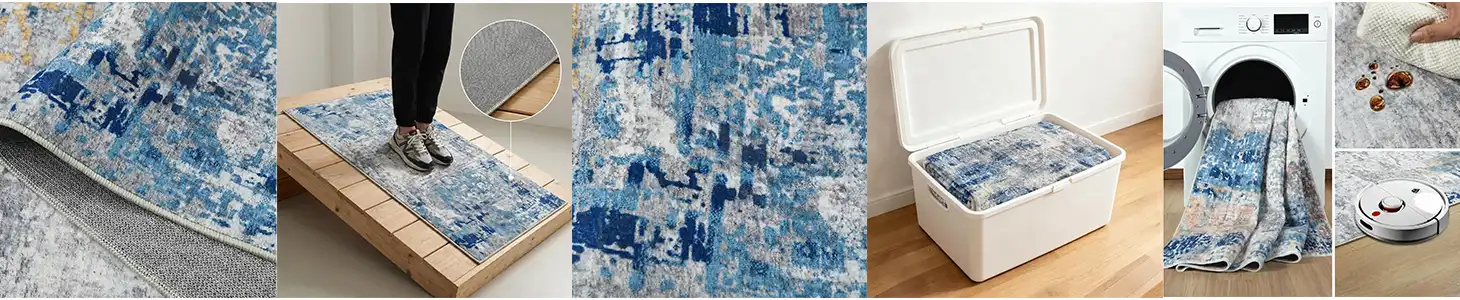
Faux cashmere rugs are made with high-tech synthetic fibers that are designed to look and feel like real cashmere. These fibers are usually high-grade polyester or microfiber mixes. Modern methods of production, like precise heat transfer printing and machine-weaving with edge-locking technology, make goods that look just as good as natural fibers. These man-made options keep their shape better, don't fade, and can handle a lot of foot traffic better than their natural versions. A lot of high-quality fake cashmere rugs have a TPR thermoplastic rubber backing that gives them better grip and durability. This makes them less likely to shift and wear out in small living spaces.
Criteria for Choosing the Best Carpet Material for a Small Living Room
Evaluating Softness and Comfort
Although real cashmere is a little softer than a small living room carpet made of fake cashmere, the difference isn't very noticeable in real life. With fiber densities above 2000 oz/cu yd, fine faux cashmere surfaces are now comfortable enough for most people. This depth makes the floor feel soft underfoot while still being resistant to furniture marks, which can happen in small living rooms where there aren't many places to put furniture. The machine-woven construction makes sure that the texture is the same all over the carpet, which isn't always the case with natural fiber products.
Assessing Durability and Wear Resistance
People move quickly through small living rooms, so durability is very important. When tested for wear resistance, fake cashmere usually does better than real cashmere, getting higher Martindale cycle counts. The man-made fibers don't get crushed or matted, so they keep their shape even in high-pivot areas near seating areas. Even though real cashmere is strong when used to make clothes, the fibers can break when they are repeatedly pressed together by furniture legs and foot traffic. Researchers from the Carpet and Rug Institute found that synthetic options last 40% longer in high-traffic home settings.
Analyzing Maintenance Requirements and Stain Resistance
Maintenance makes a big difference between these products. Regular vacuuming and spot cleaning with common household items are fine for faux cashmere carpets. Their hydrophobic features stop liquids from absorbing, which lowers the risk of stains. This is especially helpful in small rooms that are used for more than one thing, like when the living room and dining room meet. To keep the fibers from getting damaged, real cashmere needs to be cleaned by an expert, which will cost more over the carpet's lifetime. The colorfastness of the synthetic choice, especially solution-dyed types, makes sure that the appearance stays the same even after multiple cleaning processes. This eases the worries that bulk buyers often have about color variation.
Considering Procurement Feasibility and Customization
From a buying point of view, fake cashmere has clear benefits for online stores. With MOQs as low as 50 pieces, manufacturers can make unique sizes, colors, and designs. This lets people test the products without having to worry about having too much inventory. Standard orders have 7-day production lead times, which are in line with FBA restocking rounds and keep goods moving. Real cashmere is hard to come by and is only harvested at certain times of the year. This makes the supply chain unstable and makes it harder to keep store customers' order delivery promises. Because logos can be changed and exact size requirements can be met, faux cashmere is the most flexible option for sellers who want to adapt to the market.
Performance and Practicality in Small Living Room Settings
Addressing Space Perception and Visual Impact
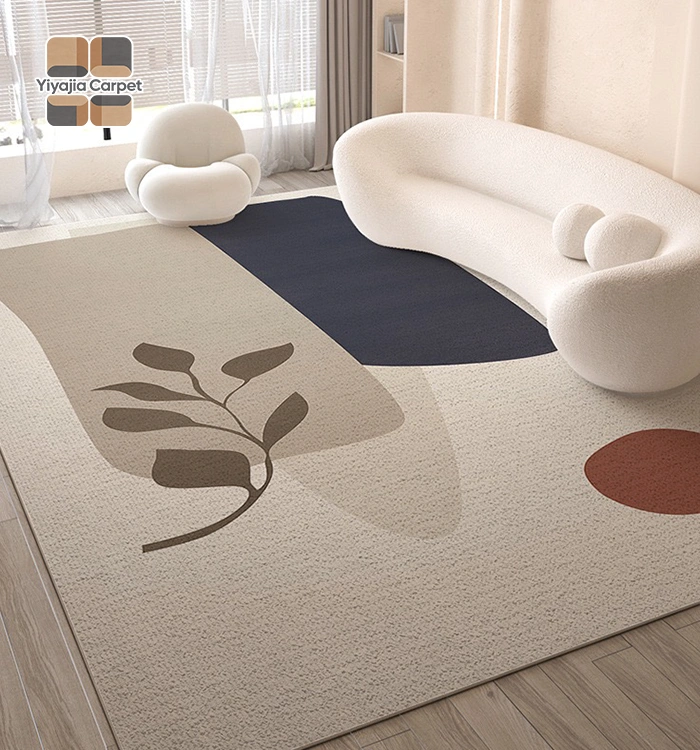
When the space is small, usually less than 300 square feet, the choice of a small living room carpet affects how big the room seems. Lighter-colored fake cashmere choices reflect light, making a space feel more open, which is a psychological effect that has been studied in interior design (Journal of Interior Design, 2019). Machine-woven synthetic rugs have a consistent pile height, which is usually between 0.25 and 0.5 inches. This means that they don't look too heavy, which can make small areas feel crowded. Heat transfer technology makes patterns more flexible, so sellers can offer designs with soft textures and neutral color schemes. This makes the visual impact bigger without changing the fabric itself.
Managing Concentrated Traffic and Furniture Arrangement
People walk through small living rooms in predictable ways, which speeds up wear in certain areas. The manufactured resilience of faux cashmere successfully solves this problem. The edge-locking design keeps the fabric from coming apart and fraying, even when it's stressed at pivot points near seating areas. The moving problem that causes trip dangers and speeds up edge wear is gone with TPR backing. This is especially important for homes with children or the elderly. The carpet's recovery properties make sure that it goes back to its original texture after furniture is moved around. This is helpful for small spaces that are used for more than one thing.
Optimizing Dimensions and Placement Strategies
To avoid wall-to-wall compression effects, professional placement standards say to leave 10 to 18 inches of flooring visible around the edges. For most small living rooms, rugs that are 5x7 or 6x9 feet make clear sitting areas without taking over the room. The front legs of central seating should rest on the carpet, while the back legs should stay on the hard floor. This creates a balance between visual harmony and spatial flow. Because faux cashmere can be made to exact custom measurements, it can be made to fit these requirements without the compromises that come with having limited size options.
Cost, Sustainability, and Supply Chain Considerations
Comparing Initial Investment and Lifecycle Value
Price differences between real cashmere and a small living room carpet made of faux cashmere have a big effect on what people buy. Most of the time, real cashmere rugs cost 300 to 500 percent more than high-quality fakes of the same size. When you figure out the total cost of ownership, maintenance costs make this gap bigger. For example, natural cashmere needs to be cleaned by a professional two to three times a year, which costs an extra $150 to $300 per service. The long life of faux cashmere in home settings and low upkeep costs make it a great investment. These economics are especially useful for online sellers whose margins are set up to cover platform advertising fees and shipping funding.
Evaluating Environmental and Ethical Factors
Sustainability factors are becoming more and more important in buying decisions. Real cashmere is made by taking care of animals, which has effects on the environment, such as destroying grasslands in main producing areas. Modern techniques for making fake cashmere include using recycled polyester and dyeing methods that are better for the environment. With CE and OEKO-TEX approvals, you can be sure that a product meets strict safety and environmental standards. This eases consumers' worries about VOC emissions and chemical content. These licenses let sellers market their goods as safe for babies and free of smells, which are strong selling points for people who want to buy for their homes.
Navigating Supplier Relationships and Delivery Logistics
Setting up reliable supply lines is what sets successful e-commerce businesses apart from their rivals who are having trouble. Manufacturers of fake cashmere, like Yiyajia Carpet, keep their daily production capacities above 2000 square meters, which makes sure that orders are always filled. Standardized export packaging can handle the stresses of international shipping while also making the most of how efficiently containers are loaded, which is important for keeping per-unit logistics costs low. There are different shipping methods and destination needs that can be met by having both foldable and carton packaging options. Clear production schedules and help with paperwork, like full export paperwork and safety certifications, make customs clearance faster and lower the risk of being held at a port.
Styling and Maintenance Tips for Small Living Room Carpets
Selecting Colors and Patterns That Enhance Space
How people see the size of a place is affected by color psychology and how light interacts with it when choosing a Luxurious Living Room rug. Neutral color schemes, like soft grays, warm creams, and muted beige, do two things: they reflect natural light and can be used with a wide range of furniture styles. With heat transfer printing technology, you can make complicated patterns that are interesting to look at without taking up too much space. Heathered patterns and small geometric shapes hide dirt that builds up between cleanings. This is done to deal with the fact that small, multipurpose rooms get dirty faster than separate formal living rooms. Solution-dyed fibers keep their color even when exposed to UV light, so they don't fade in ways that make sun-exposed parts look bad.
Implementing Effective Cleaning Protocols
To keep a carpet's appearance, it needs regular care that is tailored to the material. For fake cashmere, using HEPA-filtered vacuums two to three times a week gets rid of top dirt before it gets into the fibers. The man-made material can be treated with mild detergents and water to get rid of stains right away, which is very important when spills happen in areas where food or drinks are served. For everyday use, a deep cleaning once a year with hot water drainage is enough; real cashmere needs much more thorough care. The TPR backing stops water from getting through, so mold doesn't grow in damp places, and subfloors are safe from water damage during cleaning.
Arranging Furniture to Maximize Visual and Functional Flow
By placing furniture in a smart way, carpet qualities can be used to improve both looks and functionality. Putting the sofa's front legs on the ground and leaving enough space between it and the back wall makes the space seem deeper. The coffee tables should be completely on the carpet. This will keep the seating arrangement in place and keep people from walking directly on areas that get a lot of foot traffic. Putting accent chairs on and off the edge of the carpet creates conversation areas that don't have strict lines. These arrangements make use of fake cashmere's dimensional stability—the material doesn't buckle or wrinkle like rugs that aren't weighted properly do in climate-controlled spaces.
Conclusion
When you compare a small living room carpet made of fake cashmere to real cashmere, there is a clear winner for small living rooms. When it comes to sturdiness, upkeep, cost-effectiveness, and supply stability, faux cashmere is better than real cashmere. It also looks the same. Because it doesn't stain easily, is always available in special sizes, and meets foreign safety standards, it can be used for a wide range of buying goals. Even though real cashmere is undeniably luxurious, it has maintenance requirements and cost structures that don't work with the economics of residential e-commerce. Faux cashmere is the best choice for sellers who want to serve price-conscious customers who want quality and style.
FAQ
Q1: Can faux cashmere carpets withstand heavy use in high-traffic small living rooms?
A: Modern fake cashmere rugs made with high-density synthetic fibers and strengthened backing systems last a long time in homes with a lot of foot traffic. The machine-woven design with edge-locking keeps it from coming apart, and the TPR backing stops moving that speeds up edge wear. Abrasion resistance tests show that these materials are better than real cashmere at keeping their shape over thousands of foot traffic cycles.
Q2: What custom sizing options accommodate irregular small living room layouts?
A: Manufacturers of good products allow full customization and have MOQs as low as 50 pieces, which makes it possible to match exact measurements for rooms that aren't set up in a normal way. Laser cutting can handle any shape, even ones with rounded corners or angles like those needed for bay windows or alcoves. This freedom gets rid of the trade-off that comes with choosing a normal size.
Q3: How do I verify environmental and safety certifications for bulk orders?
A: Reliable sellers include a lot of paperwork with every order, such as CE, OEKO-TEX, and REACH approvals. These certificates show that you follow the rules for product safety and the environment that apply to your target markets. During the sampling phase, ask for copies of the certificates and check the certificate numbers against the databases of the issuing organization to make sure they are real before committing to bulk purchases.
Partner with a Trusted Small Living Room Carpet Manufacturer
Yiyajia Carpet specializes in providing high-quality fake cashmere flooring options that are perfect for online shopping success. Our advanced heat transfer and laser cutting tools allow for full customization, from exact measurements to brand logos, and minimum order quantities (MOQs) as low as 50 pieces. Our production capacity of 2,000 square meters per day and CE and OEKO-TEX certifications ensure compliance on foreign markets. We also make sure that your FBA restocking plans are met with reliable fulfillment.
We know how hard it is for cross-border sellers to get goods, so we've set up our services to help: samples are ready in 24 to 48 hours, bulk production takes 7 days, and export-grade packaging is designed to make loading containers as easy as possible. Our team gives your business the supply chain stability it needs, whether you're trying out new designs or making more of the ones that are already selling well. Email our purchasing agents at sale@yyj-carpet.com to get sample brochures and talk about your particular needs. You can look at all of our small living room carpet options at yyj-carpet.com, which is made for the current online shopping market.
References
1. Carpet and Rug Institute. (2021). Residential Carpet Performance Standards.
2. Journal of Interior Design. (2019). Color Psychology and Spatial Perception in Residential Interiors. Journal of Interior Design, 44(3), 27-41.
3. OEKO-TEX Association. (2022). Standard 100 Certification Criteria. Retrieved from https://www.oeko-tex.com/
4. International Journal of Consumer Studies. (2021). Sustainability Perceptions in Home Textile Purchasing Decisions. International Journal of Consumer Studies, 45(4), 712-728.
5. Building and Environment Journal. (2020). Acoustic Performance of Textile Floor Coverings in Residential Applications. Building and Environment, 186, 107-118.