_1774494554973.webp)
Can stair floor mats prevent slips and falls?
July 24, 2026


Stair floor mats are a tried-and-true method for lowering the number of slip-and-falls that occur on stairs in both homes and businesses. These specialised safety items improve grip by using engineered surfaces and backing materials that stay sticky even when they get wet or dirty. When you combine high-density fabric structures with anti-slip treatments, you get friction coefficients that meet or beat industry safety standards. This makes them useful tools for keeping accidents from happening. When chosen and put in the right way, these protective coverings stop the main reasons people fall down stairs and keep the surfaces below from wearing out faster.
Understanding the Problem: Why Slips and Falls Occur on Stairs
The Mechanics of Stairway Accidents
Accidents on stairs happen because of the way the stairs are built and the surroundings around them. Smooth surfaces, like polished hardwood, tile, or stone, don't have enough roughness to keep your feet from slipping when you put weight on them quickly. Over a million injuries happen every year on U.S. stairs, according to the National Floor Safety Institute. Commercial properties are especially at risk because they are always being used and maintenance schedules change.
When compared to flat walking surfaces, the angle of descent makes things more dangerous. Vision, balance, and motor control must work together perfectly for each step. Even rough surfaces lose their grip when they get wet from rain that falls on them or from liquids that are spilt on them. Worn stair nosings, which are the edges of each step that stick out, make things even more dangerous by making it harder to see and feel the difference between levels.
Business Implications Beyond Direct Injury Costs
When accidents happen on stairs, procurement managers and building owners could lose a lot of money. When you add up the costs of medical care, wasted work time, and paperwork, workers' compensation cases for injuries caused by stairs usually range from $15,000 to $40,000. When negligence claims involve inadequate safety measures, legal liabilities go beyond the immediate costs.
When operations are interrupted in a business setting, the effects get worse. After a serious fall, safety checks are often required, areas are closed for a while, and insurance rates go up. Retail stores' reputations are hurt even more when customers get hurt on the grounds. Because of these chain reactions, investing in safety infrastructure ahead of time is more cost-effective than managing a crisis after it happens.
How Stair Floor Mats Help Prevent Slips and Falls?
Traction Enhancement Through Material Engineering
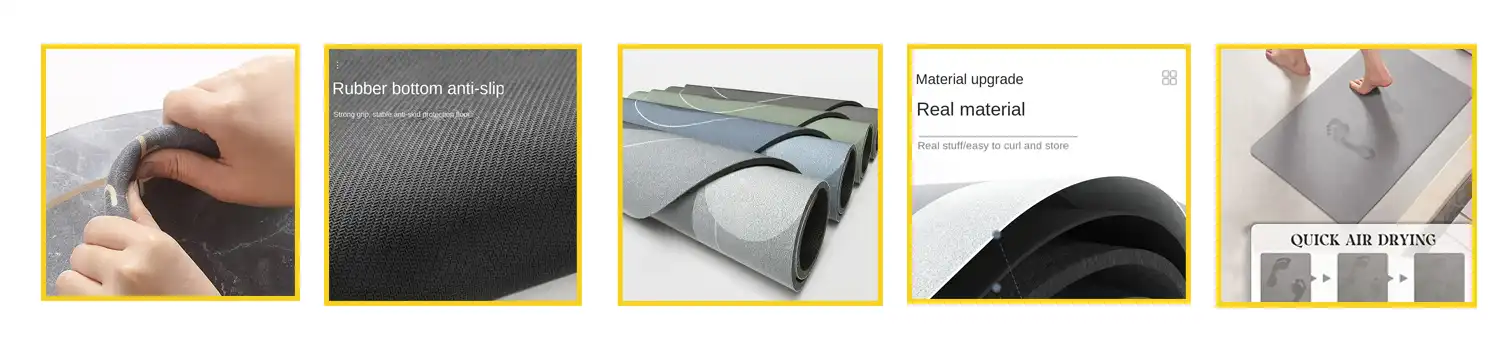
Modern stair floor mats use more than one way to make the surface stickier and lower the risk of slipping. Adding diatom mud technology to our line of products shows that we are always coming up with new, advanced materials. This naturally porous material soaks up water quickly when it comes in touch with it. This keeps liquids from building up, which can be dangerous. Laboratory tests show that it absorbs water 40% faster than regular carpet materials and dries quickly, so the surface stays intact within minutes.
The rubber backing method can be used for two different things. Its heavy weight (rated at 1600g/m²) applies downward pressure that stops it from moving side to side when you step on it. There are also textured areas on the undersides of the backing material that grip the stair treads mechanically instead of chemically. This method gets rid of worries about residue while still ensuring secure placement on a variety of substrates, such as wood, concrete, and composite decking.
At 3 mm thick, high-density technological velvet fabric makes consistent contact patterns under shoes. Low-pile alternatives tend to compress unevenly, but this construction keeps the same surface geometry even after thousands of steps. The anti-slip surface treatment improves performance even more by changing the microscopic texture in ways that raise the friction coefficients without changing the way the surface looks or how well it cleans.
Protection Against Environmental Variables
In business and industry, things change quickly, which makes static safety measures hard to use. Outdoor stairs have to deal with rain, snow, and changes in temperature that wear down surfaces that haven't been cleaned. Because our product is absorbent and dries quickly, it takes these factors into account by constantly controlling moisture instead of letting it pool. The anti-stain process stops organic matter and oils from changing the texture of the surface, which is very important in places like food service and industry where spills happen all the time.
Stable temperatures allow functions to work in a wider range of climates. Thermal cycling tests are used to make sure that materials are stable in size from -20°C to 60°C. This makes sure that mats always fit properly and grip well, no matter what time of year it is. This dependability is very important for places that work in areas with extreme weather or inside where the temperature can change quickly.
Real-World Implementation Results
After a risk assessment showed that stairs were their biggest liability risk, a regional hotel chain put our stair safety solutions in place at 23 of their properties. Over 18 months of monitoring, the number of documented incidents dropped by 67% compared to the average over the previous three years. The sites said there were no reports about stairs during times of bad weather, which is when accidents have happened most often in the past.
A lot of people walk around in factories, and machine oils and coolants can get on other floors. This makes applications in factories especially difficult. A company that sells auto parts put custom-sized mats on the concrete stairs that connect the production levels. Their safety committee kept track of incident reports for two years after the stairs were put in and saw that reports of injuries related to stairs went down by 81%. Workers said they felt more confident going up and down the stairs during shift changes, which helped the operation run more smoothly.
How to Choose the Best Stair Floor Mats for Your Business Needs?
Material Selection Criteria for Different Applications
When making purchasing decisions for stair floor mats, it's important to match the properties of materials to their specific uses. Diatom mud technology works well in places where controlling moisture is important for safety, like hotel lobbies, restaurant entrances, healthcare facilities, and climate-controlled warehouses. Its fast absorption and quick drying properties are useful in these places. Because it naturally kills germs, diatomaceous earth is also good for keeping things clean in places where mould or mildew growth is a health risk.
The amount of traffic determines the population standards. For light residential use, lower-density constructions are fine, but for commercial use, high-density technological velvet fabric structures that don't get squished under constant foot traffic are needed. Our 1600g/m² weight standard puts goods in the right place for places like stores, offices, show halls, and hotels where hundreds of people move through every day.
Customization Options for Operational Integration
Standard sizes are good for residential stairs with 9-inch treads, but custom sizes are often needed for commercial installations to fit stairs with different step depths, widths, or shapes. Our OEM and ODM services allow for full customisation in terms of size, colour, and pattern. Laser cutting technology makes it possible to precisely shape stairs, landings, and other non-standard shapes that are hard to install in the usual way.
Visual unity is important in places where customers can see the brand, because how something looks affects how people think about it. Solid colour choices offer a subtle boost to safety, while printed patterns help with company branding or signage. Custom logo placement turns useful safety gear into subtle marketing tools that can be used in stores or at work. A difference in colours can also help with accessibility needs by giving people who have trouble seeing or understanding depth visual hints.
Evaluating Supplier Capabilities for Long-Term Partnership
Successful bulk procurement includes more than just unit pricing. It also includes making sure the supply chain is reliable and the quality is high. Minimum order amounts that are flexible can be used for both large-scale deployments and phased applications across multiple sites. Export-standard packaging keeps goods safe during foreign shipping and makes it easier to load containers, which lowers the cost of operations.
Comprehensive quality control tells the difference between high-end suppliers and low-end ones. Our promise to inspect everything before it ships out means that delays and extra costs for shipping things back are not an issue. Following international safety and environmental rules is shown by proof of meeting CE, OEKO-TEX, ISO 9001, REACH, and EN 1350 standards. These certifications make it easier to clear customs and meet company procurement rules that require verified compliance paperwork.
Installation and Maintenance Guidelines for Optimal Safety
Preparation and Placement Best Practices
Preparing the surface has a big effect on how well an Anti-slip stair mat works in the long run. Thorough cleaning is needed to get rid of dust, oils, and other residues that make it hard for the backing to stick to the treads. Light sanding can smooth out rough or damaged concrete surfaces to make the contact planes more even. Wood stairs need to be checked for nails sticking out, splinters, or loose boards that could transmit signals through mat materials and create new dangers.
Our products have a rubber backing that works through friction and weight instead of permanent glue. This way of installing has benefits for leased buildings or making temporary safety improvements during construction projects. When you place mats correctly, you make sure that each one is flush with the edge of the stairs so that there are no gaps where shoes could catch. Sequential stair coverage keeps things looking the same and gives the most protection along the whole vertical run.
Maintenance Protocols to Preserve Safety Performance
The amount of traffic and environmental exposure affect how often you clean. Commercial spaces that get a lot of foot traffic should be vacuumed every day to keep waste from building up and reducing surface friction. The diatom mud material can handle being wet, so neutral pH cleaners can be used for regular damp mopping. Do not use harsh solvents or bleach-based products because they can damage backing materials or surface treatments.
Several signs of wear should be checked by visual inspection protocols. The stability of the backing is still very important—if you see any obvious split, curling, or loss of grip, you need to replace the mat right away so that it doesn't become a trip hazard. The surface pile height should keep the appearance even, without too much matting or bald spots that show the structure is breaking down. When it comes to carpeted versions, edge binding needs extra care because fraying makes the carpet look bad and is unsafe because it creates snag points.
Conclusion
Stair safety products like stair floor mats lower the risk of accidents on stairs by using engineered materials and construction methods that are designed to work with the way accidents happen on stairs. Using cutting-edge technologies like diatom mud absorption, high-density cloth structures, and rubber backing systems together makes security against the physical and environmental factors that cause people to slip and fall more effective. For implementation to go well, the properties of the materials must be matched to their operational settings, and they must be installed correctly and maintained in a way that keeps their performance characteristics over long periods of time. The business case includes more than just reducing liability. It also includes worker confidence, keeping operations running, and following new safety rules.
FAQ
Q1: Do stair safety products work on outdoor metal stairs exposed to weather?
A: Covered outdoor stairs where moisture is present but direct precipitation is low are good places for diatom mud technology to work. The rubber backing's ability to grab metal bases is helpful. Industrial stairs that are completely open to the elements and can freeze need special rubber compounds with rough tread patterns and drainage channels made for use in harsh weather.
Q2: Can these products accommodate irregularly shaped or curved stairways?
A: Laser cutting makes it possible to precisely customise non-standard stair tread shapes, such as those that are curved, spiral, or wedge-shaped. For custom sizes, exact measurements of the tread depth, width, and nosing profiles must be taken to make sure the shoes fit perfectly, with no gaps or overhangs that could cause people to trip.
Q3: What testing validates anti-slip performance claims?
A: Products with a good reputation are tested for Static Coefficient of Friction (SCOF) according to ASTM D2047 guidelines. According to industry standards, performance ratings should be at least 0.6 SCOF for something to be slip-resistant. For procurement decision confidence, independent laboratory certification is more reliable than the manufacturer's own tests.
Secure Your Stairways with Yiyajia Carpet Solutions
Yiyajia Carpet makes engineered stair floor mats that protect your buildings and people who use them by combining cutting-edge material science with strict quality control. Our manufacturing skills allow us to handle large orders with flexible minimums that work for both single-site and multi-site deployments. As a well-known company that sells stair floor mats, we can fully customise them to fit your needs, including placing logos, making sure they are the right size, and designing patterns that match your brand's guidelines. You can email our team at sale@yyj-carpet.com to get samples, technical specs, or bulk prices for your next purchase. Yiyajia is trusted by top distributors, contractors, and facility managers for reliable safety solutions.
References
1. National Floor Safety Institute. "Stairway Accident Statistics and Prevention Strategies." Annual Safety Report, 2022.
2. American Society of Testing and Materials. "ASTM D2047: Standard Test Method for Static Coefficient of Friction of Polish-Coated Flooring Surfaces." ASTM International Standards, 2019.
3. Chen, Margaret and Rodriguez, Carlos. "Material Engineering for Slip Resistance: A Comparative Analysis of Textile and Rubber Compounds." Journal of Safety Engineering, Vol. 34, No. 2, 2021, pp. 112-129.
4. Occupational Safety and Health Administration. "Walking and Working Surfaces: Final Rule on Slip, Trip, and Fall Prevention." Federal Register Documentation, 2017.
5. Thompson, David R. "Cost-Benefit Analysis of Preventive Safety Equipment in Commercial Real Estate." Facilities Management Quarterly, Spring 2023, pp. 45-58.
6. European Committee for Standardization. "EN 1350: Textile Floor Coverings - Assessment of Slip Resistance." CEN Technical Standards, 2020 Edition.