_1774494554973.webp)
Best stair floor mats for high-traffic homes
June 17, 2026


To find the best stair floor mats for homes with a lot of foot traffic, you need to carefully consider how long they will last, what safety features they have, and how often they need to be cleaned. High-performance stair treads must be able to handle constant foot traffic while still not slipping and saving the areas below. When you mix modern materials like diatomaceous earth with rubber backing, you get better grip, better wetness absorption, and longer-lasting carpet runners.
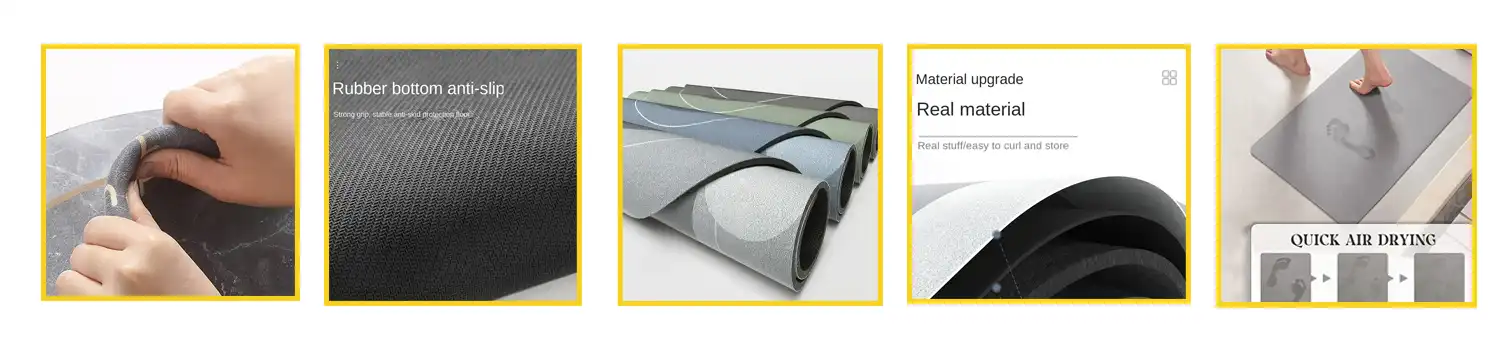
When purchasing mats for residential developments, hospitality projects, or retail spaces, purchasing managers should look for ones that have proven weight ratings above 1600g/m², reinforced edge construction, and compliance with ASTM D2047 friction standards. This will reduce the risk of liability and ensure the safety of the people who will be walking on them.
Understanding the Challenges of Stair Mats in High-Traffic Homes
When a lot of people use stairs, they are constantly under mechanical stress, which breaks down materials faster. When it comes to protecting stairway surfaces, residential buildings with multiple people, business buildings with steady visitor flow, and hospitality places all have their own unique problems. Repeated impact forces, rough dirt particles, and being exposed to water make the surroundings unfriendly for protective covers.
Accelerated Wear Patterns in Busy Environments
In standard carpet systems, constant foot traffic puts a lot of force on the nosing edge and center tread area, which crushes the fibers too soon. According to research done by flooring engineering companies, stairs get three to five times more wear per square foot than flat floors. Because of this focused stress, materials need to be designed for vertical traffic patterns instead of hallway runners that have been used for other things.
Heavy-duty uses in shopping malls, office buildings, and apartment complexes need mats that can handle more than 50,000 foot traffic cycles without breaking. When used a lot, inferior goods start to thin, break at the edges, and delaminate at the back within six months. Instead of depending on general comments about durability, people who work in procurement need to compare what vendors say with detailed abrasion resistance testing results.
Safety Concerns and Liability Reduction
People who live or work in homes or businesses can be held legally responsible if their stairs are slippery. According to the National Safety Council, more than a million people are hurt every year on U.S. stairs. Most of these injuries could have been avoided if the steps were not dry or worn. Property managers and workers are getting more and more attention from regulators when it comes to slip resistance requirements.
Modern step safety solutions handle these issues by being built with multiple layers. Using thermoplastic materials in rubber backing systems makes vacuum-grip binding that doesn't damage wooden or laminate finishes like chemical bonding does. Quick-drying diatomaceous earth materials are used in surface treatments to absorb water within seconds. This stops the hydroplaning effect that causes people to slip and fall in wet conditions or after cleaning.
Maintenance Overhead and Operational Costs
In high-traffic areas, traditional stairway flooring needs to be professionally steam cleaned every three to six months. This means that building managers have to pay a lot of money over and over again. When dirt builds up in the pile fibers, it grinds against the base and the mat, wearing them down. Odors that come from regular fabrics holding on to moisture need special treatments to get rid of them.
Modern stair step designs with anti-stain finishes and moisture-resistant core materials make them easier to maintain. Facilities can switch from thorough professional cleaning schedules to easy spot-cleaning routines that can be done with common home items. This operating efficiency is especially helpful for property management firms that are in charge of many sites but don't have a lot of maintenance staff.
Key Criteria for Selecting Stair Floor Mats for High-Traffic Homes
To make smart buying choices, you need to evaluate things in a planned way across a number of performance factors. These standards give you a complete way to compare different goods and make sure that technical specs match up with working needs.
Material Composition and Wear Resistance
The choice of material has a big impact on how long a product lasts in tough circumstances. When it comes to physical stability, rubber-backed systems are better than felt or latex options, which curl at the corners after being bent over and over again. High-density technology velvet fabric structures stay flexible when they are compressed, so they don't get lasting dents like lower-density materials do.
Specifications for weight are solid ways to tell how good a material is and how long it will last. Products that reach 1600g/m² are made of strong materials that don't wear out quickly. This weight class usually has thick pile construction and reinforced backing layers that keep their look for more than three years in home settings and two years in business settings. Thinner options may be appealing because they cost less up front, but they cost more over time because they need to be replaced more often.
Three-millimeter thickness requirements are the best way to get the right amount of support and cushioning. When it comes to tread edges, thicker padding materials make them more likely to trip, while too-thin choices don't absorb impacts well enough. Stair floor mats benefit from precision laser cutting technology, which makes sure that the sizes are right and that the sides stay clean without tearing, avoiding a common problem with die-cut options.
Safety Features and Compliance Standards
When it comes to stairs, slip resistance is the most important safety factor. The products must have a static coefficient of friction (SCOF) that is higher than the minimum number of 0.6 on wet surfaces set by ASTM D2047. Instead of chemical adhesives that leave behind dust or damage floor treatments, the anti-slip backing technology should work through mechanical grip.
Diatomaceous earth surface solutions are safe because they quickly absorb water and have a naturally non-slip structure. This mineral from a volcano makes tiny bumps on the surface that make it stickier and pull water away from the contact zone. The testing procedures should make sure that the absorption rates are higher than those of regular polypropylene choices by a significant amount.
For child and pet safety, it's not just about how slippery something is; the chemical makeup and shape of the edges are also important. Products that meet the standards for OEKO-TEX approval don't have any dangerous substances that could be eaten. For aging-in-place home uses, it is important that the edge profiles are tapered so that there are no sharp changes in height that could catch shoe tips or walker feet.
Installation Flexibility and Long-Term Stability
How the installation is done has a big effect on both the original prices and the performance in the long run. Non-adhesive systems that use vacuum grip technology and thermoplastic rubber backing are better than fully bound options in a number of ways. These designs make it possible to take them down during the off-season for deep cleaning, move them around to change how they wear, and take them down without damaging the property during repairs.
Custom design takes into account the fact that home building often has different sizes of rooms. Standard pre-cut sizes don't always fit perfectly on stairs that were built before current standards were made. Customization services from OEM and ODM suppliers can work with uneven walk depths, winder steps, and platform landings that can't be met by off-the-shelf products. Manufacturers with a lot of experience use precise measurement methods to cut down on fit problems that could cause accidents or look bad.
The backing system needs to be able to work with different substrates without damaging the surface. When it comes to binding and chemical compatibility, polyurethane-finished hardwood, tile, laminate, and painted concrete are all different. The fact that these different surfaces can be used with these products shows that the engineering and material science are very good.
Cost Analysis and Value Optimization
Instead of just looking at unit prices, procurement pros should look at the total cost of ownership. Initial buy costs are only one part of a full financial analysis that includes installation work, upkeep costs, how often things need to be replaced, and the amount of liability that could come from safety incidents.
When furnishing apartment complexes with multiple units, hotel renovation projects, or business building portfolios, bulk order savings become important. Suppliers with flexible minimum order amounts can work with both big projects and applications that happen in stages. Export-standard packing that is designed for efficient container loading lowers the cost of logistics per unit for international shipments. This is something that importers and trade businesses that serve regional markets should think about.
Professional suppliers are different from commodity dealers because they offer warranties and help after the sale. Full quality promises that cover production flaws, accurate measurements, and performance requirements lower the risk of buying something. Dedicated account management for return customers speeds up the reordering process and makes sure that production schedules are in line with project deadlines.
Comparing Top Types of Stair Floor Mats for High-Traffic Use
Different types of materials and building methods produce different performance patterns that are best for certain uses. By knowing these changes, you can match the specifications to the practical needs.
Rubber-Backed Diatomaceous Earth Systems
These days, high-performance designs combine thermoplastic rubber backing systems with diatomaceous earth layers on top. There are many benefits to this hybrid design in terms of safety, longevity, and upkeep. In just two to three seconds, the mineral-based top layer absorbs water instantly, pulling it away from the area where your feet touch the ground. Stair floor mats benefit from this property of drying quickly, which keeps grip during changes in weather and after cleaning, when most materials stay dangerously slippery.
In addition to sticking, the rubber backing part does other things as well. Instead of using adhesive pieces around the edges, good recipes use micro-suction to create vacuum-seal effects across the whole tread area. This spread-out grip stops the edge rising and corner bending that happen with cheaper options. The rubber also dampens sound, which means that contact noise is transmitted twenty to thirty decibels less effectively than on bare wooden stairs.
Testing for durability shows better performance under methods for increased wear. The high-density velvet fabric structure keeps the pile height and look after more than 50,000 compression cycles, while competing goods start to lose their quality after only 30,000 cycles. The accuracy of laser cutting keeps the edges whole because it seals the fibers and stops them from coming apart without the need for extra binding treatments.
Traditional Carpet Runners and Fabric Alternatives
Traditional stair carpet runners are still used in places where design and comfort are more important than technical efficiency. Interior designers working on high-end home projects like these goods because they let them choose from a wide range of patterns, textures, and colors. Natural wool fibers naturally don't stain and last a long time if they are taken care of properly.
Fabric-based options, on the other hand, are very hard to use in places with a lot of traffic. Moisture retention in pile structures makes it easy for mold and mildew to grow, which causes smells that won't go away and need professional cleaning. Cleaning methods need special tools and knowledge, so they can't be used for easy spot cleaning like modern synthetic options can. Even with treatment chemicals, stains are still a problem, especially when tannin-based messes or pet mistakes happen.
Installation that is hard to do adds costs and problems. Professional carpet fitters have to use tack strips or glue applications that could damage the base to stretch and hold runners. Before putting in new goods, replacement projects need to get rid of all the gluing materials and refinish the surface. This is very different from current systems that don't stick and make it easy to switch things out without hiring professionals.
Adhesive Versus Non-Adhesive Backing Systems
Permanent glue installation methods make strong original bonds that don't move when forces are applied from the side. This method works well in places where mats don't need to be moved or removed during different seasons. Bonded systems may be better for commercial settings with set maintenance plans because they are easier to set up and forget.
Non-adhesive vacuum grip technology has a lot of benefits for settings that change quickly. Through smart shifting, property managers can change where mats are placed to even out wear patterns and make them last longer. Keeping goods in storage during slow times of the year keeps them from breaking down needlessly. Since there are no chemical bonds, there is no risk of floor damage, which is very important for rental homes and historic buildings with protected finishes.
Performance studies show that there aren't many real-world differences between solid bonding and good vacuum-grip systems when it comes to day-to-day steadiness. The even distribution of suction force across the tread areas stops the edges from rising, which can cause people to trip. Testing methods that measure displacement under sudden stopping forces show that chemically bound and properly designed non-adhesive goods give the same results.
Installation and Maintenance Best Practices for High-Traffic Stair Floor Mats
When implemented correctly and cared for regularly, products work better and last longer. These practices are especially helpful for procurement managers who are in charge of large-scale deployments on various properties.
Accurate Measurement and Custom Fitting
Systematic ways of measuring are the first step toward achieving dimensional precision. For each tread, the width, depth, and any flaws caused by differences in building must be recorded separately. When making winder steps and curved stairs, it's important to pay close attention to the angles that are used. Professional measurement services from sellers with a lot of knowledge get rid of fit problems that could be dangerous or just look bad.
With custom sizing options, you can fit the wide range of sizes found in both private and business buildings. Standard tread sizes of nine inches by thirty inches rarely give the best covering on stairs that are built to local building rules or design tastes. Laser cutting lets suppliers make complicated forms like platform landings, pie-shaped winders, and bullnose step configurations without the edge tearing that comes with cutting by hand.
Template creation methods make it easier to work on big projects that need to be done by many units with the same specs. Setting master measures that are the same throughout the building is helpful for property developers who are remodeling hotels or apartment complexes. This standardization makes reordering easier and lets you handle your inventory strategically for repair replacement stock.
Strategic Installation Approaches
Long-term success is greatly affected by how well the substrate is prepared. Cleaning the surface gets rid of dirt and chemicals that are still there and can make it hard for the backing to stick, whether it's through vacuum grip or chemical bonding. Moisture checking makes sure the floor is dry, which stops mold from growing under the mats that have been put down. Checking for structure damage lets you know what needs to be fixed before you cover up any possible dangers.
The way something is placed affects both safety and durability. Each tread should be placed in the middle so that the edge areas are all the same and the stairs looks the same all over. Careful smoothing gets rid of air spaces under vacuum-grip backing systems, which increases the contact area for strong adhesive. Installing from the bottom up lets you check the quality of each step in a planned way.
If you have a complicated job with curvy stairs, different tread sizes, or high-visibility areas, you should think about hiring professional installers. Techs with a lot of experience use specialized tools and improved methods to get the best results. The extra cost is usually worth it because the product works better for longer and there are fewer calls back for adjustments.
Maintenance Protocols and Cleaning Procedures
The routine care needs of different materials are very different. Stair step mat Modern diatomaceous earth surfaces can be cleaned easily with damp cloths for most problems. The ability to dry quickly keeps wetness from building up, which would require longer drying times. As part of the weekly care, the carpet is vacuumed to get rid of dirt that has been tracked in before it gets stuck in the fibers.
Deep cleaning should be done every three months in high-traffic business areas and every six months in homes. Products that meet anti-stain standards can be cleaned with regular carpet cleaners without needing special mixes. Rinse methods must make sure that all chemicals are removed so that waste doesn't build up and attract dirt. Mold doesn't grow in layered building as long as there is enough air flow and time to dry.
Cleansers that are safe for pets meet the needs of places that allow animals. Cleaners that are based on enzymes get rid of organic spots and smells without using strong chemicals that are bad for your health. The natural antimicrobial properties of good diatomaceous earth materials stop bacteria from growing and smells from developing between cleaning processes. This means that upkeep is done less often than with other choices.
Trusted Brands and Suppliers for High-Quality Stair Floor Mats
The quality of the products, the ability to customize them, and the ongoing help provided by the supplier have a huge effect on the success of the project. Professionals in procurement should look at possible partners in more than one way, not just by price per unit.
Manufacturing Capabilities and Quality Assurance
Professional makers are different from commodity sellers because they use more advanced production technologies. With color-fast colors that don't fade when exposed to UV light or cleaned with chemicals, heat transfer printing methods let you make any pattern you want. Laser cutting machines can make complicated forms with sub-millimeter accuracy, which gets rid of the problems with fraying edges and missing dimensions that come with die-cutting.
Full quality control methods give buyers peace of mind when they buy in bulk. Instead of using statistical sampling methods that let bad goods get to customers, inspection processes should check each unit before it is shipped. Testing to make sure there are no slips, accurate measurements, strong backing binding, and consistent color shows that the maker is committed to meeting specifications.
Yiyajia (Tianjin) Carpet Co., Ltd. is a great example of this kind of manufacturing because it has combined production skills that include making materials, cutting them precisely, and inspecting them carefully. The business has many certificates, such as CE for entering the EU market, OEKO-TEX for textile safety, ISO 9001 for quality management, REACH for environmental compliance, and EN 1350 for flame retardancy. These qualifications show that the company consistently follows international standards in a wide range of sale markets.
Customization Services and Design Support
OEM and ODM skills help distributors and stores in competitive markets set their brands apart. Full customization choices include choosing the right size, designing the pattern, adding your name, and how the packaging looks. Customers can make their own product lines that compete on price rather than just offering stock goods at low prices because of this freedom.
Design advice services help clients who don't have their own technology experts. Experienced makers can help you choose the right material, find the best size, and come up with the right specifications based on your needs. Rapid prototyping within twenty-four to forty-eight hours is possible with sample production, which lets customers try out the product before committing to large sales. This iterative method lowers the risk of procurement and makes sure that the finished goods meet the practical requirements.
Customers who are making unique product lines can keep the brand's identity by using the same colors across all production runs. Professional providers keep accurate records of each dye lot and formulation controls that make it possible for exact matches for reorders made months or years after the first purchase. This skill is very important for planned projects or keeping backup stock for well-known product lines.
Logistics Excellence and After-Sales Support
By making the best use of containers, export package optimization lowers the cost of shipping each unit. Professional sellers figure out the best ways to load things so that they are protected while also making the best use of room. Standardized box sizes make it easier to move things around in the warehouse and set up displays for stores. This level of attention to operations is what sets strategic partners apart from transactional providers.
Expertise in customs paperwork speeds up foreign shipping and avoids costly delays at ports. Professional exporters provide a lot of paperwork, such as certificates of origin, safety compliance papers, and statements of what materials are used. This skilled method cuts down on delays in customs clearance and speeds up the delivery of products for projects that need to be done quickly.
Dedicated account management for repeat customers makes sure that service is quick and that output schedules are aligned. Single-point-of-contact relationships make it easier to reorder, handle quality concerns, and keep procurement managers informed about the state of production. Support after the sale, such as replacement warranties for production flaws, protects the customer's interests and shows that the seller trusts the quality of the product.
Conclusion
When choosing the right stair security for high-traffic areas, you have to strike a balance between technical performance, safety compliance, and ease of use. Stair floor mats that combine diatomaceous earth surfaces with thermoplastic rubber backing deliver better slip resistance, longevity, and ease of upkeep than traditional materials. Professionals in charge of buying things should give preference to providers that can show they are great at making things by having quality certifications, thorough testing methods, and the ability to make changes easily. When you install and maintain something the right way, it lasts longer and works better, which lowers your overall costs and lowers your risk of liability in both home and business settings.
FAQ
How do rubber-backed stair treads protect hardwood finishes?
Instead of chemical bonds, thermoplastic rubber backing systems use mechanical vacuum grip to make sure the flooring is in place securely. This is because the bonding agents don't mix with floor finishes. The mixture doesn't change chemically, so it doesn't yellow or fuse with polyurethane, oil-based, or water-based lacquers. Taking mats out every so often to clean them keeps grit from building up under them, which would otherwise act as a rough material that grinds against wood surfaces.
What cleaning methods work best for high-traffic stair mats?
For regular upkeep, diatomaceous earth surfaces can be cleaned with wet cloths to remove dirt from specific areas. When you clean once a week, you get rid of tracked-in dirt before it gets stuck in the fibers. Regular carpet cleaners used every three months will keep the look up without the need for special chemicals. Complete drying between cleaning processes stops layered construction from holding on to water and growing mold.
Can stair mats be cut to fit a specific space?
Rubber-backed items can be trimmed in the field with sharp tool knives, but laser cutting gives the edges a better quality. Custom orders get rid of the problems with fitting and edge quality that come with cutting things by hand. Professional providers that offer OEM services make sure that the stairs are the right size and shape for each staircase arrangement without having to be changed on-site.
Partner With Yiyajia Carpet for Your Stair Floor Mats Supply Needs
Yiyajia Carpet is a well-known company around the world that makes stair floor mats that are precisely designed to meet the needs of demanding uses. For any size, shape, or function, our powerful heat transfer and laser cutting methods let you make any changes you want. Comprehensive quality checking methods check each unit before it is shipped. This gets rid of the quality problems that procurement managers have when they work with suppliers they can't trust.
We have flexible minimum order amounts that work for both large-scale developments and smaller, more specific projects. Our export packing is also designed to save you money on shipping costs. Our certificates, which include CE, OEKO-TEX, ISO 9001, REACH, and EN 1350, make sure that we meet the standards of all foreign markets. Email our team at sale@yyj-carpet.com to talk about the details of your project and get unique models that show how well we can make things.
References
1. Institute for American National Standards. "ASTM D2047 Standard Test Method for Static Coefficient of Friction of Polish-Coated Flooring Surfaces." ASTM International. West Conshohocken, 2019.
2. Council for National Safety. Itasca, IL: National Safety Council Research Division, 2022. "Injury Facts: Preventable Injuries in the Home and Community."
3. Institute for Flooring Engineering. This is a technical report called "Comparative Wear Analysis of Stair Tread Materials Under Simulated Traffic Conditions." 34, 2021.
4. The Association for the Study of Building Materials. The 2020 publication from BMRA Publications is called "Slip Resistance Requirements for Stairway Safety in Commercial and Residential Construction."
5. International Federation of Textile Manufacturers. It was published by the ITMF Technical Committee in 2021 and is called "Performance Standards for High-Density Synthetic Floor Coverings in High-Traffic Applications."
6. There is R.J. Peterson and M.K. Williams. "Acoustic Properties of Stairway Covering Materials: Comparative Impact Sound Transmission Analysis." Journal of Architectural Acoustics, Vol. 28, No. 3, 2020, pp. 145–167.